

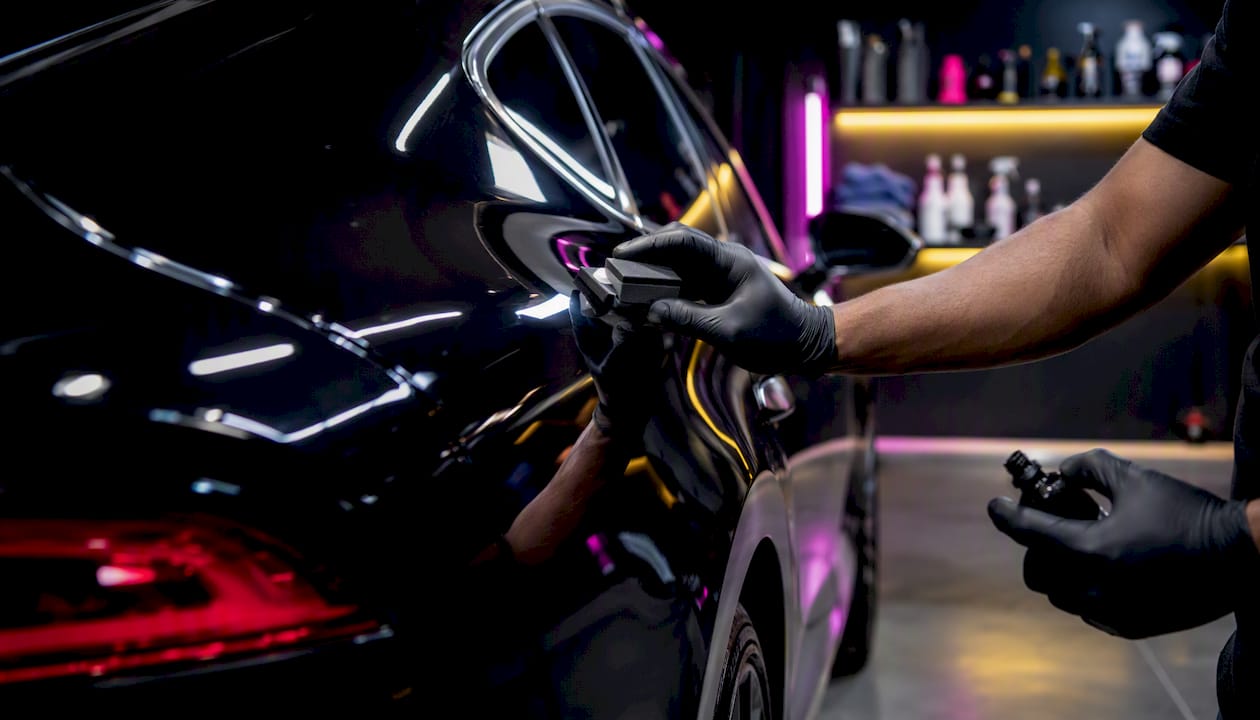
Paint sealant is one of the most practical investments a vehicle owner can make. Synthetic polymers bond directly to your car’s clear coat, forming a durable, hydrophobic barrier that blocks UV rays, repels contaminants, and preserves gloss for months at a time. The top reasons to use a paint sealant come down to five core benefits: UV and oxidation protection, chemical and contaminant resistance, water-beading hydrophobicity, significantly easier maintenance, and gloss enhancement that supports resale value.
The core reasons at a glance:
- UV and oxidation protection that slows paint fading and chalking
- Chemical and contaminant resistance against acid rain, bird droppings, and road grime
- Hydrophobic water beading that keeps the surface cleaner between washes
- Easier, less abrasive maintenance that reduces swirl marks over time
- Improved gloss and color depth that maintains a showroom appearance
One realistic expectation to set upfront: a sealant is a sacrificial protective layer, not a repair product. It will not remove existing scratches, fill chips, or stop physical impact damage. For that level of protection, paint protection film (PPF) or a professional ceramic coating is the appropriate solution.
Key Takeaways
A paint sealant delivers durable, months-long protection against UV, chemical contaminants, and daily wear, making it the most practical protective layer for most vehicle owners.
| Point | Details |
|---|---|
| Sealant lifespan | Quality sealants last 4–12 months depending on formula, prep quality, and environmental exposure. |
| Core benefits | UV protection, chemical resistance, hydrophobic water beading, and easier cleaning are the primary advantages. |
| Prep is non-negotiable | Decontamination and paint correction before application determine whether a sealant bonds correctly and lasts. |
| Know the limits | Sealants do not remove scratches, stop chips, or replace PPF for physical impact protection. |
| Mannyceramicprotouch | For high-value vehicles or aggressive climates, professional Liquid PPF and ceramic coatings provide longer-lasting, more durable protection than any sealant. |
Table of Contents
- 1. UV and oxidation protection slow paint fading
- 2. Chemical and contaminant resistance guards the clear coat
- 3. Hydrophobicity makes water bead and roll off
- 4. Easier cleaning reduces swirl marks and washing effort
- 5. Gloss enhancement and color depth improve appearance
- 6. Cost-effectiveness compared to frequent waxing
- 7. Resale and asset value preservation
- 8. Winter and salt exposure mitigation
- How a paint sealant actually protects your car’s finish
- What types of paint sealants are available?
- How does sealant compare to wax and ceramic coatings?
- How long does paint sealant last, and what affects it?
- When and how to apply a paint sealant correctly
- What paint sealant will not do
- Which vehicle owners get the most value from a paint sealant
- How to maintain a sealant and know when to reapply
- When a professional ceramic coating or Liquid PPF makes more sense
- A note from the studio on sealants and long-term protection
- Mannyceramicprotouch offers professional-grade protection beyond sealants
- Sources
1. UV and oxidation protection slow paint fading
Ultraviolet radiation is one of the most consistent threats to automotive paint. Prolonged sun exposure breaks down the clear coat at a molecular level, causing oxidation, chalking, and the dull, faded appearance that drops a vehicle’s perceived value fast. A quality paint sealant creates a UV-blocking layer over the clear coat that absorbs and deflects solar radiation before it reaches the paint itself.
For owners in high-sun climates, this protection is especially meaningful. A vehicle parked outdoors daily in Florida or Arizona faces far more cumulative UV exposure than one garaged in the Pacific Northwest. Applying a sealant every 4–6 months in those conditions can meaningfully slow the rate of clear coat degradation. You can read more about preventing UV-related paint fading and the strategies that work best for different climates.
2. Chemical and contaminant resistance guards the clear coat
Bird droppings, tree sap, acid rain, and industrial fallout are chemically aggressive. Left on bare paint, they etch into the clear coat within hours, especially in warm weather. A sealant layer acts as a sacrificial barrier, absorbing that chemical attack before it reaches the paint. Sealants protect against UV, acid rain, bird droppings, tree sap, and road grime, though they are not a permanent shield against prolonged exposure to any of these threats.
The practical benefit is time. A sealed surface gives you a wider window to rinse off a bird dropping or sap spot before it bonds permanently to the clear coat. That window can be the difference between a quick rinse and a polishing session.
3. Hydrophobicity makes water bead and roll off
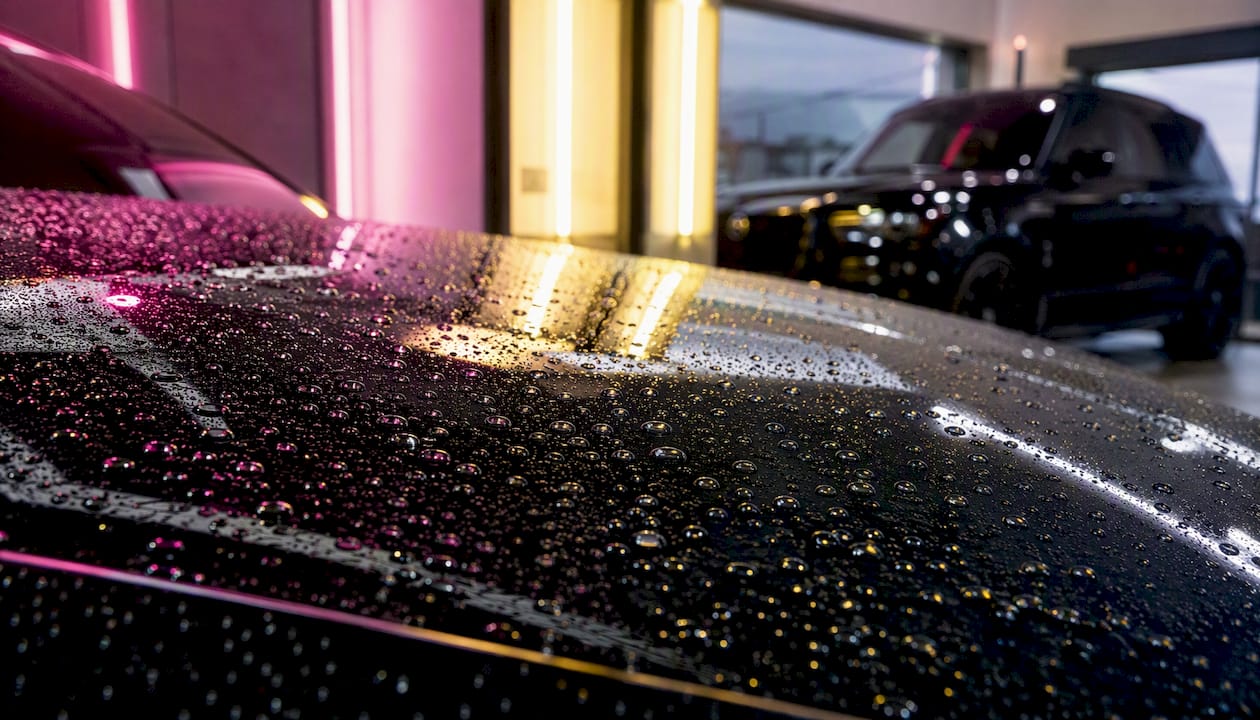
Water beading is one of the most visible signs that a sealant is working. Sealants improve water beading and make contaminants easier to remove, reducing cleaning effort and helping maintain gloss and color depth. When water sheets off the surface rather than sitting in flat pools, it takes dissolved road salt, mineral deposits, and light grime with it.
This matters most for daily drivers in wet climates or areas where road salt is used in winter. A hydrophobic surface is genuinely self-cleaning in light rain, and it dries faster after a wash, which reduces water spot formation.
Pro Tip: After washing, check whether water still beads into tight, high-contact droplets. Flat, spreading water is a reliable sign the sealant has worn thin and reapplication is due.
4. Easier cleaning reduces swirl marks and washing effort
A sealed surface is smoother at the microscopic level. Contaminants have less surface area to grip, so they release with less mechanical pressure during washing. Less pressure means fewer swirl marks introduced by wash mitts and drying towels, which is a real advantage for anyone who washes their car frequently.
The sacrificial, water-repellent layer allows contaminants to bead and release more easily, which reduces cleaning friction. For a daily driver that gets washed weekly, this compounds over time into noticeably better paint condition.
5. Gloss enhancement and color depth improve appearance
A fresh sealant application adds a layer of optical clarity over the clear coat that deepens color and increases reflectivity. Dark-colored vehicles benefit most visibly, with blacks and deep blues gaining a wet-look depth that wax alone rarely matches for more than a few weeks.
This is not purely cosmetic. A vehicle that looks well-maintained commands a higher price at resale and at trade-in. Buyers and appraisers notice paint condition immediately, and a consistently sealed finish shows far less micro-marring and surface haze than an unprotected one.
6. Cost-effectiveness compared to frequent waxing
Traditional carnauba wax typically lasts 4–8 weeks under normal conditions. A quality synthetic polymer sealant lasts considerably longer, with professional and quality DIY sealants reported to last roughly 4–12 months depending on formula and exposure. That durability gap translates directly into fewer applications per year, less product consumed, and less time spent on maintenance.
For owners who value their time as much as their vehicle’s appearance, a sealant applied twice a year outperforms wax applied six to eight times over the same period, both in protection and in total effort.
7. Resale and asset value preservation
Paint condition is one of the primary factors in a used vehicle’s market value. A car with dull, oxidized, or heavily swirled paint will sell for less and take longer to move than one with a clean, glossy finish. Consistent sealant use keeps the clear coat in better condition over the vehicle’s life, which supports a stronger resale position.
For owners of luxury or collector vehicles, this is not a minor point. Environmental threats like UV, acid rain, and road grime accelerate paint wear, and the cost of paint correction or a respray far exceeds the cost of preventive protection applied regularly.
8. Winter and salt exposure mitigation
Road salt is corrosive. It accelerates rust on exposed metal and degrades unprotected paint over repeated freeze-thaw cycles. A sealant creates a barrier between the paint surface and salt-laden water, slowing the rate at which salt contacts and damages the finish.
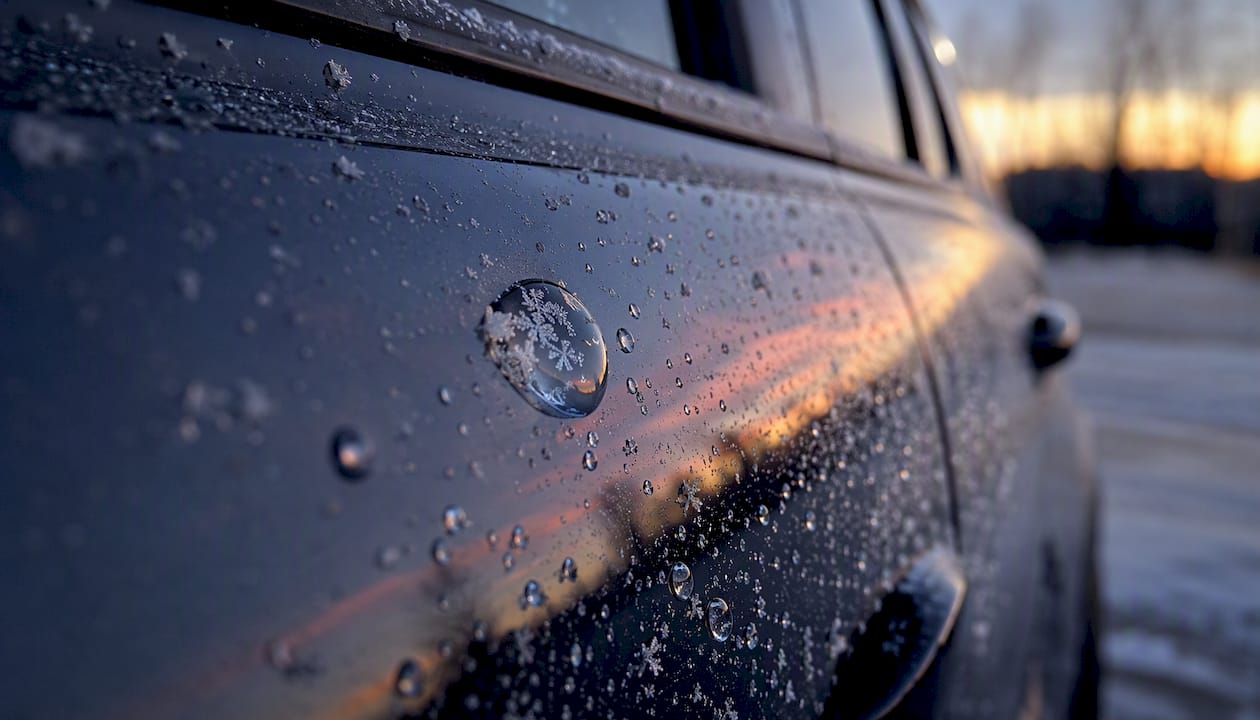
This protection is not absolute. A sealant will not stop rust on already-exposed metal or seal around door edges and wheel wells where chips have broken through. But on intact painted surfaces, it meaningfully reduces the rate of salt-related deterioration through a winter season.
How a paint sealant actually protects your car’s finish
Paint sealants are synthetic polymers that bond to the vehicle’s clear coat, filling the micro-porosity in that surface and creating a smoother, denser layer on top. That layer is what delivers the protective benefits. The chemistry is straightforward: polymers cross-link with the clear coat’s surface molecules, forming a semi-rigid film that contaminants cannot easily penetrate.
Research on SiO2-based ceramic hydrophobic materials explains why silicon dioxide-enhanced sealants perform particularly well. SiO2 particles create a tighter molecular network than standard polymer-only formulas, which produces stronger water repellency and better chemical resistance.
The protective actions a sealant performs:
- UV absorption and deflection before radiation reaches the clear coat
- Chemical resistance by presenting a pH-neutral surface to acidic contaminants
- Sacrificial barrier function so contaminants attack the sealant layer first
- Hydrophobic water beading that carries dissolved contaminants off the surface
- Micro-smoothing of the clear coat surface, which reduces contaminant adhesion
The sequence in practice: a clean, decontaminated clear coat surface receives the sealant, which bonds and cures into a continuous film. Contaminants that land on that film bead up or slide off rather than etching into the paint below.
Wikipedia’s entry on paint sealants confirms this mechanism: sealants fill micro-porosity in the clear coat, and skipping paint correction before application is the most common reason a DIY sealant job looks worse than expected.
What types of paint sealants are available?
Not all sealants are the same product. The formula determines durability, gloss character, ease of application, and cost. Here is how the main categories compare:
Synthetic polymer sealants are the most common type. They bond well to clear coats, last 4–6 months under typical conditions, and are straightforward to apply. Gloss is clean and reflective rather than warm. These are the workhorses of the category.
- Pros: widely available, easy to apply, good durability for the price
- Cons: gloss can look slightly cold or synthetic compared to carnauba
SiO2-based (ceramic) sealants incorporate silicon dioxide particles for stronger hydrophobicity and chemical resistance. SiO2-based sealants form durable, water-repellent shells with stronger UV and chemical resistance than traditional carnauba wax. Durability typically runs 6–12 months.
- Pros: superior water beading, better chemical resistance, longer lifespan
- Cons: slightly more demanding application, higher cost than basic polymer sealants
Carnauba-derived and hybrid products blend natural carnauba wax with synthetic polymers. The result is a warmer, deeper gloss that many enthusiasts prefer aesthetically, with better durability than pure carnauba.
- Pros: warm, rich gloss character, good for show cars and weekend vehicles
- Cons: shorter lifespan than pure synthetic or SiO2 formulas (typically 2–4 months)
Graphene-enhanced sealants are the newest category. Graphene additives claim stronger heat dissipation and improved chemical resistance. They require careful application and consistent maintenance to deliver on those claims.
- Pros: high durability claims, strong heat resistance
- Cons: higher cost, application sensitivity, limited long-term field data compared to SiO2
Which type fits your situation:
- Daily driver in a moderate climate: synthetic polymer sealant, reapplied every 4–6 months
- Show car or weekend vehicle: carnauba hybrid for gloss character, reapplied every 2–3 months
- High-UV or winter-salt environment: SiO2-based sealant for maximum chemical resistance
- Owner seeking maximum DIY durability: graphene-enhanced formula with careful prep
How does sealant compare to wax and ceramic coatings?
Car and Driver positions sealants as a mid-point solution: better durability than wax, less permanent and less costly than professional ceramic coatings. That framing is accurate and useful for most owners making a buying decision.
Key comparison points:
- Durability: Wax lasts 4–8 weeks. Sealant lasts 4–12 months. Professional ceramic coatings last 2–5 years or longer.
- Gloss appearance: Wax produces the warmest, deepest gloss. Sealant gloss is clean and reflective. Ceramic coatings deliver a glass-like depth.
- Maintenance frequency: Wax requires reapplication every 4–8 weeks. Sealant every 4–12 months. Ceramic coatings need periodic maintenance washes but rarely full reapplication.
- Cost: Wax is the lowest upfront cost. Sealant is moderate. Professional ceramic coatings carry a significant upfront investment.
- Prep level required: Wax is forgiving of light surface imperfections. Sealant benefits from decontamination and light correction. Ceramic coatings require thorough paint correction before application.
| Category | Durability | Gloss Character | Maintenance | Relative Cost |
|---|---|---|---|---|
| Carnauba wax | 4–8 weeks | Warm, deep | High frequency | Low |
| Synthetic sealant | 4–12 months | Clean, reflective | Moderate | Moderate |
| Ceramic coating | 2–5+ years | Glass-like depth | Low frequency | High |
| Liquid PPF | 3–5+ years | High clarity | Low frequency | Premium |
Matching options to owner profiles: A daily driver that sees regular washing and moderate environmental exposure is the ideal sealant candidate. A show car where gloss warmth matters most might favor a carnauba hybrid layered over a sealant base. A high-value vehicle whose owner wants long-term asset protection with minimal reapplication is the right candidate for professional ceramic coating or Liquid PPF.
How long does paint sealant last, and what affects it?
Quality sealants last roughly 4–12 months, but that range reflects real variation driven by formula, application quality, and environmental conditions. A SiO2-based sealant applied to a properly prepped surface and kept in a garage will perform very differently from a basic polymer sealant applied over a contaminated surface on a vehicle parked outdoors year-round.
Factors that shorten sealant life:
- High UV exposure (outdoor parking in sunny climates)
- Acidic fallout from industrial areas or heavy tree coverage
- Road salt exposure without regular rinsing
- Automatic car washes with harsh detergents or abrasive brushes
- Improper washing technique (high-pressure nozzles too close, abrasive mitts)
Factors that extend sealant life:
- Sheltered or garaged parking
- Regular pH-neutral wash maintenance
- Prompt removal of bird droppings, sap, and industrial fallout
- Proper surface prep before application (decontamination, clay, panel wipe)
- Layering a compatible spray sealant or quick detailer between full reapplications
| Sealant Type | Typical Lifespan | Conditions That Affect Range |
|---|---|---|
| Carnauba hybrid | 2–4 months | UV exposure, wash frequency |
| Synthetic polymer | 4–6 months | Climate, parking, wash method |
| SiO2-based (ceramic) | 6–12 months | Prep quality, environmental exposure |
| Graphene-enhanced | 6–12+ months | Application care, maintenance routine |
When and how to apply a paint sealant correctly
Application timing and surface preparation determine whether a sealant bonds properly and lasts its full rated lifespan. Skipped prep is the primary reason DIY sealant jobs underperform. Professional detailers consistently identify missed decontamination as the leading cause of poor sealant bonding and shortened durability.
Step-by-step application process:
- Full wash: Remove all loose dirt and grime with a pH-neutral shampoo and a clean wash mitt. Rinse thoroughly.
- Iron decontamination: Apply an iron remover spray to dissolve embedded ferrous particles. These are invisible to the eye but will compromise sealant bonding if left in place.
- Clay bar decontamination: Clay the entire surface to remove bonded contaminants that washing and iron removal cannot lift. The surface should feel smooth as glass when done correctly. See the expert surface prep guide for a detailed walkthrough.
- Paint correction (if needed): Address swirl marks, light scratches, and oxidation before sealing. A sealant will lock in whatever condition the paint is in.
- Panel wipe: Apply isopropyl alcohol (IPA) solution or a dedicated panel cleaner to remove any polish oils or residue. This step is critical for proper polymer bonding.
- Apply the sealant: Work in small sections in a shaded area, ideally between 50°F and 80°F. Apply a thin, even coat with a foam applicator. Thicker is not better.
- Cure and buff: Follow the product’s flash time instructions, then buff off with a clean microfiber towel. Allow full cure (typically 12–24 hours) before exposing the vehicle to water.
Pro Tip: Apply a second coat of sealant 24 hours after the first. The second layer bonds to the cured first layer and meaningfully extends durability without adding complexity to the process.
What paint sealant will not do
Setting accurate expectations prevents disappointment and helps owners choose the right level of protection for their vehicle and budget.
A paint sealant will not:
- Remove existing scratches, swirl marks, or paint defects
- Stop physical rock chips or road debris impacts
- Provide permanent protection (reapplication is required every 4–12 months)
- Seal or protect exposed bare metal from rust
- Fully block salt damage on prolonged winter exposure without regular maintenance rinses
- Replace paint protection film for chip-prone areas like the hood, front bumper, and mirrors
One additional point worth noting: sealants do not address surface contaminants that have already etched into the clear coat. Once a bird dropping or acid rain spot has chemically bonded to the paint, a sealant applied afterward cannot reverse that damage. It can only prevent future etching.
Which vehicle owners get the most value from a paint sealant
Paint sealant delivers strong value across a wide range of owner profiles, but some situations make it especially worthwhile.
- Daily drivers: A vehicle driven year-round in mixed conditions benefits most from the consistent protection a sealant provides. Reapply every 4–6 months.
- Owners in high-UV climates: Sun-belt owners face accelerated oxidation risk. A SiO2-based sealant applied twice a year provides meaningful UV resistance between applications.
- Owners near trees or urban fallout zones: Tree sap, pollen, and industrial particulates are persistent threats. A sealant’s sacrificial barrier buys time before these contaminants etch.
- Owners who want easier maintenance without a full ceramic investment: A quality sealant delivers most of the day-to-day maintenance benefits of ceramic coating at a fraction of the upfront cost.
- Owners preparing for winter: Applying a fresh sealant before the first frost creates a barrier against road salt and freeze-thaw cycling that an unsealed surface cannot match.
- Fleet operators: Consistent sealant application across a fleet reduces per-vehicle cleaning time and helps maintain resale values at disposal.
How to maintain a sealant and know when to reapply
A sealant’s performance degrades gradually, not all at once. A simple maintenance routine keeps protection effective and extends the time between full reapplications.
Maintenance routine:
- Wash with a pH-neutral shampoo every 2–4 weeks. Avoid automatic car washes with abrasive brushes.
- Dry with a clean, soft microfiber towel or a forced-air blower to prevent water spots.
- Apply a compatible spray sealant or quick detailer after each wash to top up the hydrophobic layer.
- Remove bird droppings, tree sap, and industrial fallout promptly, ideally within a few hours of noticing them.
- Inspect the surface quarterly under direct light for swirl accumulation and loss of gloss depth.
- Reapply a full sealant coat every 4–12 months depending on product type and exposure conditions.
Signs the sealant has failed:
- Water no longer beads into tight droplets; instead it sheets flat across the surface
- The paint feels rough or gritty after washing
- Gloss depth has visibly decreased compared to a fresh application
- Contaminants are harder to remove and require more mechanical effort
Seasonal care notes: Before winter, apply a fresh sealant coat and consider a compatible spray sealant for monthly top-ups through the salt season. After winter, a full decontamination wash followed by reapplication removes accumulated road salt residue and resets the protective layer for spring.
When a professional ceramic coating or Liquid PPF makes more sense
A paint sealant is the right choice for many owners, but there are clear situations where a professional-grade solution delivers better long-term value.
Cases where professional protection is the stronger choice:
- High-value or exotic vehicles: A vehicle worth $80,000 or more deserves protection that lasts years, not months. Professional ceramic coatings and Liquid PPF are engineered for that level of asset preservation.
- Aggressive climates: Owners in coastal salt-air environments, high-UV desert regions, or areas with heavy industrial fallout face conditions that push sealants to their limits. A professional ceramic coating provides a harder, more chemically resistant surface.
- Visible chip risk: Front-end chip damage on highway-driven vehicles requires physical impact protection that no sealant can provide. Paint protection film, particularly Liquid PPF, is the appropriate solution.
- Long-term preservation goals: If the goal is maintaining showroom condition for 3–5 years with minimal reapplication, professional ceramic coating or Liquid PPF is the only realistic path.
- Owners with limited time for maintenance: A professional coating reduces the maintenance burden significantly. Sealants require reapplication every 4–12 months; professional coatings can go years between full treatments.
Decision criteria:
- Vehicle value above $50,000: consider professional ceramic or Liquid PPF
- Outdoor parking in a high-UV or coastal environment: SiO2 sealant at minimum, professional ceramic preferred
- Frequent highway driving with chip exposure: Liquid PPF on front-end panels
- Budget-conscious daily driver: quality synthetic sealant, reapplied twice yearly
Pro Tip: Professional prep matters as much as the product itself. A staged decontamination, paint correction, and measured application process, as used at Mannyceramicprotouch, produces results that a rushed DIY application cannot replicate, regardless of the product used.
A note from the studio on sealants and long-term protection
Most vehicle owners are better served by a paint sealant than by doing nothing, and better served by a professional ceramic coating or Liquid PPF than by a sealant alone when the vehicle’s value and exposure level justify the investment. The honest recommendation is to match the protection level to the asset. A sealant applied correctly, on a properly prepped surface, and maintained consistently will outperform an expensive ceramic coating applied over contaminated paint with no follow-up care.
At Mannyceramicprotouch, the standard is to treat every vehicle’s protection as a long-term strategy, not a one-time application. Sealants fit into that strategy as a practical, accessible starting point. For clients whose vehicles demand more, professional Liquid PPF and ceramic coatings are the natural progression.
Mannyceramicprotouch offers professional-grade protection beyond sealants
For vehicle owners who have outgrown what a DIY sealant can deliver, Mannyceramicprotouch provides professional Liquid PPF, high-performance ceramic coatings, and precision paint correction for luxury, exotic, and high-value vehicles. Every service begins with a staged decontamination and surface assessment, so protection bonds correctly and lasts as long as the formula is rated to perform.

The difference between a sealant and a professional ceramic or Liquid PPF application is not just product quality. It is the prep, the process, and the tailored approach to each vehicle’s specific exposure and condition. Mannyceramicprotouch works with clients who want long-term results, not a product that needs replacing every few months. To explore the full range of professional paint protection services or request a quote for your vehicle, contact Mannyceramicprotouch directly and schedule a consultation.
Sources
The following sources informed the claims and guidance in this article:
- What Is Paint Sealant? | Chemical Guys
- Paint Sealant Mega Guide – Everything You Need To Know | TorqueDetail
- What Is Paint Sealant for Cars and Why You Need It – The Mobile Buff
Recommended
- Car Paint Protection: Your Complete 2026 Guide – Manny’s Ceramic Pro Touch and Luxury Surface Preservation™
- Benefits of Professional Coating for Your Vehicle – Many Ceramic Pro Touch
- Advanced Paint Preservation Types for Luxury Car Owners – Manny’s Ceramic Pro Touch and Luxury Surface Preservation™
- Glass Coat for Cars: Protect Your Paint and Glass – Manny’s Ceramic Pro Touch and Luxury Surface Preservation™