

The biggest short- and long-term elements that damage car finish are bird droppings, tree sap, UV radiation, bug splatter, road salt, fuel and brake fluid, acid rain, industrial fallout, rock chips, abrasive washing, pollen accumulation, and extreme weather events. Some of these cause visible etching within hours; others work silently over months or years.
Here is how they rank by speed of damage:
- Hours: Bird droppings, gasoline spills, brake fluid, egg, Silly String
- Days: Bug splatter, tree sap, acid rain deposits
- Weeks to months: Road salt corrosion, industrial fallout, tar
- Months to years: UV oxidation, pollen oil buildup, coastal salt exposure
Each section below covers what the culprit does, how fast it acts, how to remove it safely, and what professional protection stops it for good.
Key Takeaways
The most damaging elements that harm a car’s finish act within hours, making immediate removal the single most important habit a car owner can build.
| Point | Details |
|---|---|
| Hours-level threats | Bird droppings, egg, gasoline, and brake fluid can etch or strip clear coat within 1–6 hours; remove immediately. |
| Days-level threats | Bug splatter and tree sap cause permanent bonding within 24 hours; use dedicated removers, not household solvents. |
| Long-term threats | UV oxidation, road salt, and coastal air degrade paint over months to years; scheduled washing and a sacrificial protective layer are required. |
| Safe washing matters | Automatic brush carwashes, dish soap, and dirty towels introduce swirl marks and strip protective wax; use pH-neutral shampoo and clean microfibers. |
| Mannyceramicprotouch | Offers Liquid PPF, ceramic coatings, and paint correction for luxury and high-value vehicles, with a tailored strategy for each asset. |
Table of Contents
- 1. What are the main elements that damage car finish?
- 2. How do chemical and physical processes actually destroy clear coat?
- 3. How can you inspect your paint and judge the severity of damage?
- 4. What should you do immediately for common contaminants?
- 5. What regular habits and products prevent paint damage?
- 6. What professional protection options give long-term defense?
- 7. How fast does each threat cause damage, and what does repair cost?
- 8. How do bird nesting materials and pollen affect your paint over time?
- 9. What does extreme weather do to your car’s paint?
- 10. Why does where you park matter so much for paint condition?
- 11. How do poor-quality detailing products damage paint?
- What owners of high-value vehicles should prioritize first
- Mannyceramicprotouch protects what your finish cannot handle alone
- Sources
1. What are the main elements that damage car finish?
The most common paint threats fall into four categories: biological, chemical, physical, and human-caused. Understanding which category a threat belongs to tells you how urgently you need to act.
Biological culprits
- Bird droppings: Contain enzymes (amylase, lipase) and uric acid. Lab and microscopy studies confirm these enzymes catalyze hydrolytic cleavage of clear-coat polymers, etching the surface and reducing gloss, especially when heat accelerates the reaction.
- Bug splatter: Insect bodies release enzymes and acidic fluids on impact. Left on a hot hood, they begin softening the clear coat within 24–48 hours.
- Pollen: Pollen grains carry oils that bond to paint. Rain drives them into surface micro-pores, leaving stains that resist a basic rinse.
Plant resins
- Tree sap: Sticky resins harden as they dry, bonding chemically to the clear coat. Removal within 24 hours is straightforward; after several days, solvents are required.
Chemical solvents
- Gasoline and brake fluid: Both strip clear-coat polymers on contact. Brake fluid, gasoline, and bird droppings are among the fastest-acting chemical threats on a vehicle’s exterior.
- Household chemicals: Ammonia-based glass cleaners, dish soap, and bleach remove protective wax layers and attack the clear coat directly.
- Non-obvious culprits: Silly String, shaving cream, shoe polish, and coffee or soda can stain or chemically attack paint if left on the surface.
Environmental threats
- UV radiation: Photo-oxidation breaks polymer chains in the clear coat and pigments, producing fading, chalking, and micro-cracking. Dark and red pigments tend to be most vulnerable.
- Acid rain and industrial fallout: Sulfuric and nitric acid compounds in rain etch clear coats. Airborne iron particles from brake dust and rail lines embed in paint and oxidize, creating rust spots.
- Road salt: Salt and winter de-icers trap moisture and chloride ions in chips and micro-pores, accelerating corrosion from the inside out.
Physical damage
- Rock chips and gravel: High-speed road debris punches through clear coat, base coat, and sometimes primer, exposing bare metal to moisture and rust.
- Hail: Impact dents deform metal and crack clear coat simultaneously.
Human-caused damage
- Eggs and Silly String: Egg whites and yolks are highly acidic and begin etching within hours; Silly String contains solvents that dissolve clear coat on contact.
- Abrasive washing: Automatic brush carwashes, dirty towels, and household sponges introduce swirl marks and micro-scratches that dull gloss over time.
Pro Tip: High-risk parking situations include spots directly under trees (sap and droppings), near industrial facilities or rail lines (airborne iron fallout), and coastal areas (salt-laden air). Identifying these before you park is the simplest prevention step available.
2. How do chemical and physical processes actually destroy clear coat?
Paint damage follows five distinct mechanisms. Knowing which one is at work tells you whether the damage is reversible or permanent.
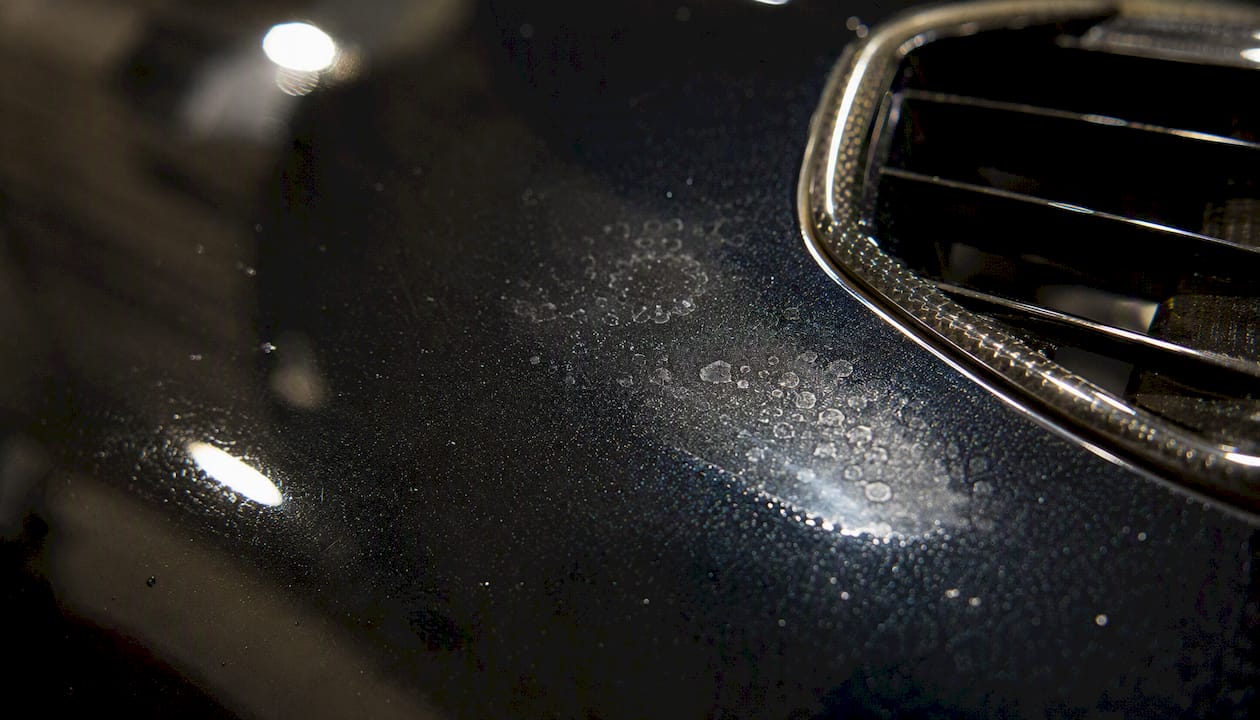
Chemical attack (acid etching): Acidic substances, including bird droppings, egg, acid rain, and certain industrial fallout, lower the pH at the paint surface. This dissolves the cross-linked polymer network in the clear coat, leaving a visible pit or halo. Once the polymer chains are broken, the damage is irreversible without material removal through polishing or repainting.
Enzymatic hydrolysis: This is distinct from simple acid attack. Enzymes in bird droppings and tree gums act as catalysts, accelerating the breakdown of ester and ether bonds in acrylic and melamine clear coats. The reaction speeds up significantly with heat, which is why a dropping left on a sun-baked hood etches faster than one left in shade.
UV-driven photo-oxidation: Prolonged sun exposure breaks polymer chains in both the clear coat and the underlying pigment layer. The result is chalking (a powdery white residue), fading, and micro-cracking. This process is cumulative and largely irreversible once chalking appears. For UV protection strategies, a sacrificial layer is the most reliable defense.
Mechanical abrasion: Rock chips, gravel, and abrasive washing physically remove material from the clear coat. Each scratch or chip is a breach in the protective system, exposing lower layers to moisture and chemical attack.
Corrosion after coating breach: Once road salt, moisture, or acidic compounds reach the base coat or primer through a chip or scratch, electrochemical corrosion begins. Chloride ions from road salt are particularly aggressive, spreading corrosion laterally under intact paint.
Clear coat is the only sacrificial layer standing between your paint and the environment. Once it is etched, cracked, or abraded through, every subsequent threat reaches the color layer directly — and repair costs rise sharply.
3. How can you inspect your paint and judge the severity of damage?
A five-minute inspection under good light tells you whether you are dealing with surface contamination or structural damage.
Visual signs to look for:
- Dull or chalky finish: Oxidation from UV exposure; the clear coat has begun to break down.
- Shiny halo or ring around a spot: Active contamination (bird dropping, sap) that has not yet etched through.
- Etched pit or frosted area: Acid has already removed clear-coat material; polishing may restore gloss but cannot rebuild lost thickness.
- Clear coat lifting or peeling: Advanced failure; professional correction or panel repaint is required.
- Exposed primer (gray/beige) or bare metal: Deep chip; immediate sealing is needed to prevent rust.
Three inspection steps:
- Wash a small section with pH-neutral shampoo and rinse thoroughly so contamination does not obscure the surface.
- Run a clean fingertip across the area. Smooth means surface-level; rough or gritty means embedded contamination or etching.
- Hold a flashlight or phone light at a low angle in a shaded area. Swirl marks appear as circular scratches; etches appear as dull, non-reflective patches.
Decision guide: Surface contamination with no texture change responds to a dedicated cleaner and a light polish. Visible etching, peeling, or chips that reach primer require professional paint correction or spot repaint. Attempting to polish deep etches without the right equipment removes more clear coat than necessary and can accelerate failure.
4. What should you do immediately for common contaminants?
The general rule: rinse loose debris with water first, never rub dry, use a dedicated product for the specific contaminant, rinse again, and apply a quick detailer or spray wax to restore the sacrificial layer.
Bird droppings
- Soak the area with a pH-neutral car shampoo solution or a dedicated bird dropping remover for 30–60 seconds.
- Lift gently with a damp microfiber cloth. Do not wipe laterally.
- Rinse with clean water and dry with a fresh microfiber towel.
- Apply a spray detailer or quick wax to the cleaned area.
Tree sap
- Apply an isopropyl alcohol (IPA) solution (70% IPA, 30% distilled water) or a dedicated sap remover to a microfiber cloth.
- Hold the cloth on the sap for 30 seconds to soften it, then lift without scrubbing.
- Rinse and follow with a spray detailer.
Bug splatter
- Use a dedicated bug remover spray or a damp microfiber cloth soaked in pH-neutral shampoo.
- Let it dwell for 60 seconds, then wipe gently.
- Rinse thoroughly; bug residue left in panel gaps continues to degrade paint.
Gasoline spills
- Rinse immediately with water to dilute and remove the fuel.
- Wash the area with pH-neutral car shampoo.
- Do not use household degreasers; they strip protective wax and can attack the clear coat.
Brake fluid
- Flush immediately with large amounts of water. Brake fluid is hygroscopic and penetrates quickly.
- Wash with pH-neutral shampoo and rinse again.
- Inspect for softening or wrinkling of the clear coat; if present, consult a professional.
Acid rain marks
- Wash the vehicle with pH-neutral shampoo.
- Apply a dedicated paint decontamination spray or a light clay bar treatment to remove embedded deposits.
- Follow with a wax or sealant to restore the sacrificial layer.
Road salt
- Rinse the entire vehicle, including the undercarriage, with clean water as soon as possible after driving on salted roads.
- Wash with pH-neutral shampoo.
- Apply a wax or sealant before winter to reduce salt adhesion.
Tar
- Apply a dedicated tar remover to a microfiber cloth and hold it on the spot for 60 seconds.
- Wipe gently; never scrub.
- Wash the area with pH-neutral shampoo and apply a quick detailer.
Eggs and Silly String
- Rinse immediately with water. Do not let egg dry; it etches within hours.
- Wash with pH-neutral shampoo and a soft microfiber mitt.
- Inspect for etching after cleaning; professional polishing may be needed.
Pro Tip: Keep a small kit in your car: a spray bottle of diluted pH-neutral shampoo, two clean microfiber cloths, and a travel-size spray detailer. On-the-spot treatment within the first hour prevents most permanent damage.
5. What regular habits and products prevent paint damage?
Prevention is less expensive than correction. A consistent routine reduces the frequency and severity of damage from nearly every threat covered above.
Washing frequency by exposure:
- High exposure (coastal, Sun Belt, winter-salt regions, urban): wash weekly, rinse undercarriage after every salt exposure.
- Moderate exposure (suburban, mild climate): wash every two weeks.
- Low exposure (garaged, limited outdoor use): wash monthly, inspect for contamination after each use.
Safe washing practices:
- Use pH-neutral car shampoo only; dish soap strips wax and degrades sealants.
- Wash in shade on a cool panel; hot paint dries soap before rinsing, leaving residue.
- Use the two-bucket method (one for shampoo, one for rinsing the mitt) to avoid reapplying grit.
- Dry with a clean, plush microfiber drying towel; never use bath towels or chamois leather.
- Avoid automatic brush carwashes; the brushes accumulate grit from previous vehicles and introduce swirl marks.
Protective products to apply:
- Carnauba wax or polymer sealant: Apply every 2–3 months as a sacrificial layer against UV, bird droppings, and light chemical exposure.
- Ceramic coating maintenance spray: Extends the life of a professional ceramic base coat between annual inspections.
- Detail spray: Use after every wash to restore hydrophobic properties and add a thin protective layer.
Preventive parking habits:
- Avoid parking directly under trees, especially during spring sap season and during bird nesting periods.
- Use a breathable car cover for extended outdoor storage.
- Schedule a professional protection service before winter (to guard against salt) and before peak summer (to guard against UV). For a step-by-step paint fading prevention routine, the approach differs by climate zone.
Pro Tip: If you live in a coastal area, a Sun Belt city, or a region with heavy winter salting, treat your protection schedule as seasonal maintenance, not optional. Salt air and UV work year-round on unprotected paint.
6. What professional protection options give long-term defense?
For owners of luxury, exotic, or high-value vehicles, consumer-grade wax is not a sufficient long-term defense. Professional options address specific threat categories at a structural level. Modern factory finishes are often thinner and water-based, optimized for VOC compliance rather than durability, which increases the value of engineered sacrificial layers.
Ceramic coatings
A professionally applied ceramic coating bonds to the clear coat at a molecular level, creating a hard, hydrophobic surface that resists UV oxidation, chemical etching, bird droppings, and light abrasion. It does not prevent rock chips. Maintenance involves periodic top-up sprays and an annual inspection. Lifespan ranges from two to five years depending on exposure and care. For a deeper look at what this service involves, see Mannyceramicprotouch’s ceramic paint protection guide.
Liquid Paint Protection Film (Liquid PPF)
Liquid PPF is a sprayable polymer that provides a thicker sacrificial layer than ceramic alone, with self-healing properties for minor scratches. It offers stronger chemical resistance than standard ceramic coatings and is particularly suited to high-exposure areas like hoods, bumpers, and mirrors. Mannyceramicprotouch specializes in this application for luxury and exotic vehicles. Explore the Liquid PPF vs. traditional PPF comparison for a direct breakdown.
Traditional Paint Protection Film (PPF)
Traditional PPF is a urethane film applied in pre-cut sections to high-impact zones. It provides the strongest physical barrier against rock chips and road debris. Installation requires precision cutting and application; poor-quality installation leaves visible edges and traps moisture. Lifespan is typically 5–10 years with proper care.
Paint correction
Paint correction uses machine polishing to remove a controlled layer of clear coat, eliminating swirl marks, light etches, and oxidation. It is a prerequisite before applying any coating or film; applying ceramic over damaged paint locks in the defects. For paint treatment options and value preservation, correction is the foundation.
When to choose professional protection:
- High-value or exotic vehicle where resale value matters
- Repeated etching from bird droppings or acid rain despite regular washing
- Large rock chips or chips that have reached primer
- Extended outdoor parking in coastal, Sun Belt, or winter-salt environments
7. How fast does each threat cause damage, and what does repair cost?
Speed of damage determines urgency. Cost of repair determines whether prevention was worth it.
| Culprit | Time to visible damage | Suggested immediate action |
|---|---|---|
| Bird droppings | 1–4 hours (hot weather) | Remove within the hour; use dedicated remover |
| Egg / Silly String | 1–6 hours | Rinse immediately with water, then wash |
| Gasoline / brake fluid | Minutes to 1 hour | Flush with water immediately |
| Bug splatter | 24–48 hours | Remove same day with bug remover |
| Tree sap | 24 hours | Apply IPA solution within 24 hours |
| Acid rain deposits | Days to weeks | Clay bar treatment after washing |
| Road salt | Weeks to months | Rinse undercarriage after every salt exposure |
| Industrial fallout | Weeks to months | Iron decontamination spray, clay bar |
| UV oxidation | Months to years | Apply UV-blocking wax or coating; park in shade |
| Coastal salt air | Months to years | Frequent washing, ceramic or PPF protection |
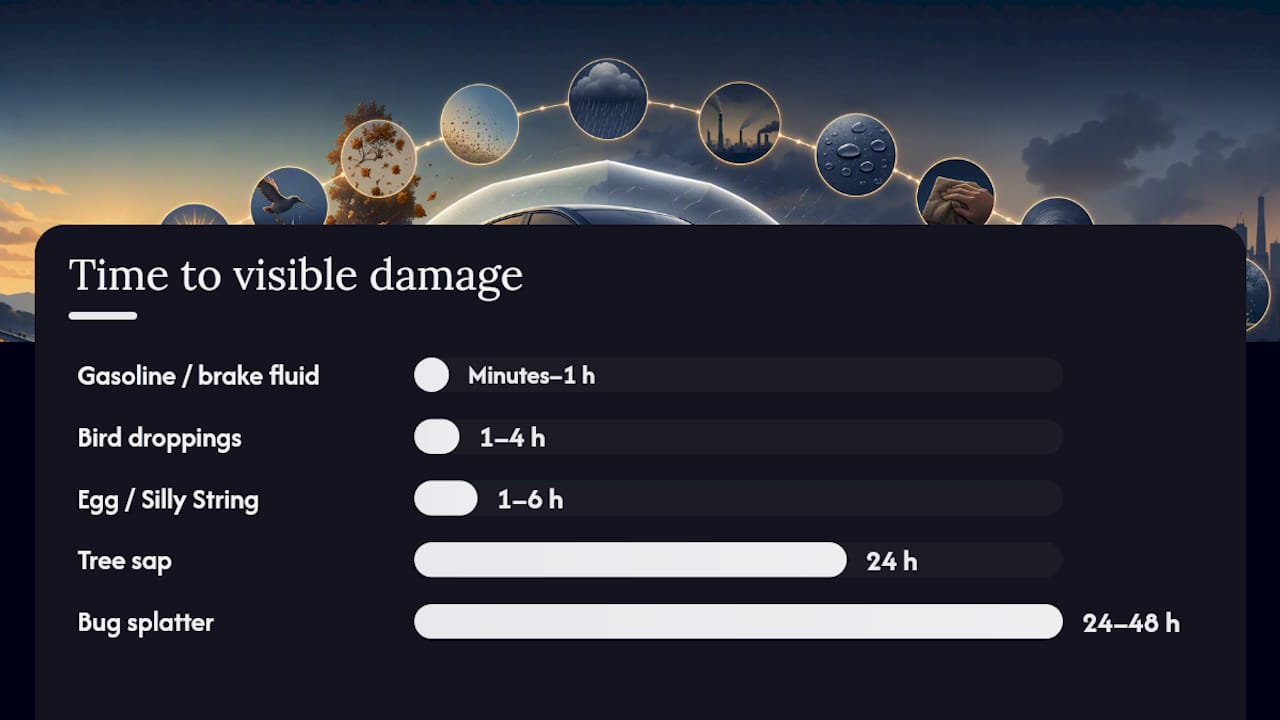
Repair costs can vary depending on vehicle, region, and damage severity. Spot polishing is usually moderately priced, full paint corrections and repaints have a range of costs, while professional ceramic coatings and paint protection films represent significant investments.
For vandalism damage (egg etching, keying, graffiti), comprehensive auto insurance with a low deductible may cover professional correction or repaint. Document the damage with photos before cleaning, and file a claim before any repair work begins.
8. How do bird nesting materials and pollen affect your paint over time?
Bird nesting season, typically spring through early summer in most U.S. regions, concentrates two threats simultaneously: droppings and nesting debris. Twigs, dried grass, and seed casings that birds carry and drop onto vehicles are mildly abrasive and trap moisture against the paint surface. Prolonged contact softens the clear coat and creates conditions for mold and bacterial growth, which can leave staining that resists standard washing.
Pollen is a subtler threat. Individual pollen grains are microscopic and carry surface oils that bond to paint when wet. A single rain shower drives pollen into surface texture and panel gaps. As the water evaporates, the oils concentrate and polymerize, forming a thin film that dulls gloss and, over weeks, becomes increasingly difficult to remove with shampoo alone. A clay bar treatment after peak pollen season is the most effective way to clear embedded pollen residue before it causes lasting staining.
9. What does extreme weather do to your car’s paint?
Hail is among the most destructive single weather events for a vehicle’s exterior. Even small hailstones traveling at speed create impact dents that deform the metal substrate and crack the clear coat simultaneously. The crack itself is often invisible at first but opens a path for moisture, salt, and UV to reach the base coat directly.
Heavy rain on its own is less damaging than the contaminants it carries. Rainwater in most U.S. urban and industrial areas contains dissolved sulfur dioxide and nitrogen oxides, making it mildly acidic. Repeated exposure without washing allows these compounds to accumulate and etch the clear coat gradually. Thermal cycling, the expansion and contraction of paint layers as temperatures swing between day and night, compounds this by widening micro-cracks that acid rain then penetrates. Parking in a garage or under a solid cover during severe weather events is the most direct protection available.
10. Why does where you park matter so much for paint condition?
Parking location is one of the most controllable variables in paint preservation, yet most car owners treat it as an afterthought. Parking directly under a tree exposes the vehicle to sap drips, bird activity concentrated in branches above, falling seed pods, and pollen. During spring, a single overnight parking session under a flowering tree can deposit enough pollen and sap to require a full decontamination wash.
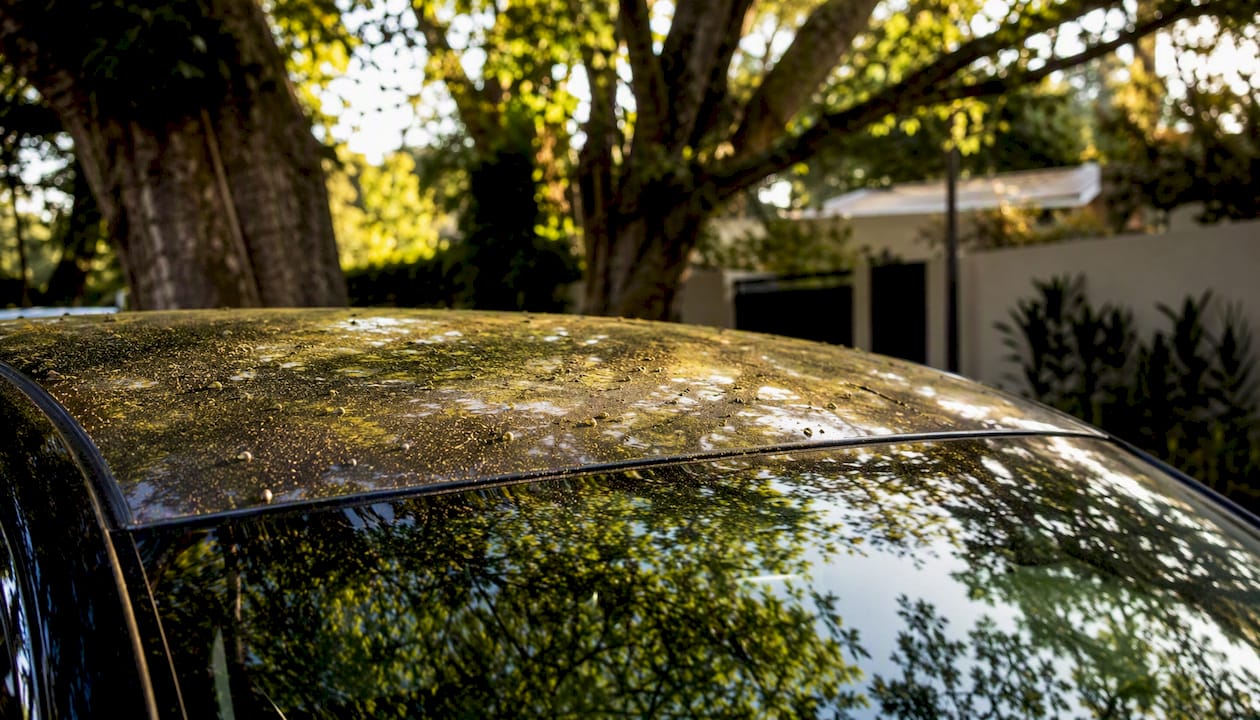
Parking near construction sites or industrial facilities adds iron particles and chemical dust to the equation. These particles embed in the clear coat and begin oxidizing within days, creating the rust-colored speckling known as industrial fallout. Coastal parking compounds salt exposure; vehicles parked within a mile of the ocean accumulate salt deposits on paint and in door gaps even without direct spray. Choosing covered parking, a garage, or at minimum an open lot away from trees and industrial activity extends the time between professional protection services and reduces the cumulative damage load on the finish.
11. How do poor-quality detailing products damage paint?
Not all car care products protect paint. A significant category of aftermarket products and low-quality detailing supplies actively damages the surfaces they are marketed to protect.
Abrasive polishes sold without clear compound ratings can remove more clear coat than intended, thinning the protective layer with each use. Over time, repeated application of an overly aggressive polish leaves the clear coat too thin to protect the base coat effectively. Spray waxes and sealants formulated with high solvent content strip existing protection before depositing a new layer, creating a net-negative effect on vehicles that already have a professional coating.
Automatic carwash brushes are a well-documented source of swirl marks. The bristles accumulate grit from previous vehicles, and the rotating action drags that grit across the paint in circular patterns. Improper washing tools and household cleaners are among the most common causes of avoidable paint damage. pH-imbalanced shampoos, including dish soap and all-purpose cleaners, strip carnauba wax and polymer sealants in a single wash, leaving the clear coat unprotected. For vehicles with a professional ceramic coating, using the wrong maintenance product can degrade the coating’s hydrophobic properties and void the installer’s warranty. Always verify that any product used on a coated vehicle is rated as coating-safe.
What owners of high-value vehicles should prioritize first
The conventional advice on paint protection tends to treat all vehicles equally. It should not. A daily driver with a $15,000 replacement value and a $200,000 exotic have fundamentally different risk profiles, and the protection strategy should reflect that.
The most common mistake owners of high-value vehicles make is investing in professional ceramic coatings or PPF without first correcting existing paint defects. Applying a coating over swirl marks, light etches, or oxidation locks those defects in permanently. The coating does not hide them; under certain lighting, it amplifies them. Paint correction is not optional prep work. It is the foundation that determines whether a $2,000 coating investment looks flawless or mediocre.
The second mistake is treating protection as a one-time event. Ceramic coatings degrade. PPF edges can lift. Liquid PPF requires periodic inspection. The vehicles that maintain showroom condition over five or ten years are the ones whose owners treat protection as a scheduled maintenance category, not a single purchase. For high-exposure environments, that means an annual professional inspection, a seasonal decontamination wash, and immediate response to any contaminant that reaches the surface.
Daily habits matter more than most owners expect. Avoiding parking under trees, rinsing salt off within 24 hours, and keeping a basic removal kit in the car costs almost nothing. Those habits, combined with a professional protection layer, are what separate a vehicle that holds its finish for a decade from one that needs a full repaint in five years.
Mannyceramicprotouch protects what your finish cannot handle alone

Mannyceramicprotouch is a premium automotive protection studio in the United States built specifically for owners of luxury, exotic, and high-value vehicles who want long-term results, not a quick detail. The studio’s core services, Liquid PPF, high-performance ceramic coatings, and professional paint correction, are applied with a quality-first, tailored process designed to address the exact threats covered in this article: chemical etching, UV oxidation, rock chips, and environmental fallout.
Every vehicle receives a customized protection strategy. No volume-based shortcuts. If your vehicle has existing paint defects, correction comes first. If you are in a high-exposure environment, the protection package is built to match that exposure level.
To see the Liquid PPF and ceramic coating options available, or to book a consultation for paint protection film service, visit Mannyceramicprotouch and request a quote for your vehicle.
Sources
- Impact of biological materials on automotive clear coats (review / research chapter)
- Does the Sun Affect Your Car Paint and How Can You Stop It – Tire Advise
- Ten Things That Can Damage Car Paint – UTI collision blog
- Impact of weather conditions on car paint and how you can protect it – Knock Out
- What Common Substances and Methods Can Damage Your Car’s Paint? – AutoDetailPedia