

TL;DR:
- Surface preservation uses advanced coatings to protect vehicle paint from environmental damage and maintain its value. These coatings block UV rays, repel water, resist pollutants, and prevent scratches, extending the vehicle’s appearance and resale price. Proper application and matching coating chemistry to the vehicle are essential for long-term effectiveness.
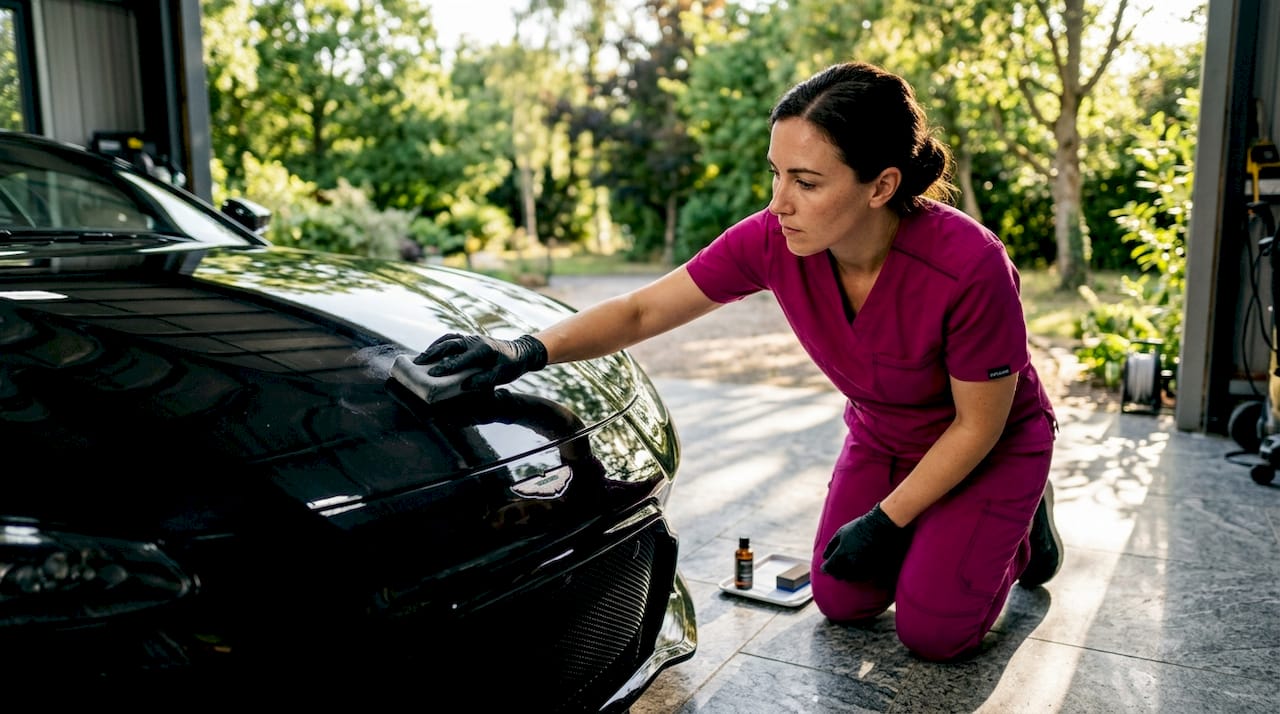
Surface preservation is defined as the application of a functional, breathable barrier that protects a vehicle’s exterior from environmental damage while maintaining its original finish and structural integrity. This is the standard industry term for what many car owners loosely call “paint protection,” and understanding the distinction matters. The role of surface preservation goes well beyond a simple wax coat. Advanced materials like polysiloxane-based coatings and organic-inorganic hybrid composites now deliver UV resistance, antimicrobial properties, and self-cleaning effects in a single application. Mannyceramicprotouch applies these technologies to luxury and high-value vehicles, treating every finish as a long-term asset rather than a cosmetic afterthought.
What is the role of surface preservation for vehicle finishes?
Surface preservation is the primary defense against the forces that degrade automotive paint over time. Environmental threats including UV radiation, moisture, pollutants, and mechanical abrasion significantly degrade vehicle paint without effective preservation. Each of these forces works differently, but all of them attack the clear coat and base coat layers that give your car its color and gloss.
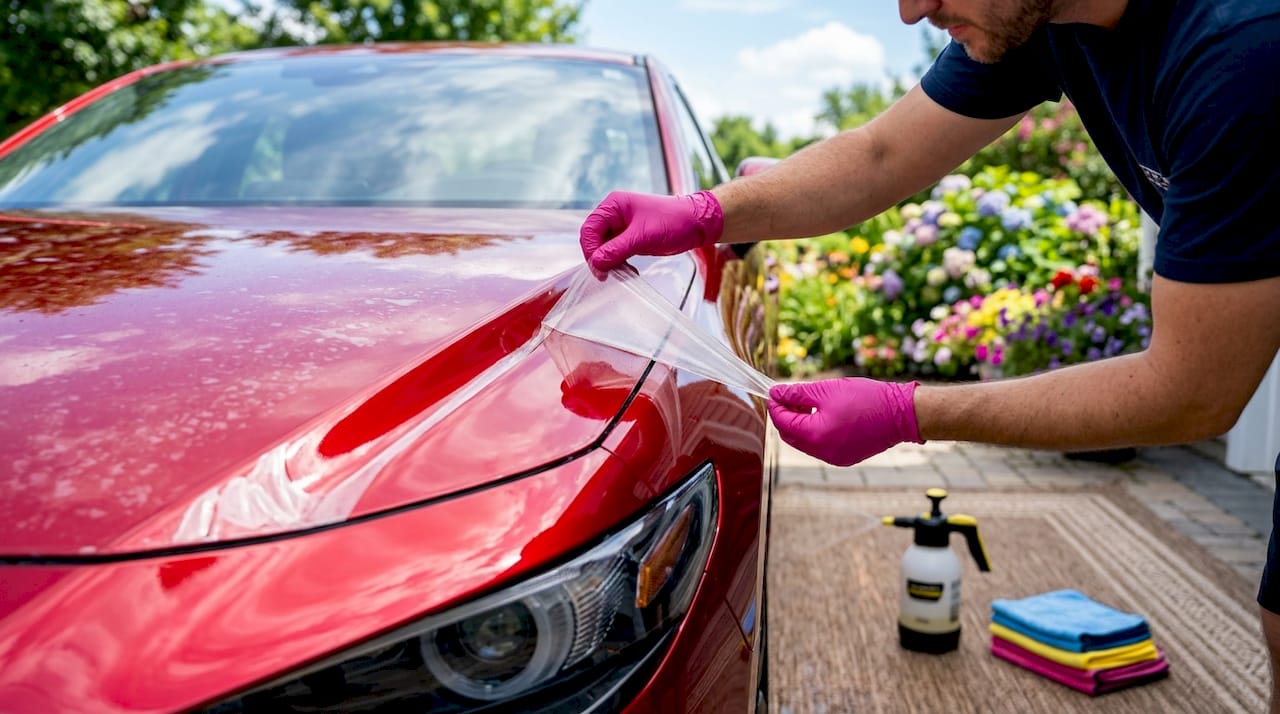
UV radiation breaks down the chemical bonds in automotive paint, causing oxidation and fading. Moisture creates conditions for corrosion, especially where paint has micro-scratches or chips. Airborne pollutants, including industrial fallout and road tar, bond to paint surfaces and etch into the clear coat if left untreated. Mechanical wear from washing, road debris, and daily contact removes paint material at a microscopic level over time.
Preservation coatings act as a sacrificial layer that absorbs these insults before they reach the paint. The coating takes the damage. The paint stays intact. That is the core function, and it explains why surface integrity maintenance is not optional for owners who care about long-term value.
What are the primary benefits of surface preservation for vehicles?
The benefits of surface preservation extend across appearance, durability, and financial value. Car owners who invest in proper preservation coatings see measurable differences in how their vehicles look and hold up over time.
The key benefits include:
- UV and oxidation resistance. Coatings block UV rays that cause paint to fade and oxidize, keeping color depth consistent for years.
- Hydrophobic protection. Water beads off treated surfaces, reducing the time moisture sits on the paint and limiting the risk of water spotting and corrosion.
- Pollutant resistance. A preserved surface repels bonded contaminants like industrial fallout, bird droppings, and tree sap, making them easier to remove before they etch the paint.
- Scratch and abrasion resistance. Harder coating layers absorb light mechanical contact that would otherwise mar the clear coat.
- Resale value retention. A vehicle with maintained, original paint commands a higher resale price than one with faded, oxidized, or repainted panels.
Surface protection extends value for luxury cars in ways that go beyond aesthetics. A well-preserved exterior signals to buyers that the vehicle was cared for throughout its life. That perception directly affects sale price and negotiating position.
Pro Tip: Apply a coating within the first 30 days of owning a new vehicle. The paint is at its cleanest and most receptive at that stage, and you lock in the factory finish before any environmental damage accumulates.
How do modern surface preservation technologies and coatings work?
Modern preservation coatings rely on materials science, not just chemistry. Organic-inorganic hybrid coatings with nanoparticle reinforcement exhibit multifunctional protection, including UV resistance and antimicrobial properties, while maintaining vapor permeability. Nanoparticles like SiO2 or ZnO enhance mechanical durability and push water contact angles up to 160°. A contact angle that high means water forms near-perfect spheres on the surface and rolls off, carrying dirt with it.
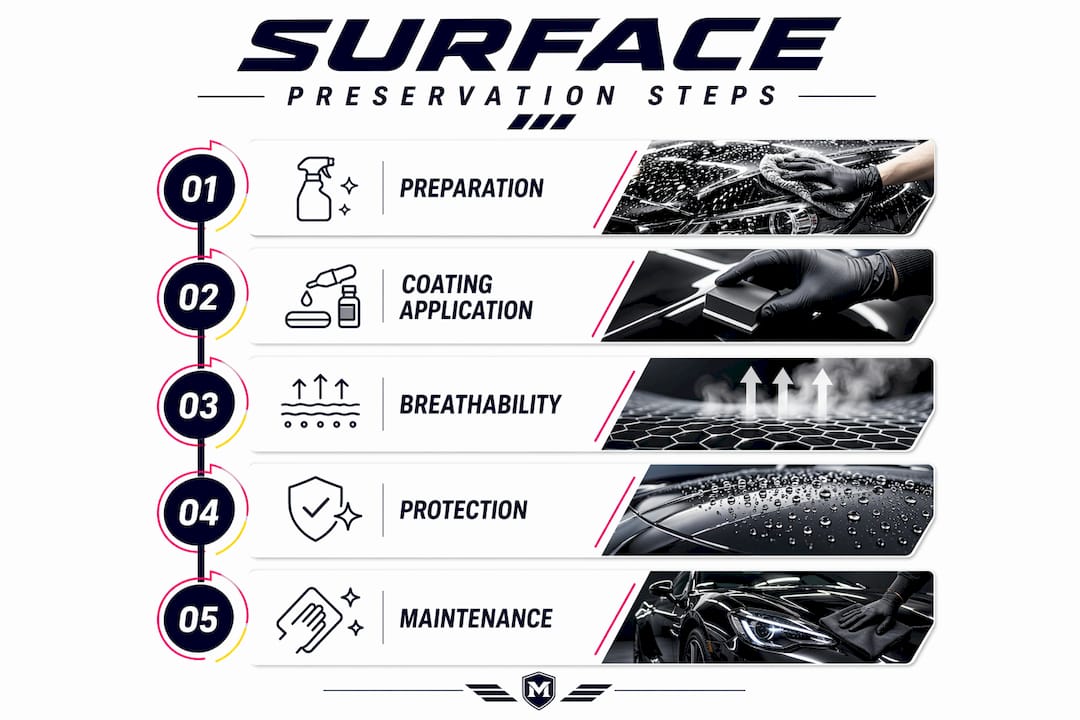
The breathability factor is where most car owners get surprised. Excessive sealing by coatings that lack breathability can trap moisture, leading to internal surface damage despite seeming glossy or sealed. A coating that looks perfect on the outside can be trapping humidity underneath, which accelerates corrosion from within. The best coatings balance protection with vapor permeability.
Polysiloxane-based formulations address this directly. A 15% polysiloxane-based surface protection achieves superior water repellency with a water absorption rate of 0.38% and minimal color deviation, while still allowing the substrate to breathe. That combination of low absorption and breathability is the standard that serious preservation coatings are measured against.
The shift toward biomimetic coatings reflects this understanding. Biomimetic coating design focuses on allowing surfaces to remain “alive” by letting them breathe, rather than creating impermeable shells. For automotive applications, this means the coating works with the paint system rather than sealing it off entirely.
| Coating Type | Key Property | Protective Benefit |
|---|---|---|
| Polysiloxane-based | Low water absorption (0.38%) | Breathable water repellency |
| SiO2 nanoparticle hybrid | Contact angle up to 160° | Self-cleaning hydrophobic surface |
| ZnO nanoparticle hybrid | UV absorption | Antimicrobial and fade resistance |
| Organic-inorganic hybrid | Vapor permeability | Moisture balance, no internal damage |
Pro Tip: Ask any coating provider about the vapor permeability rating of their product. If they cannot answer, the coating may trap moisture and cause more damage than it prevents.
What are common surface preservation techniques and best practices?
Proper technique separates a coating that lasts two years from one that lasts five or more. Long-term value depends on precise application protocols and matching coating chemistry to the substrate, not merely product choice. The coating itself is only part of the equation.
Follow these steps for effective preservation:
- Decontaminate the surface thoroughly. Wash, clay bar, and chemically decontaminate the paint before any coating goes on. Bonded contaminants trapped under a coating will continue to damage the paint from below.
- Correct paint defects first. Polish out swirl marks, light scratches, and oxidation before applying a protective layer. A coating locks in whatever condition the paint is in at application time.
- Match the coating to the substrate. No universal coating works for all substrates. Effectiveness depends on the substrate’s porosity and the coating’s breathability. Consult a professional to identify the right chemistry for your specific paint system.
- Apply in controlled conditions. Temperature, humidity, and dust levels all affect how a coating cures. Most professional-grade coatings require application between 60°F and 80°F with low humidity.
- Use multi-stage treatment protocols. Multi-stage surface treatments combining consolidation and surface sealing agents provide better long-term structural integrity than single applications. A base layer followed by a top coat delivers more durable protection than one thick application.
- Maintain the coating regularly. Use pH-neutral wash products and avoid abrasive tools. Reapply a maintenance spray every three to six months to refresh hydrophobic properties between full recoatings.
Surface preparation is the step most car owners skip or rush. Skipping it is the single most common reason coatings fail early.
Pro Tip: Never apply a coating over a freshly washed car without also decontaminating with an iron remover and clay bar. Water alone does not remove bonded industrial fallout, and that contamination will compromise adhesion.
What environmental threats do vehicle surfaces face?
Vehicle surfaces face a constant combination of chemical, physical, and biological threats. Understanding each one helps car owners prioritize which preservation strategy fits their environment.
- UV radiation breaks down clear coat polymers through photodegradation. Paint fades, loses gloss, and eventually chalks without UV-blocking protection.
- Moisture and humidity penetrate micro-defects in the paint system. Once inside, moisture accelerates oxidation and can cause paint to bubble or peel from the substrate.
- Airborne pollutants include industrial fallout, acid rain, and exhaust particulates. These deposits are chemically active and etch into clear coat within hours of contact in some climates.
- Bird droppings and tree sap are highly acidic or resinous. They bond to paint quickly and cause permanent etching if not removed within 24 hours.
- Mechanical abrasion from road debris, automatic car washes, and improper hand washing creates swirl marks and micro-scratches that scatter light and dull the finish.
Preservation coatings prevent oxidation, fading, corrosion, and pollutant buildup that cause surface damage. The coating intercepts each of these threats at the surface level before they reach the paint layers below. For car owners in coastal or high-pollution environments, this protection is not a luxury. It is the difference between a paint system that lasts the life of the vehicle and one that requires repainting within a decade.
Automotive surface technology in 2026 has made coatings more targeted to specific threat profiles. A car driven daily in South Florida faces different challenges than one garaged in a dry climate, and the coating strategy should reflect that difference.
What I have learned about surface preservation after years in the field
The biggest misconception I see from car owners is that any coating is better than no coating. That is not always true. Incompatible coatings lead to premature clouding, cracking, or surface degradation. I have seen vehicles come in with more damage under a poorly chosen coating than they would have had with no coating at all.
The second thing I have learned is that reversibility matters more than most people realize. Preservation materials should be removable without surface damage, allowing reapplication and adjustments over time. A coating that cannot be safely removed without damaging the paint locks you into a bad decision permanently. Always ask whether a coating can be corrected or replaced before you commit.
The shift I am most excited about is the move toward multifunctional coatings that do more than repel water. UV resistance, antimicrobial properties, and self-cleaning effects in a single layer represent a genuine advance in what preservation can accomplish. The science has caught up to what car owners actually need.
My honest advice: treat your paint system the way you treat any other high-value asset. Protect it early, maintain it consistently, and work with someone who understands the chemistry behind the product they are applying.
— Emmanuel
Professional surface preservation at Mannyceramicprotouch
Mannyceramicprotouch specializes in advanced surface preservation for luxury, exotic, and high-value vehicles using the latest coating technologies available in 2026.
Every vehicle receives a tailored preservation strategy built around its specific paint system, environment, and owner expectations. The studio offers Liquid PPF solutions and high-performance ceramic coatings applied through professional-grade protocols that deliver uniform, long-lasting protection. Professional coating applications deliver more durable results than DIY methods because they follow standardized surface prep and curing procedures that consumer products cannot replicate. For car owners ready to protect their investment, Mannyceramicprotouch offers paint protection services built for vehicles that deserve more than basic detailing.
Key Takeaways
Surface preservation is the most effective way to maintain a vehicle’s paint integrity, appearance, and resale value over the long term.
| Point | Details |
|---|---|
| Breathability is non-negotiable | Coatings must allow vapor permeability to prevent moisture from being trapped under the surface. |
| Preparation determines longevity | Decontamination and paint correction before coating application are the most critical steps for durability. |
| Match coating to substrate | No single coating works for every paint system; chemistry compatibility determines long-term performance. |
| Multi-stage protocols outperform single applications | Combining a base consolidation layer with a surface coat delivers stronger, longer-lasting protection. |
| Professional application matters | Standardized prep and curing protocols produce more uniform and durable results than DIY methods. |
FAQ
What is the role of surface preservation in car care?
Surface preservation protects a vehicle’s paint from UV radiation, moisture, pollutants, and mechanical wear by applying a functional coating that absorbs environmental damage before it reaches the paint layers. It maintains both appearance and structural integrity over time.
How long does a professional surface preservation coating last?
Longevity depends on the coating type, application quality, and maintenance routine. Professional-grade ceramic coatings typically last two to five years with proper care, while Liquid PPF formulations can extend protection further with periodic maintenance.
Can incompatible coatings damage my car’s paint?
Yes. Incompatible coatings cause premature clouding, cracking, or surface degradation. Matching the coating chemistry to your vehicle’s specific paint system is critical for avoiding damage rather than causing it.
Why does breathability matter in a surface coating?
A coating that lacks breathability traps moisture beneath the surface, which accelerates corrosion and internal paint damage even when the exterior looks intact. Breathable coatings balance protection with vapor permeability to prevent this outcome.
Is professional application worth it compared to DIY products?
Professional application delivers more uniform, long-lasting protective layers because it follows standardized surface preparation and curing protocols. DIY products can provide basic protection but rarely match the durability or consistency of professionally applied coatings.
Recommended
- The Role of Factory Finish Preservation for Car Owners – Many Ceramic Pro Touch
- Why Surface Protection Extends Value for Luxury Cars – Many Ceramic Pro Touch
- Why Surface Preparation Is Critical for Car Paint – Many Ceramic Pro Touch
- Understanding Automotive Surface Technology in 2026 – Many Ceramic Pro Touch