

TL;DR:
- Modern automotive finishes are multilayered systems involving e-coats, primers, basecoats, and clearcoats, each providing distinct protective functions. Advanced coatings like DLC and PVD are applied to powertrain components to reduce friction, wear, and corrosion beyond standard paint layers. Proper understanding, testing, and maintenance of these layers are essential for long-term vehicle appearance and value preservation.
Most vehicle owners assume their car’s finish is a single coat of paint. In reality, understanding automotive surface technology reveals a sophisticated system of engineered layers, each performing a distinct protective and functional role. From electrodeposition primers to diamond-like carbon coatings on powertrain components, modern automotive surfaces are precision-built to resist corrosion, ultraviolet degradation, mechanical wear, and chemical exposure simultaneously. Whether you are a detailing professional, a luxury vehicle owner, or an OEM engineer, knowing how these layers work together is the foundation for making smarter decisions about surface preservation and long-term vehicle value.
Table of Contents
- Key Takeaways
- Understanding automotive surface technology: the layered system
- Advanced coatings for powertrain and trim components
- How automotive coatings are tested and validated
- Practical surface durability for consumers and professionals
- My perspective on what most people get wrong
- Protect your vehicle’s finish with Mannyceramicprotouch
- FAQ
Key Takeaways
| Point | Details |
|---|---|
| Automotive finishes are multilayered | E-coat, primer, basecoat, and clearcoat each perform specific protective and visual roles. |
| Clearcoat condition determines longevity | Damage to the clearcoat accelerates oxidation and paint degradation across the entire finish stack. |
| Vacuum deposition coatings serve specialized parts | DLC and PVD coatings reduce friction and wear on powertrain and trim components beyond what paint systems cover. |
| Lab testing validates coating performance | Salt spray, adhesion, and hardness testing quantify coating durability against standardized OEM benchmarks. |
| Consumer-grade protections extend factory finishes | Ceramic coatings and liquid paint protection film add meaningful durability on top of the factory paint system. |
Understanding automotive surface technology: the layered system
The term “automotive paint” undersells what actually happens in a modern manufacturing facility. A vehicle body goes through multiple chemically and mechanically distinct stages before a single visible color is applied. Each layer has a purpose, and removing or compromising any one of them affects the entire system’s performance.
Pre-treatment and e-coat
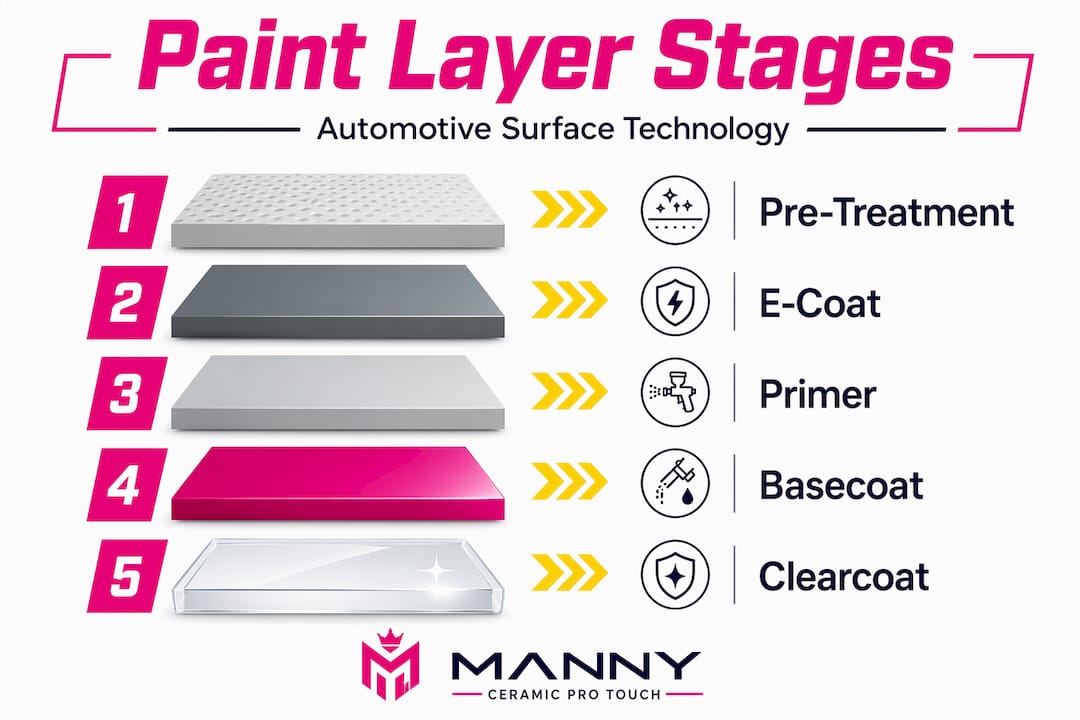
Before any coating is applied, the bare metal body is cleaned, phosphated, and rinsed in a multi-stage pretreatment process. This prepares the substrate for adhesion and begins corrosion inhibition at the metal surface level. Following pretreatment, the body goes through electrocoating, commonly called e-coat. Cathodic electrodeposition immerses the entire body in a charged bath, which deposits a thin, uniform film across every surface, including recessed areas that spray methods cannot reach consistently. This makes e-coat the most reliable method for corrosion groundwork across complex body geometries.
Pro Tip: The quality of the e-coat layer depends heavily on upstream bath chemistry. Upstream pretreatment quality and ion purity in the e-coat bath directly determine film consistency and long-term corrosion resistance, regardless of what topcoats follow.
Primer, basecoat, and clearcoat
After e-coat, a primer layer is applied to improve adhesion between the e-coat and basecoat, while also adding chip resistance. The basecoat carries all visual identity — color, metallic flake, pearl effects — but provides minimal protection on its own. The final and most protective layer is the clearcoat. According to the automotive paint system framework, the clearcoat functions as a transparent UV and chemical barrier, protecting the basecoat’s optical qualities from environmental attack.
- E-coat: uniform corrosion protection via electrodeposition, typically 15 to 25 microns thick
- Primer: adhesion promoter and chip resistance filler, filling minor surface imperfections
- Basecoat: color and visual effect layer with minimal inherent UV protection
- Clearcoat: the primary long-term barrier against UV radiation, acid rain, bird droppings, and abrasion
Manufacturing plants use automated spray systems with tight film thickness controls to maintain consistency across every unit. Variations in any layer thickness affect the final appearance and durability, which is why process control at the factory level is as important as the chemistry of the coatings themselves.
Advanced coatings for powertrain and trim components
The multilayer paint system described above applies to body panels. But a vehicle contains hundreds of components that face different exposure conditions, mechanical loads, and temperature ranges. These parts require specialized surface treatments that go well beyond conventional paint.
Vacuum deposition technologies, including physical vapor deposition (PVD) and plasma-assisted chemical vapor deposition (PACVD), allow manufacturers to apply ultra-thin, high-performance coatings with precisely controlled properties. Ionbond’s Tribobond™ DLC coatings use processes like magnetron sputtering and PACVD to deposit diamond-like carbon (DLC) films on components such as fuel injectors, camshafts, piston pins, and decorative trim pieces. The result is a surface with significantly lower friction and far higher wear resistance than the base material alone.
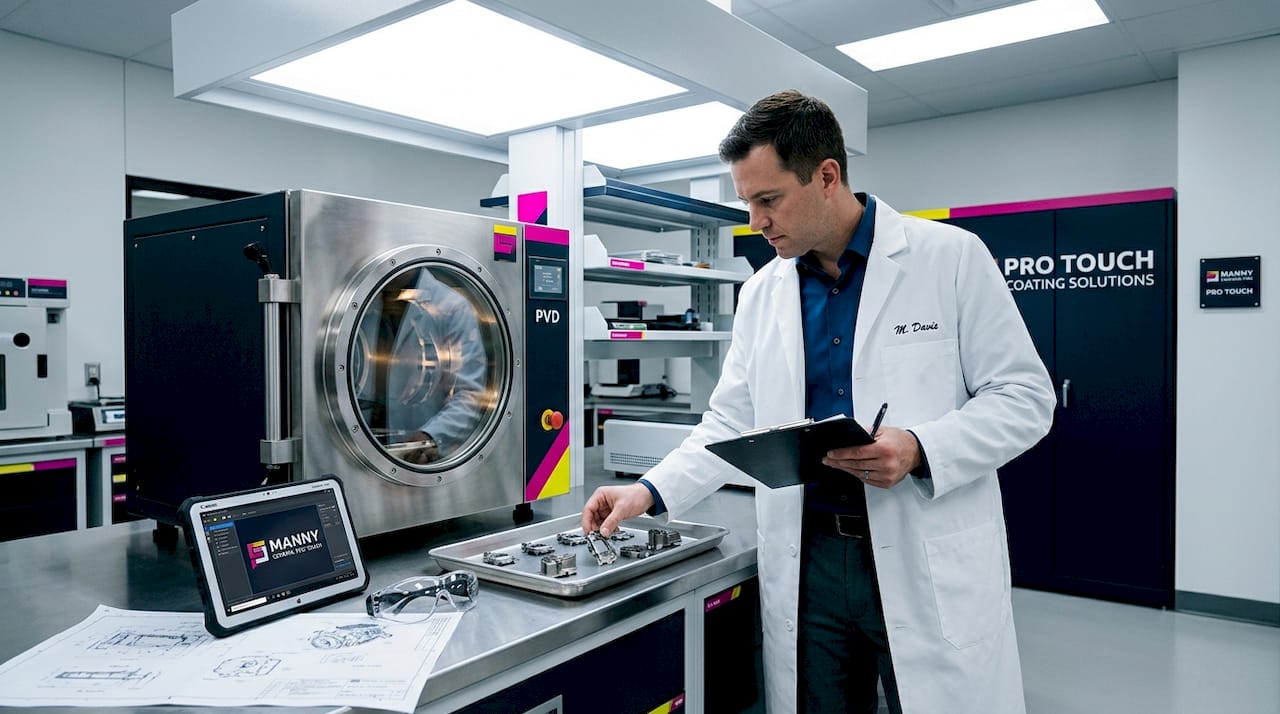
The selection of a vacuum deposition coating is not one-size-fits-all. Choosing the right coating depends on the specific component’s base material, surface roughness, operating temperature, and mechanical load demands. A coating optimized for a heavily loaded camshaft journal will differ substantially from one applied to an interior trim bezel. This is where understanding automotive surface technology at the component level separates basic knowledge from professional-grade application.
Key benefits of DLC and PVD coatings in automotive applications include:
- Reduced friction coefficients on moving powertrain parts, contributing to fuel efficiency gains
- Wear resistance that extends component service life in high-load environments
- Corrosion protection on both functional and decorative components exposed to moisture or road chemicals
- Aesthetic enhancement on exterior trim, providing consistent chrome-like or dark finishes without electroplating’s environmental drawbacks
Automotive surface durability on powertrain parts is increasingly tied to these advanced surface technologies as manufacturers push for longer service intervals and tighter efficiency targets.
How automotive coatings are tested and validated
A coating’s claimed properties are only credible when backed by standardized testing. OEMs and tier-1 suppliers use a defined set of laboratory methods to validate every coating before it reaches production or hits a dealer’s lot.
Corrosion resistance testing
Salt spray testing is the most widely recognized method for evaluating corrosion resistance on coated surfaces. Both ISO 9227 and ASTM B117 use a 5% sodium chloride solution at 35°C, with test durations ranging from 96 hours to over 1,000 hours depending on OEM specifications. Cyclic corrosion testing combines salt spray, humidity, and dry phases to simulate real-world seasonal exposure more accurately than continuous salt spray alone.
Key instruments in surface quality control
| Instrument | What it measures | Why it matters |
|---|---|---|
| Coating thickness gauge | Film thickness in microns | Confirms layer depth matches specification |
| Adhesion tester | Cross-cut or pull-off adhesion strength | Identifies delamination risk |
| Pencil/Martens hardness tester | Coating hardness | Predicts scratch and mar resistance |
| Gloss meter | Surface reflectance at defined angles | Quantifies appearance consistency |
| Environmental simulation chamber | Temperature and humidity cycling | Simulates long-term real-world exposure |
Laboratory instruments for surface quality control quantify properties that directly influence warranty outcomes and brand reputation. Visual inspection alone cannot detect sub-specification film thickness or marginal adhesion strength. These instruments make defects measurable before vehicles reach consumers.
Pro Tip: Salt spray test results only carry meaning when compared against the OEM’s specific acceptance criteria. A panel passing 500 hours does not automatically translate to 5 years of service life. Test duration and real-world durability are related, but they are not equivalent.
Practical surface durability for consumers and professionals
Technical knowledge about coating systems has direct, practical implications for how you maintain and protect your vehicle. Here is how the factory paint system and aftermarket surface treatments work together to preserve value.
-
Prioritize clearcoat preservation above everything else. The clearcoat is your vehicle’s primary defense. Clearcoat damage accelerates oxidation and color fading across the entire paint stack. Polishing compounds, improper washing, and prolonged UV exposure are the most common clearcoat threats. Protect it first.
-
Understand the difference between shine and protection. Spray detailers and gloss boosters improve appearance temporarily but add no meaningful protection layer. If you want to know how car paint fades, the answer is almost always clearcoat degradation, not loss of color in the basecoat.
-
Match your protection strategy to the vehicle’s environment. A vehicle driven daily in a coastal, high-humidity environment with road salt exposure needs different protection priorities than a weekend car stored in a climate-controlled garage. For high-exposure vehicles, choosing surface protection based on environment is more important than simply picking the highest-priced product.
-
Consider ceramic coatings as a clearcoat supplement, not a replacement. Ceramic coatings bond to the clearcoat and add a hydrophobic, chemically resistant layer on top. They do not repair clearcoat damage but they do slow additional degradation meaningfully when applied to a well-prepared surface.
-
Use liquid paint protection film (Liquid PPF) for impact and abrasion zones. Liquid PPF bonds directly to the paint surface and provides a sacrificial layer against rock chips, light scratches, and environmental contaminants. For luxury and high-value vehicles, it delivers protection in areas where film-based PPF may not conform easily.
-
Prepare surfaces correctly before any coating application. Surface prep directly determines how long any coating lasts. Contamination, micro-scratches, and surface oils all reduce adhesion. The steps to prep your car before coating application matter as much as the coating product itself.
The e-coat combined with UV-stable topcoats represents the best baseline for exterior corrosion and UV protection at the factory level. What you add to that baseline determines whether the vehicle looks and performs like new in three years or starts showing wear in eighteen months.
My perspective on what most people get wrong
I have worked closely with luxury and exotic vehicles long enough to spot the patterns in how surface technology is misunderstood, even by people who care deeply about their cars.
The most common mistake I see is treating salt spray test hours as a direct translation of how long a coating will last in real life. Salt spray testing is a comparative engineering metric, not a durability promise. Two coatings tested for 500 hours under the same protocol can perform very differently on a vehicle driven through a Miami summer versus a Minnesota winter.
The second thing I have learned is that factory paint quality is more about process discipline than coating chemistry. The upstream pretreatment quality in an e-coat line determines the foundation of everything above it. A manufacturer who maintains tight bath chemistry and pretreatment controls produces a more durable finish than one who uses technically superior chemistry but runs loose process controls.
For consumers, my honest position is this: the most cost-effective thing you can do for your vehicle’s long-term appearance is protect the clearcoat aggressively and early. Ceramic coatings and liquid PPF are not luxury indulgences for exotic car owners. They are practical tools for anyone who wants the factory finish to remain intact for the full ownership period. Chasing temporary shine without protecting the clearcoat underneath is the most expensive mistake a car owner can make over a five-year window.
— Emmanuel
Protect your vehicle’s finish with Mannyceramicprotouch

At Mannyceramicprotouch, every vehicle receives a surface assessment before any protection is applied. The goal is not to sell a product. It is to identify the right protection strategy for your specific vehicle, usage pattern, and environment. For clients driving luxury and high-value vehicles in South Florida’s harsh UV and humidity conditions, that typically means a combination of liquid PPF solutions and a high-performance ceramic coating applied over a fully decontaminated and corrected surface. If you want to understand the real difference between technologies, the liquid PPF vs. traditional PPF comparison is a useful place to start. Mannyceramicprotouch specializes in paint protection services for clients who expect precision and long-term results, not just a clean car.
FAQ
What are the layers in an automotive paint system?
A standard automotive paint system includes four layers: e-coat for corrosion protection, primer for adhesion and chip resistance, basecoat for color, and clearcoat as the primary UV and chemical barrier.
How does e-coating work on car bodies?
E-coating submerges the vehicle body in an electrically charged bath, depositing a thin, uniform film across all surfaces including recessed areas that spray application cannot reach consistently.
What do salt spray test hours actually mean?
Salt spray test hours are a comparative metric used to evaluate coating performance against OEM acceptance criteria. They indicate relative durability under controlled conditions but do not directly translate to years of real-world service life.
What is the difference between ceramic coating and liquid PPF?
Ceramic coatings bond to the clearcoat and add a hydrophobic, chemically resistant layer on top. Liquid PPF provides a sacrificial protective film that absorbs rock chip impacts and surface abrasion, particularly useful on high-exposure areas.
Why is clearcoat condition so important for automotive surfaces?
The clearcoat is the primary barrier against UV radiation, acid rain, and oxidation. Once it degrades, the basecoat beneath becomes vulnerable to fading and deterioration, accelerating the overall decline of the vehicle’s appearance and value.