

TL;DR:
- Protecting high-value vehicles in winter requires applying protective coatings, maintaining tire pressure, and cleaning the undercarriage regularly.
- Owners should also prepare emergency kits, warm up engines properly, and store their vehicles in climate-controlled garages to prevent damage.
Why winter car care essentials matter for high-value vehicles
Protecting a luxury or exotic vehicle through winter requires more than a quick wash and fresh wiper blades. The combination of road salt, freezing temperatures, and moisture creates conditions that degrade paint, corrode structural components, and strain mechanical systems in ways that accumulate quietly and cost significantly.
The core winter car care essentials for high-end vehicles are:
- Premium exterior protection: Ceramic coatings and Liquid Paint Protection Film (Liquid PPF) form the first line of defense against road salt, chemical de-icers, and environmental contamination.
- Tire pressure management: Cold weather drops tire pressure roughly 1 PSI per 10°F, affecting handling and traction on high-performance vehicles.
- Visibility systems: Winter-rated windshield washer fluid and fresh wiper blades keep sightlines clear in adverse conditions.
- Undercarriage cleaning: Regular rinsing removes corrosive salt and de-icer buildup from exposed structural and mechanical components.
- Battery and engine care: Cold temperatures reduce battery capacity and demand careful warm-up procedures for high-performance engines.
- Emergency preparedness: A well-stocked winter kit, aligned with NHTSA winter driving guidance, covers roadside emergencies specific to luxury vehicle owners.
Key stat: Tire pressure decreases by approximately 1 PSI for every 10°F drop in temperature, making monthly pressure checks a non-negotiable habit through winter months.
Table of Contents
- 1. Apply premium protective coatings before freezing weather arrives
- 2. Maintain tire pressure and visibility systems through the cold months
- 3. Protect the undercarriage from road salt and chemical de-icers
- 4. Build a winter emergency kit suited to a luxury vehicle
- 5. Warm up and shut down high-performance engines correctly
- 6. Use climate-controlled indoor storage when possible
- 7. Keep the fuel system protected from condensation and freezing
- Mannyceramicprotouch delivers precision winter protection for luxury vehicles
- Key Takeaways
1. Apply premium protective coatings before freezing weather arrives
Timing is everything with ceramic coatings and Liquid PPF. Cold ambient temperatures prevent proper chemical bonding and curing, so both products must be applied before temperatures drop near freezing. A coating applied in cold conditions will not achieve its designed hardness or hydrophobic performance, leaving the finish underprotected precisely when protection matters most.
Once a coating is properly cured, maintaining it through winter requires a multi-layered approach. Touchless or high-lubricity washes prevent abrasive road salt and grit from etching the surface. pH-neutral automotive shampoos preserve the coating’s hydrophobic properties, whereas high-pH cleaners degrade them. A single wax layer is insufficient for a luxury vehicle facing months of salt exposure. Ceramic coatings and Liquid PPF, maintained correctly, form a durable barrier against corrosive agents that would otherwise reach the paint directly.
- Apply ceramic coatings and Liquid PPF before the first hard freeze.
- Use pH-neutral shampoos exclusively to protect hydrophobic properties.
- Perform touchless pre-rinses to remove salt before any contact wash.
- Avoid harsh detergents that strip protective layers.
Pro Tip: Start wheels and the undercarriage first during every winter wash. Brake dust and road salt from those areas will contaminate freshly rinsed paint if the sequence is reversed.
Learn more about ceramic coating benefits and how they hold up under winter stress.
2. Maintain tire pressure and visibility systems through the cold months
Cold weather reduces tire pressure by approximately 1 PSI for every 10°F temperature drop. For most luxury vehicles, the target tire pressure typically ranges between 30-35 PSI; the exact specification is in the owner’s manual or on the driver’s door placard. Underinflated tires on a high-performance vehicle increase braking distance, reduce lateral grip, and cause uneven tread wear that shortens tire life.
On tire selection, dedicated winter tires use rubber compounds optimized for cold weather and deliver measurably better traction on snow and ice than all-season alternatives, though they wear faster in warmer conditions. Premium all-season tires rated for cold weather are a practical middle ground for exotic vehicles driven sparingly in winter.
Visibility preparation is equally direct:
- Replace wiper blades before the first snowfall; streaking blades are a safety hazard.
- Fill the washer fluid reservoir with a winter blend containing antifreeze agents rated for subzero temperatures.
- Check tire pressure monthly and after any significant temperature swing.
- Consult the owner’s manual for the manufacturer’s exact PSI specification.
3. Protect the undercarriage from road salt and chemical de-icers
Road salt and chemical de-icers are highly corrosive to metal frames, brake lines, suspension components, and exhaust systems. Luxury and exotic vehicles often feature exposed carbon fiber, aluminum, and precision-machined components that are particularly vulnerable. Regular undercarriage rinsing prevents corrosive agents from accumulating and accelerating structural degradation.
Best practices for undercarriage care:
- Rinse the undercarriage after every significant snow event or salted road exposure.
- Pre-rinse touchlessly before any contact wash to avoid dragging abrasive grit across surfaces.
- Apply a professional rust inhibitor or undercoating before winter begins.
- Inspect exposed mechanical components periodically for early signs of corrosion.
Long-term finish and structural preservation depend on this step as much as any coating applied to the paint. The luxury car maintenance checklist from Mannyceramicprotouch covers the full sequence.
4. Build a winter emergency kit suited to a luxury vehicle
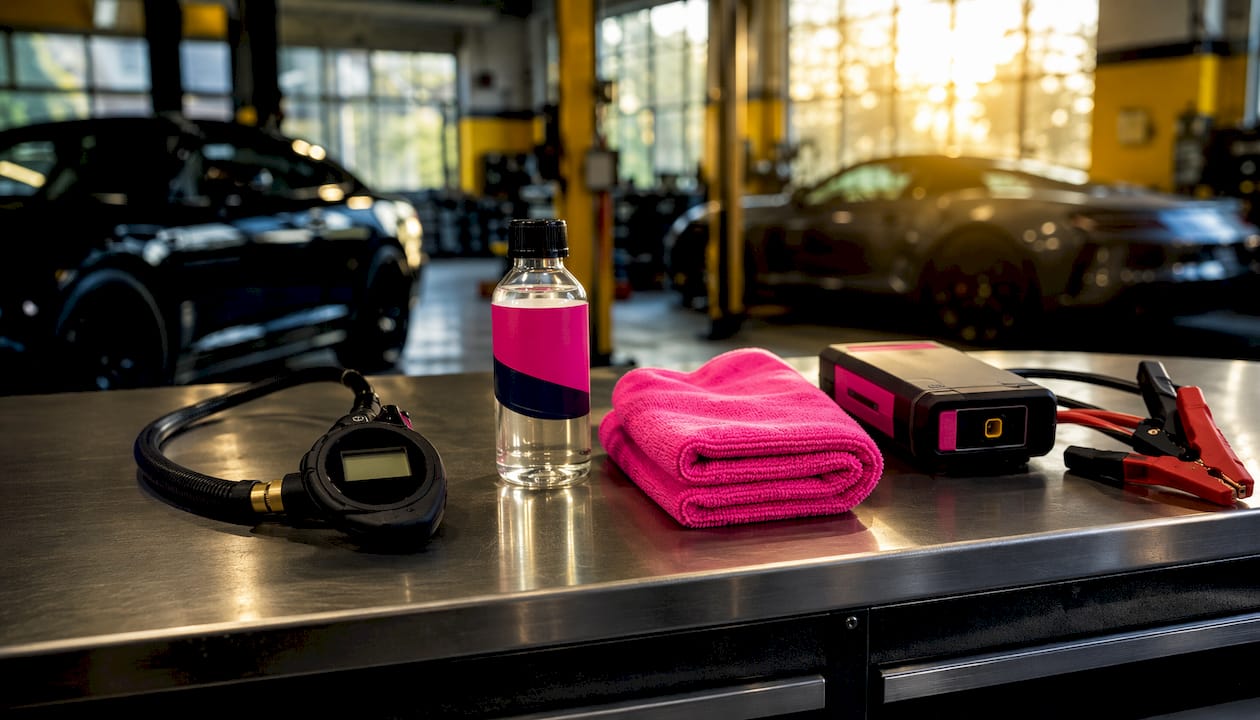
NHTSA recommends carrying a roadside emergency kit with a flashlight, ice scraper, and winter-rated windshield washer fluid. For luxury vehicle owners, that baseline warrants expansion.
A well-prepared kit includes:
- Ice scraper and compact folding shovel
- Jumper cables or a portable jump-starter
- Blanket, gloves, and bottled water
- Flashlight with spare batteries
- Sand or traction mats for slick surfaces
- First-aid kit and reflective triangles
- Battery maintainer or portable charger
A portable jump-starter is particularly practical for exotic vehicles, which may sit for extended periods and are often garaged in locations where another vehicle cannot easily assist.
5. Warm up and shut down high-performance engines correctly
Modern high-performance engines do not require extended idling warm-ups, but they do benefit from a brief, gentle warm-up period before demanding throttle inputs. Driving at low RPMs for the first few minutes allows oil to circulate fully and reach operating temperature before the engine faces stress. Synthetic oils, which most exotic vehicles specify, flow better in cold conditions than conventional oils but still need time to reach full viscosity.
On shutdown, avoid switching off a turbocharged engine immediately after hard driving. Turbochargers spin at extreme speeds and rely on oil flow for cooling. A brief idle period after spirited driving prevents heat soak in the turbo bearings, extending their service life.
6. Use climate-controlled indoor storage when possible
A climate-controlled garage is the single most effective passive protection for a luxury or exotic vehicle in winter. Stable temperatures prevent the repeated freeze-thaw cycles that stress seals, rubber components, and paint. Humidity control reduces the condensation that accelerates corrosion on exposed metal surfaces.
For vehicles stored for extended periods, a breathable car cover adds a secondary layer of protection against dust and minor abrasion. Avoid non-breathable covers in enclosed spaces, as trapped moisture accelerates the very corrosion they are meant to prevent. A battery maintainer connected during storage keeps the electrical system healthy without overcharging.
7. Keep the fuel system protected from condensation and freezing
Keeping the fuel tank at least half full through winter is a straightforward habit with a real mechanical benefit. A fuller tank reduces the air space where condensation forms, limiting the moisture that can enter the fuel system and potentially freeze in fuel lines. For exotic vehicles that may sit unused for weeks, a fuel stabilizer prevents degradation of premium-grade fuel and protects injectors from varnish buildup.
Fuel system care also extends to checking that the fuel cap seals properly, since a compromised seal allows moisture ingress. If a vehicle is stored for the season, running the engine periodically keeps seals lubricated and fuel circulating through the system.
Mannyceramicprotouch delivers precision winter protection for luxury vehicles
Owners of luxury and exotic vehicles need more than generic detailing. Mannyceramicprotouch specializes exclusively in advanced surface preservation for high-value vehicles, delivering Liquid PPF and high-performance ceramic coatings engineered to withstand the specific demands of winter: road salt, chemical de-icers, freeze-thaw stress, and abrasive grit. Every vehicle receives a tailored protection strategy, not a volume-based service. The process is quality-first, detail-driven, and built for clients who expect long-term results. For owners who want their vehicle’s finish protected before winter conditions arrive, professional paint protection services from Mannyceramicprotouch are the direct next step. Contact the studio to schedule a pre-winter protection assessment.
Key Takeaways
Premium winter vehicle maintenance for luxury and exotic cars requires layered exterior protection, consistent tire and visibility checks, undercarriage cleaning after every salt exposure, and climate-controlled storage to preserve both finish and mechanical integrity.
| Point | Details |
|---|---|
| Coat before the freeze | Apply ceramic coatings and Liquid PPF before temperatures drop near freezing for proper curing and bonding. |
| Monitor tire pressure monthly | Cold weather causes tire pressure to decrease by approximately 1 PSI for every 10°F drop; follow the owner’s manual for the recommended pressure. |
| Rinse the undercarriage regularly | Remove road salt and de-icer buildup after every significant snow or salt exposure to prevent corrosion. |
| Store in climate-controlled conditions | Stable temperature and humidity prevent freeze-thaw damage to seals, paint, and exposed metal components. |
| Mannyceramicprotouch for pre-winter protection | Tailored Liquid PPF and ceramic coating services designed for luxury and exotic vehicles before winter arrives. |