

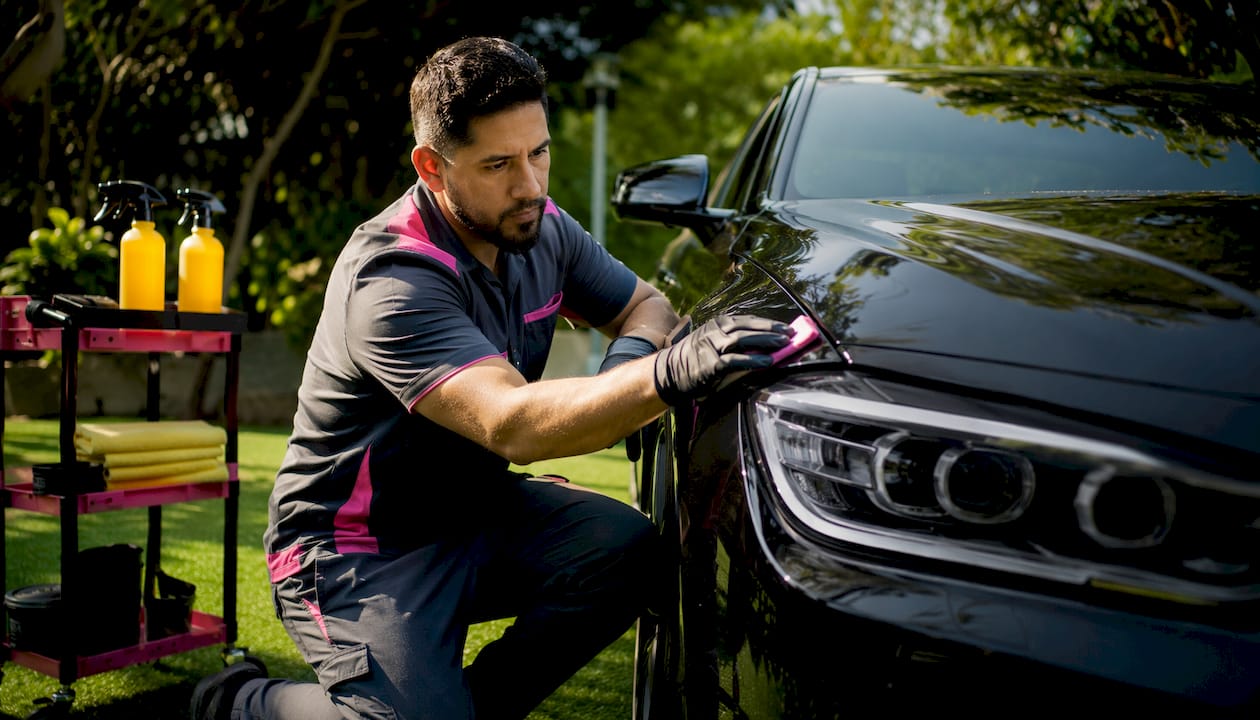
The clay bar process is the single most effective mechanical decontamination method available for luxury vehicle paint. It physically removes bonded contaminants that washing cannot touch, including industrial fallout, brake dust, and tree sap, leaving a surface genuinely clean at a molecular level. For owners of high-value vehicles, skipping this step before applying wax, sealant, or ceramic coating means sealing contamination directly under your protection layer, which cuts both adhesion and longevity.
Run your hand across your car’s paint after a thorough wash. If it feels rough or gritty rather than glass-smooth, that texture is bonded surface contamination sitting in your clear coat. A clay bar for cars is a synthetic polymer compound engineered to shear those particles away from the paint surface as it glides across with lubrication. The result is a foundation clean enough for protective coatings to bond directly to the clear coat rather than to a layer of embedded grime.
Key contaminants the clay bar process removes from luxury vehicle paint:
- Industrial fallout and rail dust that chemically bond during air exposure
- Brake dust that embeds at high speed into the clear coat
- Tree sap and road tar bonded through heat and UV exposure
- Paint overspray adhering in particles invisible to the naked eye
- Environmental pollution particles that accumulate on paint surfaces
The outcomes are equally direct: improved ceramic coating adhesion, enhanced gloss depth, and a finish that holds protective products longer.
Table of Contents
- How to safely perform the clay bar process on luxury vehicles
- Choosing the right clay bar grade and avoiding costly mistakes
- Time investment and aftercare for lasting results
- Mannyceramicprotouch delivers expert-level paint decontamination for luxury vehicles
- Key Takeaways
How to safely perform the clay bar process on luxury vehicles
Proper execution separates a safe, effective treatment from one that leaves marring on a $150,000 finish. Follow each stage without shortcuts.
Preparation: wash and dry first
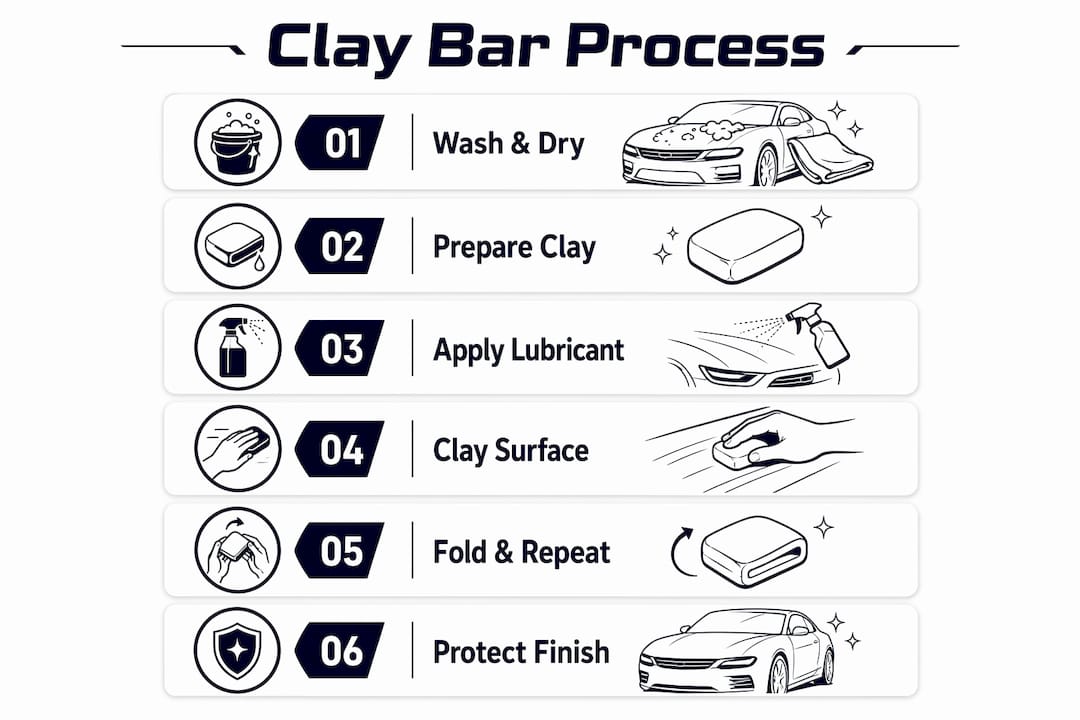
Start with a thorough two-bucket wash using a dedicated car-wash shampoo to remove all loose dirt and debris. Any grit left on the surface during claying will drag across the paint and scratch it. Dry the vehicle completely with clean microfiber towels, using the drying techniques that prevent swirl marks on premium finishes. Work in shade or a garage. Direct sun causes clay lubricant to flash dry mid-pass, which is exactly the condition that causes marring.
Preparing the clay bar
Break the clay bar into smaller, manageable pieces. Knead and flatten each piece into a thin, palm-sized pad before use. This maximizes surface contact and prevents tearing. A properly flattened bar distributes pressure evenly across the paint rather than concentrating it on a small area.
Lubrication: the most critical variable
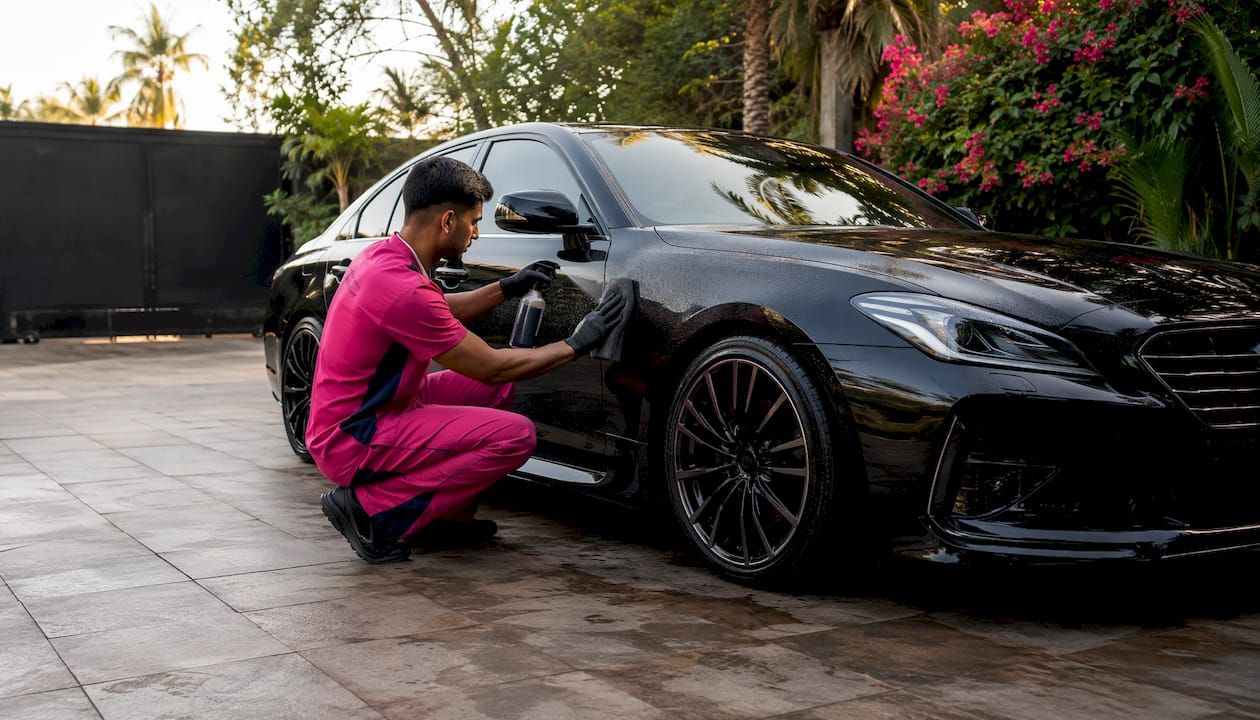
Lubrication prevents scratching by creating a slick barrier that lets the clay glide and also floats contaminant particles for easier extraction. Spray lubricant generously on both the paint section and the clay bar surface before any contact. Never let the clay touch dry paint. Without sufficient lubricant, even a light pass can leave scratches that require polishing to correct.
Motion and pressure
Use light, straight, overlapping passes only. Circular motions concentrate friction and increase marring risk on delicate luxury clear coats. The clay’s tackiness does the work; pressing down hard adds risk without improving contamination removal. You will feel the bar tugging initially as it pulls particles from the surface, then gliding freely once the section is clean.
Folding and reusing the clay
After each small section, inspect the clay surface. Fold and knead it to expose a clean face before moving to the next area. Using a dirty clay surface is equivalent to dragging the contamination you just removed back across the paint.
Pro Tip: If you drop the clay bar on the ground, discard it immediately. It picks up abrasive grit on contact that will scratch your clear coat on the very next pass, regardless of rinsing.
Variations by paint type
- Metallic and pearlescent finishes: Use fine-grade clay and extra lubrication. These finishes have complex clear coat layers that show marring more readily.
- Matte finishes: Clay barring matte paint requires a dedicated matte-safe lubricant and extremely light pressure. Standard clay lubricants can alter the surface texture of matte clear coats.
- Single-stage paint (found on some classic or exotic vehicles): Treat with fine-grade clay only, as these paints have no separate clear coat layer and are more vulnerable to abrasion.
Essential supplies checklist:
- Fine or medium-grade clay bar matched to contamination level
- Dedicated clay lubricant or quick detailer spray
- Clean microfiber towels (separate from wash towels)
- Two-bucket wash setup for pre-cleaning
- Shade or enclosed workspace
Choosing the right clay bar grade and avoiding costly mistakes
Matching grade to contamination level
Matching clay bar grade to contamination severity is one of the most consequential decisions in the process. Using an overly aggressive grade on clean or lightly contaminated paint causes unnecessary marring. Using a fine-grade bar on heavy industrial fallout leaves contamination behind and wastes time.
- Fine grade: Suited for newer vehicles, recently maintained paint, or light surface roughness. The correct choice for most luxury vehicles maintained on a regular schedule.
- Medium grade: Appropriate for vehicles not detailed in over a year or exposed to harsher environmental conditions. Covers most everyday drivers.
- Heavy duty: Reserved for severely contaminated vehicles, surfaces with extreme industrial fallout, or paint that has never been clay barred. Use sparingly on luxury clear coats.
For luxury vehicles, fine-grade clay is the default starting point. Move to medium only when the plastic bag test confirms significant roughness after a fine-grade pass.
Common mistakes that damage luxury finishes
The following errors account for the majority of clay bar damage on high-value vehicles:
- Insufficient lubrication: The single most common cause of clay bar marring. If the bar feels sticky or resistant, add more lubricant immediately.
- Circular motions: Concentrate friction and are proven to increase marring risk on delicate clear coats.
- Excessive pressure: The clay’s tackiness lifts contamination without force. Pressing hard only increases abrasion.
- Reusing contaminated clay: A soiled bar that cannot be folded to a clean face redistributes embedded grit back onto the paint in concentrated form.
- Skipping the pre-wash: Applying clay to a dirty surface drags loose debris across the clear coat, turning decontamination into the source of new scratches.
- Reusing a dropped bar: As noted above, ground grit embeds instantly and causes deep scratches.
Clay bar treatment physically shears bonded contaminants rather than dissolving them, and each pass removes a microscopic amount of clear coat. Overuse on already-thin clear coats compounds that wear over time. For light iron contamination, combining a chemical iron fallout remover with selective clay barring reduces mechanical abrasion while delivering thorough decontamination. This two-step approach is the professional standard for luxury vehicles with thin factory clear coats.
Time investment and aftercare for lasting results
How long does the clay bar process take?
The clay bar process takes 30–60 minutes for a typical vehicle. Luxury vehicles with larger panels, complex body lines, or heavier contamination can push toward the upper end of that range. Patience matters here. Rushing through sections with insufficient lubrication or skipping the fold-and-inspect step is where damage occurs.
The plastic bag test
Before and after claying, run your hand inside a thin plastic sandwich bag across the paint surface. The plastic amplifies texture, making even minor roughness detectable. If an area still feels gritty after claying, re-lubricate and make another pass. This test costs nothing and takes under a minute per panel.
Applying protective layers after claying
Clay barring removes existing wax, sealant, and light ceramic spray coatings along with the contamination. Reapplying protection after every clay session is not optional. A freshly clayed surface is the ideal substrate for wax, sealant, or ceramic coating because the product bonds directly to clean clear coat. Review the checklist before ceramic application to confirm your surface is ready before any coating goes on.
How often should you clay bar a luxury vehicle?
Most luxury vehicles benefit from regular clay bar treatment, with frequency depending on environmental exposure and contamination levels, typically before spring and fall when seasonal contamination peaks. Vehicles parked near industrial areas, highways, or construction sites accumulate fallout faster and may need more frequent decontamination. The plastic bag test is the most reliable indicator: if the paint feels rough after a thorough wash, it is time to clay.
Aftercare and maintenance best practices:
- Apply wax, paint sealant, or ceramic coating immediately after claying
- Use the plastic bag test every few months to monitor contamination buildup
- Maintain regular washing to slow recontamination between clay sessions
- Store clay bars in their original container with a small amount of lubricant to prevent drying
- Never reuse clay that has been dropped or shows embedded dark grit that cannot be folded away
Mannyceramicprotouch delivers expert-level paint decontamination for luxury vehicles
Mannyceramicprotouch is the premium choice for luxury vehicle owners who want the clay bar process and full paint decontamination handled by specialists who work exclusively with high-value finishes. The difference between a DIY clay session and a professionally executed decontamination is the level of surface inspection, grade selection, and post-clay protection applied. Mannyceramicprotouch’s quality-first process treats every vehicle with a tailored strategy, not a volume-based approach, ensuring the clear coat is properly prepared before any Liquid PPF or ceramic coating is applied.
For owners who want their vehicle’s finish preserved at a showroom level over the long term, the next step is straightforward. Review Mannyceramicprotouch’s paint protection services or explore the full range of ceramic coating packages to find the right protection tier for your vehicle.
Key Takeaways
The clay bar process is the foundational decontamination step that every luxury vehicle needs before any protective coating can bond properly and perform as designed.
| Point | Details |
|---|---|
| Decontamination before protection | Clay barring removes bonded contaminants washing cannot lift, creating a clean surface for wax, sealant, or ceramic coating to bond directly to the clear coat. |
| Lubrication is non-negotiable | Insufficient lubricant causes clay-induced scratches and marring; keep the surface wet throughout every pass. |
| Grade selection matters | Fine-grade clay suits most maintained luxury vehicles; move to medium only when the plastic bag test confirms significant roughness. |
| Process typically takes 30–60 minutes | For most vehicles, clay barring requires 30–60 minutes depending on contamination severity and panel complexity. Rushing sections with insufficient lubrication is the primary cause of clear coat damage. |
| Mannyceramicprotouch for expert care | Mannyceramicprotouch applies a tailored, quality-first clay bar and surface preparation process before every Liquid PPF or ceramic coating application on luxury vehicles. |