

TL;DR:
- Paintwork gloss assessment involves evaluating a vehicle’s surface to identify defects and determine maintenance needs. The process includes surface preparation, visual and tactile inspections, contamination testing, and gloss meter measurements at standardized angles to ensure accuracy. Regular inspections prevent missed defects and guide appropriate correction and protection strategies.
Paintwork gloss assessment is the structured process of evaluating a vehicle’s paint surface to determine its true reflective quality, detect underlying defects, and plan appropriate maintenance or correction. The full inspection process combines surface preparation, visual and tactile inspection, contamination testing, and gloss meter measurement to give you an accurate picture of your paint’s condition. Tools like a high-output LED raking light, a paint thickness gauge, a plastic bag, and a gloss meter are the standard instruments used by professionals. Skipping any of these paintwork gloss assessment steps leads to missed defects and poor maintenance decisions.
What preparatory steps and tools are needed before assessing paint gloss?
Preparation is the foundation of any accurate gloss level inspection process. Dirt, road film, and surface contamination distort both visual and instrument readings. A thorough two-bucket hand wash followed by a clean microfiber drying towel removes the surface debris that would otherwise mask defects or create false gloss readings.
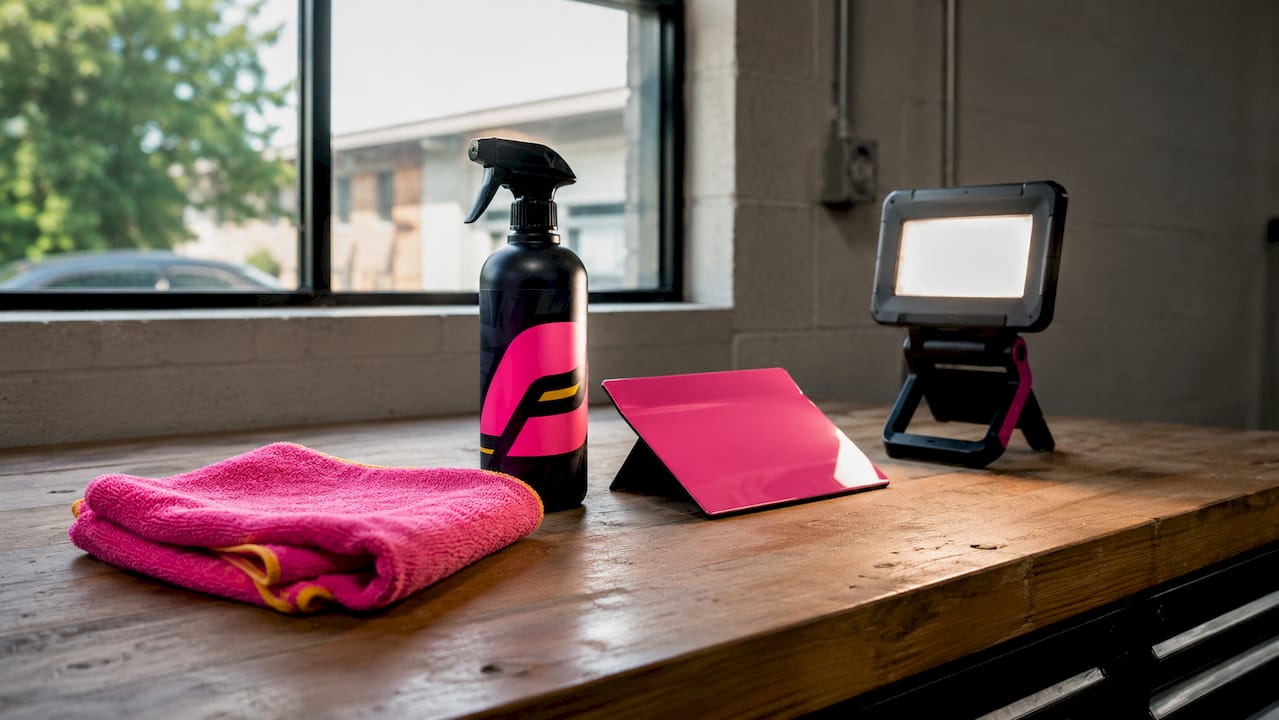
Essential tools for paint finish gloss testing
Gather these tools before you begin any inspection:
- High-output LED raking light (focused beam, not a broad floodlight) for low-angle surface inspection
- Plastic bag (clean, smooth, zip-lock style) for tactile contamination detection
- Paint thickness gauge to measure clear coat depth before any correction work
- Gloss meter for quantitative gloss unit (GU) readings at standardized angles
- Microfiber towels for final wipe-down before instrument contact
The inspection environment matters as much as the tools. A shaded garage or indoor space with controlled lighting prevents misleading reflections from direct sunlight. Inspecting under a single overhead fluorescent light is not sufficient. You need both a controlled indoor environment and access to natural daylight for different stages of the inspection.
Pro Tip: Run a clean plastic bag lightly over a freshly washed and dried panel before you do anything else. If the surface feels gritty or rough, bonded contamination is present. That contamination must be removed through clay bar treatment or chemical decontamination before any gloss reading or polishing work begins.
How to systematically inspect your car’s paint gloss and surface defects?
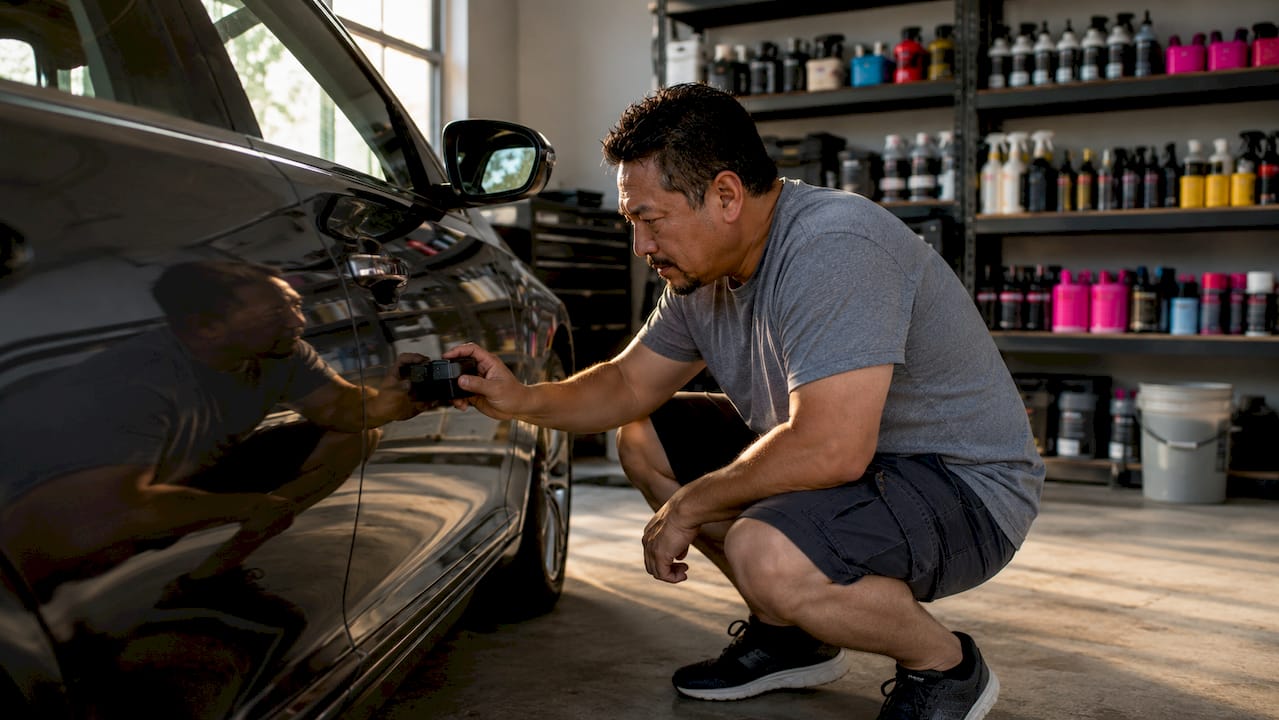
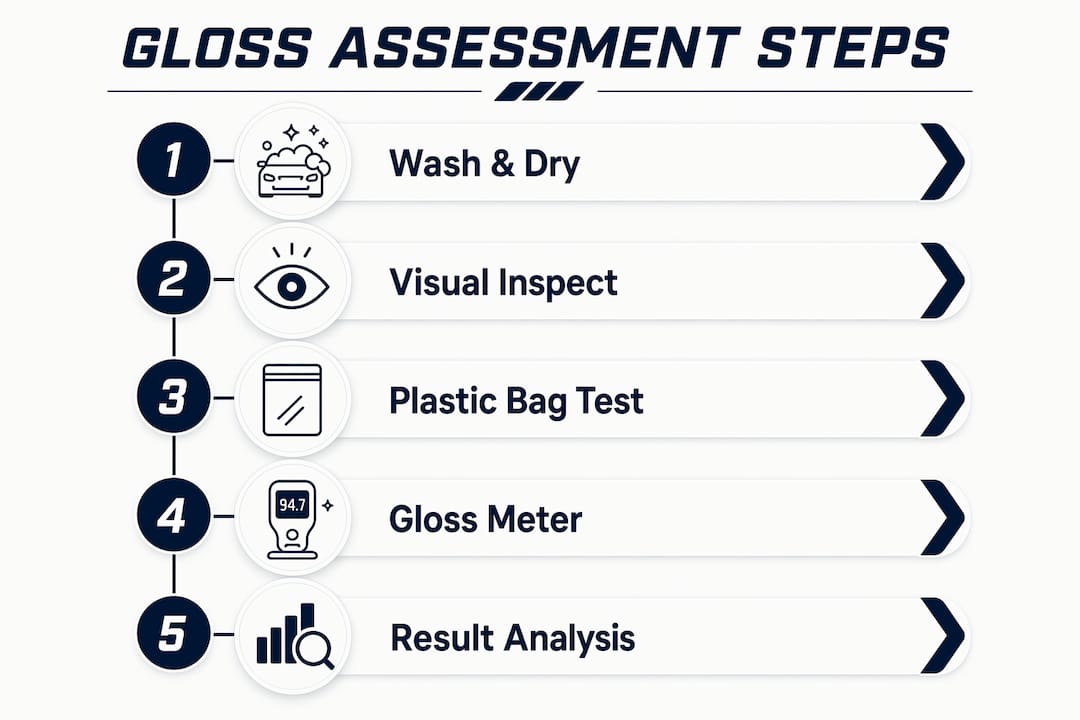
The professional inspection workflow follows a specific sequence: visual inspection in daylight, raking light inspection in a darker environment, tactile testing, edge and trim checks, and documentation. Each step reveals a different category of defect.
Step-by-step visual and tactile inspection
-
Inspect under direct sunlight at a 45° angle. Stand beside the panel and look across the surface at a low angle. Fading, oxidation, color mismatch from prior repairs, and heavy swirl marks are visible here. Move around the vehicle systematically, panel by panel.
-
Switch to raking LED light inspection indoors. Hold a focused LED light 4–8 inches from the surface, parallel to the panel, in a darkened environment. Raking light inspection reveals micro-scratches and swirl marks that are invisible under normal lighting. Inspecting straight-on misses up to 60–70% of surface scratches. This step is non-negotiable for a thorough assessment.
-
Perform the plastic bag test. Slide a clean plastic bag over the paint surface with light hand pressure. A smooth glide indicates clean paint. A gritty, sandpaper-like resistance confirms bonded contamination that visual inspection alone cannot detect. This contamination causes polishing damage if not removed first.
-
Check edges, wheel arches, and under trims. These areas accumulate the most wear and are frequently overlooked. Run a gloved finger along door edges and hood lips. Chips, rust staining, and paint thinning from prior over-polishing show up here first.
-
Assess for haze and Distinctness of Image (DOI). A surface can register high gloss meter numbers yet still appear cloudy or milky, especially on dark colors. Haze and DOI are separate optical properties that a gloss meter does not capture. Evaluate these visually by looking at a sharp reflection of a straight edge or window frame in the paint.
Pro Tip: Photograph every defect you find with your phone before moving to the next panel. Use consistent lighting and angle. These reference photos let you track changes over time and give a professional detailer an accurate baseline if you seek outside help.
What role do gloss meters and measurement angles play in quantifying paint gloss?
A gloss meter projects a beam of light at a fixed angle onto the paint surface and measures the intensity of the specular reflection that returns at the same angle. The result is expressed in gloss units (GU). Higher GU values indicate a more mirror-like surface. This quantitative data removes guesswork from the steps for paint sheen evaluation and creates a repeatable benchmark.
Understanding measurement angles
International standards ASTM D523 and ISO 2813 define three measurement angles for paint surfaces. Using the wrong angle produces misleading results that cannot be compared across inspections.
| Measurement angle | Best used for | Typical GU range |
|---|---|---|
| 20° | High-gloss automotive finishes | Above 70 GU |
| 60° | Mid-range and semi-gloss finishes | 10–70 GU |
| 85° | Matte and satin finishes | Below 10 GU |
High-gloss automotive clear coats are best differentiated at the 20° angle. At 60°, most high-gloss surfaces read near the top of the scale and differences between a good finish and an excellent one become invisible. Multi-angle gloss meters that measure all three angles in a single pass are the most practical option for automotive use. They automatically select the appropriate angle and reduce the risk of operator error.
Calibration is required before each session. Place the meter on its calibration tile and zero it according to the manufacturer’s instructions. An uncalibrated meter produces readings that are internally consistent but not comparable to any external standard.
Pro Tip: For a casual DIY inspection on a standard production car, a gloss meter is useful but not mandatory. Your eyes and the plastic bag test will catch most actionable defects. Reserve gloss meter use for pre-coating baseline documentation, post-correction verification, or when tracking finish degradation on a high-value vehicle over time.
How to interpret gloss assessment results to plan maintenance or correction?
Interpreting your findings requires matching what you observed to a specific action category. Not every defect requires correction polishing. Aggressive polishing on thin or worn clear coat causes irreversible damage that requires a full repaint. Paint thickness gauge readings must inform every correction decision.
Here is how to match findings to the right response:
- Strong reflection, smooth feel, no visible defects. The paint is in excellent condition. Apply a maintenance wax, paint sealant, or ceramic coating to protect the existing finish. No correction needed.
- Light swirl marks visible under raking light, smooth feel on plastic bag test. A mild enhancement polish applied by hand or with a light machine pass will restore clarity. Follow with a protective sealant or gloss enhancement coating to lock in the result.
- Moderate swirl marks, light scratches, slight haze on dark panels. Machine polishing with a cutting compound is required. Measure paint thickness first. If the clear coat reads below 80 microns, consult a professional before proceeding. You can also review guidance on correcting minor paint flaws for specific techniques.
- Heavy scratches, oxidation, or etching from bird droppings or water spots. Professional correction is the correct path. DIY attempts on severe defects risk burning through the clear coat.
- Gritty feel on plastic bag test. Stop all polishing plans. Complete a full decontamination process using an iron remover and clay bar before reassessing. Polishing over bonded contamination creates new scratches.
- Shine present but surface feels rough or shows haze. The vehicle likely has a temporary wax or filler coating masking underlying defects. Strip the surface with an isopropyl alcohol wipe-down and reassess before drawing conclusions.
What common mistakes should car owners avoid when assessing paint gloss?
The most common errors in paint finish gloss testing produce false confidence or unnecessary correction work. Knowing these pitfalls saves time, money, and paint.
- Inspecting only under direct overhead lighting. This angle hides swirl marks and fine scratches. Always add raking light inspection in a controlled environment.
- Confusing wax shine with paint health. A vehicle can appear shiny due to waxes or fillers while the clear coat underneath has significant defects. True gloss assessment requires stripping temporary coatings before drawing conclusions.
- Skipping the plastic bag test. Visual inspection alone cannot detect bonded contamination. Polishing over contamination causes new scratches and defeats the purpose of correction.
- Using the wrong gloss meter angle. Measuring a high-gloss clear coat at 60° instead of 20° compresses the data range and makes meaningful differences invisible.
- Polishing without measuring paint thickness. Testing paint thickness before correction is non-negotiable. Aggressive polishing on a thin clear coat causes catastrophic failure.
- Assessing under only one lighting condition. Defects that are invisible at noon in direct sun become obvious under a raking LED light at dusk. Reassess under at least two different conditions before finalizing your plan.
Pro Tip: Reassess the same panel under morning light, afternoon sun, and your garage LED light before deciding on a correction approach. Defects that appear severe in one condition sometimes look minor in another, and vice versa. That full picture prevents over-correction.
Key takeaways
Accurate paintwork gloss assessment requires surface preparation, raking light inspection, plastic bag contamination testing, paint thickness measurement, and gloss meter readings at the correct angle before any correction decision is made.
| Point | Details |
|---|---|
| Preparation comes first | Wash, dry, and decontaminate before any visual or instrument inspection begins. |
| Raking light reveals hidden defects | A focused LED held 4–8 inches from the surface exposes swirl marks invisible under normal lighting. |
| Plastic bag test detects contamination | A gritty feel confirms bonded contamination that must be removed before polishing. |
| Use the correct gloss meter angle | Measure high-gloss automotive finishes at 20° per ASTM D523 and ISO 2813 standards. |
| Measure thickness before correcting | Paint thickness gauge readings prevent over-polishing and irreversible clear coat damage. |
Why most owners are looking at their paint wrong
I have inspected hundreds of vehicles over the years, and the single most common mistake I see is owners judging their paint under a single overhead light source. They look straight down at the hood, see a reflection, and conclude the paint is fine. That is not a gloss assessment. That is a gloss impression.
The plastic bag test alone has changed how I approach every new vehicle. I have run it on cars that looked showroom-perfect under indoor lighting and felt like sandpaper the moment the bag touched the surface. That contamination was invisible. It would have caused real damage if someone had polished over it.
The other thing I want to push back on is the idea that a gloss meter replaces your eyes and hands. It does not. Gloss meters measure specular reflection. They do not capture haze, DOI, or the way a dark panel looks cloudy in certain light. Those qualities require a trained eye and the right lighting conditions. The meter confirms what you already suspect. It does not replace the inspection.
My honest advice: build the habit of doing a proper raking light check every three to four months. You do not need a gloss meter for routine monitoring. You need a good LED light, a clean plastic bag, and the discipline to check every panel systematically. When you find something that concerns you, that is the moment to bring in instruments or a professional. Integrating this into your regular detailing procedures makes the difference between catching a problem early and facing a full correction job later.
— Emmanuel
Protect the gloss you worked to assess
Once you know your paint’s true condition, the next step is protecting it. At Mannyceramicprotouch, every protection service starts with the same systematic inspection process described in this guide. If your assessment reveals a finish worth preserving, a professional-grade paint protection film or a ceramic coating package locks in that gloss and defends against the environmental damage that degrades it. Mannyceramicprotouch serves luxury, exotic, and high-value vehicles in the Fort Lauderdale area with a quality-first approach. Contact the studio after your DIY inspection for a tailored protection strategy built around your vehicle’s specific condition.
FAQ
What are the core paintwork gloss assessment steps?
The core steps are washing and drying the surface, visual inspection under sunlight and raking LED light, the plastic bag contamination test, paint thickness measurement, and gloss meter reading at the correct angle. Professional workflows combine all five before any correction decision is made.
What gloss meter angle should I use for automotive paint?
Use the 20° angle for high-gloss automotive clear coats, as defined by ASTM D523 and ISO 2813. The 60° angle is for mid-range finishes and the 85° angle is for matte or satin surfaces.
Can I assess paint gloss without a gloss meter?
Yes. Visual inspection under raking LED light and the plastic bag test identify most actionable defects without instruments. A gloss meter adds quantitative verification and is most useful for pre-coating documentation or tracking finish changes on high-value vehicles over time.
Why does my car look shiny but still have defects?
Waxes and fillers create surface shine that masks scratches, oxidation, and contamination in the clear coat underneath. Stripping the surface with an isopropyl alcohol wipe-down before inspection reveals the true paint condition.
How often should I perform a gloss inspection on my car?
A raking light inspection every three to four months is sufficient for most vehicles. High-value or frequently driven vehicles benefit from monthly checks, particularly after exposure to harsh weather, road debris, or automatic car washes.