

A glass coat is a silica-based or sol-gel hydrophobic coating that chemically bonds to automotive glass and paint to deliver water-beading, UV resistance, and stain protection. For luxury vehicle owners, daily drivers in wet or salty climates, and anyone who wants measurably easier maintenance, professional application is the recommended route.
Here is who benefits most and what to expect:
- Luxury and high-value vehicle owners who want long-term asset protection and preserved resale value
- Commuters in wet, salty, or UV-intense climates where untreated paint and glass degrade faster
- Drivers who want improved wet-weather visibility — glass coatings speed water bead formation and reduce smearing, which directly lowers distracted driving risk in rain
- Anyone who wants easier cleaning and reduced time removing ice, bugs, and road grime
For high-value assets, professional application is the clear choice. DIY glass kits are a reasonable option for older vehicles or glass-only quick treatments.
Table of Contents
- What exactly is a glass coat and how does it bond?
- What surfaces does a glass coat protect and what does it do?
- How long does a glass coat last and what should a warranty cover?
- What a glass coat won’t do: realistic limits and red flags
- Should you apply a glass coat yourself or hire a professional?
- What happens during a professional glass coat application?
- How to maintain a coated car and protect your investment
- Is a glass coat worth the cost for your vehicle?
- Mannyceramicprotouch: precision coating for high-value vehicles
- Key Takeaways
- Why professional precision matters more than most owners expect
What exactly is a glass coat and how does it bond?
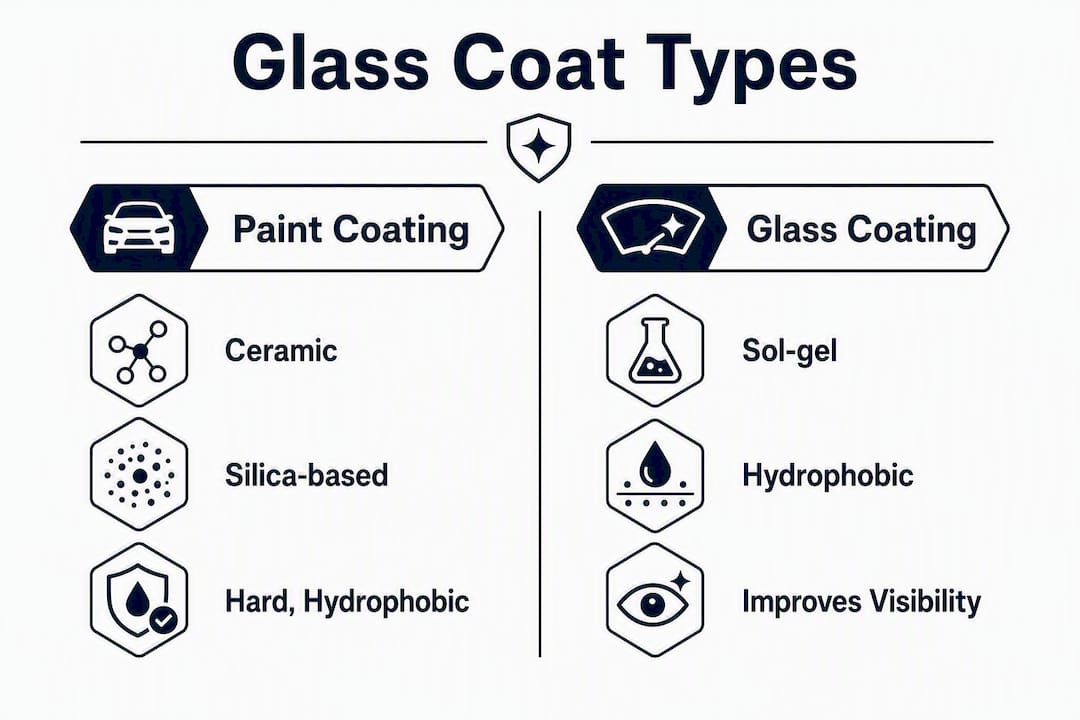
The term “glass coat” covers two related but distinct product categories. The first is a glass-specific coating applied to windshields and side windows. The second is a ceramic paint coating applied to a vehicle’s clearcoat. Both use silica chemistry, but their substrates and performance profiles differ.
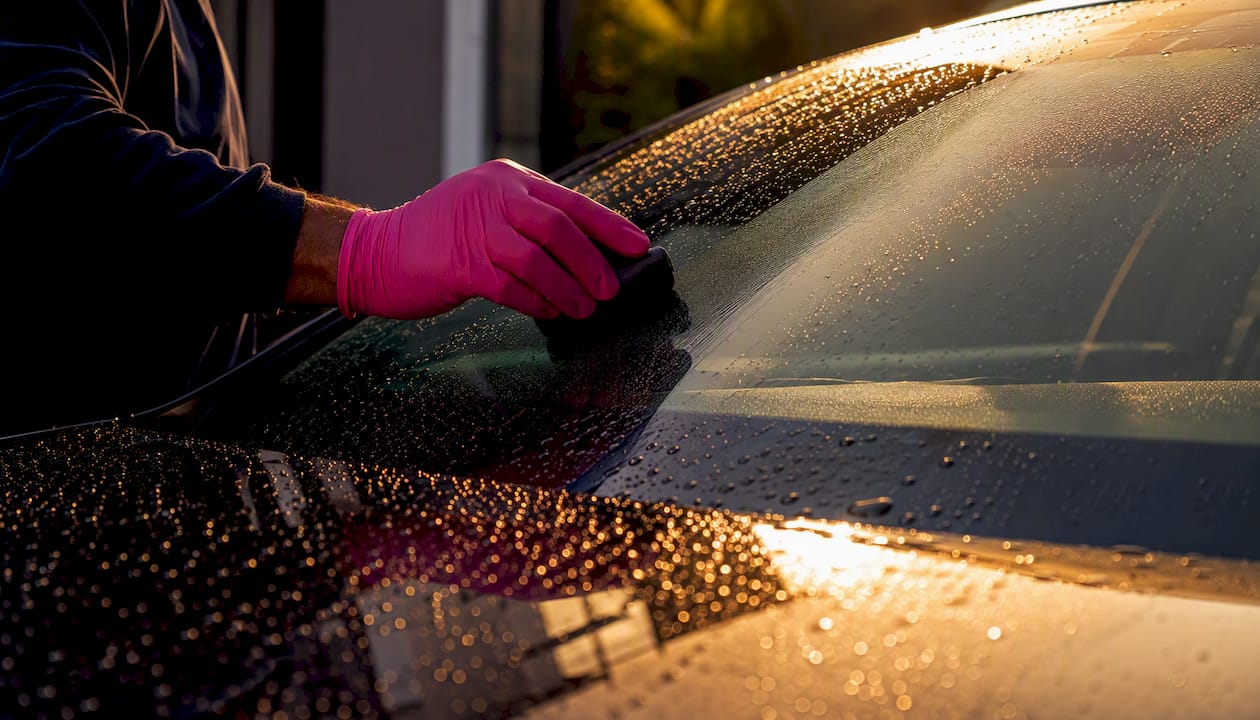
At the chemistry level, most professional-grade products use a sol-gel or siloxane hybrid network. Sol-gel siloxane coatings form a covalently bonded inorganic-organic network that delivers high contact angles, low sliding angles, and strong chemical resistance without PFAS compounds. That covalent bond is what separates these coatings from older polymeric repellents: the coating does not sit on top of the surface, it becomes part of it.
Ceramic paint coatings are silica-based liquid polymers that cure into a hard, hydrophobic layer over the clearcoat. Once cured, they outlast wax and polymer sealants by a significant margin.
| Product type | Bond type | Typical lifespan | Primary surface |
|---|---|---|---|
| Carnauba wax | Physical (sacrificial) | 4–8 weeks | Paint |
| Polymer paint sealant | Physical/chemical | 3–6 months | Paint |
| Glass coat / ceramic coating | Covalent / chemisorption | 6 months to 5+ years | Glass or paint |
| Paint protection film (PPF) | Adhesive laminate | 5 years | Paint |
Wax and sealants are sacrificial layers: they wear off and need reapplication. A cured ceramic or glass coating bonds at the molecular level, which is why it lasts years rather than weeks, and why prep quality matters so much before application.
What surfaces does a glass coat protect and what does it do?
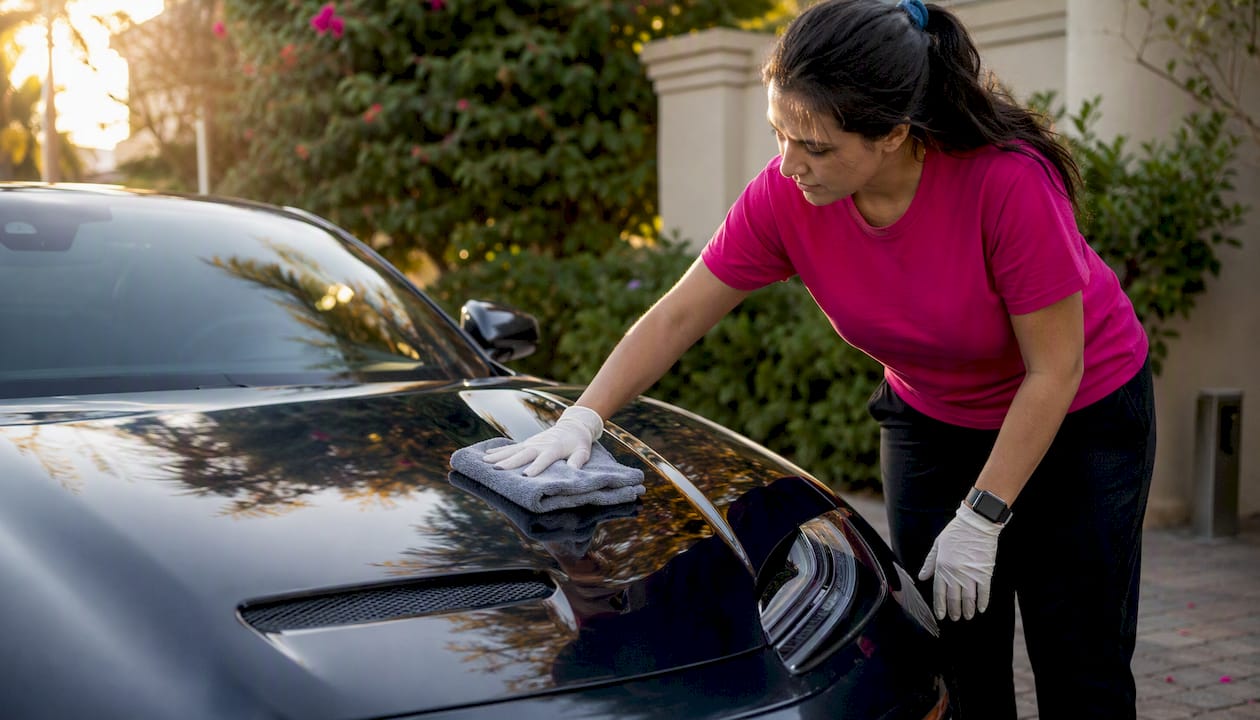
A properly applied glass coating protects more than just the windshield. Depending on the product and service package, treated surfaces typically include:
- Windshield and front glass — the highest-priority surface for visibility and wiper performance
- Side and rear glass — reduces water sheeting and improves rearview clarity
- Paint clearcoat — ceramic coatings add UV resistance, chemical resistance, and hydrophobic protection
- Exterior trim and mirrors — some packages extend protection to plastic and chrome trim
The practical benefits go beyond appearance. Glass coatings reduce the time and effort required to remove ice, snow, and insect residue because treated surfaces allow easier release. In wet weather, the hydrophobic effect speeds droplet formation and removal, which reduces smearing and the visual distraction that comes with it. For drivers who commute in rain or snow regularly, that safety benefit alone justifies the investment.
Chemical and stain resistance also matters. Road salt, bird droppings, tree sap, and industrial fallout are all more aggressive on unprotected glass and paint. A coated surface gives you a wider window to clean contaminants before they etch or stain.
How long does a glass coat last and what should a warranty cover?
Lifespan varies considerably by product type, prep quality, and environment. Here is a realistic breakdown:
| Coating type | Typical lifespan | Key longevity factors |
|---|---|---|
| Consumer glass sealant (spray-on) | 1–3 months | Surface prep, wiper frequency |
| Professional glass coating | Up to 6 months | Correct application, cure conditions |
| Professional ceramic paint coating | 2–5+ years | Full decontamination, cure protocol, maintenance |
| Industrial/commercial glass bond | Long-term or permanent | Substrate type, non-automotive use |
Some professional glass coatings advertise bonded protection up to six months on automotive glass when applied correctly. Professional paint coatings such as Meguiar’s M888 claim long-lasting durability contingent on correct prep and maintenance. For non-automotive applications, some industrial coatings like Diamon-Fusion claim a permanent chemical bond to glass with long-term warranty coverage, which illustrates how far the chemistry can be engineered when the substrate and use case allow it.
What a warranty should actually cover: Not all warranty language is equal. Before accepting any warranty, verify these points:
- Prep documentation — was decontamination and paint correction performed and recorded?
- Exclusion list — mechanical damage, neglect, and improper washing are almost always excluded
- Cure-period requirements — most warranties are void if the vehicle was washed or exposed to rain during the cure window
- Transferability — a transferable warranty adds resale value; a non-transferable one does not
What a glass coat won’t do: realistic limits and red flags
A glass coating is not a force field. Understanding its limits prevents disappointment and helps you spot misleading claims.
Core limitations:
- Not chip-proof or scratch-proof. Ceramic coatings are not impervious to mechanical damage — rock chips, key scratches, and parking lot dings go straight through.
- Will not hide existing defects. Coatings lock in whatever is on the surface at the time of application. Swirl marks and oxidation become permanent if not corrected first.
- Can affect wiper performance if misapplied to the windshield in uneven layers.
- Does not replace paint protection film for high-impact zones like the hood leading edge and front bumper.
Red flags when evaluating a product or installer:
- Claims of “permanent” protection on automotive paint with no maintenance requirements
- No documented prep process or cure protocol
- Unusually low pricing for multi-year ceramic packages
- No post-service guidance or maintenance plan provided
Pro Tip: If a coating fails during the cure window, it cannot simply be washed off. Remediation typically requires wet sanding and full reapplication, which is exactly why professional application on a high-value vehicle is not optional — it is the only way to protect your investment from a costly mistake.
Should you apply a glass coat yourself or hire a professional?
The honest answer depends on your vehicle’s value and your tolerance for risk.
Choose a professional installer when:
- You own a luxury, exotic, or high-value vehicle where a failed application requires paint correction such as wet sanding to fix
- You want a multi-year warranty backed by documented prep and cure records
- You lack a climate-controlled space with stable temperature and humidity for curing
- You want professional-grade surface decontamination and paint correction before the coating is applied
DIY kits are a reasonable fit when:
- The vehicle is older or lower in value and a shorter lifespan is acceptable
- You are treating glass only with a spray-on quick kit for wiper and visibility improvement
- You understand the prep requirements and have the tools to execute them properly
The cost gap between a DIY kit and professional service is real, but so is the risk gap. On a $80,000 vehicle, a botched DIY application that requires paint correction costs more to fix than the professional service would have cost upfront. For professional coating benefits and warranty details, the value calculation usually favors the pro route.
What happens during a professional glass coat application?
A professional ceramic or glass coating service follows a structured sequence. Here is what to expect:
- Wash and rinse — full exterior wash to remove loose contamination
- Chemical decontamination — iron remover and tar remover to strip bonded fallout from paint and glass
- Clay bar or mechanical decontamination — removes embedded particles the chemicals miss
- Paint correction (if needed) — machine polishing to remove swirl marks, oxidation, and scratches before they get locked under the coating
- IPA wipe-down — isopropyl alcohol panel wipe to remove polish oils and residue
- Masking — edges, trim, and rubber seals taped off to prevent overspray
- Coating application — product applied in controlled sections, leveled, and allowed to flash
- Cure period — vehicle kept dry and covered; no washing for the first week is standard best practice
Typical shop timelines and cost ranges:
| Service type | Shop time | Typical cost range |
|---|---|---|
| Glass-only coating (windshield + sides) | 2–4 hours | a few hundred dollars |
| Single-stage ceramic paint coating | 1–2 days | several hundred to over a thousand dollars |
| Multi-layer ceramic with paint correction | 2–4 days | over a thousand dollars |
| Liquid PPF + ceramic package | 3–5 days | several thousand dollars |
Costs vary by vehicle size, condition, and market. The prep steps for coating are where most of the labor time goes, and skipping them is the single most common cause of early coating failure.
How to maintain a coated car and protect your investment
Maintenance after coating is straightforward, but a few habits matter more than most owners realize.
Washing routine: Use a pH-neutral car shampoo, the two-bucket wash method, and a clean microfiber wash mitt. Rinse thoroughly and dry with a microfiber towel to prevent water spotting. Avoid automatic brush washes entirely, especially during the first week after application and ideally long-term, since abrasive brushes accelerate coating wear.
Products to avoid: Harsh alkaline degreasers, solvent-based cleaners, and abrasive compounds will degrade the coating faster. Stick to products labeled safe for ceramic-coated surfaces.
Routine inspections: Every few months, check the contact angle of water on the paint and glass. If water no longer beads and sheets cleanly, the coating is wearing in that area. Wiper smear on a coated windshield can indicate localized wear from mechanical abrasion. A booster coat or spot reservice can extend the life of the original application without a full redo.
Is a glass coat worth the cost for your vehicle?
The answer depends on three variables: vehicle value, climate exposure, and driving habits.
Typical price bands:
- DIY glass sealant kits: under $50
- Professional glass-only coating: a few hundred dollars
- Professional single-layer ceramic paint coating: several hundred to over a thousand dollars
- Multi-layer ceramic with full paint correction: over a thousand dollars
- Liquid PPF plus ceramic package: several thousand dollars
When the investment is clearly justified:
- You own a luxury or exotic vehicle where surface protection directly extends value
- You drive frequently in rain, snow, or coastal salt environments
- You want to reduce washing time and protect against UV fade and chemical etching
- You plan to sell or trade the vehicle and want to preserve its finish condition
When it may not be worth it:
- The vehicle is near end-of-life or has significant unrepaired body damage
- You rarely drive in conditions that stress the paint or glass
- You are not willing to follow the cure and maintenance protocols that protect the coating
For a structured comparison of protection options, the guide to choosing surface protection for luxury cars covers the tradeoffs between coatings, PPF, and combined approaches in detail.
Mannyceramicprotouch: precision coating for high-value vehicles
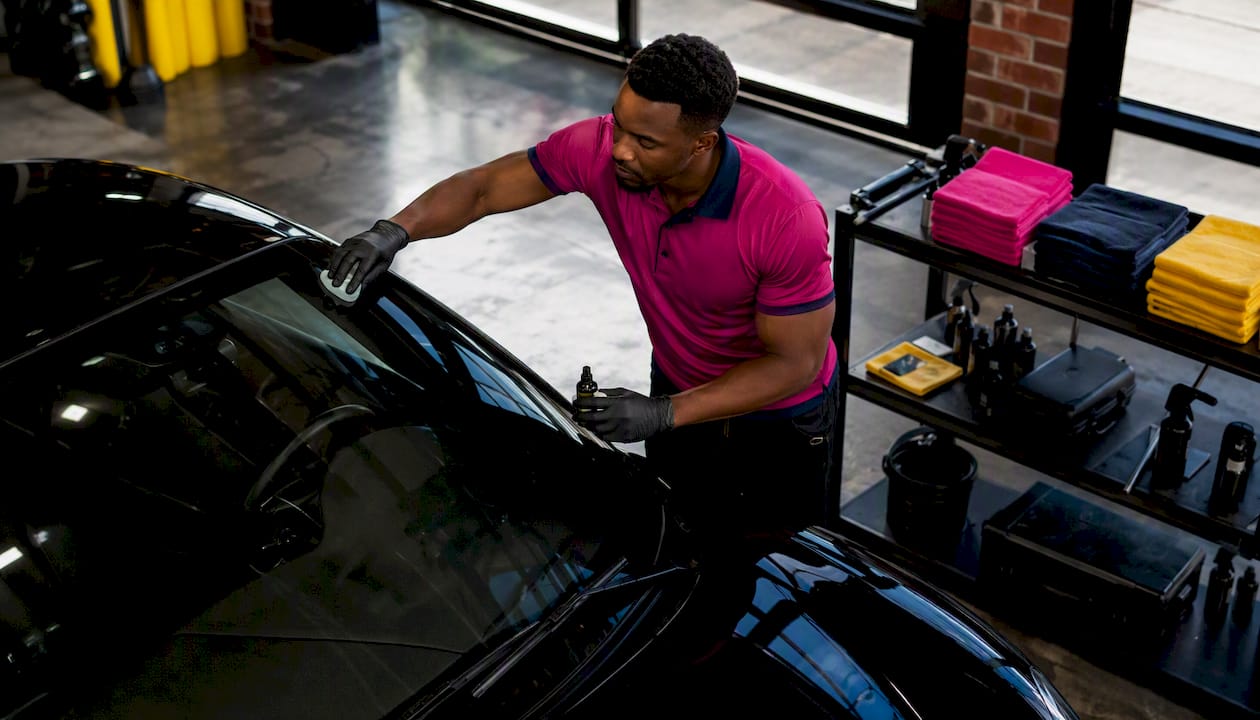
Mannyceramicprotouch is the professional choice for owners who want glass and paint coating done right the first time. The studio specializes in luxury, exotic, and high-value vehicles, with a quality-first process that covers every stage: full decontamination, paint correction where needed, multi-layer ceramic application, glass protection, and Liquid PPF packages for maximum impact resistance.
Every service includes documented prep and cure protocols, so your warranty is backed by a real record, not a handshake. The studio’s specialty focus on high-value assets means technicians understand what is at stake when working on a $100,000+ vehicle. Mobile service options are also available for clients who prefer on-site application.
To see available ceramic coating packages and pricing, or to explore Liquid PPF and ceramic coating options for your vehicle, visit the studio’s service pages and request a consultation. Availability is limited by design.
Key Takeaways
Professional ceramic and glass coatings deliver multi-year protection only when surface prep, application, and maintenance protocols are followed correctly, making professional installation the right choice for any high-value vehicle.
| Point | Details |
|---|---|
| Glass coat chemistry | Sol-gel and silica coatings form covalent bonds to glass and paint, outlasting wax and sealants by years. |
| Lifespan varies by type | Professional glass coatings last up to 6 months; multi-layer ceramic paint coatings can last 2–5+ years with proper maintenance. |
| Pro application for high-value cars | Failed cures require wet sanding and reapplication, making professional installation the lower-risk choice for luxury vehicles. |
| Maintenance matters | pH-neutral washing, no brush washes, and periodic contact-angle checks preserve coating performance between services. |
| Mannyceramicprotouch | Offers documented prep, multi-layer ceramic and Liquid PPF packages, and glass protection services for luxury and exotic vehicles. |
Why professional precision matters more than most owners expect
The conventional wisdom around glass coatings tends to focus on the product itself: which brand, how many layers, what contact angle. That framing misses the more important variable, which is the surface underneath.
A coating applied over contaminated paint or uncorrected swirl marks does not protect the finish. It preserves the damage. The prep stage, specifically chemical decontamination and paint correction, is where the real work happens, and it is also where DIY applications most often fall short. Most consumers do not have access to a dual-action polisher, iron remover, and a controlled cure environment. Even those who do often underestimate how much surface preparation time a proper job requires.
The other underappreciated point is the safety argument for glass coatings specifically. Improved wet-weather visibility is not a marketing claim. Water that beads and slides off a treated windshield at highway speed genuinely reduces the visual noise that contributes to distracted driving in heavy rain. For daily drivers in Florida or the Pacific Northwest, that benefit compounds over thousands of miles.
Professional application is not about prestige. It is about getting the chemistry right the first time on a surface that cannot easily be redone.