

TL;DR:
- A premium exterior protection package for luxury vehicles includes paint correction, ceramic coating, and Liquid Paint Protection Film on high-impact zones. These steps preserve gloss, block UV damage, and prevent rock chips, with detailed inspections, documentation, and warranties from quality studios. Proper process and documentation ensure long-term paint preservation, resale value, and adherence to the industry standard.
For a luxury or exotic vehicle, the right approach to car exterior detailing is paint correction followed by a professional-grade ceramic coating across the full vehicle, plus Liquid Paint Protection Film (Liquid PPF) on high-impact zones. That combination preserves gloss depth, blocks UV-driven oxidation, and shields against rock chips where a coating alone cannot. Schedule a panel inspection at a quality-controlled studio, request paint-thickness measurements in microns, and get a written scope with warranty terms before any work begins.
Table of Contents
- What does a premium exterior protection package actually include?
- What is the step-by-step studio process and timeline?
- Ceramic coating vs. Liquid PPF vs. traditional PPF: which suits your car?
- How do you evaluate and choose the right studio?
- What do premium protection services cost, and how long do they last?
- What aftercare routine keeps your coating and warranty valid?
- How does professional paint preservation protect resale value?
- Key Takeaways
- Why the industry standard for luxury cars is more demanding than most owners expect
- Mannyceramicprotouch delivers studio-grade protection with a written warranty
- Useful sources for owners evaluating protection options
What does a premium exterior protection package actually include?
Premium surface preservation goes well beyond a wash and wax. A properly structured package covers every stage of paint preparation and protection, with documented results at each step.
Service components owners should expect:
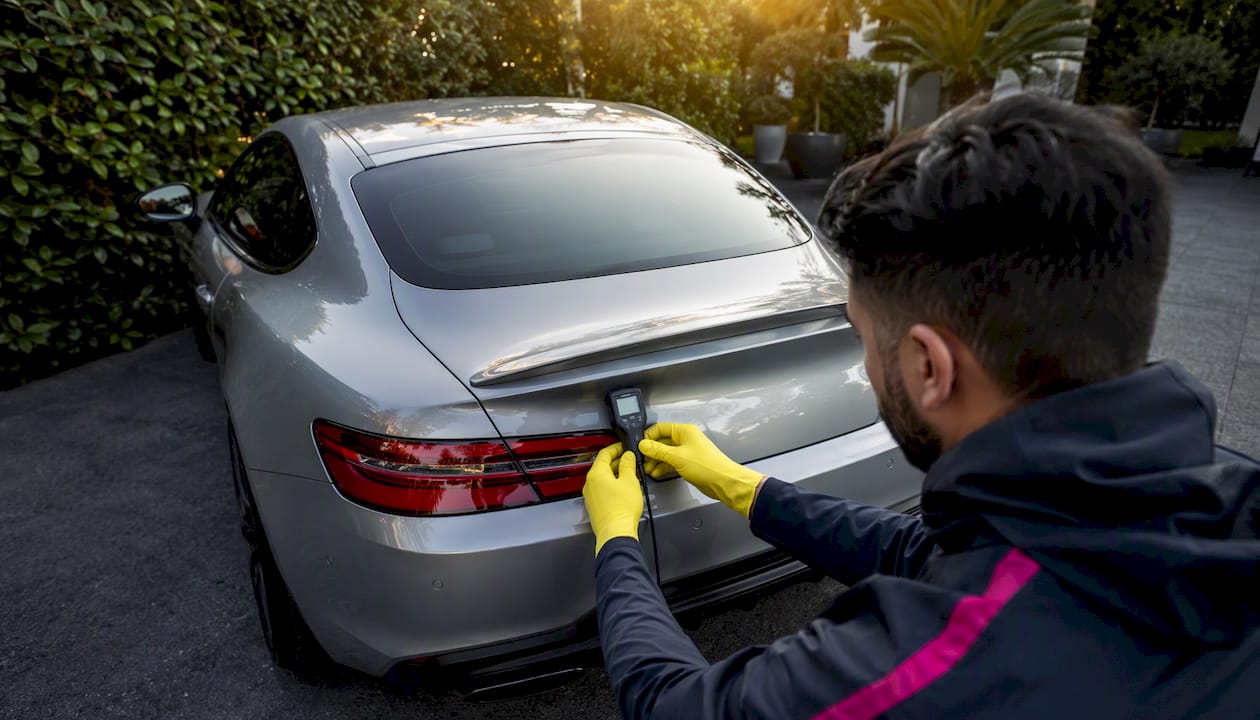
- Paint-thickness inspection: Baseline micron readings on every panel before any work begins, recorded in a written report.
- Safe wash and iron decontamination: Chemical iron removers dissolve embedded brake dust and ferrous particles that clay alone cannot lift.
- Clay bar or equivalent decontamination: Removes bonded surface contamination to create a clean substrate for correction.
- Machine paint correction: Single-stage (light defect removal) or multi-stage (deeper swirl and scratch elimination), with micron readings taken after each stage.
- Surface prep wipe: Isopropyl alcohol or panel wipe removes polishing oils so the coating bonds directly to bare clear coat.
- Professional-grade ceramic coating application: Panel-by-panel application of an SiO2-based polymer that chemically bonds to clear coat and forms a durable hydrophobic layer.
- Liquid PPF application: Applied to front bumper, hood leading edge, mirror caps, and rocker panels for impact-zone chip resistance.
Deliverables the studio should hand you at pickup: before-and-after panel photographs, a written paint-thickness report, documented cure times, a maintenance schedule, and a written warranty or service guarantee.
Pro Tip: Ask the studio to record clear-coat thickness both before and after correction. Factory clear coat typically measures a range of microns, and multi-stage correction removes a small but measurable amount per session. Without measurement, repeated polishing can permanently exhaust the clear coat on thin European factory finishes.
What is the step-by-step studio process and timeline?
The sequence matters as much as the materials. Skipping or compressing any stage produces a result that looks good at pickup and degrades within months.
| Stage | What Happens | Typical Time |
|---|---|---|
| Panel inspection | Thickness readings, defect mapping, photography | typically takes a few hours |
| Wash and decontamination | Safe wash, iron remover, clay bar | typically takes a few hours |
| Masking | Trim, glass, and rubber protection | usually under an hour |
| Single-stage paint correction | Light swirl and oxidation removal | generally several hours |
| Multi-stage paint correction | Deep scratch and hologram elimination | often requires a full day or more |
| Liquid PPF application | Impact-zone panels, edge wrapping | several hours |
| Ceramic coating application | Panel-by-panel, flash and buff per layer | several hours |
| Initial cure and inspection | Infrared-assisted cure, final photography | a few hours |
Single-stage vs. multi-stage correction: Single-stage uses one compound or polish to reduce light defects and typically removes a small amount of clear coat. Multi-stage uses progressively finer abrasives to eliminate deeper scratches and holograms, removing a larger but variable amount overall. The paint-thickness readings taken before correction determine which approach is safe for a given panel.
At drop-off, bring a full fuel level, note any areas of concern, and confirm the deposit and scheduling lead time. Most quality studios book several weeks out for full correction and coating packages. Expect the vehicle to stay multiple days for a complete build. For a detailed look at the multi-stage correction protocol, Mannyceramicprotouch publishes a technical guide covering polishing sequences and micron budgeting.
Ceramic coating vs. Liquid PPF vs. traditional PPF: which suits your car?
| Dimension | Ceramic Coating | Liquid PPF | Traditional PPF |
|---|---|---|---|
| Layer thickness | — | Thicker than coating, thinner than film | — |
| UV resistance | High UV-A/UV-B blocking | Moderate | High |
| Hydrophobicity | High | High | Moderate |
| Rock chip resistance | None | Partial | Full |
| Self-healing | No | No | Yes (heat-activated) |
| Typical lifespan | Several years (pro-grade) | Multiple years | Multiple years |
| Cost shape | Lower | Mid-range | Highest per panel |
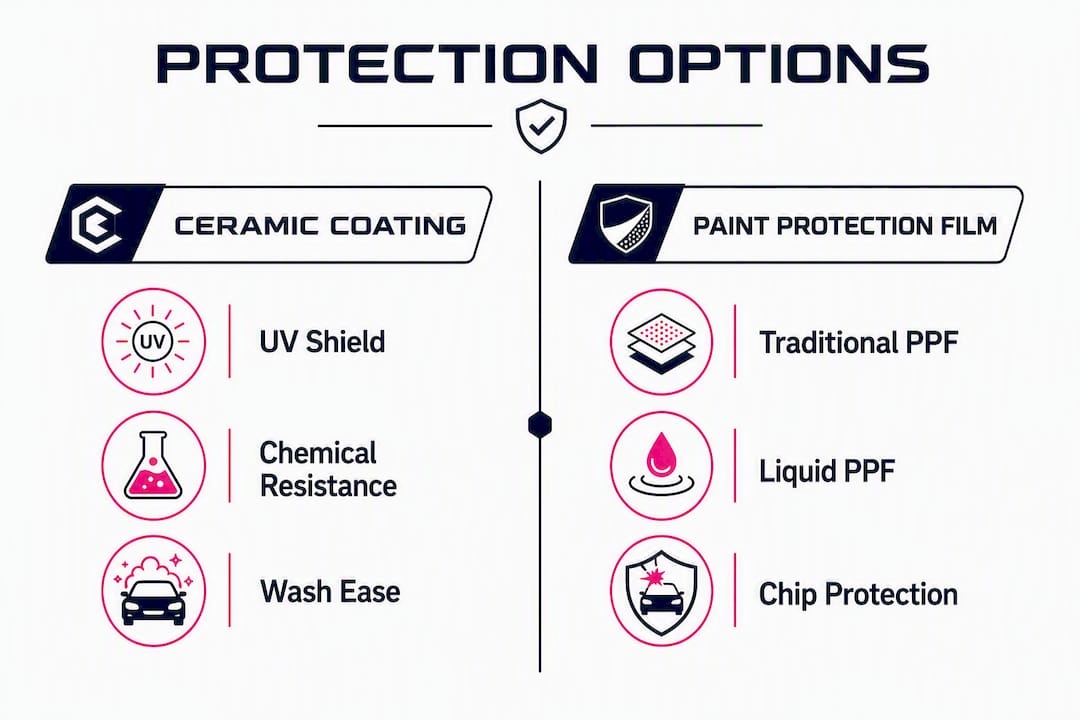
Ceramic coating excels at UV protection, chemical resistance, and wash-ease. It reduces wash-induced swirl formation and keeps paint looking deeper and glossier over time. It does not stop rock chips.
Liquid PPF fills the gap between a coating and traditional film. Applied as a liquid, it adds a thicker sacrificial layer on impact zones without the edge lines or installation complexity of cut film. It handles minor abrasions and road debris better than a coating alone.
Traditional PPF remains the strongest chip protection available, particularly on full-front or full-vehicle wraps. The trade-off is cost and installation time.
The professional standard pairs Liquid PPF or traditional PPF on the front third of the vehicle with a full-vehicle ceramic coating for hydrophobicity and UV defense. That combination covers what each material does best.
Recommended builds by use case:
- Daily-driven luxury sedan or SUV: Liquid PPF on front bumper, hood, mirrors, and rockers; full-vehicle 9H ceramic coating.
- Garaged show car or weekend exotic: Full-vehicle traditional PPF plus a ceramic coating over the film for hydrophobic performance.
- High-mileage luxury vehicle: Multi-stage correction first, then Liquid PPF on highest-impact zones, full-vehicle ceramic coating.
How do you evaluate and choose the right studio?
Studio qualifications to verify before booking:
- Controlled indoor environment with no open-air curing bays
- Trained applicators with documented product certification
- Written warranty terms specifying coverage period, exclusions, and warranty-service contact
- Before-and-after gallery for vehicles comparable to yours (not just sedans if you own an exotic)
- Paint-thickness gauge on site and willingness to share pre/post readings
- Product technical datasheets available on request
Questions to ask during your inquiry:
- Which specific coating product will be applied, and what is its rated cure time?
- Is paint correction included, and will it be single-stage or multi-stage?
- How do you measure and record clear-coat thickness before and after correction?
- What does the warranty cover, and what actions void it?
- What are your current lead times and deposit requirements?
Request in writing: the full scope of work, expected hours per stage, panel photographs, paint-thickness report, maintenance obligations required to keep the warranty valid, and a named contact for warranty service. For owners evaluating studios, Mannyceramicprotouch’s guide on how to choose surface protection for luxury cars walks through the full qualification checklist.
What do premium protection services cost, and how long do they last?
Pricing variables that move the number significantly:
- Vehicle size and panel complexity (a Lamborghini Urus costs more to wrap than a sedan)
- Paint condition and required correction stages
- Coating tier: entry-level 9H vs. premium multi-layer graphene blends
- Liquid PPF vs. full traditional PPF coverage
- Studio location and labor market
Cost and lifespan reference ranges:
- DIY ceramic coating kits: $60–$180, lifespan 1–3 years
- Professional 9H ceramic coating (correction included): $600–$3,500+, lifespan 2–5 years
- Professional premium multi-layer coating: $2,000–$5,000+, lifespan 5–7 years
- Liquid PPF on impact zones (added to coating package): typically $500–$1,500 additional
- Full traditional PPF (front half or full vehicle): $2,500–$8,000+ depending on coverage
Protection cost in context: A professional coating at $2,000 over five years costs roughly $400 per year. For a vehicle worth $150,000 or more, that annualized figure is a fraction of the depreciation prevented by maintaining corrected, defect-free paint.
Annual inspections or studio top-up layers can extend warranty performance beyond the base period. High-UV climates, like Florida or Arizona, accelerate clear-coat degradation, making professional-grade UV blocking a measurable advantage rather than a premium add-on.
What aftercare routine keeps your coating and warranty valid?
The first 7–30 days after application are the micro-curing period. During this window, avoid automatic car washes, prolonged water exposure, and parking under trees. The studio will provide a specific cure schedule.
Ongoing maintenance:
- Wash every 2–4 weeks using the two-bucket hand-wash method with a pH-neutral shampoo.
- Dry with a clean microfiber drying towel or a filtered air blower. Never drag a chamois across a coated surface.
- Remove bird droppings, bug splatter, and tree sap within 24 hours. These are acidic and will etch through a coating if left to bake in sun.
- Avoid automatic brush washes entirely. The bristles introduce swirl marks that degrade the coating’s optical clarity.
- Schedule a professional inspection every 12 months to assess coating integrity and apply a maintenance layer if required by your warranty.
Pro Tip: Keep a simple log of every wash, product used, and any spot-cleaning event. If you ever need to make a warranty claim, documented maintenance history is the fastest way to validate it.
Actions that typically void a coating warranty: using abrasive polishes or cutting compounds on the coated surface, applying incompatible wax or sealant products, and having unauthorized paint repairs done without notifying the studio. For a full owner maintenance protocol, Mannyceramicprotouch’s maintenance guide for luxury car owners covers approved products and wash intervals. For time-efficient wash routines, time-saving car care practices offer practical scheduling guidance for busy owners.
How does professional paint preservation protect resale value?
Luxury dealerships increasingly require paint correction to meet showroom standards because corrected paint removes swirl marks, holograms, and oxidation that reduce perceived value. Buyers at auction and private sale respond to paint condition more than almost any other visual factor.
Corrected, coated paint produces stronger offers and faster time-to-sale for sellers of high-value vehicles. A car with documented paint correction, a transferable coating warranty, and before-and-after photography enters the market with a verifiable condition claim, not just a seller’s assertion.
For lease returns, preserved paint avoids wear-and-tear charges that dealers assess on oxidized, swirled, or chipped panels. On a $120,000 vehicle, those charges can reach several thousand dollars at turn-in.
Seller tip: Maintain a file with your studio’s before-and-after photographs, paint-thickness report, coating warranty certificate, and wash logs. Present that documentation to any prospective buyer or dealer. It substantiates the condition claim and supports a higher asking price. Mannyceramicprotouch’s guide on vehicle resale value protection covers how to structure that documentation for maximum impact.
Key Takeaways
Professional paint correction paired with a ceramic coating and Liquid PPF on impact zones is the most effective long-term preservation strategy for luxury and exotic vehicles, protecting both finish quality and resale value.
| Point | Details |
|---|---|
| Correct before you coat | Applying coating over swirled or contaminated paint locks in defects permanently; correction must come first. |
| Measure clear-coat thickness | Factory clear coat runs 40–50 microns; multi-stage correction removes 3–8 microns, so measurement is non-negotiable. |
| UV protection is quantifiable | Quality 9H ceramic coatings provide substantial UV blocking, measurably slowing clear-coat oxidation. |
| Aftercare determines longevity | pH-neutral hand washing, 24-hour contaminant removal, and annual inspections keep warranties valid and coatings performing. |
| Mannyceramicprotouch’s approach | Studio delivers inspection with micrometer readings, single/multi-stage correction, Liquid PPF, full-vehicle ceramic coating, and written warranty. |
Why the industry standard for luxury cars is more demanding than most owners expect
Most owners assume a quality wash and a coat of wax is sufficient maintenance for a $200,000 car. The paint correction requirement alone challenges that assumption. Luxury and European factory clear coats are often thinner than domestic equivalents, which means they show swirl marks faster and tolerate fewer correction cycles. A studio that skips thickness measurement is not cutting a corner on process; it is taking a risk with your clear coat that cannot be undone.
The ceramic coating conversation has a similar gap. Owners hear “9H hardness” and assume the coating is impervious. It is not. A 9H-rated coating resists light scratches and chemical etching, but it will not stop a rock chip. That is exactly why the professional standard pairs film on impact zones with a coating over the full vehicle. Neither material alone does the complete job.
What actually separates a quality studio from a volume shop is documentation. Before-and-after photography, paint-thickness reports, and written warranty terms are not marketing extras. They are the proof that the work was done correctly and the basis for any future warranty claim. If a studio cannot produce those documents, the warranty is effectively unenforceable.
Mannyceramicprotouch delivers studio-grade protection with a written warranty
Owners who want paint correction, Liquid PPF, and a professional ceramic coating handled under one roof, with documented results and a written warranty, will find that Mannyceramicprotouch is built for exactly that.
Every vehicle enters the studio with a micrometer-based paint-thickness inspection. Correction stage (single or multi-stage) is determined by those readings, not by a fixed package tier. Liquid PPF is applied to specified impact zones, followed by a full-vehicle professional-grade ceramic coating with infrared-assisted curing. Final documentation includes before-and-after photography, a paint-thickness report, and a warranty certificate specifying coverage period, required maintenance, and warranty-service contact.
Booking is straightforward: request a quote through the ceramic coating packages page, describe your vehicle and any known paint concerns, and the studio will confirm lead time and deposit requirements. Most full correction and coating builds are scheduled multiple weeks out. For owners evaluating Liquid PPF specifically, the Liquid PPF and ceramic coating service page details package components and coverage options.
Useful sources for owners evaluating protection options
When vetting a studio or verifying product claims, request and review these document types:
- Product technical datasheets: Confirm the coating’s rated cure time, hardness rating, UV-blocking specification, and warranty period directly from the manufacturer.
- Independent UV and chemical resistance test data: Third-party testing on 9H-rated coatings, such as the data published by Gtechniq on ceramic coating performance, provides a benchmark for evaluating studio claims.
- PPF film specifications: For traditional PPF, request the film’s mil thickness, self-healing rating, and adhesive warranty from the studio.
- Coating cure and shelf-life documentation: Confirms the product was applied within its usable window and cured under appropriate conditions.
- Studio before-and-after gallery: Request examples on vehicles comparable to yours, with paint-thickness readings documented alongside the photography.
- Paint correction ROI and pre-sale requirement context: The analysis at Is Paint Correction Worth It? and the luxury dealership pre-sale standard provide market context for why correction is a prerequisite, not an optional add-on.
Use these documents during your studio evaluation to verify that the products match the warranty claims and that the studio’s process aligns with the professional standard outlined in this guide.