

TL;DR:
- Factory finish preservation protects a vehicle’s original paint and clear coat, extending its lifespan and resale value. Modern techniques like PPF and ceramic coatings offer durable, long-term shields against environmental and mechanical damage, unlike temporary aftermarket sealants. Regular maintenance and professional inspections are essential to prevent premature deterioration and preserve the vehicle’s structural integrity and aesthetic appeal.
Factory finish preservation is the process of protecting a vehicle’s original paint and clear coat to maximize longevity, structural integrity, and resale value. The factory finish is not simply a cosmetic layer. It is the primary defense against corrosion, UV radiation, abrasion, and chemical exposure, and losing that protection accelerates degradation at every level of the vehicle’s surface. Systematic preservation can extend finish life by 30 to 50%, delaying costly repainting and maintaining the vehicle’s market value. Modern protective technologies, including paint protection film (PPF), Liquid PPF, and ceramic coatings, give owners practical tools to keep that original finish intact for years beyond its unprotected lifespan.
What is the role of factory finish preservation?
Factory finishes are applied under controlled manufacturing conditions that field-applied coatings cannot replicate. Manufacturers cure coatings under precise temperature and humidity settings, producing a molecular bond density that is fundamentally denser and more durable than anything applied in an open environment. That density is what gives the original paint its depth, gloss, and resistance to everyday wear.
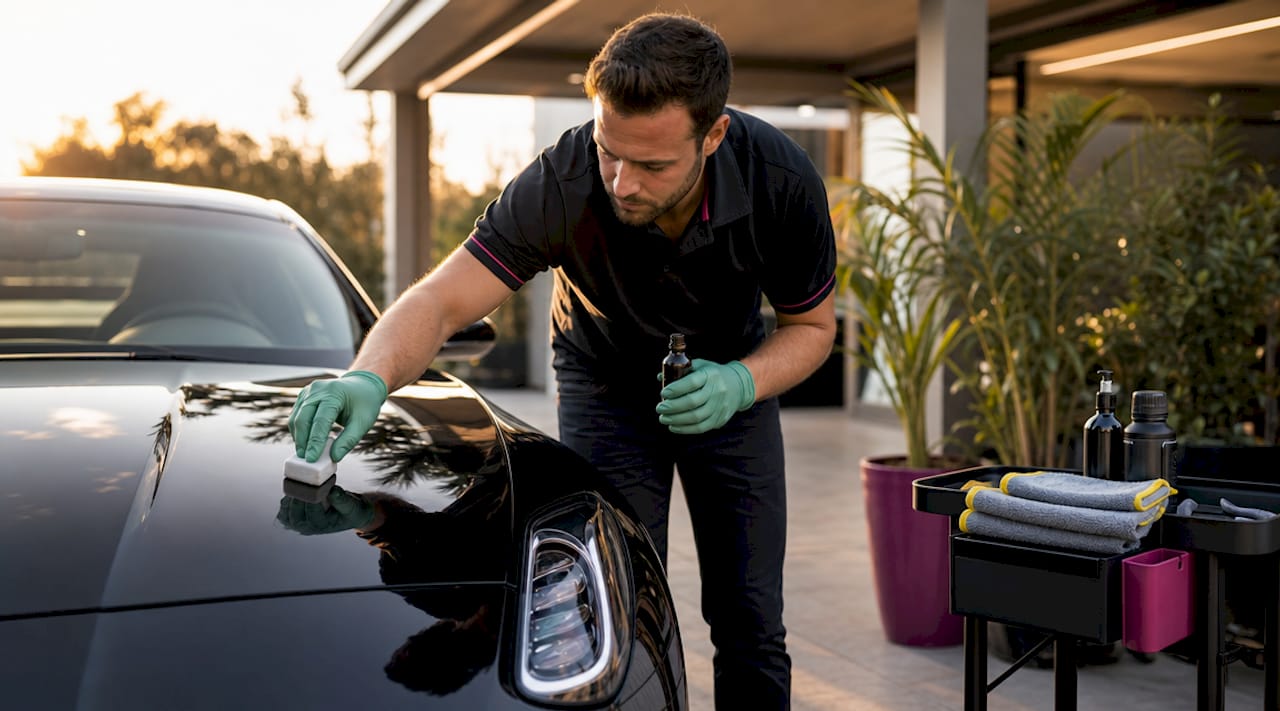
Aftermarket coatings, including spray-on sealants and DIY wax products, sit on top of the existing clear coat rather than bonding at the same molecular level. They offer temporary protection but cannot restore the structural integrity of a compromised factory finish. Once the original clear coat is breached through neglect, aggressive polishing, or unaddressed damage, a perpetual repair cycle begins that grows more expensive with every pass.
Repainting is the most costly outcome of poor preservation. A professional respray on a single panel can cost hundreds of dollars, and a full vehicle respray on a luxury or exotic car can reach into the thousands. Beyond cost, factory paint carries a color-match precision and curing quality that aftermarket shops struggle to duplicate exactly. Preserving the original finish is always preferable to replacing it.
- Factory finishes bond at a molecular level that aftermarket coatings cannot match
- Controlled curing produces superior film density and UV resistance
- Aftermarket sealants provide temporary protection but do not restore compromised clear coat
- Repainting eliminates the original finish permanently and reduces resale value
- Preservation is always more cost-effective than reactive repair or full respray
Pro Tip: Avoid using rotary polishers on factory clear coat unless you are a trained professional. Each pass removes microns of clear coat that cannot be replaced, and the cumulative effect shortens the finish’s functional lifespan significantly.
What threatens your factory finish most?
The threats to a factory finish fall into two categories: environmental and mechanical. Both operate continuously, and the damage they cause compounds over time when left unaddressed.
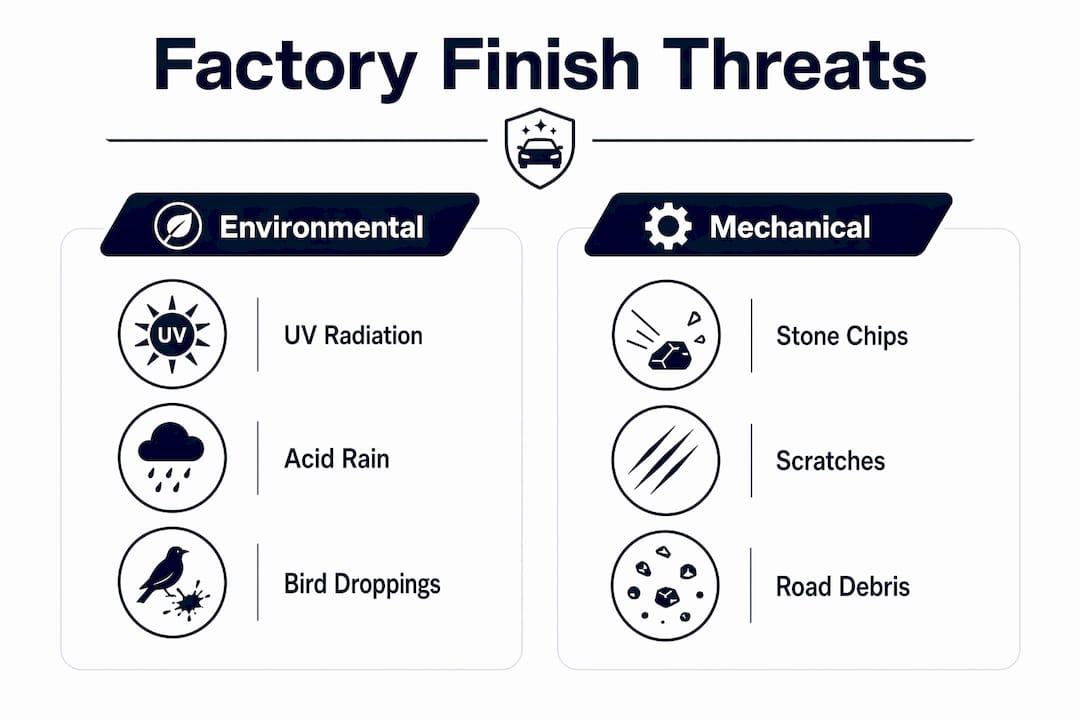
Environmental threats include UV radiation, acid rain, bird droppings, tree sap, and industrial fallout. UV exposure causes oxidation, which breaks down the clear coat’s polymer chains and produces the chalky, faded appearance common on neglected vehicles. Acid rain and bird droppings etch directly into the clear coat through chemical reactions, leaving permanent marks if not removed within hours of contact. Neglecting edge sealing and surface contaminants allows corrosion to migrate under the factory coating from the inside out, a process that is invisible until the damage is already severe.
Mechanical threats include stone chips, road debris, scratches from improper washing, and abrasion from automatic car washes with worn brushes. Stone chips are particularly damaging because they break through the clear coat and primer in a single impact, exposing bare metal to moisture and oxygen. That exposure is the starting point for rust, which spreads laterally under the surrounding paint.
The early signs of deterioration are worth knowing:
- Chalking — a powdery residue on the surface caused by UV-driven oxidation of the clear coat
- Clear coat failure — visible peeling or flaking where the clear coat separates from the base coat
- Fading — loss of color depth and vibrancy, most visible on dark-colored vehicles
- Micro-scratches — a web of fine scratches visible under direct light, usually caused by improper washing
- Etching — shallow pits or rings left by bird droppings, tree sap, or acid rain
Neglect accelerates all five of these conditions simultaneously. A vehicle that goes months without proper washing accumulates contaminants that chemically attack the clear coat around the clock. Addressing these threats early costs far less than correcting them after the clear coat has failed.
How to preserve factory finish: methods that actually work
Preserving a factory finish requires a combination of correct cleaning practices, physical protection, and scheduled professional maintenance. No single product or method covers all threat categories on its own.
Washing technique and product selection
The foundation of factory finish maintenance is regular washing with pH-neutral soaps using the two-bucket method. One bucket holds soapy water, the other holds clean rinse water for the wash mitt. This prevents reintroducing contaminants to the paint surface with each pass. Contamination management with pH-neutral products is more impactful for preservation than frequent waxing. Wax provides a temporary hydrophobic layer, but it does not prevent acid etching or UV degradation at the clear coat level.
Paint protection film and ceramic coatings
PPF provides a clear, durable barrier that absorbs stone chips, scratches, and road debris before they reach the factory paint. Traditional PPF is a thermoplastic urethane film applied to high-impact zones such as the hood, front bumper, and door edges. Liquid PPF is a sprayable polymer that covers the entire vehicle with a thinner but highly flexible protective layer. Ceramic coatings enhance gloss and chemical resistance by forming a semi-permanent bond with the clear coat, making the surface easier to clean and more resistant to UV and environmental contaminants.
| Protection method | Best for | Lifespan | Key limitation |
|---|---|---|---|
| Traditional PPF | High-impact zones, stone chips | 7 to 10 years | Higher cost, panel-specific |
| Liquid PPF | Full-vehicle coverage, daily drivers | 2 to 5 years | Less impact resistance than film |
| Ceramic coating | Chemical resistance, gloss, UV protection | 2 to 5 years | Does not absorb physical impacts |
| pH-neutral wax or sealant | Temporary hydrophobic layer | 3 to 6 months | No structural protection |
Scheduled maintenance versus reactive repairs
Reactive cleaning leads to greater costs than planned preventative care. A vehicle that receives professional decontamination washes, paint correction only when necessary, and periodic coating inspections will retain its factory finish far longer than one that only receives attention after visible damage appears. Scheduled maintenance also catches early-stage deterioration before it becomes structural failure.
Pro Tip: Schedule a professional paint inspection every 12 months. A trained detailer can identify micro-scratches, coating wear, and early clear coat failure that are invisible to the untrained eye, allowing correction before the damage becomes irreversible.
How do you choose the right preservation products and services?
Selecting the right protection strategy depends on vehicle usage, climate, and budget. A daily driver in Fort Lauderdale faces different threats than a weekend car stored in a climate-controlled garage. High UV exposure, salt air, and frequent rain in South Florida make full-vehicle PPF or Liquid PPF combined with a ceramic coating the most practical long-term strategy.
When evaluating products and service providers, consider the following:
- Liquid PPF vs. traditional PPF: Liquid PPF covers the entire vehicle at a lower cost and is ideal for owners who want comprehensive coverage without the seams of traditional film. Traditional PPF offers superior impact resistance on high-risk panels. For a detailed comparison, the Liquid PPF vs traditional PPF breakdown covers both options for luxury car owners specifically.
- Ceramic coating quality: Not all ceramic coatings are equal. Professional-grade coatings applied by certified installers bond more effectively and last significantly longer than consumer-grade products. Ask any installer about the coating’s hardness rating (measured in 9H scale), warranty terms, and whether a paint correction step is included before application.
- Questions to ask your installer: How long has the shop been applying PPF and ceramic coatings? Do they perform paint correction before coating? What prep process do they use? What warranty covers the product and the installation?
- Warning signs of inferior services: No surface decontamination before application, no paint correction offered, unusually low pricing, and no written warranty are all indicators of a service that will underdeliver.
Protecting your luxury car from environmental paint damage requires matching the protection level to the actual risk profile of how and where the vehicle is driven. Owners who skip this assessment often overpay for protection they do not need or underpay for protection that leaves gaps.
Key takeaways
Factory finish preservation protects a vehicle’s original paint through proactive maintenance, physical barriers like PPF, and chemical protection like ceramic coatings, extending finish life by 30 to 50% compared to unprotected vehicles.
| Point | Details |
|---|---|
| Factory finishes are irreplaceable | Original paint bonds at a molecular level that repainting cannot fully duplicate. |
| Proactive care beats reactive repair | Scheduled maintenance costs less and preserves finish longer than addressing damage after it appears. |
| PPF and ceramic coatings work best together | PPF handles physical impacts; ceramic coatings handle UV and chemical threats. |
| Washing technique matters | pH-neutral soaps and the two-bucket method prevent micro-scratches that degrade clear coat over time. |
| Choose installers by process, not price | Surface prep, paint correction, and warranty terms determine whether a coating investment pays off. |
What I’ve learned after years of working with factory finishes
Most car owners think a shiny car is a protected car. That assumption is the single most common reason factory finishes fail prematurely. Shine is a surface condition. Finish health is a structural condition. You can have a car that looks glossy and still have a clear coat that is six months from peeling.
The owners who get the best long-term results are the ones who treat preservation as a maintenance schedule, not a one-time event. They book annual inspections, address contamination quickly, and do not reach for a polishing machine every time they see a swirl mark. Consistent expert workflows for luxury vehicle owners show that the difference between a 10-year-old car that looks new and one that looks its age is almost entirely a function of how consistently the finish was maintained.
I also want to address the polishing misconception directly. Polishing is a correction tool, not a preservation tool. Frequent aggressive polishing removes microns of clear coat with every session. A factory clear coat is typically 40 to 50 microns thick. Aggressive polishing can remove 1 to 3 microns per session. Do that four or five times and you have permanently thinned the only protective layer standing between your paint and the elements.
The realistic expectation for a well-preserved factory finish is 10 to 15 years of showroom-quality appearance with proper protection and maintenance. That is not a marketing claim. That is what the data and the cars I have worked on consistently show. The investment in PPF, ceramic coating, and scheduled care pays back in resale value, avoided repair costs, and a vehicle that genuinely holds its appearance over time.
— Emmanuel
Protect your factory finish with professional-grade solutions
Mannyceramicprotouch specializes in factory finish preservation for luxury, exotic, and high-value vehicles in Fort Lauderdale and the surrounding area. The studio offers Liquid PPF, traditional paint protection film, and professional ceramic coating services, each applied with a detail-driven process designed for owners who expect long-term results. Every vehicle receives a tailored protection strategy based on its usage, climate exposure, and condition. If you are ready to protect your factory paint with a solution built for your specific vehicle, explore the Liquid PPF options in Fort Lauderdale or review the full range of paint protection services available at Mannyceramicprotouch.
FAQ
What does factory finish preservation mean for a car?
Factory finish preservation refers to protecting and maintaining a vehicle’s original paint and clear coat applied during manufacturing. The goal is to extend the finish’s lifespan, prevent deterioration, and retain the vehicle’s aesthetic and resale value.
How long does a factory finish last without protection?
Without protection, a factory finish typically shows significant deterioration within 5 to 7 years due to UV oxidation, acid rain, and physical damage. With PPF and ceramic coatings, finish life extends by 30 to 50% beyond that baseline.
Is ceramic coating enough to protect factory paint?
Ceramic coating provides strong UV and chemical resistance but does not absorb physical impacts like stone chips. Pairing a ceramic coating with PPF on high-impact zones gives the factory finish protection against both environmental and mechanical threats.
Does polishing damage the factory clear coat?
Yes. Aggressive polishing removes microns of clear coat with each session, permanently thinning the protective layer. Polishing should be used only for targeted paint correction, not as a routine maintenance step.
What is the difference between Liquid PPF and traditional PPF?
Traditional PPF is a thermoplastic urethane film installed on specific panels, offering maximum impact resistance. Liquid PPF is a sprayable polymer that covers the entire vehicle at a lower cost but with less physical impact protection. The right choice depends on vehicle usage, risk exposure, and budget.