


TL;DR:
- Maintaining and documenting a vehicle proactively preserves its market value throughout ownership. Using manufacturer services, transferable warranties, cosmetic protection, and detailed records helps owners recover more at resale. Starting these practices early and following a consistent upkeep routine significantly maximizes resale price and buyer confidence.
Vehicle resale value protection is the practice of proactively maintaining, documenting, and upgrading a vehicle to preserve its market worth through every stage of ownership. The industry term for this discipline is automobile depreciation protection, and it covers everything from manufacturer service schedules and transferable extended warranties to paint protection film and ceramic coatings. Owners who treat their vehicle as a depreciating asset from day one consistently recover more money at resale than those who react to problems late. This guide covers the specific strategies, products, and timelines that produce measurable results in 2026.
How does regular maintenance and documentation protect your vehicle’s resale value?
Strict adherence to a manufacturer’s service schedule is the single most effective long-term strategy for protecting resale value. Expert mechanic John Ibbotson at Consumer Reports identifies preventive maintenance as the primary defense against costly mechanical failures that destroy buyer confidence. A vehicle with zero deferred maintenance signals to buyers that the asset was respected, not neglected.

Consistent, documented maintenance signals respect for the vehicle and carries more weight than sporadic expensive repairs. Routine oil changes, fluid checks, tire rotations, and minor cosmetic repairs build cumulative value that a single pre-sale service visit cannot replicate. Buyers can tell the difference between a vehicle that was cared for and one that was cleaned up for the transaction.
Documentation is where most owners lose money they should have kept. A digital value file that chronologically archives service invoices, repair receipts, and maintenance notes shifts buyer perception from skepticism to confidence. Digital records are more credible than a folder of faded paper receipts because they are harder to fabricate and easier to verify.
Here is what a complete value file should contain:
- Every oil change receipt with mileage and date
- Tire rotation and alignment records
- Brake service invoices
- Fluid flush documentation (coolant, transmission, brake fluid)
- Any recall completion notices from the manufacturer
- Receipts for cosmetic repairs such as paint touch-ups or dent removal
- Warranty certificates and transfer paperwork
Pro Tip: Store your value file in a cloud service like Google Drive or Dropbox so you can share a link with prospective buyers instantly. A buyer who can review your records before a test drive arrives with far less negotiating leverage.
Follow the elite luxury car maintenance checklist from Mannyceramicprotouch to build a service cadence that maps directly to manufacturer requirements and resale benchmarks.
What role do warranties and depreciation protection products play?
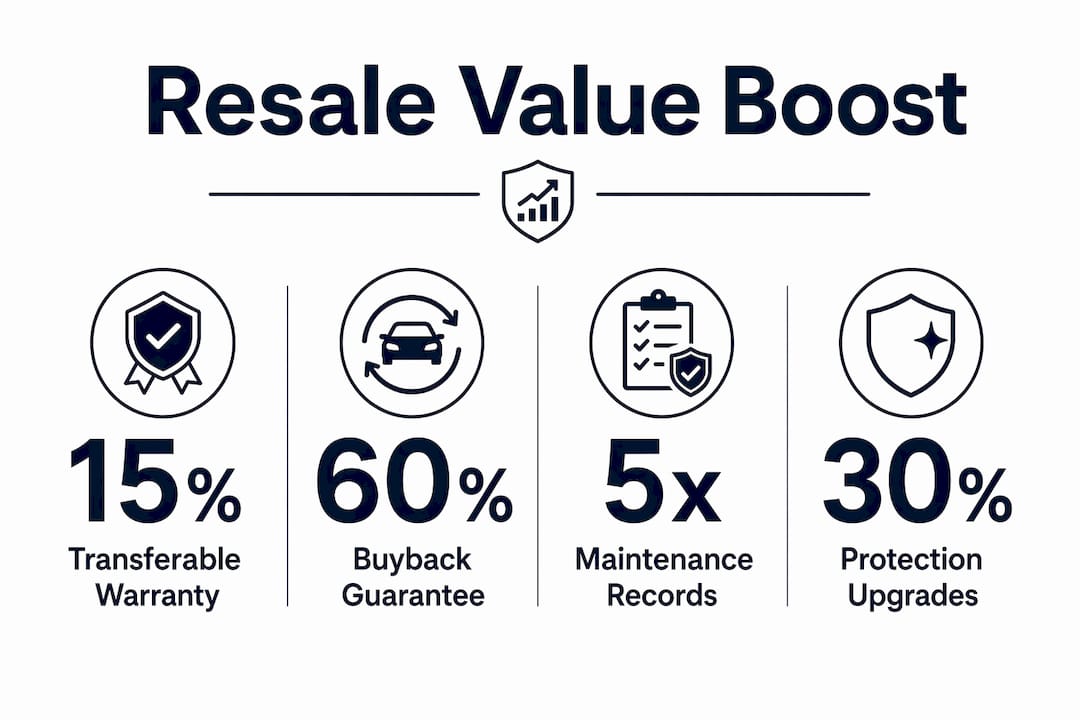
A well-maintained vehicle with a transferable extended warranty can sell for 5 to 15% more than comparable models without one. That premium exists because buyers view warranty coverage as a risk transfer. They are not just buying a car. They are buying protection against the unknown mechanical costs that follow ownership.
Depreciation waivers and extended warranties serve different purposes, and understanding the distinction matters for resale strategy.
| Product | Coverage focus | Typical term | Resale benefit |
|---|---|---|---|
| Extended warranty | Mechanical and electrical repairs | 3 to 7 years or mileage cap | 5 to 15% price premium if transferable |
| Depreciation waiver | Total loss financial gap | 24 to 36 months on new vehicles | Protects owner equity during peak depreciation |
| Buyback program | Guaranteed minimum resale price | 3 years with service conditions | Predictable exit value for luxury buyers |
Depreciation waivers apply specifically to brand-new vehicles and cover the financial gap between the insurance payout and the vehicle’s original value in a total loss scenario. They are most valuable during the first 24 to 36 months of ownership, when depreciation is steepest. After that window closes, their resale benefit is minimal.
Luxury automakers have taken depreciation protection further. Audi India’s buyback program guarantees up to 60% of the ex-showroom price after three years, provided the owner meets mileage limits and service schedule requirements. This model is spreading across premium brands because it removes the resale uncertainty that deters first-time luxury buyers.
Not all extended warranties add resale value. Transfer eligibility, service network flexibility, and simplicity of the transfer process are the three factors that determine whether a warranty is a genuine asset or a marketing feature. An overly complex transfer process reduces buyer appeal, even if the coverage itself is strong.
Pro Tip: Before purchasing an extended warranty, ask the provider for the exact transfer steps in writing. If the process requires more than two steps and a single form, the warranty may not add the resale value you expect.
How do cosmetic preservation and protective upgrades maximize resale value?
Cosmetic condition is a decisive factor for premium vehicle buyers, often outweighing mechanical history in initial negotiations. A buyer’s first impression is visual. Scratches, paint fade, rock chips, and stained interiors communicate neglect before a single question is asked. Protecting the exterior and cabin from day one is not optional for owners who want top-dollar offers.
The three primary cosmetic protection options each serve a distinct purpose:
- Liquid Paint Protection Film (Liquid PPF): Applied as a liquid that bonds to the paint surface, Liquid PPF provides protection against rock chips, light scratches, and environmental contaminants. It is less visible than traditional film and works well on complex body curves.
- Traditional PPF: A pre-cut or custom-fitted thermoplastic urethane film installed over painted surfaces. Traditional PPF offers thicker physical protection and self-healing properties on high-end formulations, making it the preferred choice for high-impact zones like hoods and front bumpers.
- Ceramic coatings: A chemical polymer layer that bonds to the paint and creates a hydrophobic, UV-resistant surface. Ceramic coatings do not absorb physical impacts but dramatically reduce paint oxidation, water spotting, and chemical etching over time.
| Protection type | Physical impact resistance | UV and chemical protection | Longevity | Best for |
|---|---|---|---|---|
| Liquid PPF | Moderate | High | 2 to 5 years | Full-body coverage on complex shapes |
| Traditional PPF | High | High | 5 to 10 years | High-impact zones, front ends |
| Ceramic coating | Low | Very high | 2 to 7 years | Paint clarity and gloss retention |
Routine upkeep reinforces whatever protection layer is in place. Regular washing with pH-neutral products, periodic waxing or coating maintenance, prompt dent removal, and consistent cabin cleaning all contribute to the condition score a buyer assigns during inspection. Read more about how surface protection extends value for luxury vehicles to understand the full financial case for cosmetic investment.
When and how should you prepare your vehicle for resale?
Optimal preparation begins 3 to 6 months before the intended sale date. This window allows time to complete necessary services, address cosmetic issues, and let the vehicle demonstrate normal use after repairs. A car that has just had every fluid changed and every scratch buffed out the week before listing raises questions. A car with a clean history and recent maintenance completed months earlier reads as well cared for.
Follow this sequence to maximize market readiness:
- Conduct a condition assessment. Walk the vehicle in daylight and note every cosmetic flaw, mechanical symptom, and interior issue. Use a pre-owned luxury car inspection checklist as a reference to catch items buyers will flag.
- Complete all outstanding manufacturer service items. Address any overdue oil changes, fluid flushes, filter replacements, or scheduled inspections. Confirm that no open recalls remain.
- Repair cosmetic damage. Fix rock chips, paint scratches, and dents through a professional detailer or body shop. Replace cracked or worn interior trim pieces.
- Organize and digitize your value file. Compile all service records, warranty documents, and repair receipts into a single digital folder. Verify that warranty transfer paperwork is complete and ready to hand over.
- Detail the vehicle professionally. A full detail, including paint decontamination, interior deep clean, and glass treatment, should be completed two to four weeks before listing.
- Set your price using current market data. Reference tools like Kelley Blue Book and CarGurus to establish a defensible asking price supported by your documentation.
Pro Tip: Avoid completing all repairs in the final two weeks before listing. Buyers and professional appraisers recognize rushed preparation. Spreading work across several months makes the vehicle’s condition appear organic and consistent.
What common mistakes reduce resale value despite protection efforts?
Protection efforts fail when owners undermine them with avoidable habits. These are the most common mistakes that cost sellers money at the negotiating table:
- Skipping or delaying routine maintenance. A single missed service interval creates a gap in the value file that buyers will notice and use to justify lower offers.
- Neglecting warranty transfer details. Failing to verify transfer eligibility before listing means the warranty cannot be presented as a selling point, eliminating a potential 5 to 15% price advantage.
- Allowing cosmetic damage to accumulate. Small rock chips and scratches compound over time. Each one that goes unaddressed lowers the condition grade a buyer assigns to the vehicle.
- Making aftermarket modifications. Non-factory wheels, suspension lowering kits, aftermarket exhaust systems, and custom body kits narrow the buyer pool significantly. Most buyers want a stock vehicle they can insure and resell without complications.
- Smoking inside the vehicle. Smoke odor is one of the most difficult conditions to remediate and one of the fastest ways to reduce offers. Professional ozone treatment can help, but it rarely eliminates the problem entirely.
- Failing to maintain cabin cleanliness. Stained seats, worn carpets, and cracked dashboards reduce perceived value even when the mechanical condition is excellent. Buyers price what they see first.
Key takeaways
Protecting vehicle resale value requires consistent maintenance, transferable warranty coverage, cosmetic preservation, and coordinated pre-sale preparation starting at least three to six months before listing.
| Point | Details |
|---|---|
| Maintenance documentation | A digital value file with chronological service records shifts buyer perception from skepticism to confidence. |
| Warranty transferability | Transferable extended warranties can add 5 to 15% to resale price, but only if the transfer process is simple and verified. |
| Cosmetic protection | Liquid PPF, traditional PPF, and ceramic coatings each serve distinct roles and should be selected based on vehicle use and budget. |
| Pre-sale timing | Begin preparation 3 to 6 months before listing to avoid the appearance of rushed maintenance. |
| Avoid value-reducing habits | Aftermarket modifications, smoking, and deferred cosmetic repairs consistently reduce final sale prices. |
Why I think most owners protect their vehicles too late
Most vehicle owners think about resale value six weeks before they list the car. By that point, the maintenance gaps are already in the record, the cosmetic damage has compounded, and the warranty transfer window may have closed. The protection strategy that actually works starts at the moment of purchase.
What I have seen consistently is that owners who treat their vehicle as a financial asset from day one, not just a transportation tool, recover significantly more money at resale. That means following the service schedule without exception, applying paint protection before the first road trip, and building the value file from the first oil change receipt. It is a discipline, not a project.
The warranty piece is underused. Buyers in 2026 are more financially cautious than they were five years ago. A transferable warranty that covers the powertrain for another three years is a genuine competitive advantage in a private sale. Most sellers either do not have one or do not know how to transfer it. That gap is money left on the table.
Cosmetic condition shapes the emotional side of the transaction. A buyer who falls in love with how a car looks will negotiate less aggressively on price. A buyer who spots three rock chips and a scratched bumper before the test drive has already mentally discounted the vehicle. The car preservation workflow that Mannyceramicprotouch recommends addresses this directly. Start the protection early, stay consistent, and the resale outcome takes care of itself.
— Emmanuel
Protect your vehicle’s exterior with professional liquid PPF services
The most durable form of cosmetic protection for resale value starts with the paint surface. Mannyceramicprotouch specializes in Liquid PPF and high-performance ceramic coatings designed specifically for luxury, exotic, and high-value vehicles. Every application is tailored to the vehicle’s finish, body geometry, and the owner’s long-term preservation goals.
If you are preparing a high-value vehicle for eventual resale or simply want to maintain showroom-level condition over time, explore the liquid PPF solutions in Fort Lauderdale that Mannyceramicprotouch offers. For owners comparing options, the Liquid PPF vs traditional PPF guide breaks down which solution fits your vehicle and budget. Contact Mannyceramicprotouch directly for a personalized consultation.
FAQ
What is vehicle resale value protection?
Vehicle resale value protection is the practice of maintaining, documenting, and upgrading a vehicle throughout ownership to preserve its market worth at resale. It includes manufacturer service adherence, transferable warranties, cosmetic protection, and organized documentation.
How much can a transferable warranty increase resale value?
A vehicle with a transferable extended warranty can sell for 5 to 15% more than comparable models without one, provided the transfer process is straightforward and verified before listing.
When should I start preparing my car for resale?
Preparation should begin 3 to 6 months before the sale date to complete services, address cosmetic issues, and allow the vehicle to demonstrate normal post-repair use without appearing rushed.
Does paint protection film help with resale value?
Paint protection film, whether liquid or traditional, preserves the paint surface against rock chips, scratches, and environmental damage. Buyers view cosmetic condition as a primary indicator of overall vehicle care, which directly supports higher offers.
What documents should I have ready when selling my vehicle?
Compile a digital value file with all service invoices, repair receipts, recall completion notices, warranty certificates, and transfer paperwork. Documentation organized chronologically drives quicker sales and reduces buyer negotiation leverage.