

TL;DR:
- Paint decontamination removes bonded contaminants like iron particles, tar, and fallout that washing cannot eliminate, restoring paint smoothness. The recommended sequence involves iron remover, tar remover, then clay bar treatment to prevent scratches and ensure proper adhesion of protective coatings. Regular decontamination, typically every two to three months, is essential for maintaining paint health and maximizing coating longevity.
Paint decontamination is defined as the process of removing bonded contaminants from a vehicle’s paint surface that regular washing cannot eliminate. These contaminants include iron particles from brake dust, tar deposits, industrial fallout, and road grime that physically embed into or chemically bond with the clear coat. The paint decontamination process uses a combination of chemical products and mechanical methods, including iron removers, tar removers, and clay bars, to restore a genuinely smooth surface. Without this step, polishing produces uneven results and protective coatings like ceramic or wax fail to bond properly to the paint.
What is paint decontamination and why does it matter?
Paint decontamination removes bonded contaminants like iron particles, tar, and industrial fallout that washing simply cannot reach. This matters because these substances do not sit loosely on the surface. They penetrate the clear coat or chemically react with it over time, causing roughness, dullness, and eventually oxidation that shortens the life of your paint.
Regular car washing removes loose dirt and surface debris. It does not dissolve iron particles that have embedded from brake dust, nor does it lift tar that has polymerized onto the paint in warm weather. Washing alone is insufficient to address these bonded contaminants, which is why a dedicated decontamination step exists as a separate procedure in any serious paint care workflow.
The result of skipping decontamination is visible and tactile. Run a clean plastic bag over an unwashed panel and you will feel a gritty, sandpaper-like texture. That texture is contamination. Removing it restores the slick, glass-like feel that indicates a truly clean surface ready for correction or protection.
What contaminants does paint decontamination target?
Understanding the specific contaminants involved explains why multiple products are needed and why no single wash removes them all.
- Iron particles: These come from brake dust and industrial pollution. When iron particles contact paint, they heat up from friction and physically embed into the clear coat. Over time, they oxidize and cause orange or rust-colored spotting. Iron removers are the only effective solution for dissolving these particles chemically.
- Tar and road film: Petroleum-based tar deposits from road surfaces stick to lower panels and wheel arches. They are sticky, dark, and resistant to soap. Tar remover, a solvent-based product, dissolves these deposits without requiring abrasive scrubbing.
- Industrial fallout: Airborne metallic particles from factories, rail yards, and construction sites settle on paint surfaces. These particles behave similarly to brake dust iron and require chemical iron removers to address them.
- Tree sap and adhesive residue: These organic and synthetic sticky substances bond to paint and harden over time. Tar remover handles most of these, though stubborn adhesive may require a dedicated remover.
- Bonded road grime: Fine particles of silica, rubber, and road debris that embed into the paint surface over thousands of miles. Clay bar treatment is the primary method for lifting these physically.
Each contaminant type requires a specific product. Using only one product and expecting full decontamination is a common mistake that leaves residual contamination sealed under the next protective layer.
What is the step-by-step paint decontamination workflow?
The recommended decontamination sequence is iron remover first, then tar remover, then clay bar treatment. This order is not arbitrary. Each step prepares the surface for the next and reduces the risk of scratching or marring.
-
Wash the vehicle thoroughly. Start with a full two-bucket wash or foam cannon pre-rinse to remove loose dirt, mud, and debris. Washing before chemical decontamination prevents loose particles from interfering with product contact and reduces the risk of dragging grit across the paint during later steps.
-
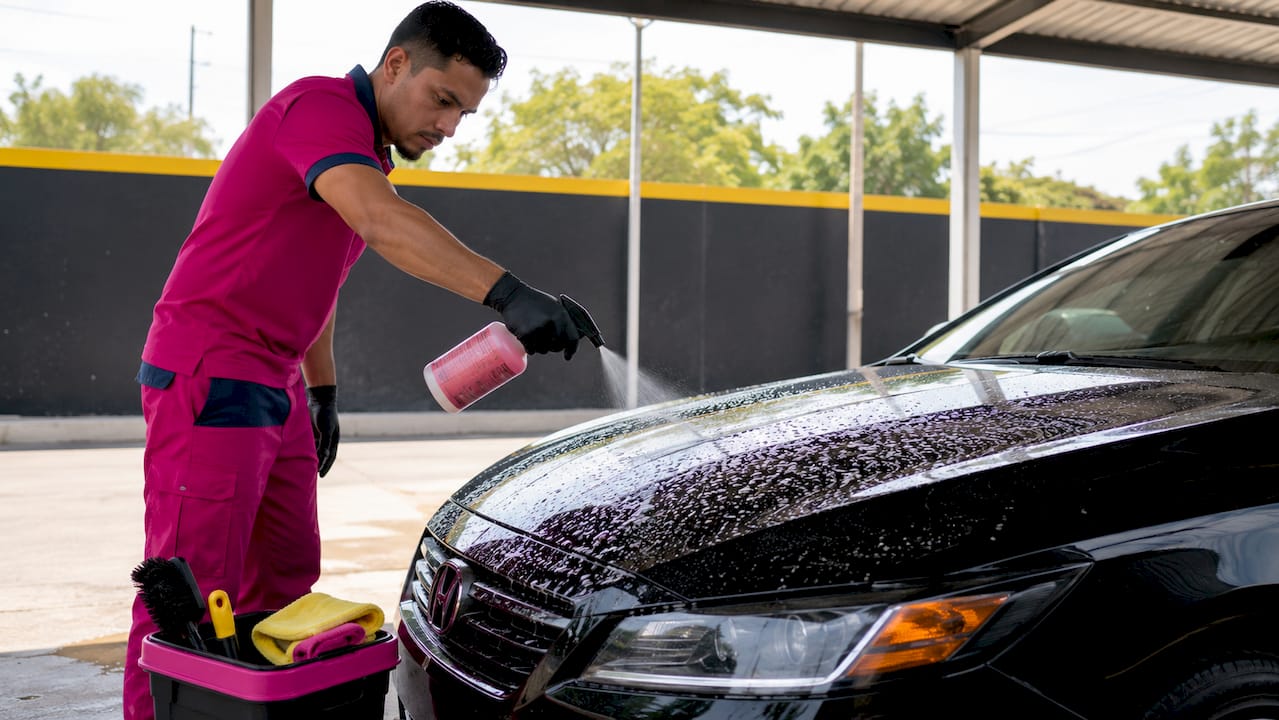
Apply iron remover to all painted surfaces. Spray the product generously onto wet or damp paint and allow it to dwell for 3 to 5 minutes. Iron removers show a visible color change, turning purple or red as they react with embedded iron particles. This color reaction confirms the product is working. If no color change appears, the panel may need additional coverage or a longer dwell time.
-
Rinse iron remover completely. Do not allow the product to dry on the surface. Drying chemical decontaminants reduces their effectiveness and can cause streaking or staining. Re-mist the panel if it begins to dry before rinsing.
-
Apply tar remover to affected areas. Focus on lower panels, rocker panels, and wheel arches where tar deposits concentrate. Allow the product to dwell according to the manufacturer’s instructions, then wipe gently with a microfiber towel. Avoid scrubbing aggressively.
-
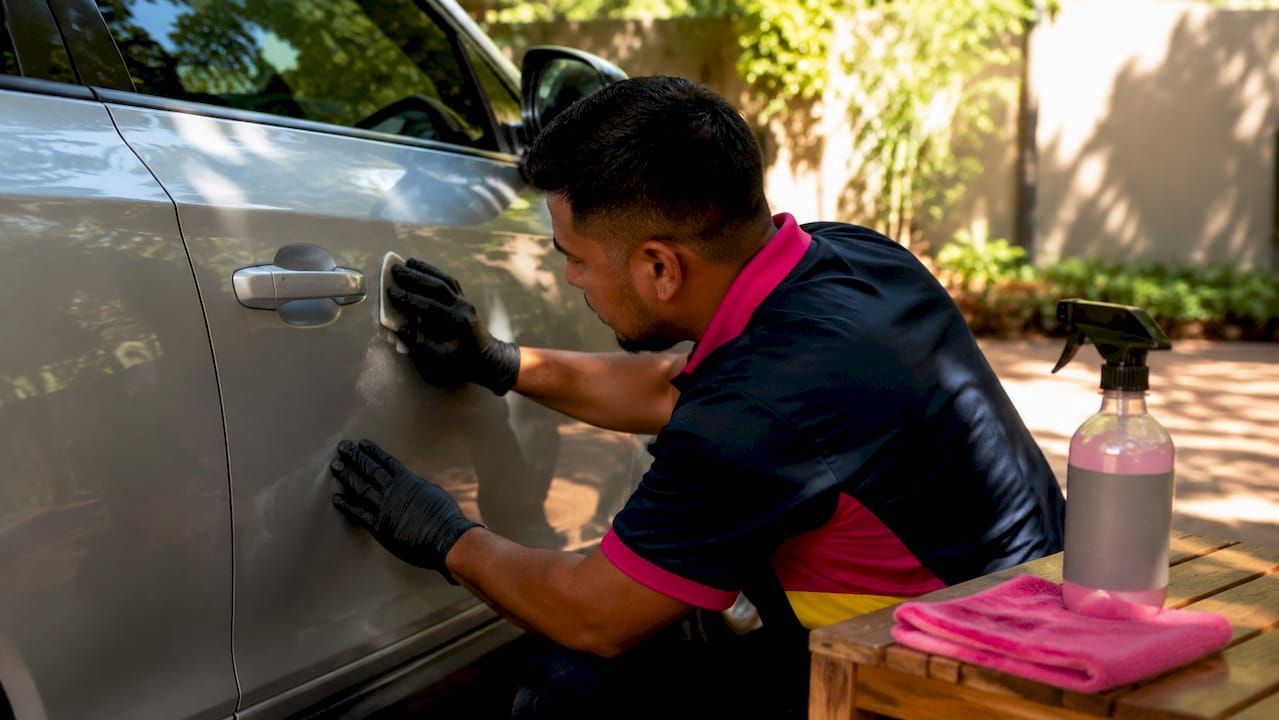
Perform clay bar decontamination. Lubricate the paint surface with a dedicated clay lubricant or quick detailer spray, then glide the clay bar across the surface using light, overlapping passes. Clay bars remove bonded surface contamination physically by controlled mechanical contact. This is not polishing. Clay lifts what chemicals dissolve but cannot fully remove.
-
Inspect the surface. After claying, run a clean plastic bag or your fingertips across the paint. Smooth paint feels frictionless while contaminated paint still feels gritty. If roughness remains, repeat the clay step on that area.
Pro Tip: Never let iron remover or tar remover dry on the paint. Work one panel at a time on hot days or in direct sunlight, and keep a spray bottle of water nearby to re-mist the surface if the product begins to flash.
Why does sequence and technique matter so much?
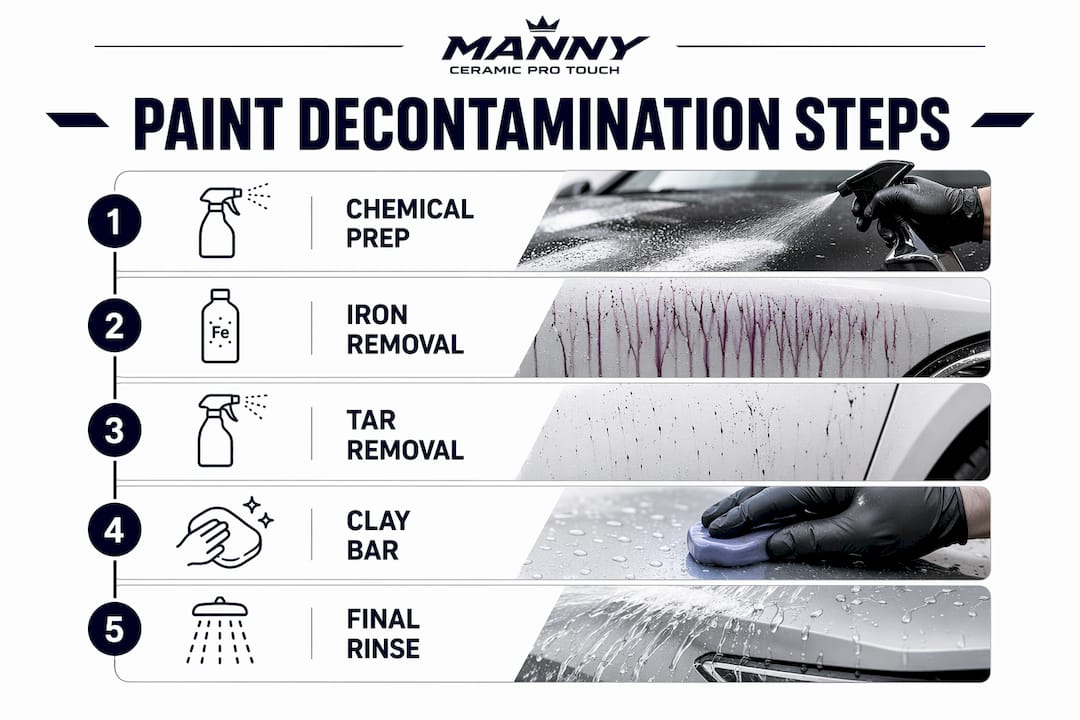
The order of chemical before mechanical decontamination is the single most important technical decision in the entire workflow. Claying before iron removal risks dragging sharp metal particles across the clear coat, creating micro-scratches that require polishing to correct. Chemical dissolution first reduces the size and adhesion of those particles before any physical contact occurs.
Technique during clay application carries equal weight. Proper lubrication during clay use prevents scratches by allowing the clay to glide rather than drag. Using a quick detailer spray like Meguiar’s D155 or a dedicated clay lubricant from Gyeon or CarPro keeps the surface wet enough for safe mechanical contact. Pressing too hard or using a dry clay bar on paint is a reliable way to introduce marring that defeats the purpose of the entire process.
Common pitfalls to avoid during the paint decontamination workflow:
- Over-claying: Excessive clay use causes unnecessary abrasion. Regular chemical decontamination reduces the frequency and intensity of clay use needed, protecting the clear coat over time.
- Rushing dwell times: Iron remover needs 3 to 5 minutes to complete its chemical reaction. Rinsing too early leaves partially dissolved iron on the surface.
- Skipping the inspection step: Visual inspection alone misses residual contamination. Always use the plastic bag or fingertip test to confirm smoothness before moving to polishing or coating.
- Dropping the clay bar: A clay bar that touches the ground picks up grit that will scratch paint. Discard it immediately and use a fresh piece.
Pro Tip: Fold and re-knead the clay bar frequently during use to expose a clean surface. Once the clay face becomes visibly gray or loaded with contamination, fold it to reveal a fresh section before continuing.
How often should you decontaminate your car’s paint?
There is no universal schedule for paint decontamination. Frequency depends on driving habits, climate, storage conditions, and contamination levels specific to each vehicle. A daily driver in an urban environment accumulates iron and tar far faster than a weekend car stored in a garage.
General guidance for most vehicles:
- Chemical decontamination (iron remover and tar remover): Every two to three months for vehicles driven regularly in urban or industrial areas. Vehicles stored indoors or driven infrequently may need this only twice per year.
- Clay bar decontamination: Only as needed, based on the plastic bag test result. Overusing clay accelerates clear coat wear without meaningful benefit.
- Seasonal timing: Spring and fall are logical decontamination points. Spring removes winter road salt, industrial fallout, and accumulated brake dust. Fall prepares paint for winter protection by removing summer tar and tree sap before applying a fresh sealant or coating.
- Before any coating or polish application: Always perform full decontamination before applying ceramic coatings, paint protection film, wax, or sealants. This is non-negotiable for proper coating adhesion.
Monitoring contamination levels through regular touch tests takes less than a minute and gives you accurate, vehicle-specific data rather than relying on a fixed calendar schedule.
How decontamination prepares paint for polishing and coatings
Decontamination is the foundation of every successful polishing and coating job. The table below shows exactly how each decontamination step affects the outcome of subsequent paint work.
| Decontamination step | Effect on polishing and coating |
|---|---|
| Iron remover | Eliminates embedded particles that cause polishing pad loading and uneven correction |
| Tar remover | Removes sticky residues that prevent uniform pad contact and contaminate polish |
| Clay bar | Produces a physically smooth surface that reveals true paint defects for accurate correction |
| IPA wipe-down | Strips polish oils and product residues so ceramic coatings bond directly to clean paint |
| Full decontamination sequence | Prevents contaminants from being sealed under coatings, which would compromise durability |
Contaminants block protection bonding and cause polishing pads to load with debris, resulting in uneven paint correction. A ceramic coating applied over contaminated paint bonds to the contaminant layer, not the clear coat. That coating will fail prematurely, and the contaminants will continue degrading the paint underneath. The IPA (isopropyl alcohol) wipe-down after polishing removes any remaining polish oils and silicone residues, giving the coating a genuinely bare, clean surface to bond with. Skipping any step in this sequence compromises every step that follows. You can learn more about environmental paint threats that make decontamination necessary in the first place.
Key takeaways
Paint decontamination is the mandatory foundation for any polishing, wax, or ceramic coating application, requiring chemical removal of iron and tar before mechanical clay treatment to protect the clear coat and maximize coating adhesion.
| Point | Details |
|---|---|
| Definition and purpose | Paint decontamination removes bonded contaminants that washing cannot reach, restoring surface smoothness and gloss. |
| Correct sequence | Always apply iron remover first, then tar remover, then clay bar to minimize scratch risk. |
| Frequency guidance | Chemical decontamination every two to three months; clay bar only as needed based on touch test results. |
| Coating preparation | Skipping decontamination seals contaminants under protective coatings, reducing adhesion and long-term durability. |
| Inspection technique | Use the plastic bag or fingertip test after claying to confirm the surface is genuinely smooth before proceeding. |
What I’ve learned from years of decontaminating high-value paint
Most car owners underestimate how much contamination their paint carries. I have worked on vehicles that looked flawless from ten feet away but felt like sandpaper under a plastic bag test. The paint was loaded with iron fallout and tar that no amount of washing had touched. That gap between appearance and actual surface condition is exactly why decontamination exists as a separate step.
The chemical-first approach is the one principle I would not compromise on. I have seen the micro-scratch patterns that result from claying over unresolved iron contamination, and correcting that damage takes far more time than the decontamination step itself would have. The sequence exists for a reason, and following it precisely is what separates a professional result from an amateur one.
My other consistent observation is that people over-clay. They treat clay as a routine step rather than a targeted one. Regular iron remover use keeps contamination levels low enough that clay is rarely needed more than once or twice per year on a well-maintained vehicle. That approach protects the clear coat over the long term, which matters especially on luxury and exotic finishes where paint depth and clarity are part of the vehicle’s value.
Decontamination is not glamorous work. It does not produce the dramatic visual transformation that polishing or coating does. But it is the step that determines whether everything that follows actually works. Get it right, and your paint stays cleaner, your coatings last longer, and your vehicle holds its finish for years.
— Emmanuel
Protect your paint after decontamination with Mannyceramicprotouch
Decontamination prepares your paint for protection. What you apply next determines how long that clean surface stays that way.

At Mannyceramicprotouch, every vehicle receives a full decontamination protocol before any protective product touches the paint. That preparation is what makes the difference between a coating that lasts two years and one that lasts five. Whether you are considering ceramic coating packages for long-term gloss and chemical resistance, or exploring Liquid PPF options for physical protection against rock chips and scratches, the foundation is always a properly decontaminated surface. Mannyceramicprotouch serves clients in the Fort Lauderdale area who expect precision and lasting results.
FAQ
What is paint decontamination in simple terms?
Paint decontamination is the process of removing bonded contaminants like iron particles, tar, and industrial fallout from a vehicle’s paint surface using chemical products and clay bars. Regular washing cannot remove these substances because they physically embed into or chemically bond with the clear coat.
How often should you decontaminate car paint?
Chemical decontamination with iron remover and tar remover is recommended every two to three months for regularly driven vehicles. Clay bar treatment should only be performed as needed, based on the plastic bag touch test, to avoid unnecessary clear coat wear.
Can you skip decontamination before applying ceramic coating?
Skipping decontamination before a ceramic coating means the coating bonds to contaminants rather than clean paint, which reduces adhesion and shortens the coating’s lifespan. Full decontamination followed by an IPA wipe-down is required for proper coating performance.
What does the color change during iron removal mean?
The purple or red color change that appears during iron remover application confirms that the product is chemically reacting with embedded iron particles. If no color change occurs, the panel may need additional product coverage or a longer dwell time.
Is clay bar treatment the same as polishing?
Clay bar treatment is not polishing. Clay physically lifts bonded surface contamination through controlled mechanical contact, while polishing uses abrasives to remove clear coat imperfections. Clay prepares the surface for polishing; it does not correct paint defects on its own.