

TL;DR:
- Chemical resistance on cars refers to coatings’ ability to withstand harmful substances like acids, alkalis, and automotive fluids without damage. Modern factory paint relies on engineered layers such as ceramic coatings and PPF to provide long-lasting chemical durability, surpassing traditional wax protections. Maintaining this resistance involves regular use of pH-neutral products, prompt contaminant removal, and professional upkeep to preserve coating integrity and prevent long-term damage.
Chemical resistance for cars is the capacity of automotive materials and coatings to withstand exposure to damaging substances, including fuels, road salts, bird droppings, alkaline cleaners, and industrial fallout, without losing structural integrity or appearance. This property is not built into modern factory paint. Modern factory finishes are thinner and more water-based than ever, meaning chemical resistance must be added through engineered surface layers. Technologies like ceramic coatings and paint protection film (PPF) exist specifically to fill that gap, protecting your vehicle’s finish from oxidation, etching, and staining that accumulate over time.
What is chemical resistance for cars and why it matters
Chemical resistance in vehicles is the property that determines how well a surface layer repels, neutralizes, or survives contact with reactive substances. Without it, your car’s paint is exposed to a constant cycle of chemical attack from the environment, the road, and even routine washing. The industry term for this protective property is chemical durability, and it applies to every layer of a vehicle’s exterior: clear coat, base coat, and any aftermarket coating applied on top.
The core mechanism behind chemical resistance is molecular structure. SiO2 and TiO2 coatings form covalent bonds with the paint surface, creating cross-linked inorganic networks that maintain integrity under chemical attack. This is fundamentally different from traditional carnauba wax, which sits on top of the paint as a soft organic layer and breaks down quickly when exposed to acidic or alkaline substances.
Here is what chemical resistance actually protects against on a daily basis:
- Acidic contaminants: Bird droppings (pH as low as 3.5), acid rain, and industrial fallout etch directly into unprotected clear coat within hours of contact.
- Alkaline substances: Strong degreasing soaps and road deicers strip hydrophobic properties from coatings, accelerating surface degradation.
- Automotive fluids: Brake fluid, engine oil, and fuel can soften and stain unprotected paint on contact.
- Road salts: Sodium chloride and calcium chloride solutions penetrate micropores in unprotected paint, accelerating oxidation from the inside out.
- UV radiation: Ultraviolet exposure does not act alone. It weakens surface chemistry, making paint more vulnerable to every chemical threat listed above.
Pro Tip: If you notice a dull, slightly textured patch on your paint after a bird dropping sits for more than a few hours, that is active etching. The acid has already begun dissolving the clear coat. A chemically resistant coating buys you significantly more time to remove the contaminant before permanent damage sets in.
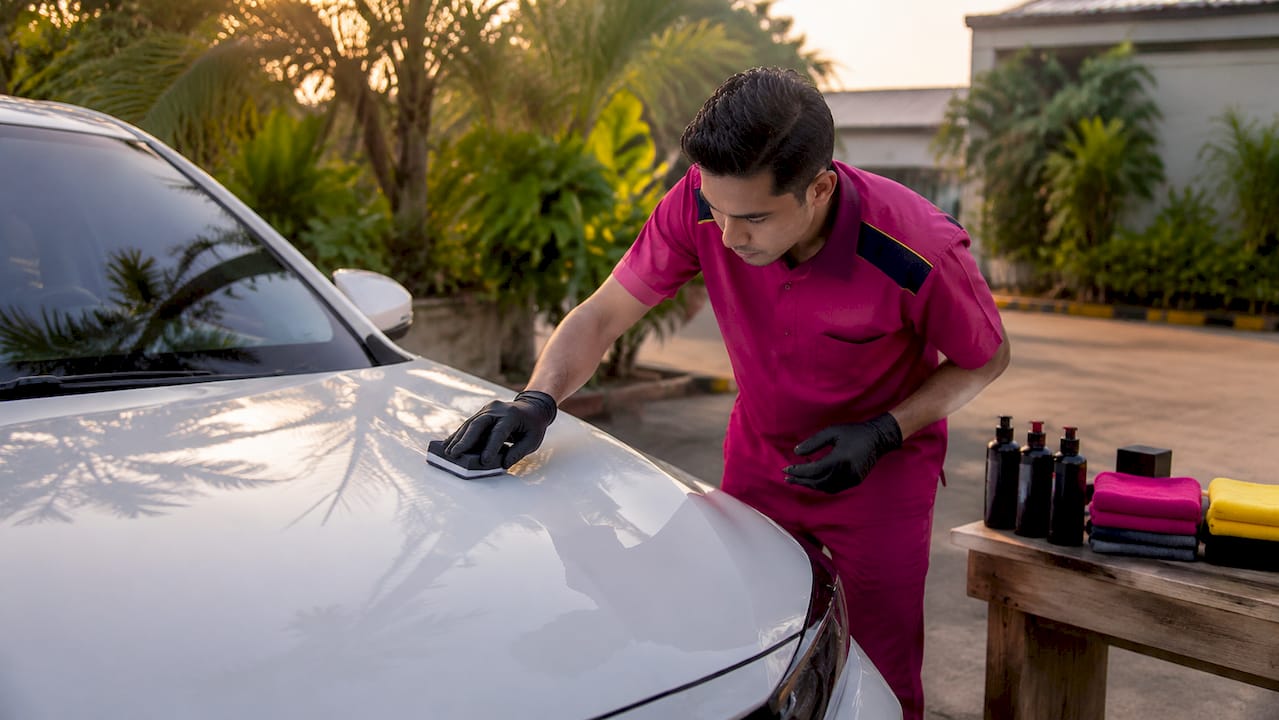
Ceramic coatings bond covalently to the paint, forming hard, semi-permanent layers that protect against UV rays, bird droppings, acid rain, and chemical stains. This is why professional-grade coatings from brands like Gtechniq and Ceramic Pro are considered the standard for serious automotive protection.
How do ceramic coatings, PPF, and wax compare for chemical resistance?
Not all protective coatings deliver the same level of chemical durability. The three main categories, ceramic coatings, paint protection film, and traditional wax or sealants, differ significantly in how they resist chemical attack, how long they last, and what conditions they handle best.
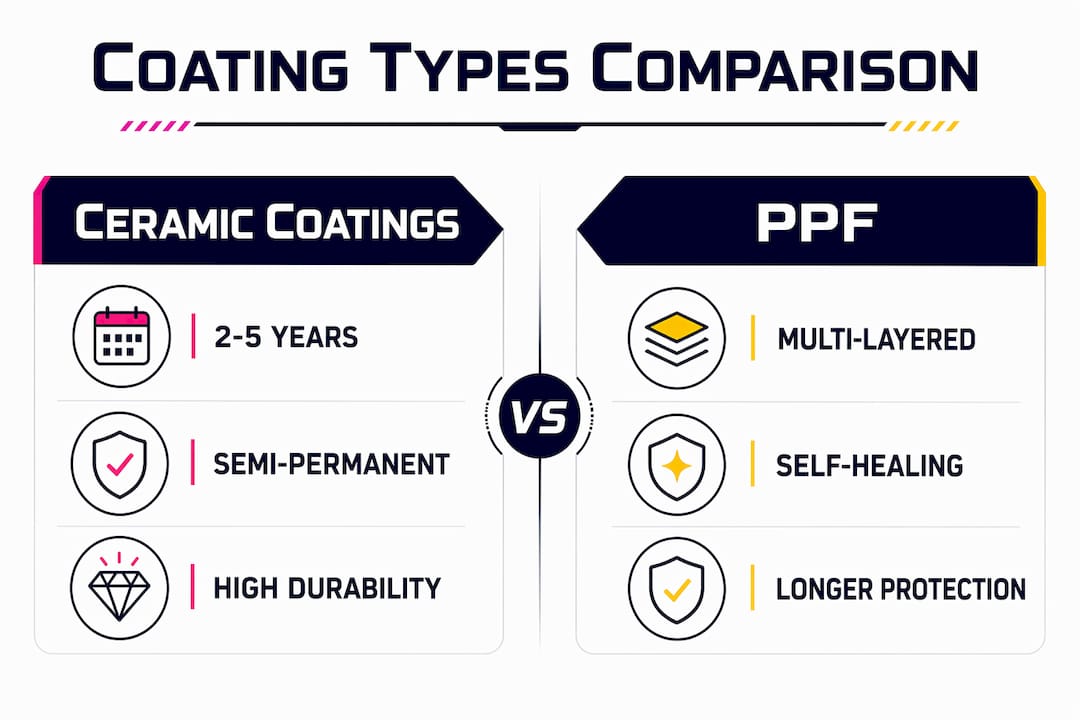
| Protection Type | Chemical Resistance Level | Durability | Self-Healing | Typical Warranty |
|---|---|---|---|---|
| Ceramic coating | High (SiO2/TiO2 covalent bond) | 2 to 5 years | No | 2 to 5 years |
| Paint protection film (PPF) | Very high (multi-layer TPU structure) | 5 to 10 years | Yes (thermally activated) | 5 to 10 years |
| Carnauba wax | Low (organic, surface-level only) | 1 to 3 months | No | None |
| Synthetic sealant | Moderate (polymer-based) | 6 to 12 months | No | Limited |
Professional-grade ceramic coatings cost $700 to $1,850 in the U.S. and offer two to five years of chemical resistance protection. That range reflects the difference between entry-level consumer-grade products and multi-layer professional systems applied by trained installers.
PPF takes chemical resistance further. PPF films provide multi-layered protection through a thermoplastic polyurethane (TPU) base, an anti-contaminant top coat, and cross-linked adhesives that resist both acid and alkali attack. PPF top coats lower surface tension to 18 mN/m or below, compared to 45 mN/m for uncured paint. Lower surface tension means contaminants bond less aggressively to the surface and are far easier to remove before damage occurs.
The self-healing property of advanced PPF is worth understanding separately. Self-healing PPF films use thermally activated dynamic polymer networks to repair chemical-induced micro-scratches. Heat from sunlight or warm water triggers the polymer chains to flow back into place, closing surface damage that would otherwise become a pathway for deeper chemical penetration.
Wax and synthetic sealants do provide a temporary barrier, but their organic chemistry makes them vulnerable to the same substances they are meant to block. Alkaline soaps and acidic bird droppings degrade organic-rich coating behavior quickly, stripping hydrophobic properties within weeks of application. For a vehicle parked outdoors or driven in urban environments, wax alone is not a viable long-term strategy.
Pro Tip: Ceramic coatings and PPF are not competing products. Many high-value vehicle owners use PPF on high-impact zones like the hood, bumper, and mirrors, then apply a ceramic coating over the entire car for a unified hydrophobic surface. This layered approach delivers the best of both technologies. You can explore the PPF vs ceramic coating comparison to decide what fits your vehicle’s needs.
What chemical threats do cars face and how do they cause damage?
Understanding the specific threats your car faces makes it easier to prioritize protection. Chemical damage does not happen all at once. It accumulates through repeated exposure, and the effects become visible only after the surface has already been compromised.
-
Bird droppings and insect residue. Bird droppings are among the most corrosive substances a car encounters regularly. Their uric acid content etches into clear coat within hours, and the damage worsens as the dropping dries and contracts, pulling the softened paint with it. Insect splatter contains organic acids with a similar effect.
-
Acid rain and industrial fallout. Acid rain carries sulfuric and nitric acids that react with paint chemistry on contact. Industrial fallout, the fine metallic and chemical particles released by manufacturing and heavy traffic, embeds into paint and initiates oxidation from within. Unprotected paint has higher surface energy, which causes stronger adherence of pollutants and faster wear.
-
Road salts and deicers. Sodium chloride and magnesium chloride solutions used for winter road treatment are highly corrosive. They penetrate paint micropores, reach the metal substrate, and accelerate rust formation. Vehicles in northern states or coastal areas face this threat year-round.
-
Automotive fluids. Brake fluid is particularly aggressive. It is glycol-based and actively softens paint on contact. Engine oil and fuel leave staining residues that bond to unprotected surfaces and are difficult to remove without abrasive action that further damages the finish.
-
Alkaline cleaning products. Automatic car washes and some consumer-grade soaps use high-pH detergents that strip protective coatings. Harsh chemicals degrade coating behavior by stripping hydrophobic properties and slickness from the surface layer over time.
Early signs of chemical damage include: a hazy or dull finish that does not respond to washing, small circular etch marks in the clear coat, water that no longer beads on the surface, and a rough texture when you run your hand across the paint. Any of these signs indicate the protective layer has been compromised. You can review environmental threats to automotive finishes for a deeper breakdown of what each contaminant does at the surface level.
How to maintain and extend chemical resistance on your car
Applying a ceramic coating or PPF is not a one-time fix. Maintaining the chemical resistance of your vehicle’s surface requires consistent care practices that preserve the coating’s molecular structure and hydrophobic performance.
- Use pH-neutral car wash soaps. Products formulated for coated vehicles, such as those from Gtechniq or CarPro, maintain the coating’s surface chemistry without stripping it. High-pH or high-alkaline soaps are the fastest way to degrade a ceramic coating’s hydrophobic layer.
- Wash frequently in contamination-heavy environments. If your vehicle is parked near trees, in urban areas, or driven on salted roads, weekly washing prevents chemical buildup from reaching the bonding threshold where etching begins.
- Remove contaminants immediately. Bird droppings, tree sap, and fuel spills should be removed within hours, not days. A ceramic coating gives you a larger removal window than bare paint, but it does not make the surface immune. Carry a quick detailer spray like CarPro Ech2O or Gtechniq W6 for on-the-go removal.
- Avoid automatic car washes with brushes. Brush-style washes introduce micro-scratches that compromise the coating’s surface integrity and create pathways for chemical penetration. Touchless washes are acceptable, but hand washing remains the best practice.
- Schedule professional maintenance annually. Proper surface preparation is critical for coating adhesion and longevity. Annual decontamination washes, clay bar treatments, and coating top-ups from a professional installer restore hydrophobic performance and extend the coating’s effective lifespan.
Surface preparation before coating is equally important when reapplying protection. Coating over contaminated or chemically damaged paint traps the damage underneath and prevents proper molecular bonding, leading to premature failure.
Key takeaways
Chemical resistance for cars requires a combination of the right coating technology, proper installation, and consistent maintenance to deliver long-term protection against acidic, alkaline, and environmental threats.
| Point | Details |
|---|---|
| Chemical resistance defined | It is the ability of coatings and materials to withstand chemical exposure without degrading in appearance or function. |
| Ceramic coatings vs. wax | Ceramic coatings form covalent bonds lasting two to five years; wax breaks down within months under chemical exposure. |
| PPF’s structural advantage | Multi-layer TPU films with self-healing chemistry offer the highest level of chemical and physical surface protection available. |
| Biggest chemical threats | Bird droppings, road salts, brake fluid, and alkaline soaps cause the most frequent and severe paint damage. |
| Maintenance is non-negotiable | pH-neutral soaps, prompt contaminant removal, and annual professional service preserve coating performance over time. |
Why chemical resistance is the most underestimated factor in paint protection
Most car owners focus on scratch resistance when evaluating a coating. That is understandable. Scratches are visible immediately. Chemical damage is slower and quieter, which is exactly what makes it more dangerous to a vehicle’s long-term finish.
In my experience working with luxury and exotic vehicles, the cars that arrive with the most severe paint damage are rarely the ones that were scratched. They are the ones whose owners used the wrong soap for two years, let bird droppings sit for a week at a time, or drove through winter roads without any chemical barrier in place. By the time the damage is visible, the clear coat is already compromised at a structural level.
True durability depends on performance under real-world stresses, not just lab resistance to isolated chemicals. A coating that tests well in a controlled environment but fails after six months of alkaline car wash exposure is not a durable coating. This is why the inorganic content of a coating matters. Coatings with high inorganic content degrade more slowly than organic-rich alternatives under sustained chemical exposure.
The other misconception I see constantly is that a ceramic coating makes paint bulletproof. It does not. A ceramic coating is a sacrificial barrier. It absorbs the chemical attack so your paint does not have to. That distinction changes how you think about maintenance. You are not protecting an invincible surface. You are preserving a protective layer that needs attention to keep performing.
If you are serious about your vehicle’s long-term condition, the conversation should start with chemical resistance, not scratch resistance. Everything else follows from there.
— Emmanuel
Protect your vehicle with professional-grade chemical resistance

At Mannyceramicprotouch, every vehicle receives a tailored protection strategy built around its specific exposure risks and ownership goals. The studio specializes in Liquid PPF and high-performance ceramic coatings for luxury, exotic, and high-value vehicles, applied with a detail-driven process that prioritizes long-term chemical durability over quick turnaround. Whether your vehicle needs a full ceramic coating package or a Liquid PPF application for maximum chemical and physical protection, Mannyceramicprotouch delivers professional results backed by real expertise. Mobile service is also available for clients who prefer on-location application. Contact the studio to schedule a consultation and get a protection plan matched to your vehicle.
FAQ
What is chemical resistance for cars in simple terms?
Chemical resistance for cars is the ability of a vehicle’s surface coating or material to withstand contact with reactive substances, such as acids, alkalis, and automotive fluids, without etching, staining, or degrading. Ceramic coatings and PPF are the most effective ways to add this property to modern factory paint.
How long does chemical resistance from a ceramic coating last?
Professional-grade ceramic coatings provide two to five years of chemical resistance protection, depending on the product tier and maintenance practices. Annual professional decontamination and top-up treatments extend performance toward the upper end of that range.
Does paint protection film offer better chemical resistance than ceramic coating?
PPF provides a higher level of chemical resistance than ceramic coating alone because its multi-layer TPU structure resists both acid and alkali attack and includes self-healing properties. Many vehicle owners apply both, using PPF on high-impact zones and ceramic coating over the full surface.
Can regular car washing damage chemical resistance coatings?
Yes. Automatic brush washes and high-pH soaps strip the hydrophobic layer from ceramic coatings over time, reducing their chemical resistance. pH-neutral soaps and hand washing are the correct maintenance approach for any coated vehicle.
What are the early signs that chemical resistance has failed on my car?
Early signs include water that no longer beads on the surface, a dull or hazy finish that does not improve after washing, small circular etch marks in the clear coat, and a rough texture on paint panels. These indicate the protective layer has been compromised and professional evaluation is needed.