

TL;DR:
- Fort Lauderdale’s intense UV radiation, salt air, and high humidity rapidly degrade luxury vehicle paint, especially the vulnerable clear coat. Environmental factors and physical damage like chips accelerate molecular breakdown, leading to costly repairs if not proactively protected. Professional-grade ceramic coatings and liquid paint protection films offer the most effective long-term preservation in this challenging climate.
Fort Lauderdale’s climate is one of the most aggressive environments a luxury vehicle can face. Even a brand-new exotic parked outdoors here can show measurable clear coat degradation within months, not years. Most owners assume their factory finish will last indefinitely with routine washing, but the combination of intense UV radiation, salt air, high humidity, and acidic biological contaminants creates a relentless attack on every layer of your paint. This guide breaks down exactly how paint degrades, what causes it here in South Florida, and what expert-level strategies actually work to stop it.
Table of Contents
- Understanding the science behind auto paint degradation
- Major causes of auto paint damage in Fort Lauderdale
- How physical damage accelerates paint failure
- Preventing and addressing paint degradation: expert strategies
- The real story: what most luxury car owners miss about paint preservation
- Professional solutions for preserving your car’s finish
- Frequently asked questions
Key Takeaways
| Point | Details |
|---|---|
| UV is the top enemy | Sunlight quickly breaks down automotive clear coat, especially in Florida. |
| Contaminants act fast | Bird droppings and tree sap can etch through paint in hours or days. |
| Small damage can grow | Chips and scratches allow in moisture, turning minor flaws into major repairs. |
| Timely prevention pays off | Protective coatings and fast action save thousands on future paint jobs. |
| Professional help lasts longer | Expert-applied coatings and films deliver the best long-term protection. |
Understanding the science behind auto paint degradation
Modern automotive paint is not a single layer. It is a precisely engineered multi-layer system, and understanding how each layer functions is key to understanding why failure happens.
The layers of automotive paint:
- Primer: Bonds to the bare metal and provides corrosion resistance
- Base coat: Contains the color pigments that give your car its finish
- Clear coat: A transparent, hardened topcoat that provides gloss, depth, and UV protection
The clear coat is the most critical line of defense, and also the most vulnerable. It sits directly in the path of everything the environment throws at your vehicle. UV-induced photodegradation of the clear coat drives most auto paint degradation, leading to oxidation, fading, and eventually full clear coat breakdown.
Photodegradation works like this: UV rays carry enough energy to break the polymer chains that give the clear coat its strength and transparency. Over time, those broken bonds cause the surface to become chalky, dull, and prone to cracking. Once the clear coat is compromised, the base coat and primer are directly exposed, and degradation accelerates sharply.
| Layer | Primary function | Key vulnerability |
|---|---|---|
| Primer | Adhesion and corrosion resistance | Moisture penetration |
| Base coat | Color and aesthetics | UV exposure once clear coat fails |
| Clear coat | Gloss, depth, UV shield | UV photodegradation, chemical etching |
Understanding the science of UV coatings is especially relevant for Fort Lauderdale owners, where UV index readings consistently exceed 10 (extreme category) for most of the year. The chemistry here is not theoretical. It is happening to your paint every single day.
“Auto paint degradation is commonly driven by UV-induced photodegradation of the clear coat, which can lead to oxidation and fading, and eventually clear coat breakdown.” — Automotive Planner
One important nuance many owners miss: oxidation is not just surface discoloration. It is a chemical change in the structure of the clear coat itself. By the time you can see cloudiness or dullness with the naked eye, the clear coat has already lost significant structural integrity at the molecular level.
Major causes of auto paint damage in Fort Lauderdale
With the foundation set, let’s examine exactly what Fort Lauderdale owners are up against. The combination of factors here is genuinely unique compared to most other American cities.
The primary threats to your finish in South Florida:
- UV radiation: Among the highest in the continental United States year-round
- Salt air: Coastal proximity means airborne salt deposits settle on paint surfaces daily
- High humidity: Traps moisture against the paint surface, accelerating chemical reactions
- Thermal cycling: Extreme daily temperature swings cause paint to expand and contract
- Acid rain and pollution: Urban pollution reacts with moisture to produce acidic precipitation
- Organic contaminants: Bird droppings, tree sap, and dead insects are extremely common in Florida’s landscape
Thermal cycling deserves special attention because it is often overlooked. Clear coat failure is accelerated by heat and thermal cycling through expansion and contraction, and by environmental exposure that gets under a compromised coating, including moisture and contaminants. In Fort Lauderdale, a car parked in direct sun can have a surface temperature exceeding 180°F by midday, then cool significantly overnight. That repeated expansion and contraction creates microscopic cracks in the clear coat over time, and those cracks become entry points for moisture and salt.
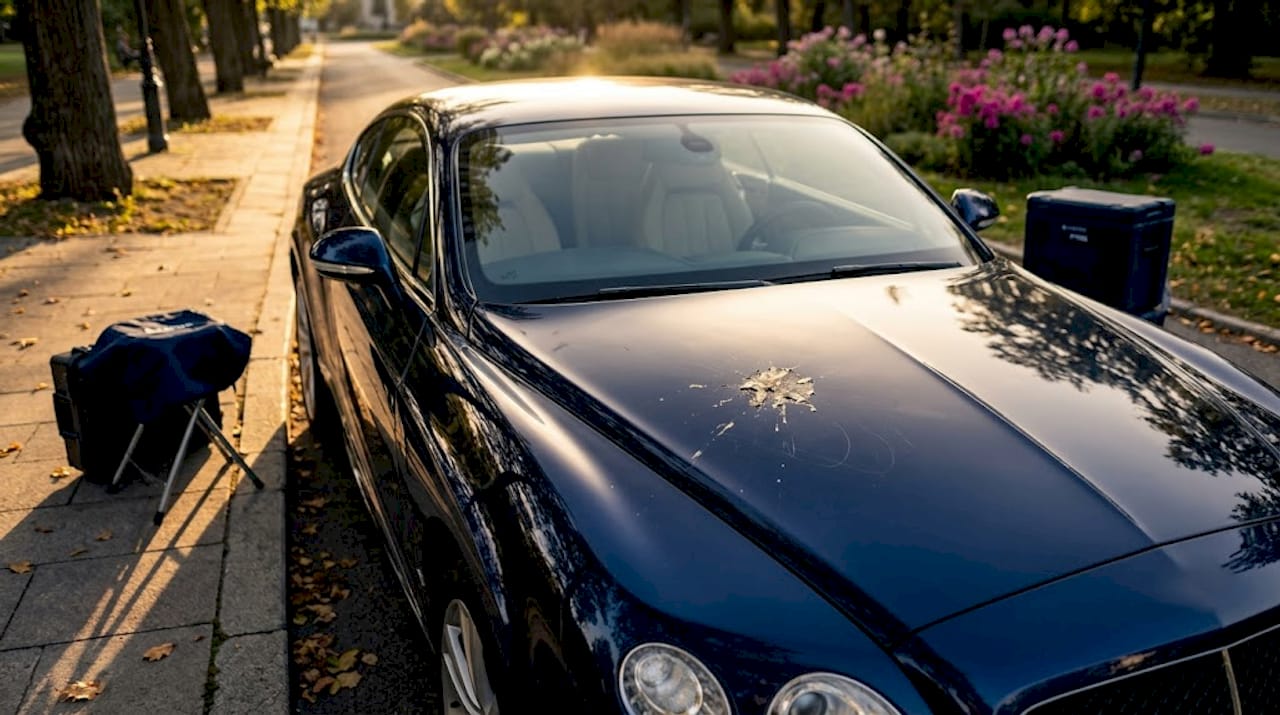
Organic and acidic contaminants like bird droppings, tree sap, and dead bugs can etch the clear coat and accelerate localized degradation, especially when left on the surface. Bird droppings are particularly aggressive because they contain uric acid with a pH as low as 3.5, which can begin etching a clear coat in under an hour on a hot Florida surface. For strategies on preventing environmental paint damage, the first step is always understanding exactly which threats are most active in your specific environment.
Quick comparison of damage types:
| Damage type | Primary cause | Speed of onset | Reversibility |
|---|---|---|---|
| UV oxidation | Solar radiation | Months to years | Low once advanced |
| Chemical etching | Bird droppings, sap, acid rain | Hours to days | Low if deep |
| Thermal cracking | Daily heat cycles | Years | Low without professional correction |
| Salt corrosion | Coastal air, road spray | Months | Moderate if caught early |
| Physical abrasion | Road debris, improper washing | Immediate | Moderate with polishing |
Key stat: Fort Lauderdale receives an average of 3,000 hours of sunshine per year, placing its UV exposure among the highest of any major American metro area. For an unprotected vehicle, that translates directly into accelerated clear coat breakdown.
How physical damage accelerates paint failure
Beyond environmental causes, it is crucial to recognize how simple chips and scratches quickly spiral into larger, more expensive repairs. Physical damage is the most immediate threat to paint integrity, and it creates a cascade effect that most owners underestimate.
How physical damage progresses through the paint system:
- Initial impact: A rock chip or road debris strike penetrates the clear coat, sometimes reaching the base coat or primer
- Exposure begins: The damaged area exposes raw layers to air, moisture, and UV radiation
- Oxidation accelerates: Moisture and oxygen react with the exposed base coat or primer, initiating rust on metal substrates
- Lifting and delamination: Rust expands beneath the paint, pushing layers up and apart
- Spread of failure: What started as a 2mm chip can become a 2-inch zone of bubbling, peeling paint within a season
Road debris impacts cause point damage in the form of chips and scratches that become entry points for moisture and oxidation, and can progress to larger coating failure if not addressed promptly. This is especially relevant on Fort Lauderdale highways like I-95 and I-595, where construction and truck traffic put debris on the road regularly.
Speed is a compounding factor. At highway speeds, even small stones carry enough kinetic energy to fully penetrate the clear coat and base coat on impact. The faster you are traveling, the more force behind each strike, and the deeper the initial damage.
“Every chip you drive away from is a clock that starts ticking against your paint. The window for low-cost intervention closes faster than most owners realize.” — Manny’s Ceramic Pro Touch
Pro Tip: If you notice a fresh chip or deep scratch, rinse the area gently and cover it temporarily until you can have it professionally assessed. Water left sitting in an open chip actively promotes rust formation, especially in Fort Lauderdale’s humid coastal air.
Professional paint correction can restore shine and fix micro scratches before they escalate, and early-stage correction is significantly less expensive than addressing delamination or rust-driven paint failure. The calculus here is simple: address damage now, or pay a multiple of that cost later.
Preventing and addressing paint degradation: expert strategies
Armed with a full understanding of risks, let’s focus on what you can do today to preserve your luxury finish for years to come. Prevention is always more cost-effective than remediation, and in Fort Lauderdale’s climate, that gap is wider than in almost any other city.
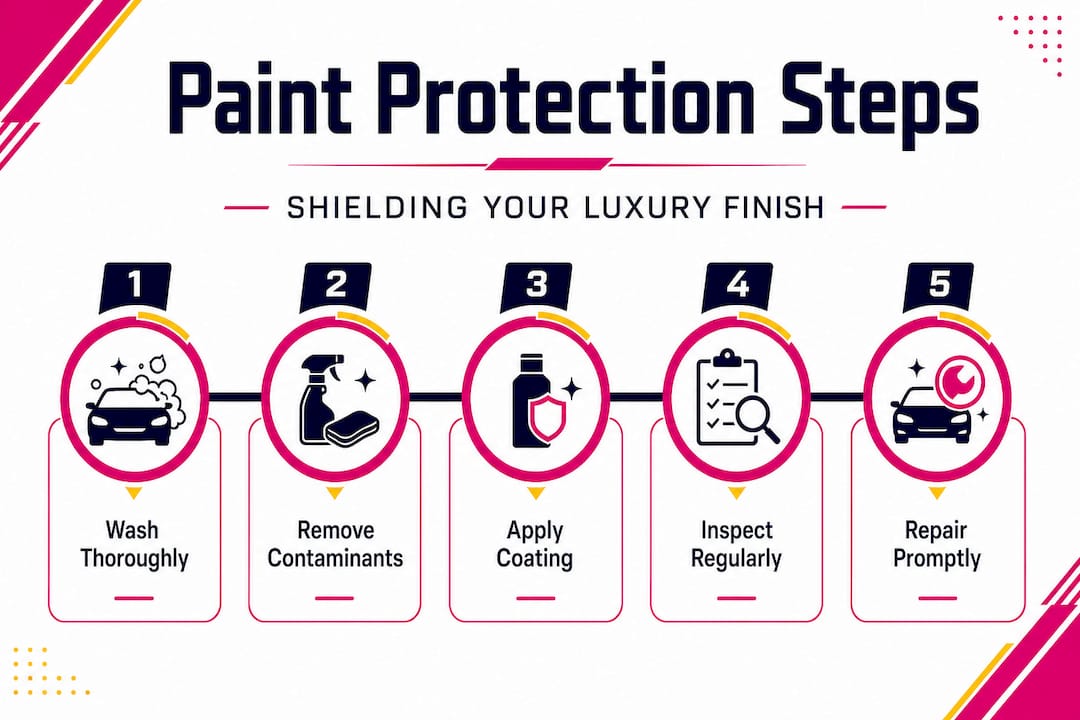
Core prevention strategies for luxury vehicle owners:
- Wash frequently and thoroughly: Remove salt, organic contaminants, and road film at least weekly. Use a pH-neutral shampoo to avoid stripping protective coatings
- Act on contamination immediately: Bird droppings and tree sap should be removed within hours, not days, especially in summer heat. The longer they sit, the deeper they etch
- Park strategically: Covered parking dramatically reduces UV exposure, thermal cycling, and salt air contact. Even a carport provides meaningful protection compared to open parking
- Inspect regularly: Monthly visual inspections of high-impact zones like the front bumper, hood, and mirrors catch early-stage damage before it spreads
- Invest in UV-blocking protection: Modern UV protection for cars has advanced significantly beyond traditional wax and goes far deeper in terms of chemical bond protection
UV radiation breaks down chemical bonds in automotive clear coat, accelerating chalking, fading, and loss of gloss over time. This makes UV-blocking technology the single most important preventive investment for Fort Lauderdale owners.
For high-value and exotic vehicles, professional-grade protection options include high-hardness ceramic coatings and Liquid Paint Protection Film (Liquid PPF). Ceramic coatings create a semi-permanent glass-like barrier that bonds to the clear coat, providing UV resistance, hydrophobic properties, and chemical resistance well beyond what any consumer product can deliver. Liquid PPF options go a step further by incorporating sacrificial polymer technology that physically absorbs and disperses impact energy, protecting against rock chips and road debris.
Understanding paint protection film pros and cons is useful context when deciding between technologies. The right choice depends on how you use the vehicle, where you drive, and how long you intend to keep it.
Pro Tip: The cost of a professional ceramic coating or Liquid PPF application is typically a fraction of a single panel repaint. On a luxury or exotic vehicle where color-matching and factory finish quality are critical, that gap in cost becomes even more significant.
The real story: what most luxury car owners miss about paint preservation
Here is a perspective that comes from working directly with luxury and exotic vehicles in South Florida over an extended period: the owners who experience the worst paint degradation are often not the negligent ones. They are the informed ones who are doing the wrong things with confidence.
The routine that most owners rely on, regular washes and periodic waxing, was designed for a different era of vehicle ownership and a different climate. Consumer-grade spray waxes and synthetic sealants offer protection measured in weeks under Fort Lauderdale UV conditions. They provide a sense of security that is not backed by chemistry capable of standing up to this environment.
The bigger issue is this: visible paint damage is always a lagging indicator. By the time you can see oxidation, dullness, or etching on your finish, the degradation process has been running beneath the surface for months. Clear coat failure does not announce itself. It accumulates quietly at the molecular level, and the visual symptoms appear only after significant structural compromise has already occurred.
What truly separates owners who maintain long-term finish quality from those who face costly repaints is not how often they wash the car. It is whether they have invested in a chemistry-driven protection system that addresses UV, thermal, chemical, and physical threats simultaneously. A deep-dive on damage prevention consistently shows that the vehicles with the best long-term outcomes are those protected proactively, before any degradation begins.
The other overlooked factor is Fort Lauderdale’s specific combination of threats. Salt air from the coast, extreme UV, summer heat well above 90°F, heavy afternoon rainstorms, and proximity to urban pollution create a compounding environment that accelerates every degradation mechanism simultaneously. A protection strategy that works in Phoenix or Chicago may be wholly inadequate here.
Professional solutions for preserving your car’s finish
If you want your luxury vehicle’s finish to stand up to South Florida’s rigors, professional solutions offer results that no consumer product line can match.
At Manny’s Ceramic Pro Touch, we approach every vehicle as an individual asset protection case, not a production detail. Our process begins with a thorough surface assessment to identify existing damage, contaminant levels, and the right protective solution for your vehicle’s condition and usage profile. From there, our Fort Lauderdale liquid PPF solutions provide advanced impact and UV resistance engineered specifically for exotic and high-value vehicles. Our paint protection services and ceramic coating packages are tailored to clients who expect precision and long-term results, not just a short-term shine. Contact us to schedule your personalized consultation and find out which protection strategy fits your vehicle and how you use it.
Frequently asked questions
How quickly can UV rays damage my car’s paint in Florida?
Florida’s intense UV can begin degrading your clear coat in only a few months if left unprotected, since UV breaks down chemical bonds in the clear coat and accelerates chalking, fading, and loss of gloss over time.
What kind of contaminants are most harmful to my car’s finish?
Bird droppings, tree sap, and dead bugs are highly acidic and quickly etch through paint if not removed rapidly. Organic and acidic contaminants can accelerate localized clear coat degradation, especially in Florida’s heat where chemical reactions happen faster.
Can a small paint chip really cause major damage later on?
Yes. Chips expose the underlying paint layers to moisture and air, leading to rapid oxidation and rust if left unrepaired. Road debris damage creates entry points that allow moisture and oxidation to progress into widespread coating failure over time.
Do ceramic coatings and liquid PPF really make a difference?
Professional coatings and films can greatly extend paint life by blocking UV and contaminants in harsh climates. Given that UV radiation accelerates chalking and gloss loss over time, a chemistry-driven barrier is the most effective long-term defense for any high-value vehicle in South Florida.