

TL;DR:
- Choosing a detailing service requires evaluating process, documentation, insurance, pricing, and post-service care to ensure quality and protection. Comparing service tiers, inspecting workflows, verifying insurance coverage, and understanding maintenance needs help make informed decisions that preserve vehicle condition and value. Proper documentation and communication are essential for long-term results and avoiding costly damage or disputes.
Choosing a detailing service sounds straightforward until you realize how much variation exists between providers. One shop’s “full detail” is another’s basic wash, and marketing language rarely tells you what actually happens to your vehicle. Getting this decision wrong means paying for work that leaves your paint unprotected, your interior half-cleaned, or worse, damaged by improper technique. These tips for selecting detailing services will help you cut through the noise and evaluate providers on the criteria that actually matter: process, documentation, insurance, pricing, and post-service care.
Table of Contents
- Key takeaways
- 1. Tips for selecting detailing services: know the service tiers first
- 2. Verify the detailer’s process and professionalism
- 3. Evaluate insurance credentials carefully
- 4. Compare pricing by understanding what drives detailing costs
- 5. Check reviews with a process-focused eye
- 6. Understand post-detailing maintenance requirements
- My honest take on choosing a detailer
- Protect your vehicle beyond the detail
- FAQ
Key takeaways
| Point | Details |
|---|---|
| Match service tier to vehicle condition | Know what each detailing tier includes before booking to avoid under-cleaning or overspending. |
| Verify the workflow before committing | Ask detailers to walk you through their step-by-step process; documentation signals professionalism. |
| Confirm insurance coverage details | General liability may not cover your vehicle during active mobile work; always request proof of coverage. |
| Look beyond price when comparing quotes | Workflow quality and product choices matter more than the number on the invoice. |
| Follow post-service maintenance guidelines | Waiting 24 to 48 hours before washing and using compatible products protects your investment. |
1. Tips for selecting detailing services: know the service tiers first
Not every detailing service is the same, and choosing the right tier directly determines whether your vehicle gets the care it needs without overspending. Here is what the standard tiers actually include:
- Exterior wash: A basic rinse, hand wash, and dry. Good for vehicles maintained regularly but not appropriate for paint correction or deep contamination.
- Mini detail: Adds interior vacuuming, surface wipe-downs, and window cleaning. Suited for moderately dirty cars that need a refresh, not a restoration.
- Full detail: Covers thorough interior extraction, surface treatment, exterior decontamination, polish, and a protective layer. Appropriate for vehicles that have not been detailed in six months or more.
- Interior-only detail: Focuses on carpets, seats, door panels, and glass. Useful after spills, pet hair buildup, or heavy odor accumulation.
- Specialist services: Includes paint correction, ceramic coating application, mold removal, and paint protection film installation. These require dedicated skills and equipment well beyond standard detailing.
The common mistake is booking a mini detail when your vehicle needs a full restoration, or paying for specialist services when a basic wash would do. Assess your vehicle’s actual condition before picking up the phone.
Pro Tip: Before contacting any detailer, photograph your vehicle in good lighting. This gives you a clear record of pre-existing scratches, stains, and wear, which helps you communicate your needs and protects you if anything is disputed later.
2. Verify the detailer’s process and professionalism
A detailer’s marketing copy tells you very little. Their process tells you everything. One of the most reliable factors for choosing detailing is whether the provider conducts a pre-wash inspection before touching your vehicle.
Professional detailers document vehicle condition with photos, written notes, and checklists before work begins. This protects both parties and sets accurate expectations. If a provider skips this step, it is a signal that their overall attention to detail may be inconsistent.
Ask each detailer to walk you through their exterior and interior workflow in sequence. A reputable exterior process follows a defined order:
- Wheels and wheel wells first (to prevent cross-contamination onto clean paint)
- Pre-rinse and foam soak
- Hand wash with microfiber mitt
- Decontamination (clay bar or iron remover as needed)
- Rinse and dry
- Polish or paint correction if applicable
- Sealant, wax, or ceramic coating application
For interior work, a structured approach covers vacuuming first, followed by surface cleaning, fabric or leather treatment, glass, and then odor treatment. Order of operations matters because cleaning in the wrong sequence re-contaminates surfaces you have already cleaned.
Ask specifically about the products and equipment used. pH-neutral shampoos, professional-grade polishers, and microfiber tools represent a meaningful difference compared to gas station products and aggressive brushes.
Pro Tip: Request that your detailer provide a written checklist or service summary when the job is complete. This gives you a record of exactly what was done and serves as a reference for scheduling future maintenance.
3. Evaluate insurance credentials carefully
This is where most car owners make a costly assumption. Just because a detailer carries business insurance does not mean your vehicle is covered while work is being performed on it.
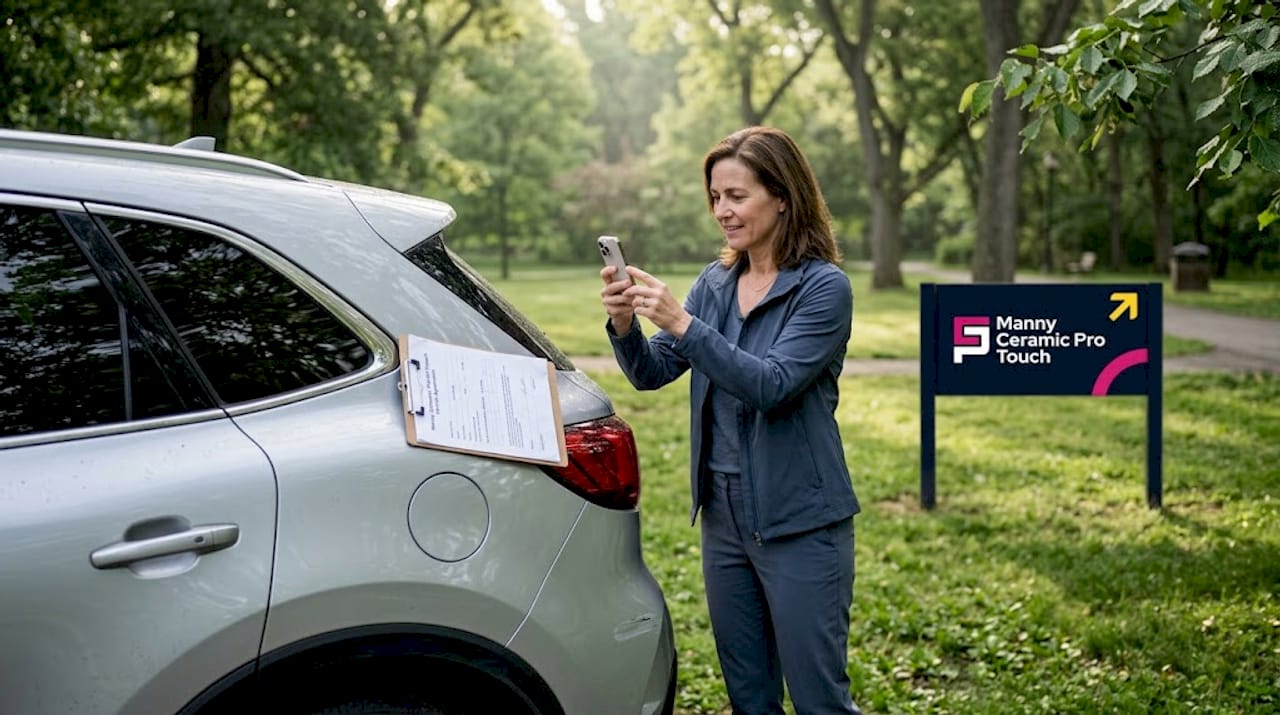
General liability insurance often excludes customer vehicles during active mobile detailing operations. This means if your car is scratched or damaged during a mobile appointment, the provider’s policy may not pay out. Additional coverage such as garage keeper’s liability or a business owner’s policy is what closes that gap.
Before booking, ask these specific questions:
- Do you carry general liability insurance? What is the coverage limit?
- Does your policy cover customer vehicles while work is being performed?
- Do you carry commercial auto insurance for mobile operations?
- Can you provide a certificate of insurance upon request?
Before and after photos of your vehicle taken by the detailer, combined with a signed service agreement, form a documented record that supports any insurance or dispute resolution process. Detailers who resist providing these documents are a red flag regardless of their reviews.
4. Compare pricing by understanding what drives detailing costs
Price alone is one of the weakest factors for choosing detailing. A $75 “full detail” and a $300 full detail can both carry the same label while delivering completely different results. Here is what actually drives the cost difference:
- Service tier and scope: More steps, more time, and more materials equal higher costs. A genuine full detail on a full-size SUV should take four to six hours minimum.
- Vehicle condition: Heavy contamination, pet hair, or oxidized paint require additional labor and product. Expect upcharges for these conditions.
- Products and materials used: Professional-grade ceramic coatings, paint correction compounds, and decontamination chemicals cost significantly more than consumer products, and that cost is reflected in the quote.
- Detailer experience and credentials: Certified technicians with specialized training in paint correction or coating application command higher rates for good reason.
Comparing quotes intelligently means asking about workflow, included steps, and product brands rather than simply comparing the bottom line. Ask whether protective coatings have specified cure times and whether the detailer provides post-service maintenance guidance.
Pro Tip: If a quote seems unusually low, ask the detailer how long the job will take. A rushed detail almost always skips steps. Quality work on a mid-size vehicle should realistically take three to five hours for a full detail.
5. Check reviews with a process-focused eye
Detailing service reviews are more useful when you read past the star rating. Look for reviews that mention specific details: the detailer’s communication before the appointment, whether they photographed the vehicle, how they handled a problem or concern, and whether the results lasted beyond the first week.
Generic five-star reviews that say “great job, car looks amazing” are nearly useless for evaluating process quality. Reviews that describe the detailer explaining cure times, recommending specific maintenance products, or addressing pre-existing paint issues give you far more signal about professionalism.
Pay attention to how the business responds to negative reviews. A detailer who addresses complaints professionally and explains their process in response shows accountability. One who dismisses criticism or gets defensive suggests they may handle disputes the same way with you.
A detailing service selection guide that emphasizes process documentation and post-service communication reflects the standards worth holding any provider to.
6. Understand post-detailing maintenance requirements
The protection a detail provides only lasts if you maintain it correctly afterward. This is one of the most overlooked factors for choosing detailing, and it starts with asking your provider what they expect from you after the appointment.
Waiting 24 to 48 hours after a wax, sealant, or ceramic coating application before washing preserves the bond between the protective layer and your paint. Washing too soon disrupts the curing process and significantly reduces longevity.
Here are the maintenance practices that protect your investment long term:
- Wash method: Use the two-bucket method with a pH-neutral shampoo and a clean microfiber mitt. Avoid automatic car washes with abrasive brushes.
- Ceramic coating compatibility: Traditional wax applied over ceramic coatings can degrade the coating. Ask your detailer specifically which maintenance products are compatible with the protection applied.
- Interior habits: Vacuum regularly and treat spills immediately. Allowing liquids to penetrate carpet and upholstery undoes thorough interior cleaning within days.
- Detailing frequency: Most professionals recommend full detailing every 4 to 6 months depending on your driving environment and habits.
Any detailer worth hiring should provide written maintenance instructions tailored to the services performed, not a generic handout. If they do not, ask for them directly.
Pro Tip: If your vehicle received a ceramic coating, look into dedicated ceramic coating maintenance sprays for between-wash protection. These are specifically formulated to top up hydrophobic properties without compromising the base coating.
My honest take on choosing a detailer
I have seen the consequences of skipped pre-wash inspections more times than I can count. A client brings in a vehicle for paint correction, and there is existing damage nobody documented. Suddenly there is a dispute about who caused what, and nobody wins. The detailers who eliminate that problem are the ones who photograph everything before they touch a car. It is not paranoia; it is professionalism.
What I have learned about how to pick detailing services is this: the lowest price offer almost always reflects a shorter process. When I dig into those quotes, I find missing steps. No decontamination. No clay bar. Coating application rushed before proper surface prep. The vehicle looks good for two weeks and then the protection fails.
There is also a widespread misconception about ceramic coatings being self-sufficient once applied. They are not. Coating care requires specific products and proper wash timing. I consistently see owners apply whatever shampoo they have on hand and wonder why the hydrophobic effect fades within months. The detailer who installs the coating and then hands you a maintenance product recommendation list is the one who cares about the result lasting.
Document everything. Verify insurance. Ask about process before price. These are not extras; they are the baseline.
— Emmanuel
Protect your vehicle beyond the detail
A great detail is the starting point, not the finish line. At Mannyceramicprotouch, the work does not stop at a clean surface. Every vehicle treated at the studio receives a tailored protection strategy built around long-term preservation, not just short-term appearance. From ceramic coating packages engineered for high-value vehicles to advanced paint protection film options that defend against rock chips, scratches, and environmental damage, Mannyceramicprotouch is designed for owners who want results that hold up over time. Mobile services are also available for clients who need professional-grade protection applied with minimal disruption. Contact Mannyceramicprotouch to get expert guidance matched to your vehicle’s specific condition and goals.
FAQ
What should I ask before booking a detailing service?
Ask the detailer to walk you through their step-by-step workflow, confirm what products they use, and request proof of insurance. A provider who documents vehicle condition with photos before starting work is a strong indicator of professional standards.
Does general liability insurance cover my car during mobile detailing?
Not always. General liability coverage often excludes customer vehicles during active service. Ask specifically for garage keeper’s liability or equivalent coverage before booking.
How long should I wait to wash my car after detailing?
You should wait at least 24 to 48 hours after a wax, sealant, or ceramic coating application. Washing too soon disrupts the curing process and shortens the protection’s lifespan.
How do I compare detailing quotes accurately?
Ask each provider about their order of operations, product brands, and time allotted for the job rather than comparing prices alone. Workflow and product quality determine the result far more than the quoted price.
How often should I get my car professionally detailed?
Most professionals recommend a full detail every 4 to 6 months, though driving conditions, storage environment, and the type of protection applied will affect the ideal frequency for your specific vehicle.