

TL;DR:
- Daily wear causes costly interior, exterior, and mechanical damage in luxury vehicles through routine use and environmental stress. Proactive protection strategies, such as ceramic coatings and timely maintenance, effectively slow deterioration and preserve value. Proper care from day one minimizes repair costs and extends the lifespan of high-end cars.
Daily wear on luxury vehicles is defined as the cumulative degradation of interior materials, exterior finishes, and mechanical components caused by routine use, environmental exposure, and repeated thermal cycling. The impact of daily wear on luxury vehicles is far more aggressive than most owners realize. Leather dashboards in models like Aston Martin can require repairs costing $10,000–$22,000 due to shrinkage and adhesive failure alone. Maintenance intervals for vehicles used in frequent short trips may need to drop from the standard 5,000–10,000 miles to as low as 2,500 miles. Understanding where wear originates is the first step toward stopping it.
How does daily wear damage luxury vehicle interiors?
Interior degradation is the most expensive and least reversible consequence of daily use in high-end vehicles. The damage happens in layers, and by the time it becomes visible, the repair bill is already significant.
Leather and dashboard deterioration
Luxury vehicle leather loses natural oils through repeated contact, heat exposure, and UV penetration. As oils evaporate, the leather stiffens, cracks, and begins to shrink. In vehicles like Aston Martin models, this shrinkage pulls the dashboard material away from its substrate, requiring full removal and re-gluing. The repair cost for this process runs between $10,000 and $22,000. That figure reflects not just material cost but the labor intensity of working inside a precision-built cabin.
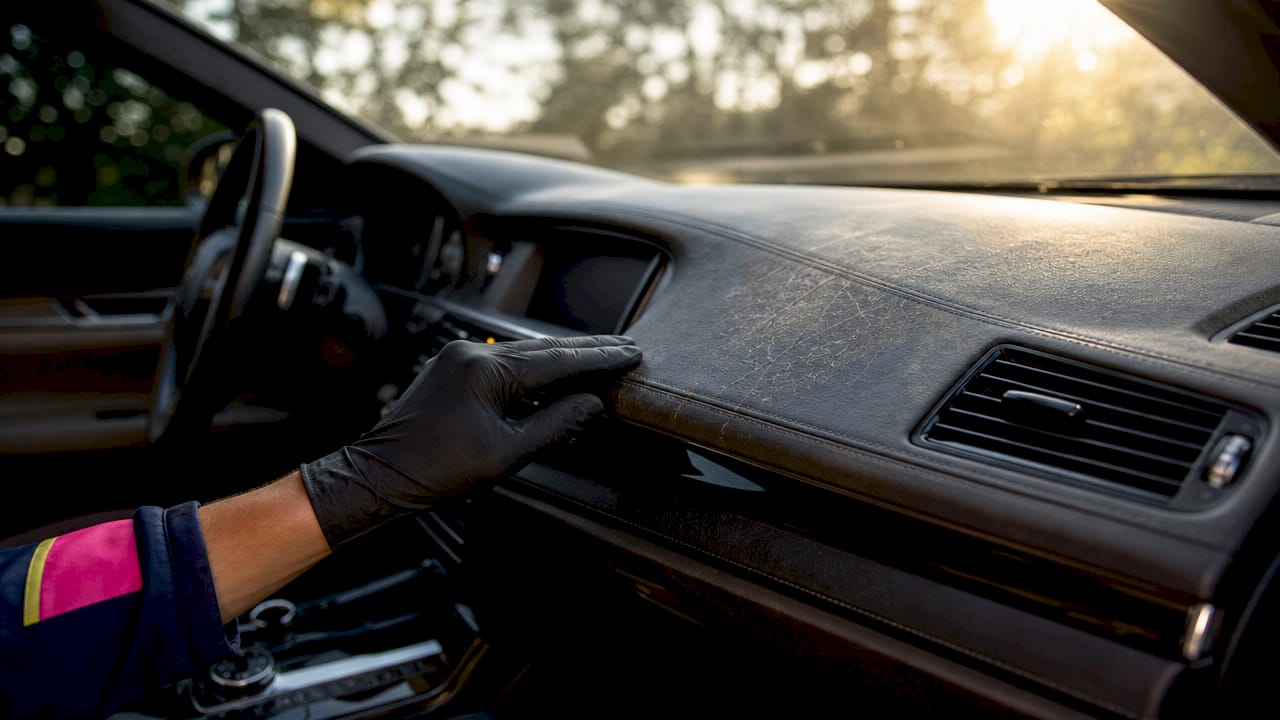
UV exposure compounds the problem. Cabin temperatures in direct sunlight can exceed 170°F (77°C), causing plastics to warp, adhesives to fail, and leather to stiffen well beyond what conditioning can reverse. This level of heat builds up within 30 minutes on a warm day, even in mild climates.
Point-loading damage on seat bolsters
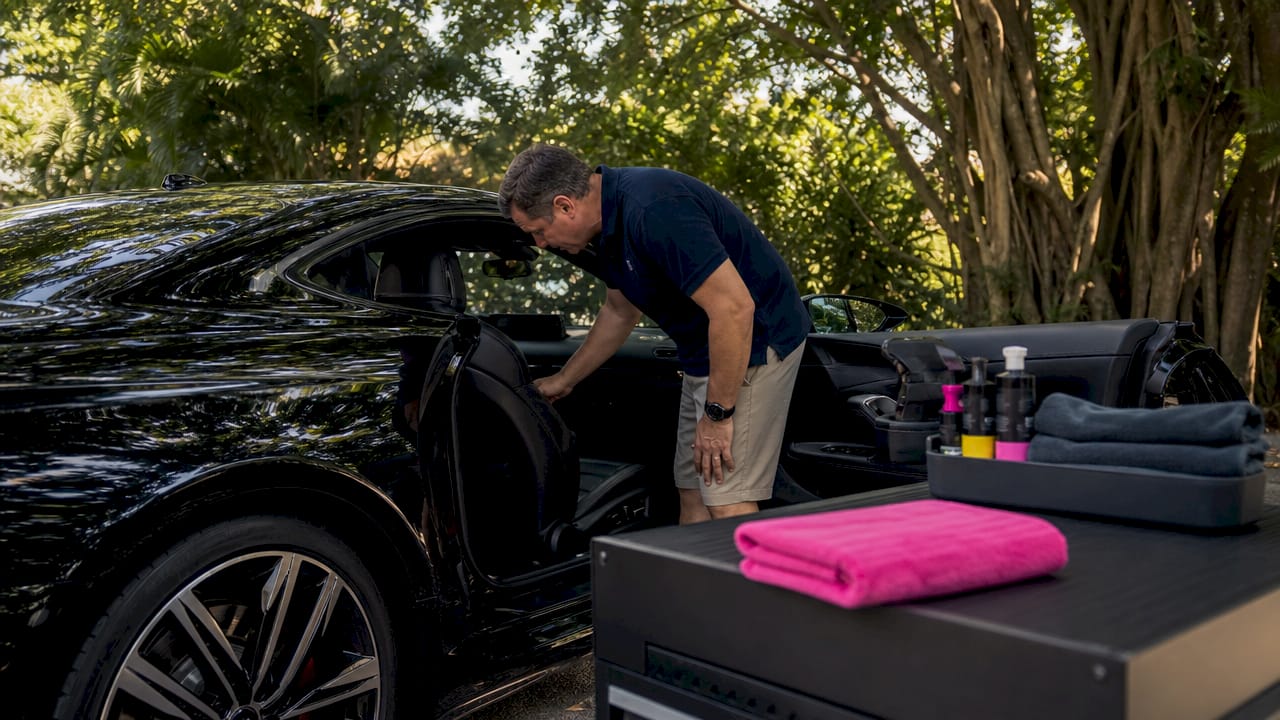
The most overlooked interior wear pattern is point-loading on leather bolsters. Every time a driver enters or exits the vehicle, concentrated pressure hits the same spot on the seat edge. Over time, the foam beneath collapses and the leather fibers thin visibly. This type of wear appears before mechanical wear in most daily-driven luxury vehicles.
Key interior wear sources include:
- UV penetration through glass causing leather stiffening and dashboard shrinkage
- Thermal cycling from repeated heating and cooling that breaks down adhesive bonds
- Point-loading on seat bolsters from entry and exit pressure
- Dry contact from clothing and skin accelerating surface fiber breakdown
- Improper cleaning using dry or abrasive cloths that grind contaminants into soft surfaces
Pro Tip: Apply a quality leather conditioner every 60–90 days and use precision-fit seat covers during daily commutes to reduce point-loading damage on bolsters.
What impact does daily driving have on a luxury vehicle’s mechanical health?
Mechanical wear in luxury vehicles follows a different pattern than in standard cars. The systems are more complex, the tolerances are tighter, and the cost of failure is disproportionately higher.
The hidden damage from short trips
Short-trip driving prevents engines and transmissions from reaching optimal operating temperatures. When a cold engine runs for less than 10 minutes, moisture accumulates in the oil, fuel residue builds up in the combustion chamber, and internal components wear faster than they would during a full warm-up cycle. Low mileage does not protect against this. A luxury vehicle driven 5 miles per day, every day, can accumulate more internal wear than one driven 30 miles on a single trip.
The mechanical effects of daily short-trip use include:
- Oil contamination from moisture and unburned fuel mixing into the crankcase
- Transmission wear from cold fluid that has not reached proper viscosity
- Battery drain from insufficient alternator charge recovery during brief drives
- Emissions system stress from catalytic converters that never reach full operating temperature
- Accelerated brake wear from repeated cold stops before rotors and pads reach working temperature
Routine maintenance on luxury vehicles is a proactive financial strategy, not a cost. Problems in complex luxury systems often mask well and only become visible after significant damage has already occurred. Catching wear early prevents repair bills that dwarf the cost of a service interval.
Pro Tip: Once a week, take your luxury vehicle on a 20-minute highway drive. This allows the engine, transmission, and emissions systems to reach full operating temperature and burn off accumulated moisture.
How do environmental factors affect exterior appearance and resale value?
Exterior degradation from daily environmental exposure is the most direct driver of resale value loss in luxury vehicles. Paint, clear coat, and trim materials are all vulnerable, and the damage compounds over time.
UV radiation and paint photo-oxidation
UV radiation causes photo-oxidation on luxury car paint, producing dull, chalky finishes that become visible after a single harsh summer season. This is not a gradual process. A vehicle parked outdoors daily in a high-UV climate like South Florida can show measurable paint degradation within months. The clear coat absorbs UV first, then the base coat begins to break down beneath it.
Covered vs. open parking: a direct comparison
| Factor | Covered Parking | Open Parking |
|---|---|---|
| UV exposure | Minimal | High daily accumulation |
| Cabin temperature | Stable | Can exceed 170°F (77°C) |
| Bird droppings and sap | Rare | Frequent and corrosive |
| Paint oxidation rate | Slow | Accelerated |
| Adhesive integrity | Preserved | Degraded over time |
Open parking accelerates every form of exterior wear simultaneously. Covered parking is not a luxury. For high-value vehicles, it is a maintenance decision.
Additional exterior threats from daily use include:
- Bird droppings and tree sap that etch into clear coat within hours in warm weather
- Road debris creating micro-chips that expose bare metal to oxidation
- Improper washing using dry cloths that act like sandpaper on paint, creating millions of microscopic swirl marks
- Brake dust from daily stops that bonds to wheel surfaces and corrodes finish
Protecting your vehicle’s exterior from environmental paint damage requires both physical barriers and chemical protection applied before degradation begins.
What are the best practices to minimize wear and tear on high-end vehicles?
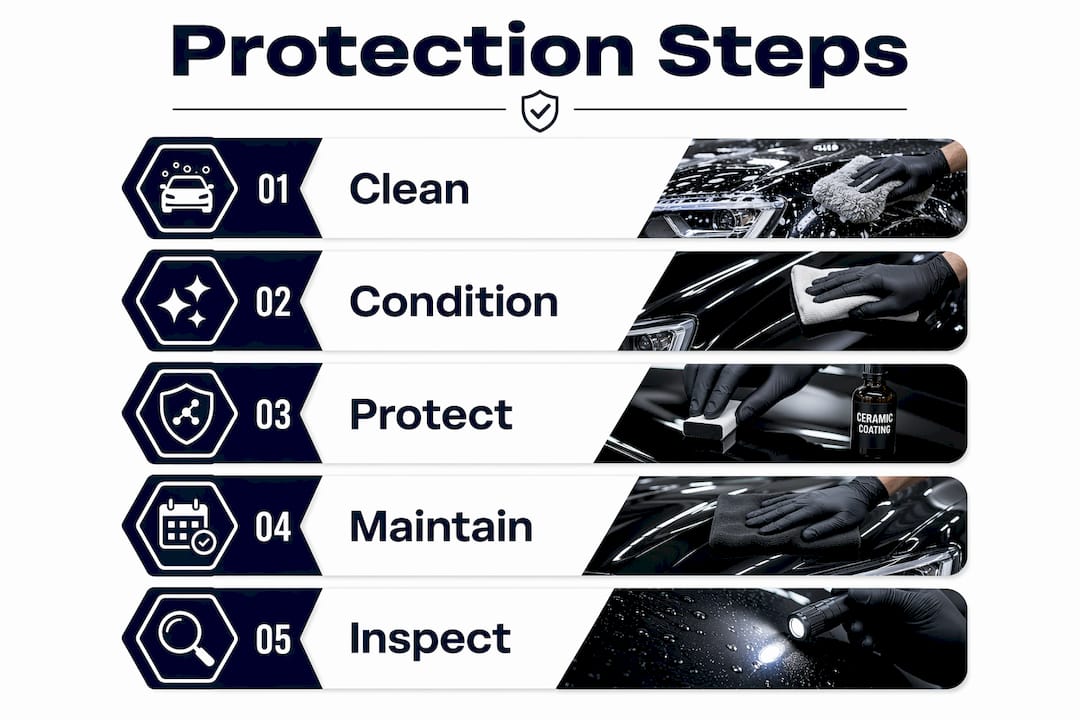
Protecting a luxury vehicle from daily wear requires a layered approach. No single product or habit covers every vulnerability. The most effective owners combine physical protection, adjusted maintenance schedules, and proper cleaning methods.
Paint protection film and ceramic coatings
Paint protection film (PPF) and ceramic coatings are the two most effective exterior defenses available. PPF creates a physical barrier against rock chips, scratches, and contaminants. Ceramic coatings add chemical resistance and hydrophobic properties that make surfaces easier to clean without abrasion. Advanced films and coatings applied from day one neutralize the vulnerability of luxury materials, allowing daily use without accelerating depreciation. The key is application timing. Waiting until damage appears means the protection is already working against a compromised surface.
Interior and mechanical protection strategies
| Protection Method | What It Addresses | Frequency |
|---|---|---|
| Precision-fit floor mats | Carpet wear and point-loading on pedal areas | Permanent |
| Leather conditioning | Oil loss, stiffening, and surface cracking | Every 60–90 days |
| Adjusted oil change intervals | Short-trip oil contamination | Every 2,500 miles for daily drivers |
| Touchless washing | Swirl marks and clear coat abrasion | Every 1–2 weeks |
| Sunshade use | Cabin heat and UV exposure to dashboard | Every time parked outdoors |
The luxury car maintenance checklist approach works because it treats each system independently. Mechanical, interior, and exterior wear each require specific interventions.
Additional best practices for luxury car longevity:
- Use a two-bucket wash method or a foam cannon to minimize paint contact during cleaning
- Apply a sunshade every time the vehicle is parked outdoors, regardless of season
- Inspect paint monthly for chips, sap, or droppings that need immediate removal
- Schedule periodic longer drives to counteract short-trip mechanical wear
Pro Tip: Avoid wiping a dry or dusty surface with any cloth, even a microfiber. Always rinse first. Dry wiping grinds particles into the clear coat and creates swirl marks that require machine polishing to remove.
Understanding surface protection value for luxury vehicles means recognizing that protection is not an add-on. It is the maintenance strategy itself.
Key takeaways
Daily wear on luxury vehicles causes compounding damage across interiors, exteriors, and mechanical systems that requires proactive, layered protection from the first day of ownership.
| Point | Details |
|---|---|
| Interior wear is the costliest | Leather dashboard repairs on models like Aston Martin can reach $22,000 from shrinkage alone. |
| Short trips cause hidden mechanical damage | Engines and transmissions wear faster on cold, brief drives than on longer highway trips. |
| UV and heat accelerate exterior degradation | Cabin temps above 170°F and photo-oxidation can visibly damage paint within one summer. |
| Day-one protection is the most effective strategy | PPF and ceramic coatings applied before damage occurs preserve both finish and resale value. |
| Maintenance intervals must match actual use | Daily drivers should service at 2,500-mile intervals, not the standard 5,000–10,000 miles. |
What I’ve learned about daily wear after years in luxury vehicle protection
Most luxury vehicle owners fall into one of two traps. They either drive their car without any protection plan and watch it depreciate faster than expected, or they treat it like a museum piece and barely use it. Neither approach serves the owner well.
The insight that changed how I think about this comes from working with clients who own vehicles worth $150,000 or more. The ones who preserve value best are not the ones who drive least. They are the ones who protected the vehicle correctly from day one and then drove it without anxiety. Advanced films and coatings make that possible. You use the car. The protection absorbs the wear.
The mechanical side is where I see the most avoidable damage. Owners assume low mileage means low wear. It does not. A vehicle driven five miles a day in stop-and-go traffic accumulates more internal engine stress than one driven 30 miles on a highway. Luxury vehicles mask mechanical issues well, which means problems compound quietly until they become expensive. Proactive servicing at shorter intervals is not overcaution. It is the correct response to how these cars are actually used.
My honest recommendation: treat protection as part of the purchase decision, not an afterthought. The cost of a quality PPF and ceramic coating application is a fraction of one interior repair or one deferred mechanical service that cascades into a larger failure.
— Emmanuel
How Mannyceramicprotouch protects luxury vehicles from daily wear
Mannyceramicprotouch specializes in advanced surface preservation for luxury, exotic, and high-value vehicles. The studio applies Liquid PPF and high-performance ceramic coatings designed to protect against rock chips, UV damage, environmental contaminants, and the cumulative effects of daily use.
Every vehicle receives a tailored protection strategy, not a volume-based service. For owners in South Florida, the Liquid PPF solutions in Fort Lauderdale address the specific demands of high-UV, high-humidity environments where exterior degradation accelerates fastest. Mannyceramicprotouch also offers professional paint protection film services for owners who want a permanent barrier between their finish and daily road conditions. Schedule a consultation to build a protection plan that matches how you actually drive.
FAQ
What causes the most damage to luxury vehicle interiors from daily use?
Point-loading on seat bolsters and UV-driven leather shrinkage cause the most visible interior damage. Repair costs for leather dashboard failures can reach $10,000–$22,000 on models like Aston Martin.
How often should a daily-driven luxury vehicle be serviced?
Luxury vehicles used for frequent short trips should be serviced every 2,500 miles rather than the standard 5,000–10,000 miles. Short trips prevent engines from reaching full operating temperature, accelerating oil contamination and internal wear.
Does open parking significantly affect a luxury car’s resale value?
Open parking exposes paint to daily UV radiation, bird droppings, and temperature extremes above 170°F. These conditions accelerate paint photo-oxidation and adhesive failure, both of which directly reduce resale value.
Is paint protection film worth applying to a daily-driven luxury vehicle?
PPF is most effective when applied from day one on a daily driver. It creates a physical barrier against chips, scratches, and contaminants that would otherwise require costly paint correction or panel repairs.
Can improper washing damage a luxury vehicle’s paint finish?
Wiping a surface with a dry cloth or using a single-bucket wash method creates microscopic swirl marks that dull the clear coat over time. Touchless or two-bucket methods are the correct approach for preserving luxury finishes.