

TL;DR:
- Advanced detailing involves multi-stage techniques that restore and protect high-value vehicle paint.
- Proper steps, professional tools, and surface-specific chemistry are essential for lasting, flawless results.
Advanced detailing procedures are specialized, multi-stage techniques that go far beyond a standard car wash to restore, correct, and protect a vehicle’s paint at a professional level. This guide to advanced detailing procedures covers every critical stage: surface decontamination, paint correction, protective coating application, and interior preservation. The tools required include a dual-action polisher, paint-thickness gauge, 2000-lumen LED inspection lights, and pH-neutral chemistry. For owners of luxury, exotic, or high-value vehicles, mastering these methods is the difference between a finish that degrades and one that holds its depth for years. This step-by-step detailing guide treats your vehicle as the asset it is.
What essential tools do you need for advanced car detailing?
Professional detailing techniques demand professional-grade equipment. Using the wrong tools does not just produce inferior results. It causes permanent damage to clear coat and paint.
Core machine and inspection tools
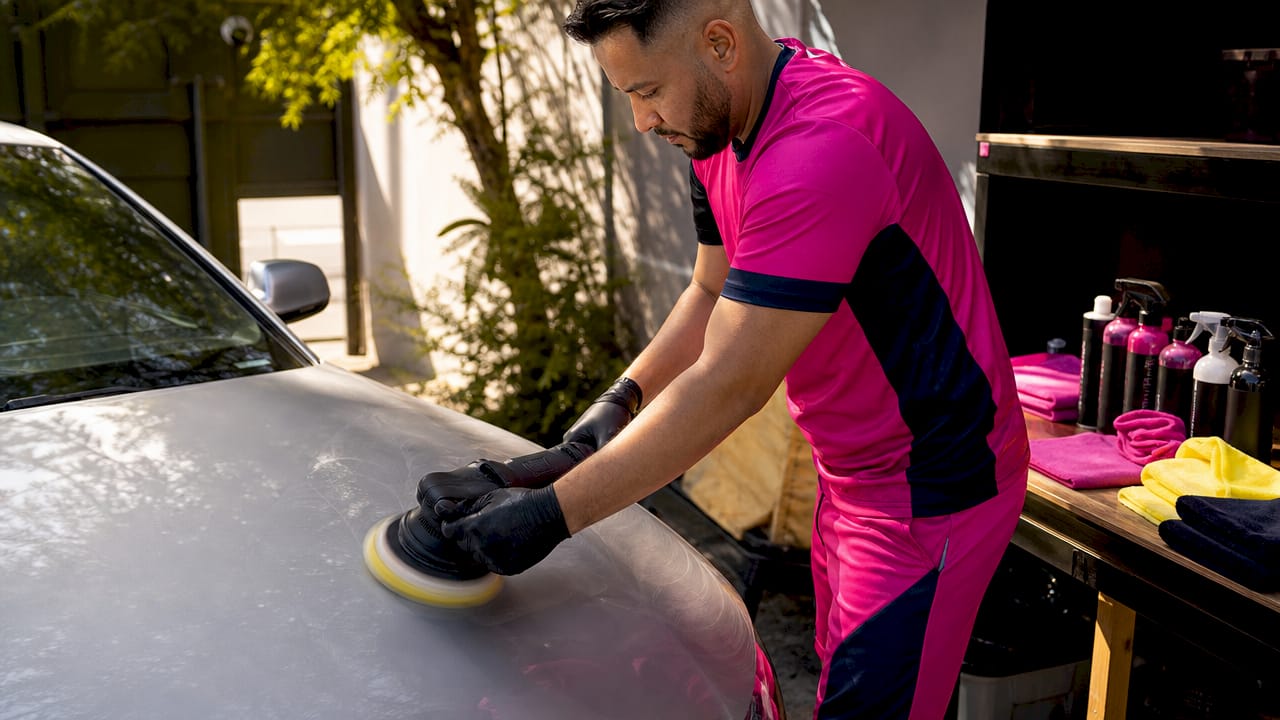
The dual-action polisher is the foundation of any paint correction setup. Brands like Rupes and Flex produce machines that deliver controlled orbital movement, reducing heat buildup and the risk of burning through clear coat. Alongside the polisher, a paint-thickness gauge is non-negotiable. It reads the depth of your clear coat in microns and tells you exactly how much correction is safe before you make a single pass.
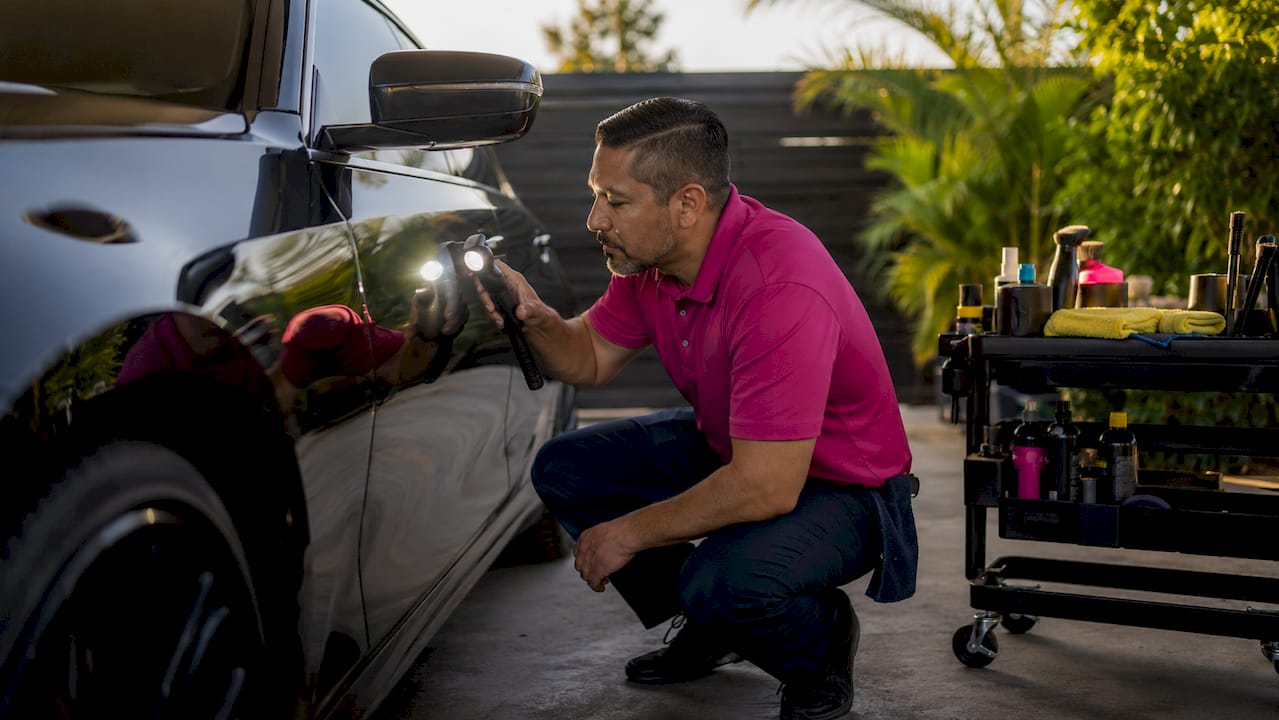
Lighting is equally critical. 2000-lumen point-source LED inspection lights reveal surface defects that standard shop lighting completely misses. Without proper lighting, you cannot confirm whether correction is complete or whether new marring has been introduced.
Pro Tip: Prime your polishing pads before the first pass on any panel. Apply four to six pea-sized dots of compound and work them into the pad fibers by hand. This prevents dry-start marring on the first contact.
Chemical and consumable requirements
| Tool or Chemical | Purpose |
|---|---|
| pH-neutral shampoo | Lifts dirt without stripping existing protection |
| Iron remover | Dissolves ferrous brake dust embedded in paint |
| Tar remover | Breaks down hydrocarbon deposits on lower panels |
| Clay bar | Mechanically removes bonded surface contamination |
| Cutting compound | Removes deeper scratches and oxidation |
| Finishing polish | Refines surface after compounding |
| IPA spray (15–20%) | Strips polishing oils to reveal true surface condition |
| Grit guards | Trap dirt at the bottom of wash buckets |
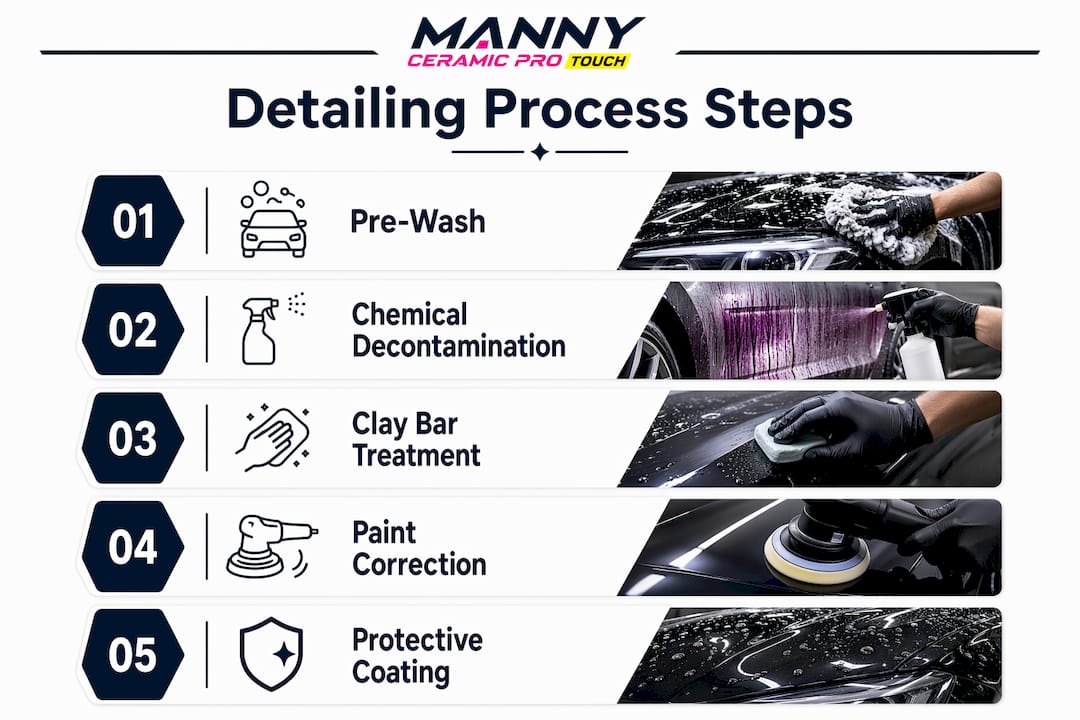
Every chemical on this list serves a specific function at a specific stage. Substituting or skipping any of them compromises the result.
How to properly prepare a vehicle’s surface before correction
Surface preparation is the most time-intensive stage of the process. Chemical and mechanical decontamination alone typically consumes 60–90 minutes of the detailing process. That time investment is not optional. It is the foundation that every subsequent step depends on.
Performing steps out of order such as polishing before decontamination grinds embedded contaminants back into the clear coat, causing permanent damage. Sequence is everything.
The step-by-step wash and decontamination process
-
Pre-wash with snow foam. Apply a high-cling snow foam to the entire vehicle and allow a minimum 6-minute dwell time before rinsing. This loosens heavy surface contamination before any contact washing begins.
-
Two-bucket contact wash. Fill one bucket with pH-neutral shampoo solution and a second with clean rinse water. The two-bucket method prevents the paint-sanding slurry effect by keeping the wash mitt clean between passes. Place grit guards at the bottom of both buckets. The true objective of the soap solution is lubrication, not just cleanliness. A pH-neutral soap allows the microfiber mitt to encapsulate dirt and lift it away from the surface rather than dragging it across the clear coat.
-
Iron decontamination. Spray an iron remover across all painted panels and allow it to dwell for 3–5 minutes. You will see purple or red bleeding where ferrous particles dissolve. Rinse thoroughly. Do not let the product dry on the surface.
-
Tar removal. Apply a tar remover to lower panels and door sills where hydrocarbon deposits accumulate. Allow 2–3 minutes of dwell time and wipe with a dedicated microfiber cloth.
-
Clay bar treatment. Working one panel at a time, lubricate the surface with a clay lubricant spray and glide a clay bar across the paint using light, overlapping strokes. The clay bar mechanically removes bonded contamination that chemical treatments leave behind. The surface should feel glass-smooth after this step.
Pro Tip: Never use a clay bar without adequate lubrication. Dry claying induces marring that requires correction to remove. Keep the surface wet throughout the entire process.
For a deeper look at paint decontamination methods, the process involves more nuance than most guides acknowledge.
What are the advanced paint correction techniques?
Paint correction is the process of removing surface defects, swirl marks, oxidation, and scratches from clear coat using abrasive compounds and polishing pads. The goal, by professional standard, is removing 95% of surface defects before any protective coating is applied.
Measuring paint thickness before you begin
Read every panel with a paint-thickness gauge before touching a polisher to the surface. A reading below 90 microns is a hard stop. Clear coat at that depth cannot safely absorb abrasive correction without risking paint failure. Document your readings panel by panel. Thin areas on hoods, roofs, and edges require either reduced correction or none at all.
The correction process: step by step
-
Panel wipedown. Clean each panel with IPA spray before correction begins. This removes any remaining wax, silicone, or residue that could interfere with compound performance.
-
Pad and compound selection. Match your cutting pad and compound to the severity of defects. Heavy swirling and oxidation require a foam cutting pad with a medium-cut compound. Light hazing requires a finishing pad with a fine polish.
-
Prime the pad. Apply four to six pea-sized dots of compound to the pad and work them into the fibers before the first panel contact. This prevents dry-start marring.
-
Work in sections. Correct one 18 x 18 inch section at a time. Set the dual-action polisher to speed 4–5 for cutting passes. Apply moderate downward pressure and make four overlapping passes horizontally, then four vertically.
-
Inspect under 2000-lumen lighting. After each section, wipe residue with a clean microfiber and inspect under direct LED lighting. Rotate the light at multiple angles to catch any remaining defects.
-
IPA wipedown for verification. After completing all correction passes, wipe the entire vehicle with a 15–20% isopropyl alcohol solution. Failing to do this IPA wipedown hides defects behind polishing oils, leading to premature finishing errors. The IPA strip reveals the true surface condition before you commit to a coating.
Pro Tip: Inspect every panel from multiple angles and distances. Defects visible only at a raking angle still exist. A walkthrough inspection under 2000-lumen lighting before coating application is the professional standard.
For professional-grade paint correction services in Fort Lauderdale, Mannyceramicprotouch applies this exact process to every vehicle.
How to apply protective coatings for long-term finish preservation
Protective coating application is the final exterior stage and the one with the least margin for error. The surface must be chemically clean, fully corrected, and at the right temperature before any product touches the paint.
Comparing protection options
- Carnauba wax provides a warm, organic gloss and lasts 4–8 weeks under normal conditions. It is best used as a topping product over a sealant or coating, not as a standalone protection layer on high-value vehicles.
- Paint sealants bond to the clear coat through polymer chemistry and last 4–6 months. Products like Meguiar’s M21 offer solid water beading and UV resistance at a lower cost than ceramic coatings.
- Ceramic coatings form a semi-permanent silica dioxide layer over the clear coat. They require a 24-hour cure at 20°C in a climate-controlled environment for full chemical bonding. The result is 2–5 years of protection, hydrophobic water behavior, and resistance to chemical etching.
For owners of luxury vehicles, ceramic coatings represent the most durable finish protection available outside of paint protection film. Review the full ceramic coating packages available at Mannyceramicprotouch for specification details.
Pro Tip: Apply ceramic coatings in a garage with controlled temperature and humidity. Direct sunlight, high humidity, or temperatures below 60°F will prevent proper bonding and cause high spots that require correction to remove.
Before committing to a coating, review the car prep steps that determine whether the surface is truly ready.
What advanced interior detailing practices complete the process?
Interior detailing at a professional level follows a strict sequence and uses surface-specific chemistry. The interior of a high-value vehicle contains leather, Alcantara, carbon fiber trim, piano black plastics, and glass surfaces that each respond differently to cleaning agents.
- Vacuum first, always. Use a HEPA filter vacuum to remove loose debris from carpets, seats, and crevices before applying any liquid product. Wet-cleaning over loose grit abrades delicate surfaces.
- Leather surfaces require a pH-balanced leather cleaner applied with a soft-bristle brush, followed by a dedicated leather conditioner. Avoid alcohol-based all-purpose cleaners on leather. They strip natural oils and accelerate cracking.
- Plastic and trim panels respond well to a diluted all-purpose cleaner at a 5:1 ratio. Apply with a microfiber cloth and avoid silicone-based dressings that leave greasy residue and attract dust.
- Alcantara and suede require a dedicated suede brush and a specialized cleaner. Never use a standard microfiber cloth on Alcantara. It mats the fibers and creates permanent sheen marks.
- Glass interior surfaces should be cleaned last, using an ammonia-free glass cleaner and a waffle-weave microfiber to prevent streaking on tinted windows.
- Odor and stain removal on fabric surfaces requires an enzyme-based cleaner for organic stains and an ozone generator for persistent odors. Standard fabric sprays mask odors rather than eliminating them.
The maintenance detailing guide from Mannyceramicprotouch covers long-term interior preservation strategies specific to luxury vehicle ownership.
Key takeaways
Advanced detailing procedures require strict step sequencing, professional-grade tools, and surface-specific chemistry to achieve and preserve a showroom-level finish on high-value vehicles.
| Point | Details |
|---|---|
| Sequence is non-negotiable | Performing steps out of order grinds contaminants into clear coat and causes permanent damage. |
| Paint thickness dictates correction limits | Stop all abrasive correction when gauge readings fall below 90 microns to prevent paint failure. |
| IPA wipedown reveals true condition | A 15–20% isopropyl alcohol wipedown after polishing removes oils that hide remaining defects. |
| Ceramic coatings require controlled curing | Apply at 20°C with a 24-hour cure period in a climate-controlled environment for full bonding. |
| Interior surfaces need dedicated chemistry | Use surface-specific products for leather, Alcantara, and plastics to avoid irreversible damage. |
What years of detailing high-value cars actually taught me
Most detailing mistakes happen in the first 20 minutes of a job. Not during correction. Not during coating. During the wash stage, when people are moving fast and treating preparation as a formality rather than the most critical phase of the entire process.
The 90-micron threshold on paint thickness is the rule I see ignored most often. Enthusiasts focus on the visual result and push correction further than the clear coat can tolerate. A paint-thickness gauge reading is not a suggestion. It is the boundary between a corrected finish and a car that needs a respray.
The other lesson that took time to fully internalize is that the IPA wipedown after polishing is not a finishing step. It is a diagnostic step. Polishing oils fill in micro-scratches and create a false impression of a clean surface. The IPA strip removes that illusion. If defects appear after the wipedown, you go back and correct them. Skipping that step and applying a coating over hidden defects locks those defects in permanently.
The best advanced car cleaning methods are not the most aggressive ones. They are the most disciplined ones. Patience in preparation, precision in correction, and restraint in knowing when to stop are what separate a professional result from an expensive mistake.
— Emmanuel
Protect your vehicle’s finish at the professional level
Advanced detailing procedures prepare a vehicle’s surface for the highest level of protection available. At Mannyceramicprotouch, that protection comes in the form of Liquid Paint Protection Film and professional ceramic coatings, applied to luxury and exotic vehicles in Fort Lauderdale with a quality-first process. Every vehicle receives a tailored surface assessment before any product is applied. For owners who want their vehicle’s finish preserved with precision and long-term results, explore the paint protection film services and liquid PPF options available at Mannyceramicprotouch.
FAQ
What is the correct order for advanced car detailing?
The correct sequence is pre-wash, contact wash, chemical decontamination, clay bar treatment, paint correction, IPA wipedown, and then protective coating application. Performing any step out of this order risks permanent paint damage.
How thick does clear coat need to be for safe paint correction?
Clear coat must read above 90 microns on a paint-thickness gauge before abrasive correction is safe. Readings below that threshold indicate the clear coat is too thin to withstand polishing without risk of failure.
How long does a ceramic coating take to cure?
A ceramic coating requires a full 24-hour cure period at approximately 20°C in a climate-controlled environment. Exposure to moisture, direct sunlight, or temperature extremes during this window prevents proper chemical bonding.
Why is the two-bucket method required for high-value vehicles?
The two-bucket method separates the wash solution from rinse water using grit guards, preventing contaminated water from returning to the paint surface. Without it, dirt particles in the wash mitt act as an abrasive and introduce swirl marks during contact washing.
What does an IPA wipedown reveal after polishing?
A 15–20% isopropyl alcohol wipedown removes polishing oils that fill micro-scratches and create a false impression of a corrected surface. The wipedown exposes the true condition of the paint before any protective coating is applied.