

TL;DR:
- Hydrophobic protection uses nanotechnology to cause water to bead and roll off vehicle surfaces, reducing contaminants and maintenance. It bonds a low-surface-energy layer that enhances water runoff, dirt removal, and surface preservation, lasting from months to years based on application quality. Proper surface preparation and professional application are essential for maximum durability, while it is not a substitute for waterproofing or manual cleaning.
Hydrophobic protection is a nanotechnology-based surface treatment that causes water to bead and roll off a vehicle’s paint, glass, and trim rather than spreading across the surface. In automotive care, the industry standard term is hydrophobic coating, and it describes any product that lowers surface energy at a molecular level to repel water, dirt, and environmental contaminants. Professional-grade versions, such as ceramic coatings and Liquid Paint Protection Film (Liquid PPF), use nanoscale molecular layers to alter how surfaces interact with water. The result is a vehicle that stays cleaner longer, resists mineral deposits, and is far easier to maintain between washes.
What is hydrophobic protection and how does it work on car surfaces?
Hydrophobic protection works by bonding a low-surface-energy layer to your vehicle’s paint, glass, or trim at the nanoscale. This layer forces water droplets to form tight, rounded beads rather than spreading flat across the surface. The physics behind this behavior is measured by contact angle: a contact angle greater than 90° defines a hydrophobic surface, while angles above 150° classify a surface as superhydrophobic. Higher contact angles mean tighter beading and faster water runoff.
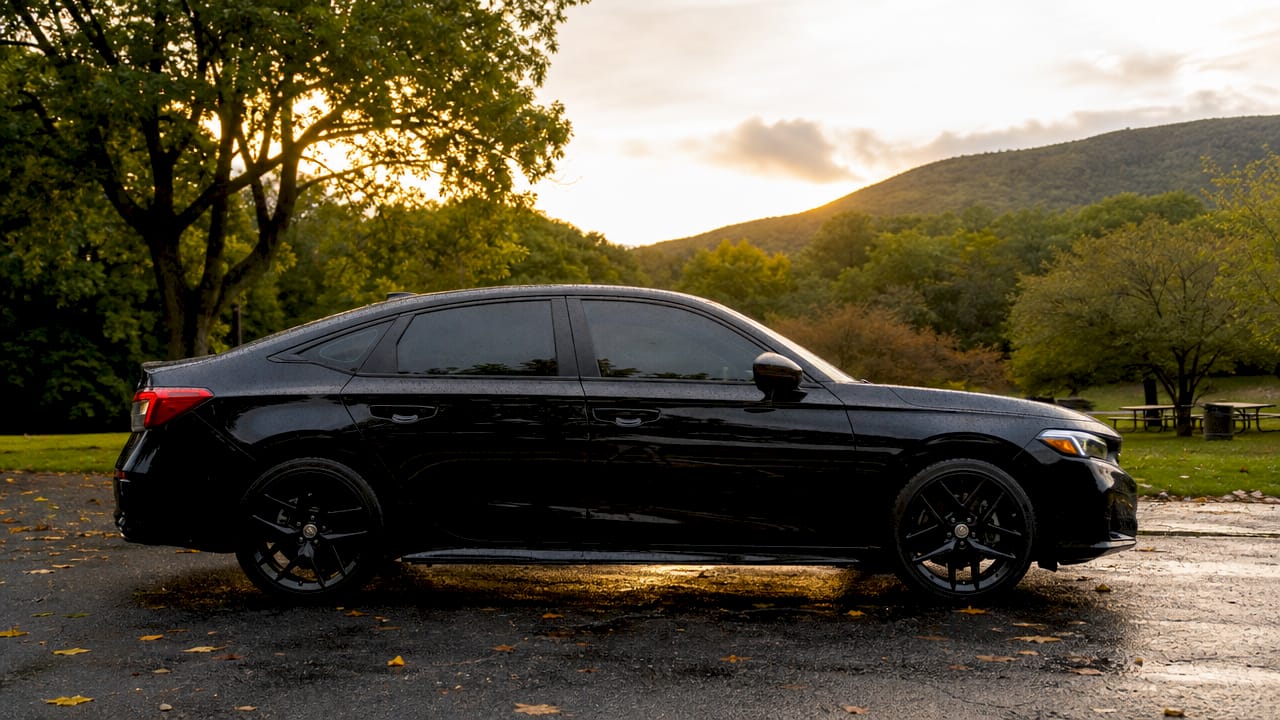
The science draws directly from nature. Microscopic surface textures reduce the contact area between water and the surface to as little as 2 to 3% in superhydrophobic applications, mimicking the structure of lotus leaves. Professional ceramic coatings replicate this by combining low-surface-energy chemistry with micro and nanoscale texture. The water droplet has almost nothing to grip, so it rolls off and carries loose contaminants with it.
One distinction matters here. Hydrophobic protection is not waterproofing. It manages surface tension to repel water rather than forming a physical barrier that blocks water entirely. This is a critical difference for car owners to understand before setting expectations.
Key behaviors of a properly treated hydrophobic surface:
- Water beads into tight spheres and rolls off at low angles
- Dirt and road grime bond to water droplets and are carried away
- Mineral deposits from hard water have less surface area to adhere to
- Treated glass sheds water at speeds of 30 to 40 mph, improving visibility without a wiper
Pro Tip: Before any hydrophobic coating is applied, the surface must be fully decontaminated. Bonding a coating over embedded iron particles or surface oils will trap those contaminants and reduce both adhesion and longevity. See the car prep guide from Mannyceramicprotouch for a full breakdown of the preparation process.
What are the benefits of hydrophobic coatings for vehicles?
The practical advantages of hydrophobic coatings go well beyond aesthetics. For car owners who drive in rain, park outdoors, or live in areas with hard water, the performance gains are measurable and consistent.
-
Reduced water spotting and mineral buildup. Hard water leaves calcium and magnesium deposits when it evaporates on untreated paint. Hydrophobic coatings reduce mineral buildup by up to 80% by minimizing the surface area where water can sit and evaporate. That figure translates directly into fewer hours spent polishing water spots off paint and glass.
-
Improved driver visibility in rain. Treated windshields shed water at highway speeds without relying solely on wipers. At 30 to 40 mph, water beads and clears from the glass passively, which is a genuine safety benefit during heavy rain.
-
Easier cleaning and reduced maintenance frequency. Cleaning frequency drops by 30 to 50% on properly coated vehicles. Dirt and road film bond less aggressively to treated surfaces, so a rinse removes what would otherwise require scrubbing on bare paint.
-
Protection against corrosion and environmental contaminants. Acid rain, bird droppings, tree sap, and industrial fallout all interact with bare paint at the surface level. A hydrophobic layer reduces dwell time for these contaminants by encouraging them to run off rather than sit and etch.
-
Long-term surface preservation. Consistent protection from UV exposure, oxidation, and chemical contaminants slows paint degradation over time. For luxury and high-value vehicles, this directly supports resale value and finish quality.
The ceramic coating benefits extend beyond rain repellency. Owners of coated vehicles consistently report that the paint retains depth and gloss longer than uncoated vehicles exposed to the same conditions.
Hydrophobic vs hydrophilic surface treatments: what’s the difference?
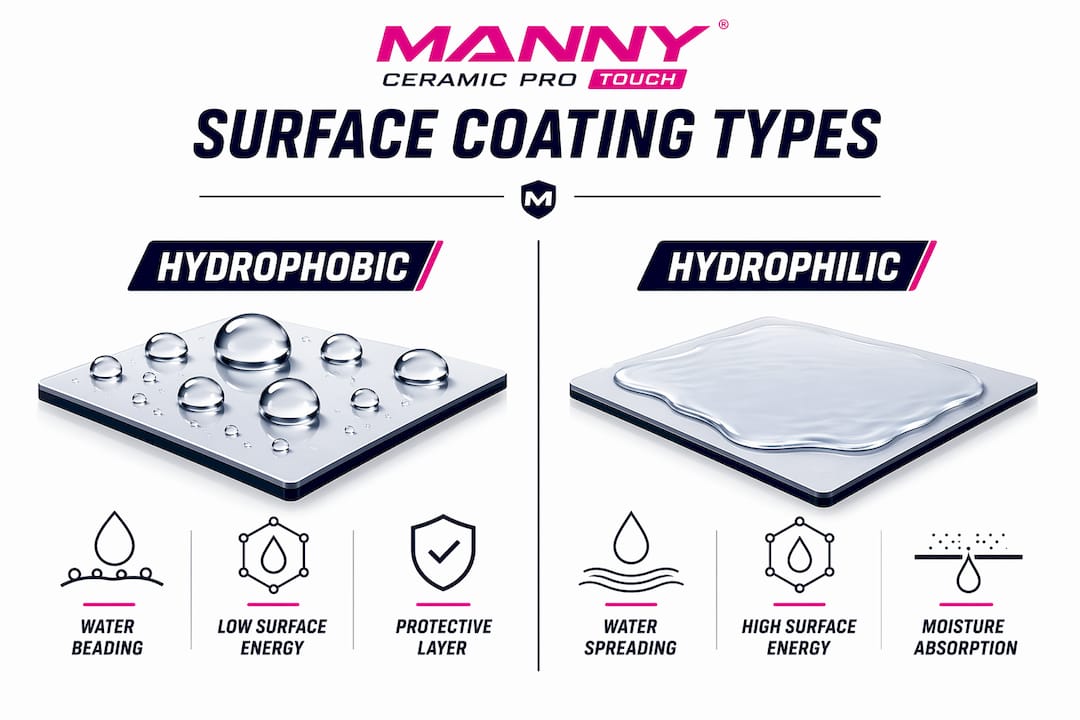
Understanding hydrophobic vs hydrophilic is straightforward once you know what each term describes. Hydrophilic means water-attracting. A hydrophilic surface has high surface energy, causing water to spread flat across it in a thin sheet rather than bead up. Hydrophobic means water-repelling. A hydrophobic surface has low surface energy, causing water to contract into beads and roll off.
| Property | Hydrophobic | Hydrophilic |
|---|---|---|
| Water behavior | Beads and rolls off | Spreads flat across surface |
| Contact angle | Greater than 90° | Less than 90° |
| Dirt removal | Water carries dirt away | Water spreads dirt across surface |
| Typical use case | Paint, glass, exterior trim | Some self-cleaning glass, medical devices |
| Cleaning effort | Lower | Higher on exterior surfaces |
For automotive exteriors, hydrophobic treatments are the standard choice. Hydrophilic coatings do appear in specific automotive glass applications where a thin, even water sheet is preferred over beading, but for paint protection and general exterior surfaces, the water-repelling behavior of hydrophobic treatments delivers better results.
The functional outcome of each approach differs in one important way. On a hydrophilic surface, water spreads and evaporates slowly, leaving mineral deposits across a wide area. On a hydrophobic surface, water contracts and rolls, concentrating any residue at the point where the droplet exits the surface. This makes post-rain cleanup significantly faster on treated vehicles.
How long do hydrophobic coatings last and how to maintain them?
Lifespan depends directly on the type of product applied. Professional ceramic coatings last 1 to 5 years, while consumer-grade DIY sprays last 1 to 6 months due to UV degradation and abrasion. The gap between those two ranges reflects the difference in chemical bonding depth, product concentration, and application precision.
Several factors determine where a coating lands within its expected lifespan:
- Surface preparation quality. Coatings applied over contaminated or improperly polished paint bond poorly and degrade faster. Decontamination before application is the single most important factor in coating durability.
- Environmental exposure. Vehicles parked outdoors in direct sunlight, salt air, or industrial zones experience faster coating degradation than garaged vehicles.
- Wash method. Automatic car washes with abrasive brushes strip hydrophobic coatings faster than hand washing with pH-neutral soap.
- Reapplication of maintenance sprays. Professional coatings can be extended with periodic application of a compatible ceramic maintenance spray, which refreshes the hydrophobic layer without requiring a full recoat.
Pro Tip: Never apply a hydrophobic coating in direct sunlight or on a hot surface. Heat causes the product to cure too quickly, leading to uneven bonding and high spots that require machine polishing to correct. Work in a shaded, temperature-controlled environment whenever possible.
A common misconception is that self-cleaning requires no manual washing. In practice, the self-cleaning effect works best when the vehicle is moving or exposed to rain with sufficient force. In heavy grime environments or during dry periods, manual washing remains necessary. The coating reduces effort, not the need entirely.
Professional vs DIY hydrophobic surface treatment: which is right for you?
The choice between professional and consumer hydrophobic treatments comes down to how long you want the protection to last and how much surface preparation you are willing to do correctly.
Professional ceramic coatings and Liquid PPF:
- Applied by trained technicians after full paint decontamination and polishing
- Bond at a molecular level to the clear coat for multi-year durability
- Require controlled application environments to prevent high spots and haziness
- Overapplication causes visual defects requiring machine polishing to correct, which is why thin, even layers applied with precision are the standard in professional treatments
- Cost more upfront but deliver significantly lower maintenance costs over time
DIY hydrophobic sprays and wipes:
- Available from brands like Meguiar’s, Chemical Guys, and Gtechniq in consumer-grade formulas
- Applied in minutes with no surface prep beyond a clean, dry surface
- Effective for 1 to 6 months depending on exposure and wash frequency
- Suitable for drivers who want basic water repellency without a long-term commitment
- Cannot match the bonding depth or durability of professional-grade products
For luxury, exotic, or high-value vehicles, the professional route is the clear choice. The ceramic coating application process involves multiple preparation stages that DIY products skip entirely. Skipping those stages on a vehicle with a high-quality paint finish risks trapping defects under the coating permanently.
For daily drivers where budget is the primary constraint, a quality consumer spray applied every few months provides meaningful protection at low cost. The key is consistency: a fresh DIY coating applied regularly outperforms a degraded professional coating that has never been maintained.
Key takeaways
Hydrophobic protection works because it lowers surface energy at the nanoscale, forcing water to bead and roll off rather than spread, which reduces mineral buildup, cleaning effort, and surface degradation over time.
| Point | Details |
|---|---|
| Core mechanism | Low-surface-energy nanolayers force water to bead and roll off, carrying dirt with it. |
| Cleaning reduction | Properly coated vehicles require 30 to 50% less cleaning frequency than uncoated surfaces. |
| Lifespan gap | Professional ceramic coatings last 1 to 5 years; DIY sprays last 1 to 6 months. |
| Surface prep is critical | Decontamination before application determines coating adhesion and long-term durability. |
| Not waterproofing | Hydrophobic coatings repel water through surface tension management, not physical barrier formation. |
What I’ve learned after years of protecting high-value vehicles
Most car owners come to us after a bad experience with a DIY product. They applied a spray coating, saw water beading for a few weeks, then watched it disappear after a handful of washes. The frustration is understandable, but the issue is almost never the product itself. It is the preparation that was skipped.
The single biggest misconception I see is that hydrophobic protection is a shortcut to a clean car. It is not. It is a force multiplier. A properly prepped and coated surface stays cleaner longer, washes faster, and resists contamination more effectively. But it still needs to be washed. The self-cleaning effect is real, and it reduces effort meaningfully. It does not eliminate the need for care.
The second thing I tell every client is that hydrophobic coatings are not waterproof. Water will not penetrate a ceramic coating and damage your paint directly, but the coating is not a physical shield against rock chips, scratches, or chemical etching from prolonged exposure. Pairing a hydrophobic ceramic coating with a paint protection film gives you both water repellency and physical impact resistance. That combination is what we recommend for any vehicle where the finish matters long-term.
Choose your installer based on their preparation process, not their price. Any shop that skips paint decontamination and polishing before applying a coating is cutting the step that determines whether the product lasts two years or two months.
— Emmanuel
Protect your vehicle with professional-grade hydrophobic coatings

At Mannyceramicprotouch, every vehicle receives a tailored protection strategy built around its specific finish, use conditions, and long-term goals. The studio specializes in professional paint protection film and high-performance ceramic coatings for luxury, exotic, and high-value vehicles in the Fort Lauderdale area. Both services deliver lasting hydrophobic performance through a preparation and application process designed for precision and durability. If you are ready to protect your vehicle’s finish at the level it deserves, contact Mannyceramicprotouch to schedule a consultation and get a protection plan built specifically for your car.
FAQ
What is hydrophobic protection in simple terms?
Hydrophobic protection is a surface treatment that causes water to bead and roll off a vehicle rather than spreading flat. It works by lowering the surface energy of paint, glass, or trim at the nanoscale.
Is hydrophobic protection the same as waterproofing?
No. Hydrophobic coatings repel water by managing surface tension, but they do not form a physical barrier that blocks water entirely. Waterproofing prevents water ingress; hydrophobic protection reduces water adhesion.
How long does hydrophobic coating last on a car?
Professional ceramic coatings last 1 to 5 years depending on surface preparation and environmental exposure. Consumer-grade DIY sprays typically last 1 to 6 months before requiring reapplication.
Does hydrophobic coating eliminate the need to wash your car?
No. Hydrophobic coatings reduce cleaning frequency by 30 to 50%, but manual washing is still necessary, especially after heavy grime exposure or during dry periods when rain cannot activate the self-cleaning effect.
What is the difference between hydrophobic and hydrophilic coatings?
Hydrophobic coatings repel water, causing it to bead and roll off. Hydrophilic coatings attract water, causing it to spread in a thin sheet. For automotive paint and exterior surfaces, hydrophobic treatments provide better protection and easier maintenance.