

TL;DR:
- Modern vehicle paints are thinner and less durable due to environmental regulations, making them more vulnerable to UV, acid rain, and pollen damage. Applying layered protection like ceramic coatings or liquid PPF, combined with routine maintenance and smart parking, significantly extends finish longevity. Quick removal of contaminants and eco-friendly products are essential for preserving vehicle value and environmental responsibility.
Your car’s factory paint finish is not a long-term shield. Most car owners assume the clear coat that leaves the factory is enough to handle years of sun, rain, and city driving. It is not. The environmental threats to automotive finishes are more aggressive, more varied, and more chemically complex than most people realize. UV radiation, acid rain, pollen, industrial fallout, and bird droppings are all working against your paint every day. Understanding how each one causes damage, and what actually stops it, is the difference between a finish that holds its value and one that oxidizes before it should.
Table of Contents
- Key takeaways
- Environmental threats to automotive finishes: the full breakdown
- Why modern paint is more vulnerable than older finishes
- Protection options: what actually works
- Maintenance habits that extend finish life
- My take on what actually matters for long-term finish protection
- Protect your finish with professional-grade solutions
- FAQ
Key takeaways
| Point | Details |
|---|---|
| UV radiation leads degradation | UV breaks carbon bonds in clear coats, causing oxidation that no polish can reverse. |
| Modern paints are thinner | Water-based, low-VOC formulations prioritize compliance over durability, leaving finishes more vulnerable. |
| Pollen is underestimated | Pollen activates with moisture to etch clear coats within days, even on ceramic-coated vehicles. |
| Wax alone is not enough | Traditional waxes break down within months and offer no structural defense against chemical damage. |
| Layered protection works best | Combining ceramic coatings or Liquid PPF with consistent maintenance delivers the most durable results. |
Environmental threats to automotive finishes: the full breakdown
Most of the damage your paint sustains is invisible at first. That is what makes these threats so costly over time. By the time fading, etching, or oxidation becomes visible, the clear coat has already been structurally compromised.
UV radiation is the most damaging and most constant threat your vehicle faces. UV breaks carbon bonds in clear coats, causing gloss loss, chalking, and oxidation that cannot be undone by washing or polishing. Once UV degrades the clear coat, it creates an open entry point for every other contaminant on this list.
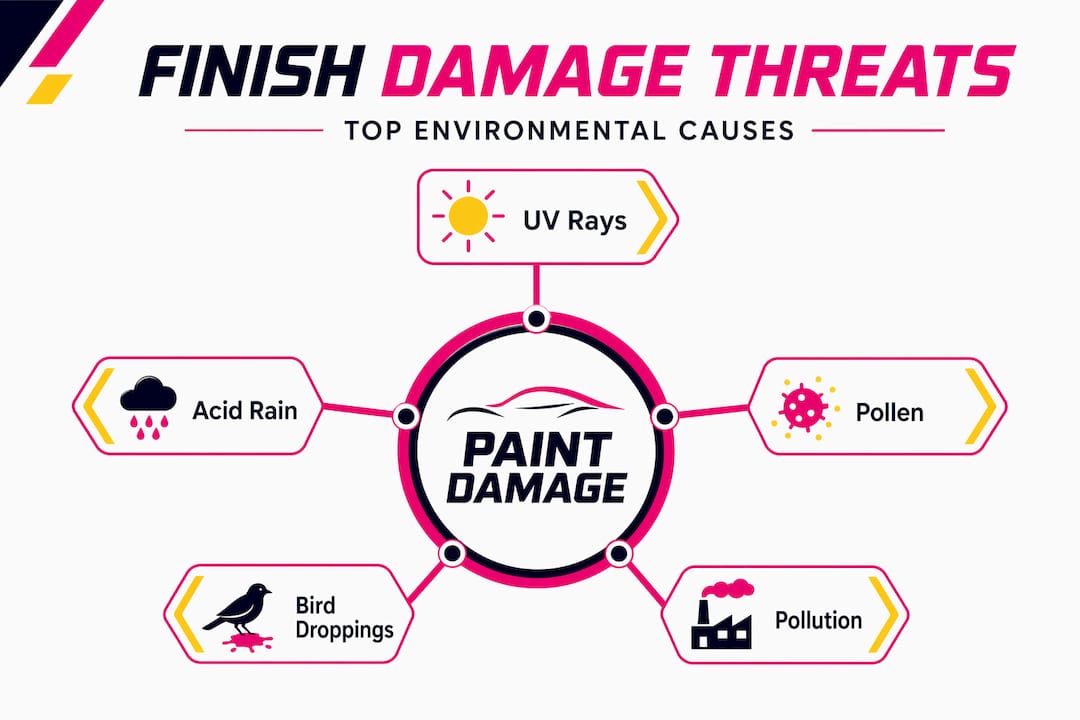
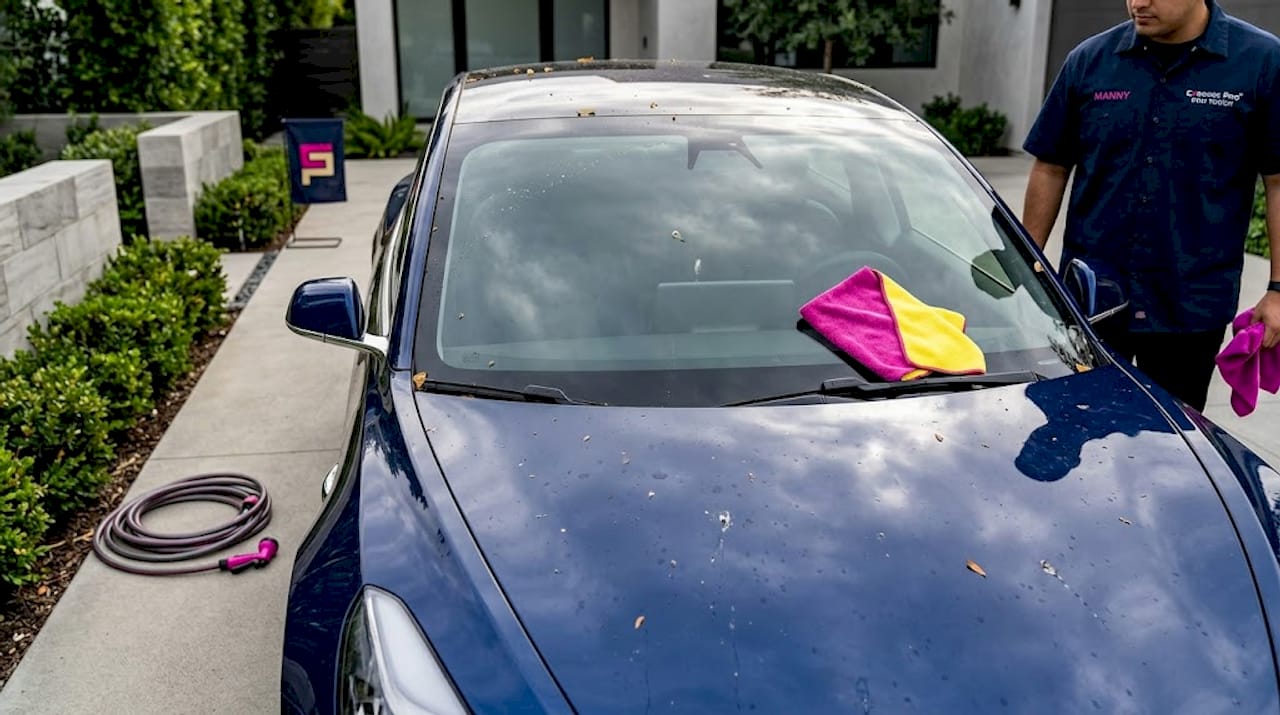
Acid rain and airborne pollutants accelerate the process. Industrial emissions, exhaust residue, and even natural sulfur compounds in rainwater create a mildly acidic solution that lands on your paint and begins etching immediately. When moisture evaporates, it leaves concentrated deposits that continue burning into the surface. Bird droppings, tree sap, and industrial dust penetrate UV-weakened clear coats and cause localized chemical etching that worsens with each hour of contact.
Pollen is one of the most underestimated environmental hazards to car paint. Pollen grains carry spike-like surfaces that physically scratch the clear coat during contact. Once moisture activates them, pollen’s acidity etches into the surface within days. This applies even to vehicles with ceramic coatings, though those finishes recover far better. Compounding the issue, pollen season has extended approximately 20 days over three decades, with pollen concentrations rising 21%, meaning annual exposure is growing every year.
Urban and industrial fallout adds another dimension to the problem. Brake dust, rail dust, and airborne metal particles land on paint and oxidize on contact. Combined with UV exposure and moisture, these particles embed into the clear coat and cause both staining and structural weakening that is difficult to address without professional decontamination.
- UV radiation causes irreversible clear coat oxidation and opens the paint to secondary contamination
- Acid rain and airborne pollutants chemically etch the surface, especially when moisture concentrates deposits
- Bird droppings and tree sap cause rapid localized etching, particularly in warm conditions
- Pollen activates with moisture to abrade and acid-etch the clear coat simultaneously
- Industrial fallout and brake dust embed into paint, accelerating oxidation and staining
Pro Tip: Remove bird droppings, tree sap, and pollen as quickly as possible. In warm weather, bird droppings can begin etching a clear coat within 30 minutes. Use a pH-neutral quick detailer spray and a microfiber cloth for fast removal without abrading the surface.
Why modern paint is more vulnerable than older finishes
This is the piece most car owners never hear. The factory finish on a vehicle built in the last decade is demonstrably less durable than the paint on a car built 30 years ago. That is not a quality control failure. It is a direct consequence of regulatory compliance.
The automotive paints market is valued at USD 11.89 billion in 2025 and is projected to reach USD 16.48 billion by 2032, driven in part by the shift toward water-based and low-VOC formulations required by environmental regulations. These paints produce fewer harmful emissions during application. However, they also apply thinner and cure differently than solvent-based systems, leaving clear coats that are measurably more susceptible to UV and chemical damage.
Modern factory paint prioritizes compliance over durability, making UV radiation a structural and chemical vulnerability that invites secondary damage from other environmental stressors. A thinner clear coat has less material to absorb UV energy before degradation begins. And once the top layer is compromised, acid rain, pollen, and fallout reach the base coat faster.
| Paint type | Average clear coat thickness | UV resistance | Chemical resistance |
|---|---|---|---|
| Solvent-based (pre-2000s) | 90 to 120 microns | Moderate to high | High |
| Water-based (modern) | 50 to 70 microns | Low to moderate | Low to moderate |
| Ceramic-coated | Base coat + 2 to 10 micron coating | Very high | Very high |
| Liquid PPF coated | Base coat + sacrificial polymer layer | High | High |
The practical implication here is clear. If you own a vehicle from the past decade, whether it is a daily driver, a luxury sedan, or a performance car, the environmental risks to vehicle finishes are greater than they were for the previous generation. Relying on factory paint alone and doing nothing else is a decision that will show up as oxidation, etching, and color fade within a few years.
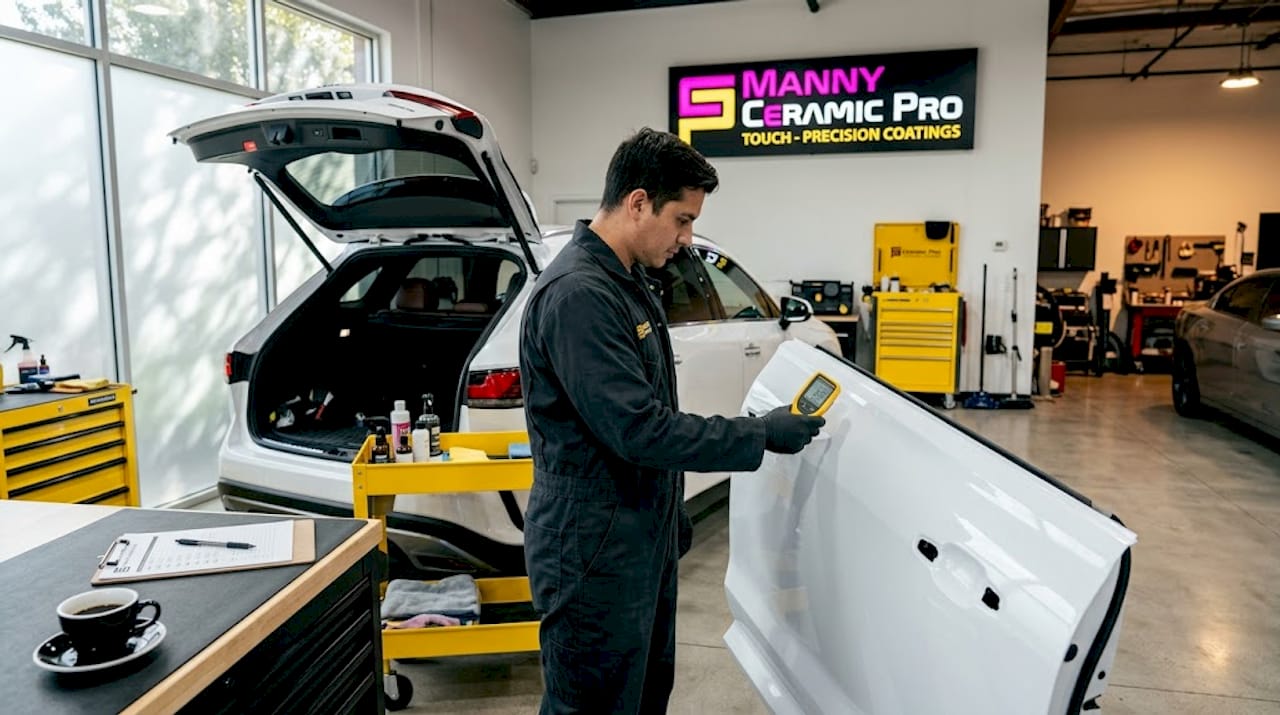
Pro Tip: Before investing in any protection product, get your paint thickness measured with a digital gauge. Knowing your clear coat depth tells you how much margin you have before polishing causes permanent thinning. Many protection decisions should be made based on that number.
Protection options: what actually works
The protection market is full of products that sound similar but perform very differently. Understanding the gap between traditional and advanced options is how you make the right investment for your vehicle.
Traditional carnauba wax offers a pleasant gloss and some water beading, but it breaks down within weeks to a few months depending on conditions. Traditional waxes degrade quickly and do not provide structural protection. They sit on top of the clear coat rather than bonding to it, which means they wash off, evaporate in heat, and offer no meaningful defense against UV radiation or chemical etching.
Polymer sealants last longer than carnauba, typically three to six months, and offer slightly better water and UV resistance. They are a better option than wax for someone not ready to commit to a professional coating, but they still lack the cross-linked chemical bonding that makes advanced coatings durable.
Ceramic coatings change the equation. High-performance paint preservation requires scientifically engineered coatings that chemically bond to the factory finish. A professional-grade ceramic coating cures into a glass-like layer above the clear coat, providing UV resistance, hydrophobic water behavior, and a surface that contaminants cannot easily penetrate. For daily commuters and luxury vehicles, the protection requirements differ, but both benefit from advanced hydrophobic and scratch-resistant coating systems over wax alone. You can learn more about how these systems work in this overview of ceramic coating benefits.
Liquid PPF represents a newer category worth understanding. Unlike traditional paint protection film, which is a pre-cut urethane sheet applied to specific panels, Liquid PPF vs traditional PPF shows that liquid formulations can cover the entire vehicle in a single application without visible seams or edges. Liquid PPF sacrificial layers absorb the physical and chemical impact that would otherwise reach the clear coat, then self-stratify to maintain gloss. The tradeoff is that liquid versions do not offer the same impact resistance as thick urethane film for rock chips on high-impact zones like the hood and front bumper.
- Carnauba wax: lasts weeks to months, no UV or chemical resistance, no structural bonding
- Polymer sealants: three to six month lifespan, basic UV filtering, still surface-level protection
- Ceramic coatings: chemically bonded, multi-year durability, high UV and chemical resistance
- Liquid PPF: full-vehicle coverage, sacrificial polymer layer, better chemical and environmental resistance than ceramic alone
- Traditional PPF film: maximum rock chip and impact protection for high-impact zones, combined with ceramic for full-coverage solutions
Maintenance habits that extend finish life
Protection products are only as effective as the maintenance routine supporting them. A ceramic coating on a neglected vehicle will still degrade faster than it should.
- Wash with pH-neutral products every two weeks. Frequency matters because contaminants accumulate and begin reacting with your clear coat or coating surface the longer they sit. Use a two-bucket method with dedicated wash and rinse buckets to minimize the chance of dragging abrasive particles back across the paint.
- Remove pollen immediately during spring. Do not let pollen sit on a wet surface overnight. Pollen’s acidity activates with moisture, and professional chemical decontamination is often required to fully remove damage caused by prolonged pollen exposure. A quick spray with a pH-neutral detailer and a clean microfiber towel prevents most of this damage.
- Choose eco-friendly wash products. Biodegradable car wash products do not harm local waterways and use phosphate-free, VOC-compliant formulations that are safer for aquatic ecosystems. Many conventional car soaps and waxes persist in waterways and harm soil health. Responsible choices here protect both the environment and the finish. For more on exterior care methods, this guide to exterior detailing practices covers several approaches worth reviewing.
- Avoid automatic brush car washes. The rotating bristles in traditional tunnel washes are one of the most common sources of micro-scratching. A touchless wash is acceptable for ceramic-coated vehicles in a pinch, but hand washing remains the best method for preserving finish quality.
- Park with exposure in mind. Covered parking reduces cumulative UV exposure, thermal cycling damage, and pollen accumulation. When covered parking is not available, a quality car cover adds a physical barrier against fallout, bird droppings, and UV. Parking away from trees reduces sap and pollen contact significantly.
Pro Tip: After washing, apply a ceramic coating maintenance spray to reinforce hydrophobic behavior and fill minor surface defects. These sprays are designed to complement existing coatings and extend their effective lifespan between professional reapplications.
My take on what actually matters for long-term finish protection
I have worked on a wide range of vehicles, from daily drivers to high-value exotics, and what I keep seeing is owners making expensive mistakes based on outdated assumptions. The biggest one is treating paint protection as optional on newer cars. It is the opposite. Newer vehicles with thinner, water-based clear coats need protection sooner and more consistently than older ones.
The second thing I have learned is that pollen damage surprises people. They expect UV and acid rain to cause problems, but they do not connect the yellow dust on their hood with the micro-etching that shows up months later. I have seen ceramic-coated vehicles with pollen etching because the owner assumed the coating meant they could leave the car unwashed for weeks during spring. The coating helped. It did not make the car immune.
What actually works in my experience is layering protection and pairing it with consistent maintenance. A well-applied professional ceramic coating combined with routine pH-neutral washing, fast contamination removal, and smart parking choices will outperform any single product applied once and ignored. Environmental responsibility matters here too. Choosing biodegradable products and sustainable car coatings that comply with VOC standards is not just better for the planet. It also reflects the direction the entire coatings industry is moving. The vehicles and owners who understand that now are ahead of the curve.
— Emmanuel
Protect your finish with professional-grade solutions

Every vehicle faces a unique combination of environmental threats depending on climate, usage, and parking conditions. At Mannyceramicprotouch, the approach is tailored from the start. Whether your vehicle needs paint protection film for high-impact zones, a Liquid PPF application for full-surface environmental defense, or a professional-grade ceramic coating package built for long-term UV and chemical resistance, every service is designed around what your specific vehicle actually needs. This is not volume detailing. It is precision asset protection for owners who care about the long-term condition and value of their vehicles.
FAQ
What are the biggest environmental threats to car paint?
UV radiation, acid rain, bird droppings, pollen, and industrial fallout are the primary threats. UV is the most damaging because it weakens the clear coat and makes all other contaminants more destructive.
Does factory paint protect against environmental damage?
Modern factory paint uses thinner, water-based formulations that prioritize environmental compliance over durability, offering limited long-term protection against UV radiation and chemical contaminants without additional coatings.
How long does a ceramic coating protect against environmental hazards?
Professional ceramic coatings chemically bond to the clear coat and typically provide two to five or more years of UV and chemical resistance, depending on application quality and maintenance frequency.
Can pollen really damage a car’s finish?
Yes. Pollen grains have abrasive surfaces and activate with moisture to produce acidic compounds that etch clear coats within days. Prolonged exposure often requires professional decontamination to fully address the damage.
Is Liquid PPF better than traditional wax for environmental protection?
Significantly better. Traditional waxes break down within weeks to months and provide no structural protection. Liquid PPF creates a sacrificial polymer layer that absorbs chemical and environmental impact, offering protection measured in years rather than weeks.