

TL;DR:
- Ceramic paint protection creates a durable, glass-like shield by chemically bonding to a vehicle’s clear coat, providing long-lasting UV and chemical resistance. Proper application involves thorough paint correction, careful curing, and regular maintenance, with long-term benefits most visible on vehicles kept five or more years. It enhances gloss, reduces wash time, but does not prevent impacts like rock chips, which require film protection.
Ceramic paint protection is defined as a liquid SiO2-based polymer that chemically bonds to a vehicle’s clear coat, forming a durable, glass-like shield against UV rays, chemical etching, and wash-induced surface wear. Unlike wax or paint sealants, which sit on top of the paint and wash away within weeks, a properly applied ceramic coating integrates at the molecular level. Professional-grade coatings block 88–94% of UV rays and can extend paint life by 30–50% in high-UV climates for vehicles kept five or more years. That level of protection is not marketing language. It is measurable, documented performance.
How does ceramic paint protection work on vehicle surfaces?
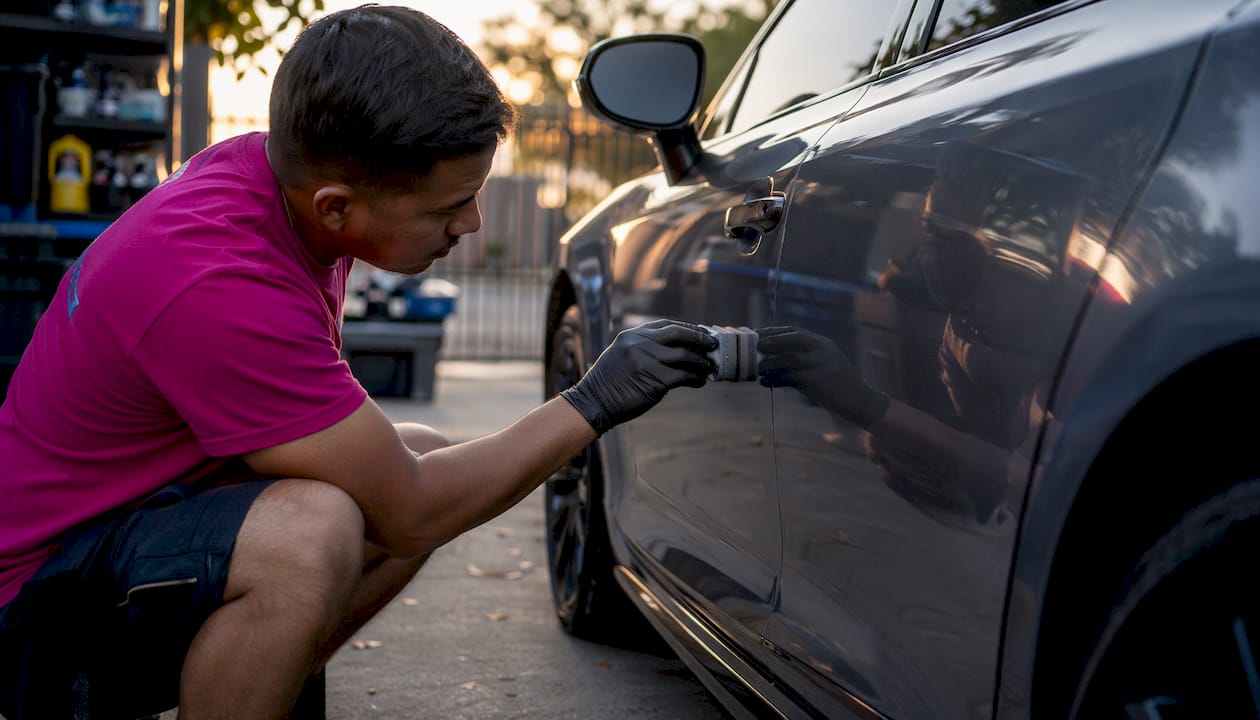
Ceramic coating paint protection works through a chemical bonding process, not a physical layering one. When applied to a prepared clear coat, the SiO2-based liquid polymer fills microscopic pores in the paint surface and bonds to the clear coat at the molecular level. The result is a glass-like, hydrophobic layer that repels water, contaminants, and UV radiation.
The coating itself measures between 0.5 and 5 microns thick, depending on the product tier and number of layers applied. That is thinner than a human hair, yet the hardness it delivers rates 4–5 on the Mohs scale. Road gravel typically rates higher, which is why ceramic coatings resist chemical damage but cannot absorb physical impact.
Curing is a critical phase. Ceramic coatings require 12–48 hours of undisturbed curing during which the chemical bond consolidates. Any water or contamination during this window compromises the final result. This is why professional application in a controlled environment matters far more than most owners realize.
Surface preparation determines the quality of the bond. Most labor in professional installations is spent on paint correction and decontamination, not on the coating application itself. A coating applied over swirls, oxidation, or contamination seals those defects in permanently.
- SiO2 bonding: The silicon dioxide polymer cross-links with the clear coat rather than resting on top of it.
- Hydrophobic effect: Water beads and sheets off the surface, carrying dirt with it.
- Hardness rating: 4–5 on the Mohs scale provides chemical resistance, not impact resistance.
- Curing window: 12–48 hours of no water or contaminant exposure after application.
- Prep dependency: Paint correction before coating locks in the final appearance permanently.
Pro Tip: Ask your installer what percentage of their total service time is spent on paint correction. If the answer is less than 50%, the coating result will reflect that shortcut.
What are the proven advantages and realistic limitations of ceramic coating?
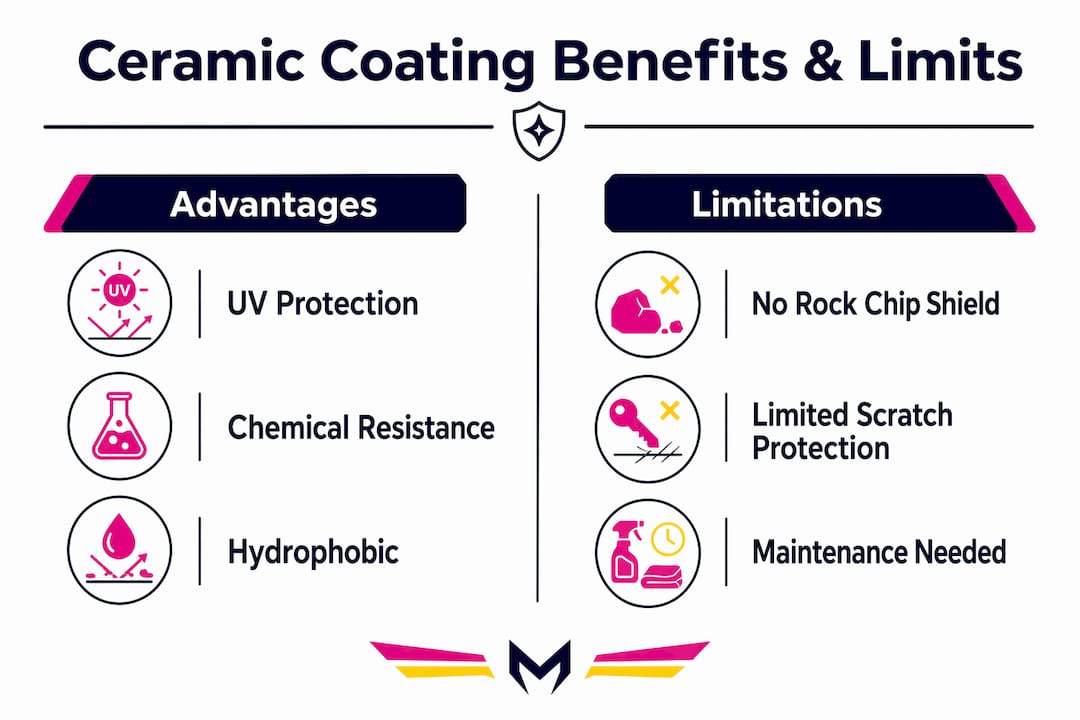
Ceramic coatings deliver measurable, documented benefits. They are not a cure-all, and understanding the difference between what they do and what they cannot do is the single most important factor in owner satisfaction.
Proven benefits
The UV protection alone justifies the investment for long-term owners. A 0.5 to 5 micron coating blocking 88–94% of UV radiation means significantly slower oxidation and color fade. For vehicles in Florida, Arizona, or other high-UV states, that translates directly to preserved paint depth and resale value. Ceramic coatings also improve gloss by 2–6 units on specialized gloss meters, with the most visible improvement on dark-colored vehicles. Coated vehicles also require 40% less time in routine washing because contaminants bond less aggressively to the hydrophobic surface.
Realistic limitations
Ceramic coatings do not prevent rock chips or deep scratches. Road gravel hits harder than a Mohs 4–5 surface can absorb. Owners who expect scratch immunity are routinely disappointed. Those who expect easier maintenance, reduced swirl visibility, and stronger UV defense report high satisfaction. The coating provides a sacrificial layer that reduces wash-induced micro-marring, but it does not eliminate the need for careful washing technique.
| Protection type | UV resistance | Chemical resistance | Impact protection | Lifespan |
|---|---|---|---|---|
| Ceramic coating | 88–94% blockage | High | None | 2–9 years |
| Paint sealant | Moderate | Low to moderate | None | 6–12 months |
| Carnauba wax | Low | Very low | None | 4–8 weeks |
| Paint protection film | Moderate | Moderate | High | 7–10 years |
Pro Tip: If bird droppings or tree sap land on a coated surface, remove them within a few hours. The coating buys you time against chemical etching, but it does not make the surface immune.
How does ceramic coating compare to PPF and wax?
Ceramic coating, paint protection film (PPF), and wax each solve a different problem. Treating them as interchangeable options leads to under-protected vehicles.
Wax provides a temporary shine and minimal chemical resistance. It sits on the surface and degrades within weeks. A carnauba wax application lasts 4–8 weeks under normal conditions. It costs little and requires no prep, but it offers no meaningful UV or chemical protection for a vehicle kept long-term.
Ceramic coating provides chemical protection, UV resistance, and hydrophobic properties that last years. Professional coatings last 2–9 years depending on product tier and maintenance quality. The coating does not absorb physical impact. A stone strike at highway speed will chip through a ceramic coating just as it would through bare clear coat.
PPF is a 6–8 mil thick urethane film that absorbs physical impact. It prevents rock chips, deep scratches, and abrasion damage. PPF does not provide the same level of chemical resistance or gloss enhancement that ceramic coating delivers. The two products are complementary, not competing.
Applying ceramic coating over PPF is the industry standard for luxury and high-value vehicles. The ceramic layer enhances the film’s hydrophobic properties and UV resistance while the PPF absorbs physical impacts beneath. Owners of exotic and luxury vehicles who want complete protection use both. This is the approach Mannyceramicprotouch applies for clients who want comprehensive surface preservation without compromise.
- Wax: Best for short-term owners or budget-limited situations. No long-term value.
- Ceramic coating: Best for chemical protection, UV defense, and gloss on vehicles kept 3+ years.
- PPF: Best for impact-prone areas like the hood, front bumper, and side mirrors.
- PPF plus ceramic: Best for luxury, exotic, and high-value vehicles requiring full-spectrum protection.
For a detailed breakdown of which option fits your vehicle and usage pattern, the PPF vs ceramic coating guide at Mannyceramicprotouch covers the decision criteria clearly.
What does proper ceramic coating application and maintenance involve?
Proper application starts before the coating touches the car. Without thorough paint correction and decontamination, the coating bonds over defects and seals them in permanently. This is the most common mistake in budget installations.
The application process
- Wash and decontaminate. Remove all surface contamination using a pH-neutral wash, iron remover, and clay bar treatment.
- Paint correct. Machine polish to remove swirls, oxidation, and light scratches. This step determines the final visual result.
- Panel wipe. Use an isopropyl alcohol solution to strip all polish oils and residue from the surface.
- Apply coating. Work panel by panel in a controlled environment, leveling the product before it flashes.
- Cure. Allow 12–48 hours of undisturbed curing. No water, no driving in rain, no touching the surface.
- Inspect. Check for high spots or uneven coverage under proper lighting before releasing the vehicle.
The vehicle prep checklist at Mannyceramicprotouch walks owners through each stage in detail.
Maintenance after coating
Coated vehicles still require regular washing. The hydrophobic surface makes washing faster and easier, but neglect still allows contamination to build up and degrade the coating over time.
- Wash every two weeks using a pH-neutral shampoo and a clean microfiber wash mitt.
- Avoid automatic car washes with abrasive brushes.
- Apply a ceramic maintenance spray every 3–4 months to refresh hydrophobic performance.
- Inspect the coating annually for wear, especially on horizontal panels exposed to direct sun.
- Address bird droppings, tree sap, and industrial fallout immediately to prevent etching.
Pro Tip: Use the two-bucket wash method: one bucket for clean soapy water, one for rinsing the mitt. This single habit reduces swirl marks more than any product upgrade.
Who benefits most from ceramic paint protection?
The return on investment for ceramic coating depends almost entirely on how long you keep the vehicle. Long-term owners benefit most while frequent traders may find less expensive protection options more cost-effective.
Ideal candidates
- Luxury and exotic vehicle owners who maintain showroom-level appearance as a standard, not a preference.
- Daily drivers in high-UV or coastal environments where UV radiation, salt air, and industrial fallout accelerate paint degradation.
- Owners keeping vehicles 5+ years who want to preserve resale value and reduce detailing costs over time.
- Enthusiasts who wash their own cars regularly and want a surface that responds well to careful maintenance.
Cost and value
Professional ceramic coating installation costs $1,200–$3,500 depending on vehicle size, product tier, and preparation complexity. That range reflects the labor-intensive prep work and premium product pricing. Spread across a 5-year ownership period, the annual cost of a mid-tier professional coating is lower than annual wax and sealant applications combined, with significantly better protection.
Short-term owners or those on tight budgets are better served by a quality paint sealant applied every 6 months. The protection is inferior, but the cost matches the ownership timeline. Ceramic coating is an investment in the vehicle’s long-term condition, not a one-time expense.
Key Takeaways
Ceramic paint protection delivers its full value only when applied over a properly corrected surface, maintained with careful washing, and matched to a long-term ownership plan.
| Point | Details |
|---|---|
| Chemical bonding is the core mechanism | SiO2 polymer bonds to clear coat at the molecular level, unlike wax which sits on the surface. |
| UV protection is measurable | Professional coatings block 88–94% of UV rays and extend paint life by 30–50% in high-UV climates. |
| Coatings do not stop rock chips | Physical impact protection requires PPF; ceramic coating handles chemical and UV threats only. |
| Prep work determines the outcome | Paint correction before application locks in the final appearance and coating durability permanently. |
| ROI depends on ownership duration | Long-term owners get the strongest return; frequent vehicle traders benefit less from the investment. |
What I’ve learned after years of working with ceramic coatings
The most consistent pattern I see is this: owners who research ceramic coatings thoroughly before committing get exactly what they expected. Owners who skip the research phase often feel let down, not because the coating failed, but because their expectations were wrong from the start.
Prep work is where the result is decided. I have seen beautifully applied coatings on poorly corrected paint, and the outcome is a glossy surface with sealed-in swirls. The coating did its job. The prep did not. That is why at Mannyceramicprotouch, the majority of our time on any coating job is spent before the product ever touches the car.
For luxury and exotic vehicle owners, the combined PPF-plus-ceramic approach is not optional in my view. It is the only configuration that addresses both chemical threats and physical impact. A ceramic-only setup on a high-value vehicle leaves the paint exposed to the one threat it cannot handle.
Maintenance is where most owners lose the benefit they paid for. A coated car washed with an abrasive brush at an automatic car wash degrades faster than an uncoated car washed carefully by hand. The coating amplifies good habits and punishes bad ones.
— Emmanuel
Professional ceramic coating services from Mannyceramicprotouch
Mannyceramicprotouch specializes in premium ceramic coating application for luxury, exotic, and high-value vehicles in Fort Lauderdale. Every service begins with a thorough paint correction process before any coating is applied, because the prep work is where long-term results are built.
Packages range from single-layer entry coatings to multi-layer professional systems combined with Liquid PPF for complete surface preservation. Whether your vehicle needs ceramic coating packages designed for daily drivers or a full liquid PPF and ceramic system for a high-value asset, Mannyceramicprotouch builds a protection plan around your vehicle’s specific needs. Schedule a consultation to get a clear assessment of what your paint requires and what results you can realistically expect.
FAQ
What is ceramic paint protection?
Ceramic paint protection is a liquid SiO2-based polymer that chemically bonds to a vehicle’s clear coat, forming a durable, hydrophobic layer that resists UV rays, chemical etching, and wash-induced surface wear. Unlike wax, it lasts 2–9 years with proper maintenance.
Does ceramic coating prevent rock chips and scratches?
Ceramic coatings do not prevent rock chips or deep scratches. They rate 4–5 on the Mohs hardness scale, which is softer than road gravel. Paint protection film (PPF) is required for physical impact protection.
How long does a professional ceramic coating last?
Professional ceramic coatings last 2–9 years depending on product tier and maintenance quality. Consumer-grade kits typically last 1–3 years.
How much does professional ceramic coating cost?
Professional ceramic coating installation costs between $1,200 and $3,500 depending on vehicle size, product tier, and the complexity of paint correction required before application.
Can ceramic coating be applied over paint protection film?
Applying ceramic coating over PPF is the industry standard for luxury and high-value vehicles. The ceramic layer enhances the film’s hydrophobic properties and UV resistance while the PPF handles physical impact protection underneath.