

Ceramic Coatings
Ceramic coatings are protective layers made from ceramic materials, applied to metals, plastics, composites, and glass to enhance their physical properties. Ceramic coatings are widely used as a protective layer to improve corrosion and chemical resistance, add thermal and electrical insulation, reduce friction, and increase surface hardness and wear resistance.
High performance ceramic coatings that provide long-lasting protection, deep gloss, and extreme durability against the elements.
Benefits
- Protects against daily wear and environmental damage
- Enhances gloss and long-term appearance
- Makes cleaning and maintenance easier
- Preserves vehicle value
- Complete protection for paint, glass, wheels, trim, and interior
Our Process
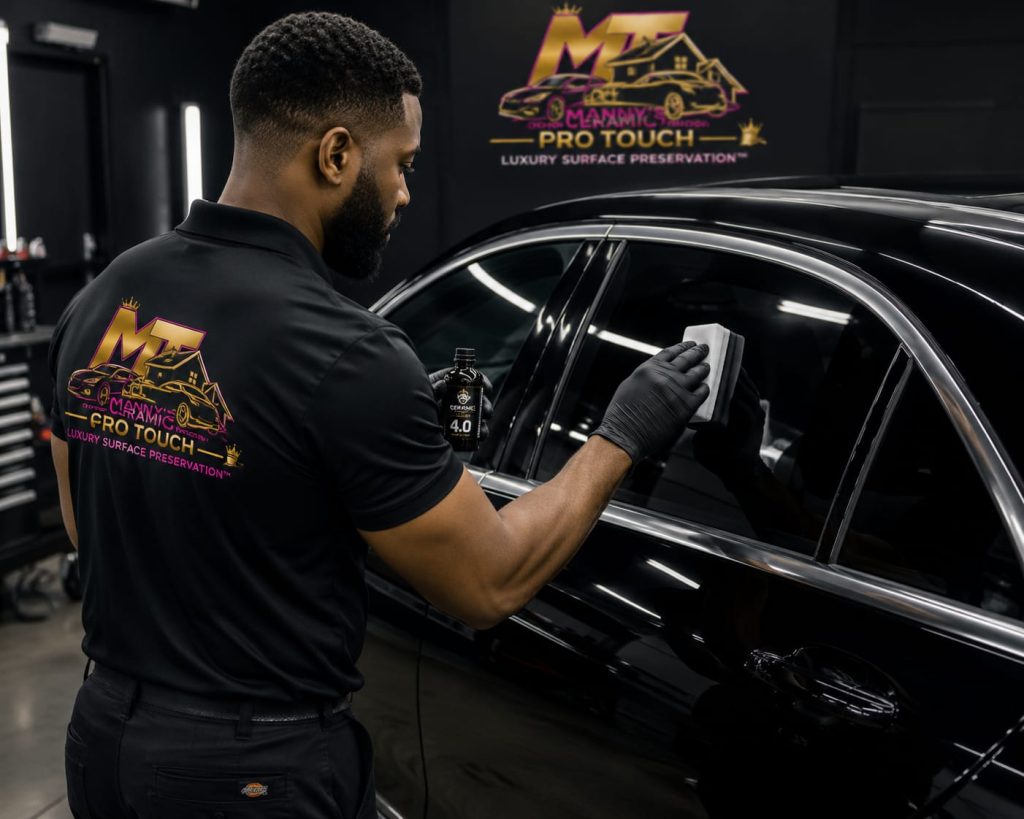
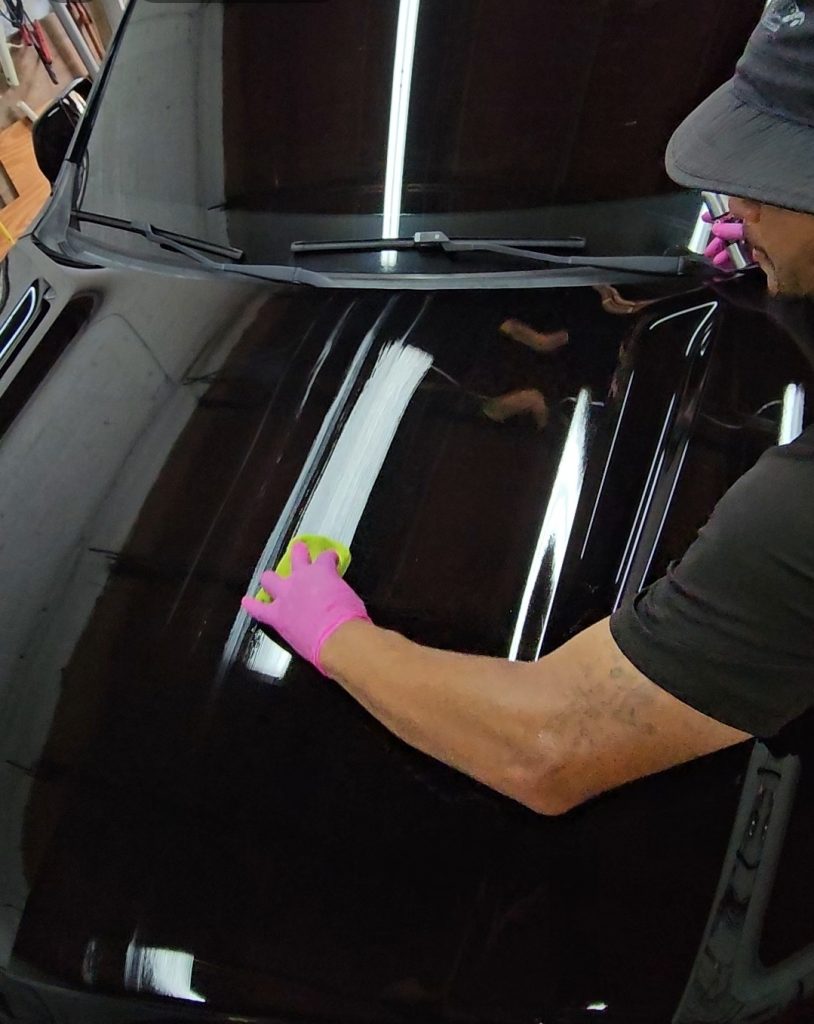
The ceramic coating process involves rigorous surface preparation followed by precise chemical application. First, wash the vehicle thoroughly to remove dirt, and use a clay bar and iron remover to eliminate embedded contaminants. Next, polish the paint to remove swirls, and use a panel wipe to remove polishing oils. Apply the coating in small sections, let it flash, and buff it off.
Ceramic coatings can be applied in several ways, depending on the application. The following list summarizes some of the application methods:
- Ceramic Coating a Car: Liquid ceramic coatings for cars are applied to a thoroughly cleaned and detailed painted surface using straight-line motions. After application, the excess coating is wiped off gently, and the car must cure for at least two days before exposure to water.
- Plasma Spraying: In plasma spraying, a plasma flame heats coating particles to very high temperatures. These particles are then propelled onto a substrate, where rapid cooling forms a durable ceramic coating.
- Detonation Gun (D-Gun): The D-Gun method is a popular thermal spray process where a mixture of oxygen and fuel detonates to heat and spray powder onto a substrate. An inert gas is then pulsed through the sprayer to purge it, and this cycle is repeated rapidly to form a strong, dense coating.
- Chemical Vapor Deposition (CVD): CVD applies ceramic coatings by introducing reactive gases that chemically react with the substrate, forming a thin, uniform film over the surface.
Our packages
Small
(Coupe/Sedan)-
Liquid ceramic coating
-
Plasma Spraying
Medium
(Medium Truck/2nd Row SUV)-
Liquid ceramic coating
-
Plasma Spraying
Large
(Large Truck/3rd Row SUV/Minivan)-
Liquid ceramic coating
-
Plasma Spraying
50/50
Half & Half Performance-
Liquid ceramic coating
-
Plasma Spraying
100%
Full Body Armor-
Liquid ceramic coating
-
Plasma Spraying
Photo Gallery

FAQ
How Long Does Ceramic Coating Last?
Ceramic coatings generally last for years, though their exact lifespan depends on the application and maintenance. On cars, ceramic coatings typically last two to five years, with factors like harsh chemicals, extreme weather, and improper maintenance reducing durability. Ceramic-coated cookware may last one to three years, while industrial coatings, exposed to chemicals, high temperatures, or mechanical impacts, also typically last several years.
What To Do To Maintain Ceramic Coating?
To maintain a ceramic coating, care should be taken to do the following:
- Avoid using harsh chemicals on the ceramic coating, as this can deteriorate the coating.
- Avoid using sharp implements or abrasives on the coating, as this can lead to scratches.
- Avoid polishing or other abrasive methods of cleaning, as this can scratch and deteriorate the coating.
- For a ceramic coating on a car, surface debris should be cleaned off every few weeks.
- Ceramic-coated cookware should be washed with warm, mild soapy water after each use.
Is Ceramic Coating High Maintenance?
No, ceramic coating is generally low maintenance, but proper care is essential. Using harsh chemicals, high-speed polishers, or abrasive tools can wear or scratch the coating, leading to deterioration.