

Car paint protection refers to the products and methods used to shield your vehicle’s finish from physical damage, chemical contamination, and UV degradation. The four main categories are Paint Protection Film (PPF), ceramic coatings, paint sealants, and waxes. Each serves a distinct purpose, and the right choice depends on your vehicle, driving habits, and budget.
Here is a quick overview of what each method delivers:
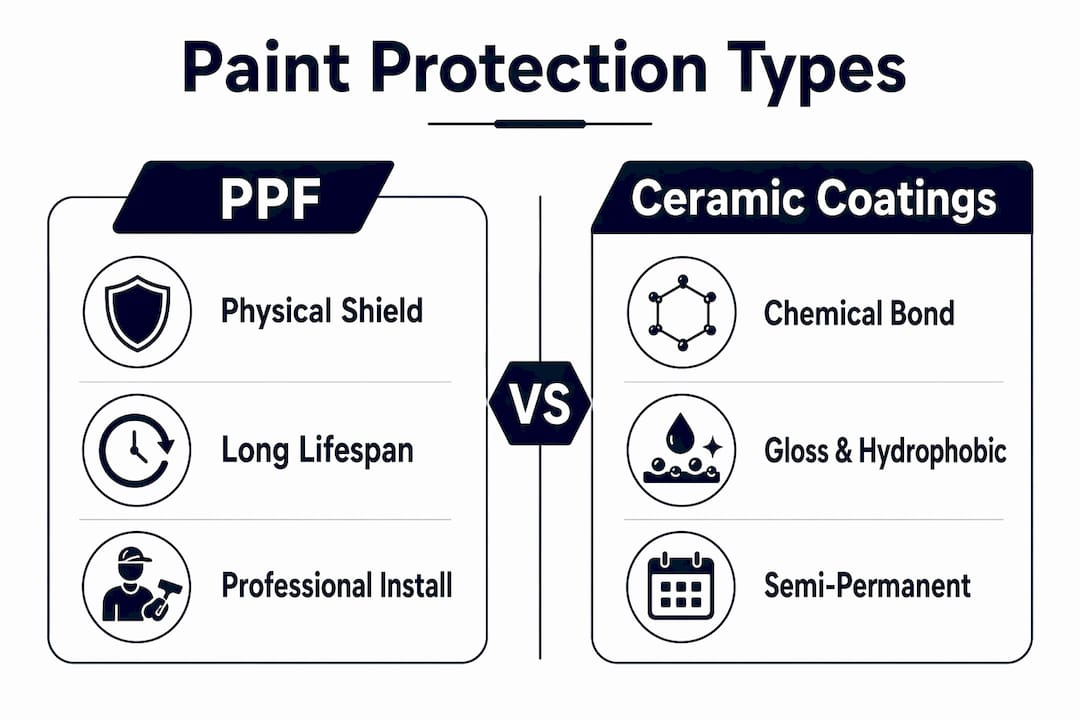
- Paint Protection Film (PPF): A thermoplastic urethane film applied to high-impact areas like the hood, bumper, and mirrors. Lasts 5–10+ years with self-healing properties. Brands include 3M and Solar Gard.
- Ceramic coatings: A chemical polymer layer that bonds to paint, creating hydrophobicity, UV resistance, and deep gloss. Lasts 2–7+ years. Brands include Chemical Guys.
- Paint sealants: Synthetic polymer layers offering UV and minor chemical protection. Lasts 6–12 months. Brands include Mothers and Meguiar’s.
- Waxes: Traditional, short-term gloss and water-beading agents with limited durability. Lasts 1–3 months. Brands include Turtle Wax, Armor All, and Eagle One.
The most effective approach for high-value vehicles combines PPF on vulnerable zones with a full ceramic coating over the rest of the car, giving you physical armor and chemical resistance in one package.
What types of car paint protection products are available?
Understanding the differences between protection categories helps you spend money where it actually matters for your specific vehicle.
Paint Protection Film (PPF)
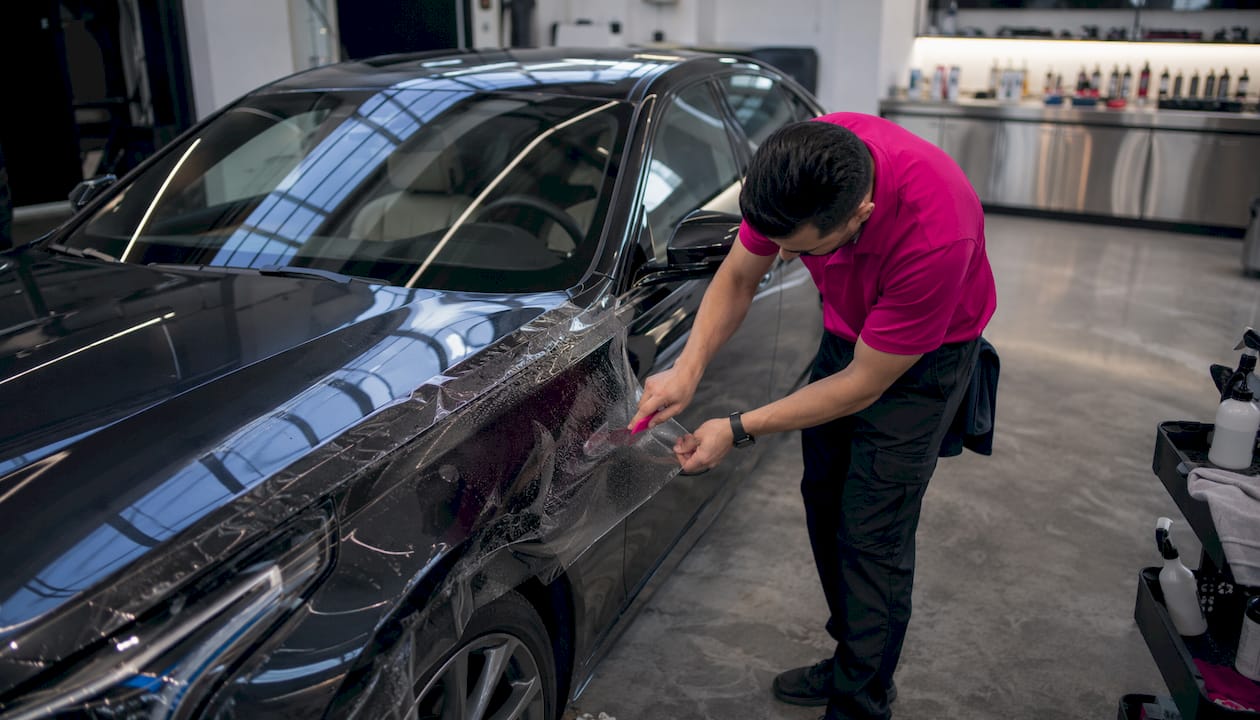
PPF is a multi-layered, optically clear film originally developed for military helicopter rotor blades. Today’s automotive versions are highly conformable and available in multiple thicknesses, measured in mils. The film sits over your paint as a sacrificial layer, absorbing rock chips, road debris, and minor abrasions before they reach the factory finish.
Modern PPF products from 3M and Solar Gard incorporate self-healing top coats. Minor scratches disappear when the film warms up from sunlight or a heat gun. 3M’s Scotchgard Paint Protection Film Pro Series and Solar Gard’s Clearshield Pro both offer multi-year warranties covering typical film failures. PPF is OEM-approved by virtually all car manufacturers, which speaks to its reliability as a long-term solution.
Professional installation is standard for PPF. Installers use slip solutions, heat guns, and pre-cut digital patterns to conform the film to complex curves without lifting or bubbling.
Ceramic coatings
Ceramic coatings are chemical polymer solutions that bond with your paint at a molecular level, forming a semi-permanent glass-like shell. Unlike wax, which sits on top of the paint, a ceramic coating becomes a functional part of the surface. The result is extreme hydrophobicity, UV resistance, and a deep, candy-like gloss that makes the paint look richer and is far easier to clean. Chemical Guys’ HydroSlick SiO2 Ceramic Coating HyperWax is one well-known consumer-grade option in this category.
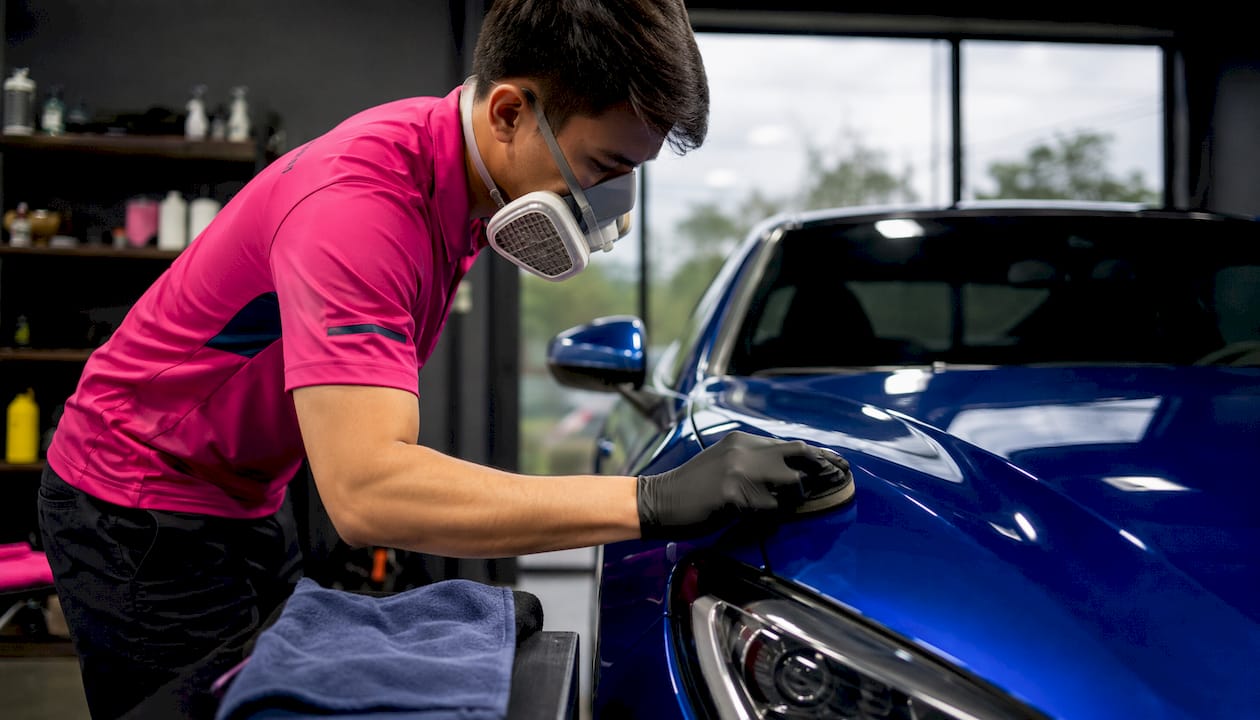
Professional-grade ceramic coatings require a controlled environment for application and a curing period before the vehicle can get wet. DIY ceramic sprays exist, but they deliver a fraction of the durability and bond strength of a professionally applied coating.
Paint sealants
Sealants are synthetic polymers that bond with the clear coat to create a durable barrier against UV rays, water, and light chemical contamination. They last longer than wax, typically 6–12 months, and require less frequent reapplication. Meguiar’s and Mothers both offer well-regarded sealant lines that work well for daily drivers who want reliable protection without a major investment. Chemical Guys’ JetSeal Durable Sealant is another option that claims up to a year of protection.
Sealants do not provide physical chip resistance. They are designed for UV and chemical defense, not impact absorption.
Waxes
Wax is the most traditional form of paint protection. Products made from natural carnauba or synthetic polymers deliver a warm, glossy finish and a basic barrier against UV rays and light contaminants. Turtle Wax, Armor All, and Eagle One all offer accessible wax products at most auto parts stores. The tradeoff is durability: wax typically lasts 1–3 months before it needs reapplication, making it the highest-maintenance option.
Spray-on protective products
Spray ceramic coatings and hybrid spray waxes sit between traditional wax and full ceramic coatings in terms of durability and ease of use. Chemical Guys’ Hybrid V07 and HydroBlitz Hybrid Ceramic Spray Wax are examples of products that offer 6–12 months of protection with a simple spray-and-wipe application. These work well as maintenance boosters between professional treatments.
Why applying paint protection to your vehicle pays off
The financial and practical case for protecting your vehicle’s paint is straightforward. Unprotected paint degrades faster from UV exposure, road debris, bird droppings, tree sap, and acid rain. That degradation shows up as faded color, oxidation, and chips that require expensive paint correction or respray work.
Preserving resale value is one of the strongest arguments. A vehicle with clean, chip-free paint commands a higher price at resale, and buyers notice paint condition immediately. PPF and ceramic coatings both help maintain that showroom appearance over years of driving.
Gloss and cleanability improve noticeably with ceramic coatings. The hydrophobic surface causes water and dirt to bead and roll off rather than bonding to the paint. Washing takes less time and effort, and the car looks cleaner between washes.
Physical protection is where PPF stands alone. No sealant or wax can stop a rock chip. PPF absorbs the impact before it reaches the paint, and the self-healing top coat repairs minor surface scratches on its own.
Environmental protection matters more depending on where you live and park. Bird droppings and tree sap are acidic and can etch through clear coat within hours in hot weather. Ceramic coatings create a chemical-proof barrier that gives you time to clean these contaminants before they cause permanent damage. UV protection from both ceramic coatings and sealants slows paint oxidation and color fading over time.
The benefits of professional coating extend beyond aesthetics. For luxury and high-value vehicles, proper surface protection is a form of asset preservation, not just car care.
How to apply paint protection correctly, step by step
Proper application is where most DIY attempts fall short. Skipping steps or rushing preparation leads to premature failure, regardless of how good the product is.
Preparation: the step that determines everything
- Wash the vehicle thoroughly using a pH-balanced car wash soap and a soft microfiber mitt. Remove all visible dirt, grime, and road film.
- Decontaminate the paint surface. Use an iron remover spray to dissolve embedded metallic particles, then follow with a clay bar treatment to pull out bonded contaminants that washing cannot remove. This step is non-negotiable before any coating or film application. Bonding protection to contaminated paint causes early failure.
- Inspect the surface under direct lighting. Look for swirl marks, scratches, or oxidation. Any paint defects need correction before protection goes on, because coatings and films lock in whatever is underneath them.
- Dry the vehicle completely using clean microfiber towels or a forced-air dryer. Water trapped under film or coating causes adhesion problems.
For a detailed breakdown of what this process involves, Mannyceramicprotouch’s guide on paint decontamination covers each step with practical depth.
Applying PPF
- Work in a clean, dust-free environment. Even small particles trapped under the film create visible bumps.
- Apply a slip solution (a mixture of water and a small amount of soap) to the panel. This prevents the film from adhering prematurely and allows repositioning.
- Lay the pre-cut film onto the panel and use a squeegee to push out air bubbles and excess solution from the center outward.
- Use a heat gun on edges and curves to stretch and conform the film without lifting. Complex surfaces like bumpers and mirrors require patience and heat to wrap cleanly.
- Allow the film to cure for 24–48 hours before washing or exposing it to rain.
Applying ceramic coatings
- Work in a shaded, temperature-controlled space. Direct sunlight causes the coating to flash too quickly, leaving high spots.
- Apply the coating to a foam or suede applicator block and work it into the paint in overlapping, cross-hatch passes on one panel at a time.
- Allow each layer to flash (typically 1–5 minutes depending on the product) before buffing with a clean microfiber towel.
- Apply additional layers as the product specifies, allowing proper flash time between each.
- Observe the full curing period before washing, usually 24–72 hours. Avoid water, rain, and bird droppings during this window.
The full pre-application checklist from Mannyceramicprotouch covers ceramic application preparation in detail for owners who want a professional-level result.
Sealant and wax application
- Apply sealant or wax to a clean, dry surface using a foam applicator pad in thin, even layers. Work one panel at a time.
- Allow the product to haze before buffing off with a clean microfiber towel. Avoid applying in direct sunlight.
Common mistakes to avoid:
- Applying any protection product to a dirty or contaminated surface
- Skipping clay bar treatment before ceramic coating
- Using a pressure washer directly at PPF edges, which can lift the film over time
- Applying ceramic coating in high humidity or direct sunlight
- Rushing the curing period by washing too soon
Pro Tip: For the best possible outcome on a high-value vehicle, apply PPF to the front bumper, full hood, fenders, and side mirrors first, then apply a professional ceramic coating over the entire car, including on top of the PPF. This combination gives you physical chip defense on the most vulnerable zones and chemical resistance with easy-clean hydrophobicity everywhere else.
How to choose the right paint protection for your vehicle
The right protection method depends on four factors: how you drive, where you park, what your vehicle is worth, and how much you want to spend upfront versus over time.
Assess your physical damage risk first. Frequent highway driving, rural roads, or driving near construction sites means rock chips are a real and regular threat. In those situations, PPF on high-impact zones is the only product that actually stops chips. Urban drivers who mostly deal with parking lot scratches and bird droppings may find a professional ceramic coating sufficient.
Consider your desired durability and maintenance commitment. PPF and ceramic coatings both offer multi-year protection with minimal upkeep. Sealants require reapplication every 6–12 months. Wax needs attention every 1–3 months. If you want to protect your paint and largely forget about it, the higher upfront investment in PPF or ceramic coating pays for itself in reduced maintenance labor.
Budget considerations:
- Full-body PPF installation typically costs $3,000–$9,000+ depending on vehicle size and coverage
- Partial PPF coverage (front bumper, hood, mirrors) costs significantly less and covers the highest-risk zones
- Professional ceramic coatings range widely based on the installer and product tier
- Paint sealants and waxes are the most accessible entry points, with quality products available at most auto parts retailers
Vehicle type matters. A new luxury or exotic car warrants the full PPF plus ceramic coating approach. A daily driver commuter benefits most from a “full front” PPF package paired with a ceramic coating over the rest of the car. A weekend car that rarely sees highway miles may only need a professional sealant or ceramic coating for UV and chemical defense, with optional PPF on the front bumper for peace of mind.
Lifestyle and environment factors:
- Garage parking reduces UV and debris exposure, lowering the urgency for premium protection
- Coastal climates bring salt air, which accelerates paint oxidation and makes ceramic coating especially valuable
- Hot, sunny climates like Florida increase UV damage risk, making UV-resistant coatings a priority
- Cars exposed to heavy tree cover face frequent bird droppings and sap, where ceramic coating’s chemical barrier earns its keep daily
For owners of luxury vehicles, Mannyceramicprotouch’s guide on choosing surface protection walks through these decisions with vehicle-specific recommendations.
Summary comparison by protection type:
| Protection Type | Lifespan | Best For | DIY Friendly | Cost Level |
|---|---|---|---|---|
| PPF | 5–10+ years | Physical chip defense | No | High |
| Ceramic coating | 2–7+ years | Chemical resistance, gloss | Partial | Moderate to High |
| Paint sealant | 6–12 months | UV protection, budget owners | Yes | Low |
| Wax | 1–3 months | Short-term gloss, enthusiasts | Yes | Very Low |
How to maintain and extend the life of your paint protection
Paint protection is not a one-time event. How you care for it after application determines whether it lasts two years or ten.
Regular gentle washing is the foundation. Use a pH-balanced car wash soap, a soft microfiber mitt, and clean microfiber drying towels. Automatic car washes with abrasive brushes and harsh chemicals are one of the fastest ways to degrade any protective layer, whether it is wax, sealant, or ceramic coating. Hand washing, or touchless automatic washes at minimum, keeps the surface intact.
Avoid harsh chemicals and abrasive tools. Dish soap, solvent-based cleaners, and stiff brushes all strip protective layers prematurely. Stick to products formulated for coated or protected surfaces. For seasonal care in winter climates, rinse road salt off the vehicle promptly after exposure. Salt accelerates clear coat degradation and can work under film edges over time. Guidance on summer vehicle maintenance offers additional seasonal care advice applicable to protected vehicles.
PPF-specific maintenance:
- Avoid directing a pressure washer at film edges. The force can lift the film gradually, especially at corners and trim lines.
- Wash PPF-covered panels with the same gentle technique as the rest of the car.
- Minor surface scratches in the film will self-heal with heat from sunlight or warm water. Deep cuts that penetrate through the film require professional repair or section replacement.
Pro Tip: Apply a spray ceramic booster or sealant topper every few washes to refresh the hydrophobic layer on ceramic-coated surfaces. This extends the life of the coating between professional maintenance visits and keeps water beading at its best.
Decontamination washes keep coatings performing. Even with a ceramic coating in place, iron particles and bonded contaminants accumulate over time and reduce the hydrophobic effect. A periodic decontamination wash using an iron remover and clay bar, done once or twice a year, restores the surface and prevents contaminant buildup from dulling the coating’s performance.
Watch for warning signs. When water stops beading and sheeting off the surface, the protective layer is thinning. Visible scratches, stains from bird droppings, or a dull finish are all signals that reapplication or professional maintenance is due. Catching these signs early prevents the underlying paint from taking damage that requires correction rather than just protection.
Neglecting maintenance does not just reduce protection effectiveness. It allows contaminants to bond to the surface, which makes them harder to remove and can cause etching or staining that reaches the clear coat. The investment in quality protection is only as good as the care routine that follows it.
Mannyceramicprotouch can protect your vehicle at the highest level
Mannyceramicprotouch specializes in advanced surface preservation for luxury, exotic, and high-value vehicles. The studio’s approach centers on Liquid PPF and high-performance ceramic coatings applied with a quality-first, detail-driven process. Every vehicle receives a tailored protection strategy, not a volume-based package.
For owners who want the best available defense for their vehicle’s finish, Mannyceramicprotouch offers professional paint protection film installation and premium ceramic coating packages designed for long-term results. The studio also leads among liquid PPF providers in the region, combining the physical armor of PPF with the chemical resistance of ceramic coating in a single, seamless application.
Key Takeaways
The most effective car paint protection combines PPF on high-impact zones with a professional ceramic coating over the full vehicle, delivering physical chip defense and chemical resistance that no single product achieves alone.
| Point | Details |
|---|---|
| PPF lasts the longest | Paint Protection Film provides 5–10+ years of physical chip defense with self-healing properties. |
| Ceramic coatings offer chemical resistance | A ceramic coating lasts 2–7+ years, creating a hydrophobic, UV-resistant, easy-clean surface. |
| Sealants and waxes suit tighter budgets | Sealants last 6–12 months; waxes last 1–3 months. Both require more frequent reapplication. |
| Preparation determines success | Clay bar decontamination and surface correction before application prevent premature failure. |
| Maintenance extends protection life | Gentle washing, decontamination washes, and spray boosters keep any protective layer performing longer. |