


TL;DR:
- Cheap protection plans for luxury vehicles often lead to higher costs due to coverage gaps, material failures, and poor repair quality. These plans carry high deductibles and low limits that expose owners to significant liabilities and out-of-pocket expenses. High-quality surface preservation and reliable protection are essential investments for maintaining a vehicle’s value and appearance.
Cheap protection is a false economy that costs luxury vehicle owners far more than the initial savings suggest. The industry term for what owners actually need is surface preservation, a quality-first approach that maintains finish integrity, structural defense, and long-term resale value. Budget options routinely fail on all three counts. A $400 savings upfront can expose you to a $40,000 liability gap when coverage limits run dry. For owners of luxury, exotic, or high-value vehicles, understanding why cheap protection fails is not optional. It is the foundation of sound asset management.
Why avoid cheap protection: the financial risks that add up fast
The most dangerous feature of low-cost protection is not what it costs today. It is what it costs when something goes wrong.
Budget protection plans commonly carry deductibles around $5,000. That figure means any damage below that threshold comes entirely out of your pocket, making the policy functionally useless for the minor incidents that happen most often.
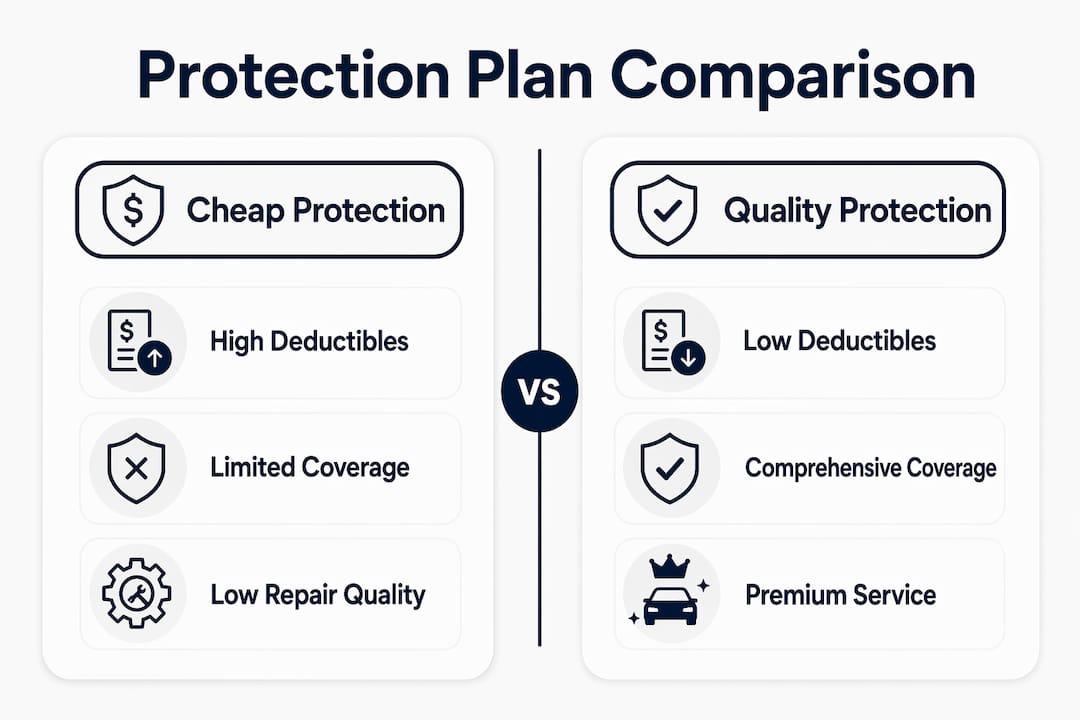
Coverage limits compound the problem. A single serious accident involving a luxury vehicle can generate repair and liability costs that exhaust a low-limit policy within hours. Once the cap is reached, your personal assets absorb the remainder. That is the mechanism behind the $400 savings turning into a $40,000 exposure.
The risks of cheap protection extend beyond repair bills. Inadequate liability coverage leaves you personally exposed when a third party is injured or their property is damaged. Choosing a low-bid provider can also elevate legal risk through vicarious liability claims, meaning the cost of a bad decision multiplies well beyond the original service fee.
Key financial dangers to evaluate before choosing any protection plan:
- Deductible vs. vehicle value ratio: A $5,000 deductible on a $120,000 vehicle is a meaningful exposure, not a minor inconvenience.
- Coverage cap exhaustion: Low limits disappear fast in real accident scenarios involving luxury vehicles.
- Liability gap: Insufficient third-party coverage puts personal assets directly at risk.
- Out-of-pocket accumulation: Multiple small incidents below the deductible threshold add up to significant unrecovered costs.
Pro Tip: Before signing any protection plan, calculate your realistic worst-case repair cost for your specific vehicle, then compare it against the policy’s coverage limit. If the gap is large, the plan is not adequate protection regardless of the premium.
How cheap protection fails at the service level
The dangers of low-cost protection are not limited to policy documents. They show up in real time when you need repairs done.
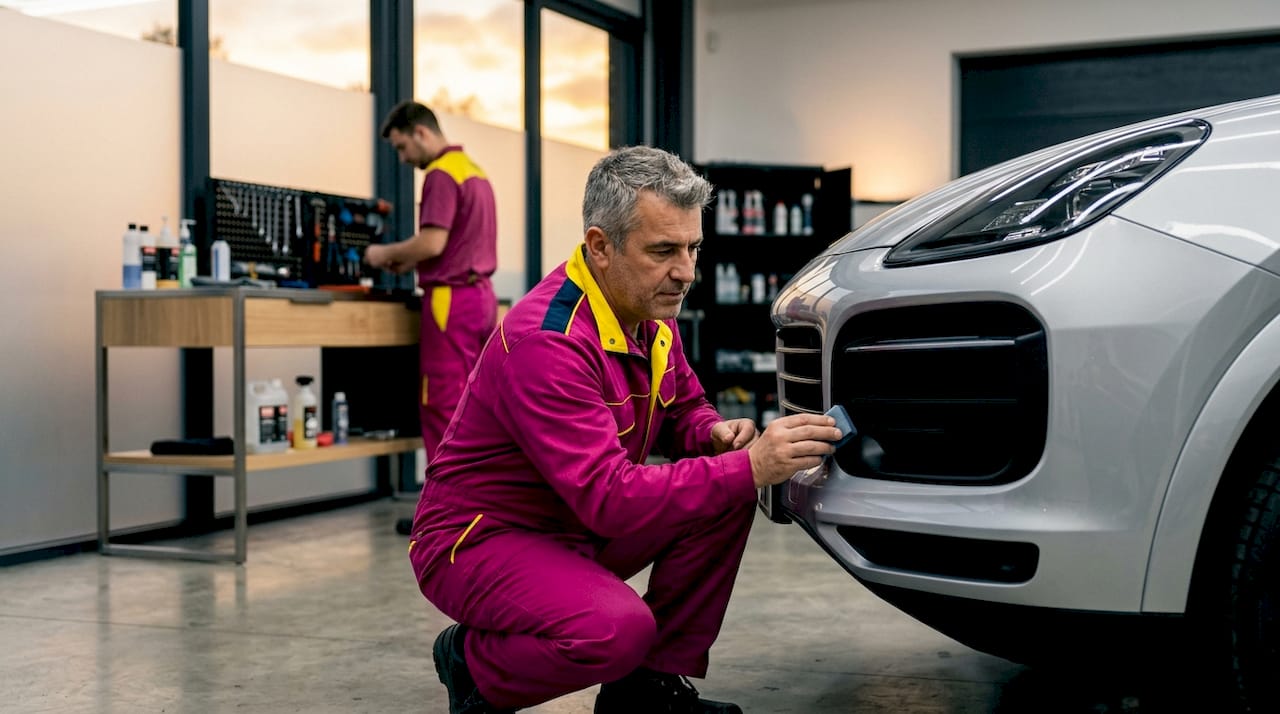
Cheap providers understaff claims departments, and the result is repair delays that stretch from days into weeks or months. For a luxury vehicle owner, that timeline is not just inconvenient. It means extended rental car costs, lost use of an asset, and a vehicle sitting in a queue rather than being serviced.
The repair quality problem runs deeper than wait times. Low-cost insurance relies on cut-rate partner networks that use non-specialized shops. A shop equipped to handle a standard sedan is not equipped to restore the paint, bodywork, or interior of a high-end vehicle to factory specification. The result is a repair that looks acceptable at a distance and fails up close.
Staff turnover makes this worse over time. Low-cost service models report 100%–300% annual staff turnover, which destroys the institutional knowledge needed to handle complex, vehicle-specific protection work. Each new technician starts from zero. That loss of expertise is invisible until the moment it matters most.
Operational red flags to watch for when evaluating a protection provider:
- No dedicated specialist network for luxury or exotic vehicles
- No stated turnaround time guarantee in the service agreement
- High staff turnover or no certified technicians on staff
- Repair authorization routed through a generic third-party network
Pro Tip: Ask any protection provider directly: “Which repair shops handle luxury vehicles in your network?” If they cannot name a certified specialist, that is your answer.
Material failures: what cheap protective products do to your finish
Physical protection products carry their own category of risk when quality is sacrificed for price. The damage they cause is often irreversible.
Cheap paint protection films can peel, yellow, and cause micro-marring by trapping grit between the film and the paint surface. Vehicle vibration then works that grit against the clear coat like a sanding block. The result is a pattern of fine scratches across the entire protected area, which is the opposite of what the product was supposed to do.
The four most common material failures in low-quality protective products follow a predictable sequence:
- Poor adhesion at installation: Budget films and coatings often fail to bond correctly, leaving edge gaps where contamination enters immediately.
- Grit entrapment: Low-density materials allow road debris to work underneath the film, creating an abrasive layer against the paint.
- UV degradation: Inferior films yellow within one to two seasons, discoloring the finish they were meant to preserve.
- Micro-marring accumulation: Each wash cycle grinds trapped particles deeper into the clear coat, compounding damage over time.
Precision fit matters as much as material quality. A film cut without vehicle-specific templates leaves exposed edges and unprotected zones. Those gaps are where stone chips, UV damage, and chemical contamination attack first. Owners researching exterior protection upgrades for luxury vehicles consistently find that product specification and installation method determine outcome far more than price alone.
Pro Tip: Always request the product specification sheet before any film or coating is applied. Verify the film’s thickness in mils, its UV resistance rating, and whether the installer uses vehicle-specific cut patterns.
What the fine print in cheap protection plans actually covers
Cheap protection policies use restrictive wording and narrow definitions that exclude a large share of potential claims. The policy looks comprehensive on the summary page. The exclusions section tells a different story.
Fine print narrows actual coverage to a fraction of real-world incidents, creating a false sense of security. Common exclusions in budget protection plans include damage from weather events classified as “acts of nature,” mechanical failure, cosmetic damage below a set dollar threshold, and incidents that occur outside a defined geographic zone. Each exclusion is a scenario where you pay out of pocket despite holding a policy.
The table below shows how typical budget plan terms compare against what comprehensive protection actually provides:
| Coverage area | Budget plan | Comprehensive plan |
|---|---|---|
| Weather and environmental damage | Often excluded or capped | Covered with defined limits |
| Cosmetic and paint damage | Below-threshold exclusions apply | Covered to policy limit |
| Third-party liability | Low cap, narrow definition | Higher cap, broader definition |
| Repair shop choice | Provider network only | Certified specialist options |
| Claim processing time | No guarantee | Stated turnaround commitment |
Consumers frequently mistake protection as a commodity and select the lowest price without reading the exclusions. That mistake is most costly for luxury vehicle owners, because the repair costs that exclusions leave uncovered are proportionally higher on high-value vehicles. Understanding asset protection for luxury vehicles means reading the exclusions first, not the premium.
Key Takeaways
Cheap protection consistently costs luxury vehicle owners more in total than quality protection does, because low premiums mask deductible exposure, coverage gaps, material failures, and claim exclusions that compound over time.
| Point | Details |
|---|---|
| Deductible exposure | A $5,000 deductible makes most minor claims financially unviable to pursue. |
| Coverage cap risk | Low limits exhaust quickly in real accidents, leaving personal assets exposed. |
| Repair quality gap | Cut-rate provider networks lack the specialist capability luxury vehicles require. |
| Material damage | Cheap films and coatings can cause micro-marring, yellowing, and adhesion failure. |
| Fine print exclusions | Budget policies exclude weather, cosmetic, and below-threshold damage by design. |
The real cost of “good enough” protection
I have seen the same pattern repeat across hundreds of vehicles. An owner spends $80,000 to $200,000 on a car, then selects protection based on the lowest monthly number they can find. Six months later, they are in front of me with a finish that has been micro-marred by a peeling film, or they are describing a claim that was denied because the damage fell under an exclusion they never read.
The misconception I encounter most often is that protection is protection. Owners assume any policy or product that carries the right label delivers equivalent results. That assumption does not hold for standard vehicles. For luxury vehicles, it is genuinely expensive.
Total cost of ownership is the correct frame. A quality paint protection film or ceramic coating applied correctly at the start of ownership costs a defined amount. A cheap film that causes clear coat damage, requires removal, and then requires professional correction and reapplication costs two to three times more, and the vehicle has been damaged in the interim. The math is not complicated once you account for the full sequence.
The shift I recommend is from “what is the lowest price?” to “what does this actually cover, and what does it exclude?” That question, applied to both physical protection products and coverage plans, changes every decision. Owners who choose surface protection with that frame rarely end up in the scenarios described in this article.
— Emmanuel
Mannyceramicprotouch: precision protection for high-value vehicles
Mannyceramicprotouch specializes in surface preservation for luxury, exotic, and high-value vehicles. Every vehicle receives a tailored approach built around Liquid Paint Protection Film (Liquid PPF) and high-performance ceramic coatings, applied with vehicle-specific precision to protect against rock chips, scratches, UV damage, and environmental wear.
The work at Mannyceramicprotouch is not volume-based. Each application is designed to maintain finish integrity and long-term resale value, which is exactly what cheap alternatives fail to deliver. Owners in South Florida can explore Liquid PPF solutions in Fort Lauderdale or review the full range of paint protection film services to find the right fit for their vehicle and ownership goals.
FAQ
Why does cheap protection fail on luxury vehicles specifically?
Luxury vehicles carry higher repair costs, tighter finish tolerances, and greater resale value sensitivity than standard vehicles. Budget protection plans and low-quality materials are not calibrated for those requirements, so the gaps in coverage and material performance cause disproportionately larger losses.
What is a typical deductible in a budget protection plan?
Budget plans commonly carry deductibles around $5,000, which means any damage below that amount is entirely out of pocket. That threshold makes cheap plans functionally useless for the minor incidents that occur most frequently.
Can a cheap paint protection film damage my car’s finish?
Yes. Low-quality films trap grit between the film and the paint surface, and vehicle vibration works that grit against the clear coat, causing micro-marring across the protected area. Yellowing and adhesion failure are also common outcomes.
What exclusions should I watch for in a budget protection policy?
The most common exclusions in budget plans cover weather and environmental damage, cosmetic damage below a dollar threshold, and repairs outside the provider’s network. Fine print narrows coverage to a fraction of real incidents, so reading the exclusions section before signing is non-negotiable.
How do I choose reliable protection for a luxury vehicle?
Start by comparing coverage limits against your vehicle’s realistic repair costs, then verify the provider’s specialist repair network. For physical protection products, request the product specification sheet and confirm vehicle-specific installation methods. Mannyceramicprotouch offers a detailed guide on selecting quality surface protection for high-value vehicles.