

TL;DR:
- Choosing a ceramic coating installer based solely on price can lead to disappointing results and compromised vehicle protection.
- Asking about experience, paint correction, product specifics, curing protocols, warranties, and pricing details ensures a professional, lasting application.
Choosing a ceramic coating installer without asking the right questions is one of the most common and costly mistakes vehicle owners make. Many people assume the product does all the work. In reality, the installer’s skill, the preparation process, and the products used determine whether your coating lasts two years or seven. Knowing the right questions to ask ceramic coating experts before you book separates a protection investment from an expensive disappointment. This guide gives you exactly what to ask, why it matters, and what a confident, qualified answer sounds like.
Table of Contents
- Key takeaways
- 1. Questions to ask ceramic coating experts about their experience
- 2. Questions about the coating products being used
- 3. Questions about paint correction before application
- 4. Questions about the application process and curing protocols
- 5. Questions about warranty, maintenance, and aftercare
- 6. Questions about pricing and what is actually included
- My take on choosing the right ceramic coating expert
- Get expert protection at Mannyceramicprotouch
- FAQ
Key takeaways
| Point | Details |
|---|---|
| Ask about paint correction | Coating locks in all surface defects permanently, so correction before application is non-negotiable. |
| Verify curing protocols | Proper curing requires controlled temperature and humidity; rushed curing causes bonding failure. |
| Understand product differences | Not all ceramic coatings are equal; ask about formulation, durability, and UV resistance. |
| Clarify warranty terms | Confirm what the warranty covers, how long it lasts, and what actions void it. |
| Request transparent pricing | A full price breakdown reveals whether prep work and paint correction are included. |
1. Questions to ask ceramic coating experts about their experience
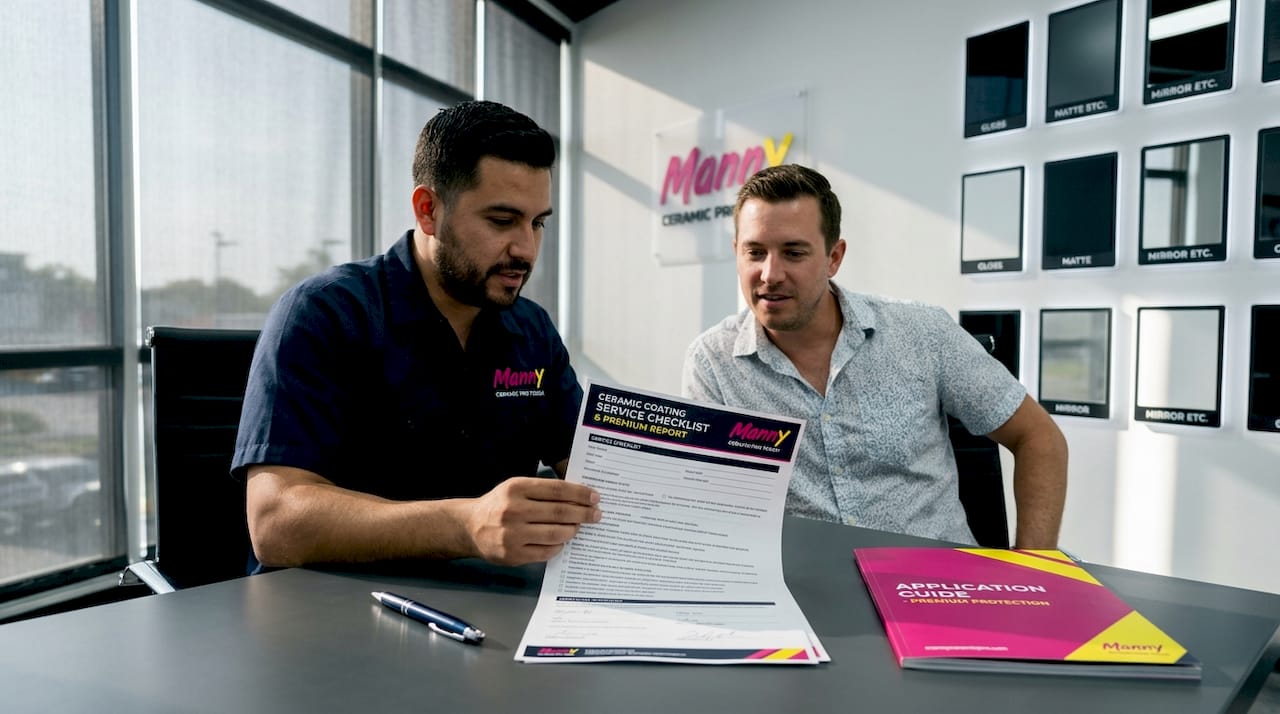
This is where the conversation should start. A confident, credible installer welcomes these questions. One who deflects or gives vague answers is showing you something important.
Ask directly: How many years have you been applying ceramic coatings professionally? Do you hold any certifications from coating manufacturers? Certifications from brands like Gtechniq, Ceramic Pro, or similar professional programs signal that the installer has completed formal training and knows how to work with the specific chemistry of the product.
- How many vehicles have you coated in total, and do you specialize in a particular type?
- Can I see before-and-after photos from recent jobs?
- Do you offer a pre-service consultation tailored to my vehicle’s current paint condition?
- What is your shop environment like in terms of lighting, temperature control, and dust management?
That last question matters more than most people realize. Application conditions affect coating leveling and curing quality critically. A garage with poor lighting and dust floating around is not where you want your paint sealed under a semi-permanent layer.
Pro Tip: Ask whether the installer offers a detailed phone or in-person consultation before quoting. Consultations reveal professionalism and signal a commitment to customizing the service around your vehicle’s actual condition rather than offering a one-size-fits-all price.
2. Questions about the coating products being used
Not all ceramic coatings are created equally. The term “ceramic coating” covers a wide range of products with very different silicon dioxide concentrations, chemical compositions, and protection profiles. Asking about the product directly helps you understand what you are actually paying for.
- What brand and product line will you use on my vehicle?
- What is the SiO2 concentration, and how does it affect hardness and durability?
- Does the coating offer UV protection, hydrophobic behavior, and resistance to chemical etching?
- How long is the product rated to last under normal driving conditions?
This is also a good point to ask about the difference between ceramic coating and paint protection film. Ceramic coating and PPF serve different purposes and work best when combined. Ceramic coating delivers chemical resistance, enhanced gloss, and a hydrophobic surface. PPF handles physical impact, rock chips, and deep abrasion. Understanding both helps you make a smarter decision about what your vehicle actually needs. You can explore the comparison in detail through this guide on PPF vs ceramic coating.
A quality installer will have a clear, confident answer here. If they cannot name the specific product or explain its benefits without hesitation, treat that as a red flag.
3. Questions about paint correction before application
This might be the single most important topic in the entire ceramic coating conversation. Skipping paint correction leads to permanently locked-in swirl marks and surface defects, lowering both paint appearance and coating performance.
Ceramic coating is semi-permanent. Whatever is on the paint surface when the coating goes down stays there. Swirl marks from improper washing, light scratches, oxidation, and water spot etching all get sealed in unless the paint is corrected first.
Ask the installer:
- Do you include paint correction in your coating packages, or is it quoted separately?
- What level of correction do you perform: one-stage polish, two-stage, or full multi-stage correction?
- How do you assess the paint condition before starting?
- What tools and polishes do you use during the correction process?
- Will you show me the paint condition before and after correction?
A thorough answer to these questions tells you the installer understands that the coating is only as good as the surface beneath it. Someone who glosses over paint correction or claims it is optional is not giving you the full picture.
Pro Tip: Request a paint thickness gauge reading before work begins. This protects you by establishing a baseline and confirms the installer is working carefully without cutting through the clear coat during polishing.
4. Questions about the application process and curing protocols
Understanding the full application timeline helps you plan and confirms whether the installer follows professional-grade procedures. Curing is where many shortcuts get taken, and where lasting damage occurs.
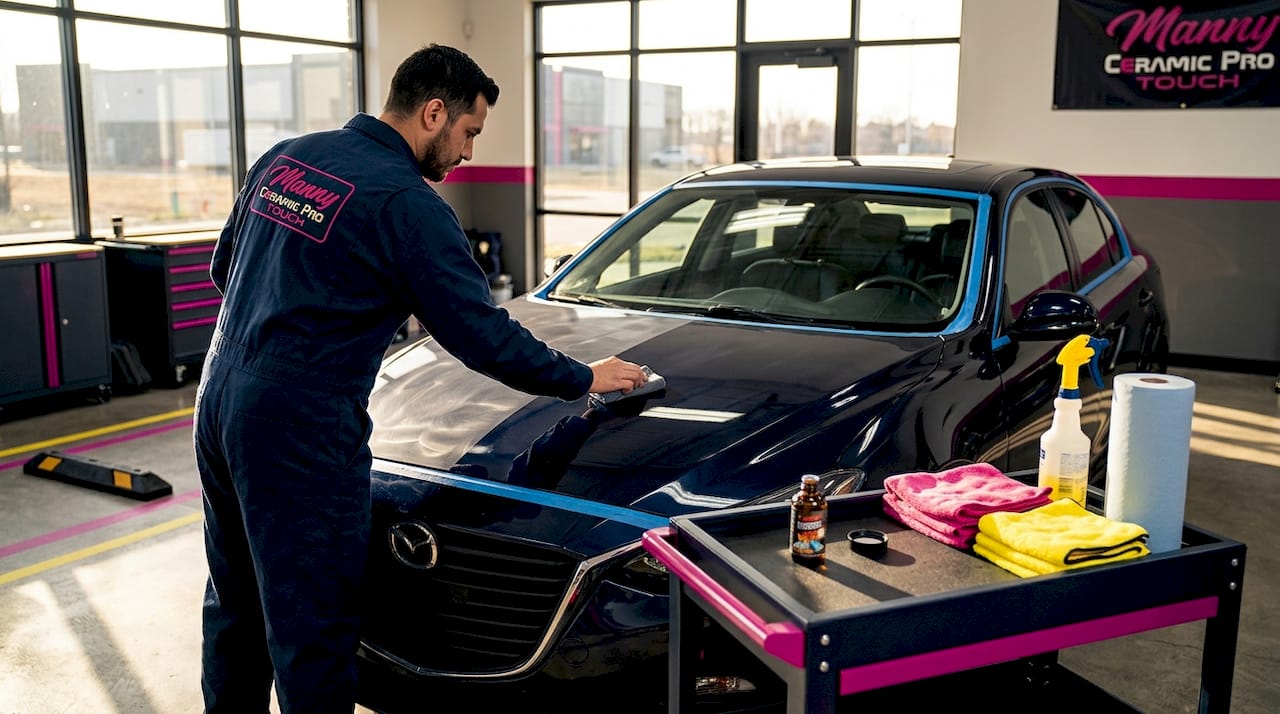
Proper curing requires keeping the vehicle dry and indoors for 24 to 48 hours after application. Full chemical bonding takes one to three weeks. Ask whether the shop uses infrared curing lamps. IR curing accelerates initial hardening from roughly 24 hours down to a few hours, significantly reducing the window where the coating is vulnerable to contamination.
Ask these questions:
- How many layers of coating do you apply, and what is the wait time between layers?
- Do you use infrared lamps to accelerate curing?
- What environmental controls are in place during application?
- How long before I can drive the vehicle after application?
- What restrictions apply during the curing period?
The ideal curing environment runs between 59°F and 81°F with humidity below 50 percent. High humidity causes haze or bonding failure. If the installer cannot describe their environmental controls, that is a serious concern.
Also ask about handling. Even skin oils interfere with curing during the first 24 to 48 hours. A professional installer avoids touching painted surfaces after application and instructs clients accordingly.
5. Questions about warranty, maintenance, and aftercare
A warranty protects your investment, but only if you understand what it actually covers. Many warranties on ceramic coatings cover application issues but exclude damage from neglect or improper maintenance. Getting clarity upfront prevents disputes later.
- What does the warranty cover, and for how long?
- What actions or products will void the warranty?
- How do I file a claim if the coating fails prematurely?
- What maintenance routine do you recommend to maximize coating life?
- Do you offer follow-up inspections or touch-up services?
Aftercare education is a sign of a quality installer. Lack of customer education on maintenance is one of the most common reasons coatings fail prematurely, and it has nothing to do with product quality. Ask whether the installer provides a written aftercare guide or recommends specific wash methods and products.
For reference, a well-maintained ceramic coating should be washed using the two-bucket method or a touchless approach, with a pH-neutral shampoo. Automatic car washes with brushes are typically off the list entirely.
6. Questions about pricing and what is actually included
Price transparency is a reliable indicator of professionalism. A quote that is just a single number with no breakdown should raise questions immediately.
| What to ask | What a good answer includes |
|---|---|
| What does the quoted price cover? | Paint decontamination, correction level, number of coating layers, and post-service care |
| Are there additional fees? | Clear disclosure of any add-ons like trim coating, glass coating, or wheel coating |
| Why does your price differ from cheaper quotes? | Explanation of labor time, product grade, and preparation steps included |
| Is paint correction included or separate? | Explicit confirmation with pricing for each stage if applicable |
Low prices often reflect skipped steps such as omitted paint correction or lower-grade coating products. A premium price reflects skilled labor, thorough preparation, and materials that deliver longevity. The difference between a $300 coating and a $1,200 coating is usually not the brand on the bottle. It is the hours of paint preparation that happen before the bottle is opened.
When comparing quotes, ask each installer to line-item their service. That makes comparison meaningful instead of misleading.
My take on choosing the right ceramic coating expert
I have seen how this goes when people skip the questions. They pick based on price, the car comes back looking fine for three months, and then the swirl marks underneath the coating start showing through. At that point, the only fix is a complete removal and redo.
The biggest misconception I encounter is the idea that ceramic coating is scratch-proof. It is not. Ceramic coating resists light scratches and chemical etching, but it will not stop a rock chip or a key dragged along the door. People who believe it is fully protective skip the PPF conversation entirely, and that is a mistake, especially on a luxury or high-value vehicle.
My honest advice is this: the installer’s skill matters more than the brand of coating alone. A mediocre product applied correctly on a properly corrected surface outperforms a premium product rushed onto contaminated paint every time. I also believe that combining ceramic coating with PPF is the right approach for most clients who truly care about long-term preservation. PPF covers the high-impact zones; ceramic coating handles the chemistry and the shine.
When you find an installer who answers every question above with clarity, detail, and zero defensiveness, that is the one worth trusting.
— Emmanuel
Get expert protection at Mannyceramicprotouch
At Mannyceramicprotouch, the questions you just read through are not formalities. They are the foundation of every client conversation. Every vehicle that comes through the studio receives a tailored protection strategy, thorough paint correction, and application in a controlled environment built for precision results. Whether you are exploring ceramic coating packages for long-term gloss and chemical protection, or considering paint protection film to guard against rock chips and physical damage, the team at Mannyceramicprotouch delivers the kind of expert advice and transparent process that removes all the guesswork. Reach out today to schedule a consultation and protect your vehicle the right way from the start.
FAQ
What questions should I ask a ceramic coating installer first?
Start by asking about their experience, certifications, and whether they perform paint correction before coating. These questions immediately reveal whether you are working with a true professional.
Does ceramic coating prevent scratches?
Ceramic coating resists light surface scratches and chemical etching, but it does not protect against rock chips or deep impact damage. For full protection, many experts recommend pairing it with paint protection film.
How long does ceramic coating take to fully cure?
The initial curing phase requires 24 to 48 hours indoors and dry, but full chemical curing takes one to three weeks. Installers using infrared lamps can shorten the vulnerable early phase significantly.
What should a ceramic coating warranty cover?
A solid warranty covers defects in application and premature failure under normal use. Clients should confirm the warranty length, what voids it, and how claims are processed before committing to a service.
Why do ceramic coating prices vary so much?
Price differences typically reflect the level of paint correction included, the quality of the product used, and the labor time invested. Very low quotes often skip preparation steps, which shortens coating longevity and can permanently damage paint appearance.