

TL;DR:
- UV radiation damages vehicle paint, interiors, and materials, especially in high-value cars.
- Ceramic coatings and paint protection films provide the most effective and long-lasting UV defense.
- Professional installation and regular maintenance are vital for optimal protection and long-term vehicle preservation.
Even the most refined factory paint job can begin losing its depth and vibrancy after just a single summer of unprotected sun exposure. UV radiation is cumulative, invisible in the moment, and persistent. For owners of luxury, exotic, and high-value vehicles, that reality carries financial consequences well beyond cosmetic disappointment. This guide explains exactly what automotive UV protection is, how it works, why it matters for premium vehicles specifically, and how to choose the right solution for your investment.
Table of Contents
- Why UV protection matters for luxury cars
- What is UV protection for cars?
- Comparing modern UV protection solutions
- Choosing and maintaining the right UV protection
- A professional detailer’s perspective: what actually works for luxury UV protection
- Take the next step to protect your luxury investment
- Frequently asked questions
Key Takeaways
| Point | Details |
|---|---|
| UV rays damage luxury cars | Unprotected sun exposure causes paint fading and interior deterioration, reducing vehicle value. |
| Advanced protection methods | Ceramic coatings and paint protection film offer durable, effective UV defense for premium vehicles. |
| Professional installation matters | Expert application ensures true coverage and maximizes the lifespan of UV protection. |
| Maintenance extends benefits | Routine cleaning and scheduled checkups optimize the longevity of protective coatings and films. |
Why UV protection matters for luxury cars
Most owners know that sun exposure fades paint. What many underestimate is how quickly and thoroughly it happens, and how deeply the damage reaches. Ultraviolet radiation does not simply dull the surface. It breaks down the molecular bonds within your clear coat, base coat, and even the materials inside your cabin.
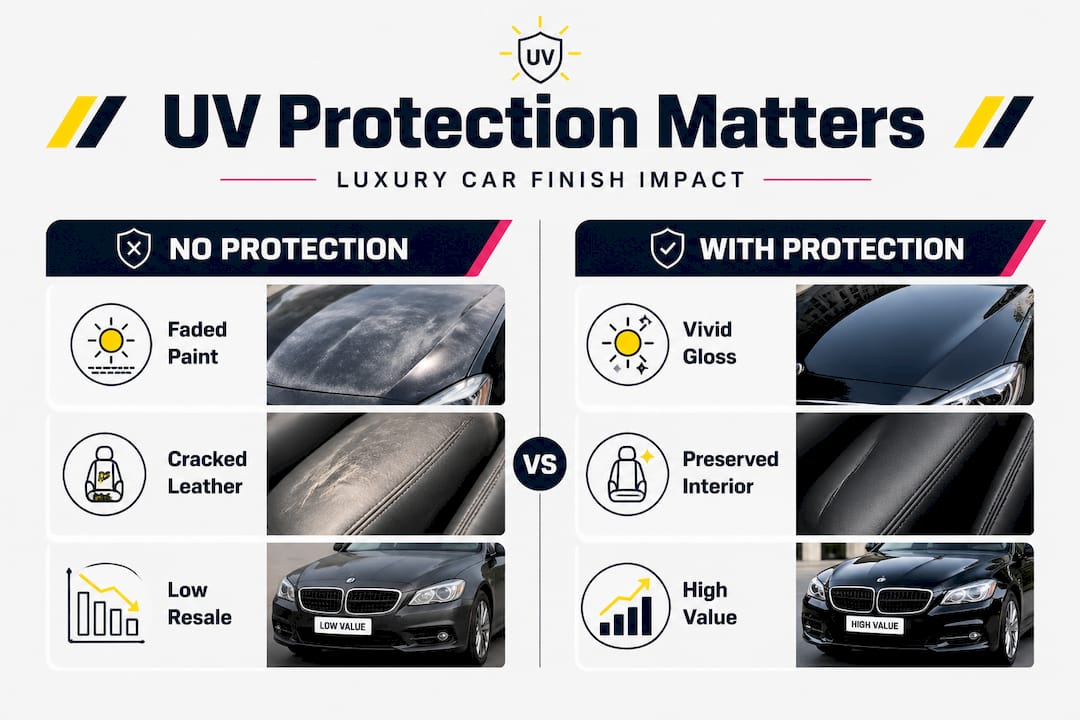
UV rays cause fading and degradation of car paint and interiors over time. For a standard vehicle, that is a cosmetic issue. For a luxury or exotic vehicle, it is a direct threat to resale value and long-term ownership satisfaction.
Here is what unprotected UV exposure typically causes:
- Paint oxidation, which turns vibrant color dull and chalky
- Clear coat breakdown, leading to peeling and micro-cracking
- Leather cracking and discoloration on seats and steering wheels
- Dashboard warping, fading, and surface texture deterioration
- Rubber and plastic trim degradation around windows and body panels
- Fading of fabric headliners and door panel inserts
“The sun does not distinguish between a base trim sedan and a limited-edition supercar. But the financial consequences of UV damage are dramatically different depending on what you’re driving.”
For luxury vehicles, the stakes are amplified by the quality and uniqueness of factory finishes. Satin wraps, two-tone metallic paints, pearlescent finishes, and bespoke colors are difficult and expensive to restore once degraded. Standard paint correction can only go so far when the clear coat itself has been compromised.
Beyond aesthetics, ceramic coating appearance studies confirm that vehicles with protected finishes consistently retain higher values at resale. Buyers in the luxury segment are discerning. A spotless exterior with deep gloss and a pristine interior signals care and discipline. UV-damaged paint signals neglect, regardless of mechanical condition.
Proactive UV protection is not a luxury upgrade for high-value vehicles. It is a baseline requirement for owners who want to preserve the integrity of their investment.
What is UV protection for cars?
Automotive UV protection refers to any product or treatment applied to a vehicle’s surfaces to reduce or block the penetration of ultraviolet radiation. To understand why this matters, it helps to know what UV rays actually are.
The two UV types most relevant to vehicle damage:
- UVA rays: These have longer wavelengths and penetrate deep into the paint layers, clear coat, and glass. They are the primary cause of paint oxidation and interior fading.
- UVB rays: Shorter wavelengths that cause more acute surface damage and are partially blocked by glass but still affect exterior finishes directly.
Both types act on your vehicle continuously whenever it is parked outdoors or driven in daylight, regardless of temperature or cloud cover. UV radiation passes through clouds with reduced but still significant intensity.
The four primary forms of automotive UV protection available today:
- Factory paint sealants and clear coats: Applied at manufacturing, these offer minimal UV resistance and typically degrade within the first two years of ownership without supplemental protection.
- Carnauba waxes and synthetic sealants: Consumer-grade products that create a thin protective layer over the paint. They offer limited UV defense and require reapplication every 4 to 12 weeks.
- Ceramic coatings: A liquid polymer that bonds chemically to the vehicle’s clear coat, forming a hard, semi-permanent layer. Ceramic coatings and paint protection films are among the most effective modern solutions for blocking UV rays. Ceramic coatings provide UV inhibitors that significantly slow oxidation while adding hydrophobic and self-cleaning properties.
- Paint protection film (PPF): A thermoplastic urethane film applied directly to painted surfaces. PPF physically blocks UV penetration and also guards against rock chips, scratches, and environmental contaminants.
| Protection type | UV defense level | Longevity | Reapplication needed |
|---|---|---|---|
| Carnauba wax | Low | 4 to 12 weeks | Frequent |
| Synthetic sealant | Low to moderate | 3 to 6 months | Seasonal |
| Ceramic coating | High | 2 to 5 years | Minimal |
| Paint protection film | Very high | 5 to 10 years | Rarely |
Each option serves a different owner profile. The right choice depends on how you use your vehicle, your climate, and how seriously you take long-term preservation.
Comparing modern UV protection solutions
Now that the primary options are clear, a detailed comparison helps identify what is actually appropriate for a luxury or high-value vehicle.
Traditional waxes and sealants have their place in basic automotive care, but they are fundamentally inadequate for premium vehicles. They sit on top of the paint rather than bonding to it, which means they wash away quickly. In Florida’s intense sun and heat, a wax applied in January may offer almost no UV defense by March. Frequent reapplication creates inconsistency in protection coverage, and over time, the UV exposure compounds without the owner realizing it.
Ceramic coatings represent a significant advancement. Paint protection film offers multi-year physical and UV defense, while professional-grade ceramic coatings deliver both protection and enhanced gloss. A professional ceramic coating chemically bonds to the clear coat and creates a sacrificial UV-resistant layer. This layer absorbs and disperses UV radiation before it reaches the paint beneath. The result is meaningful slowing of oxidation and color fade over years, not weeks.
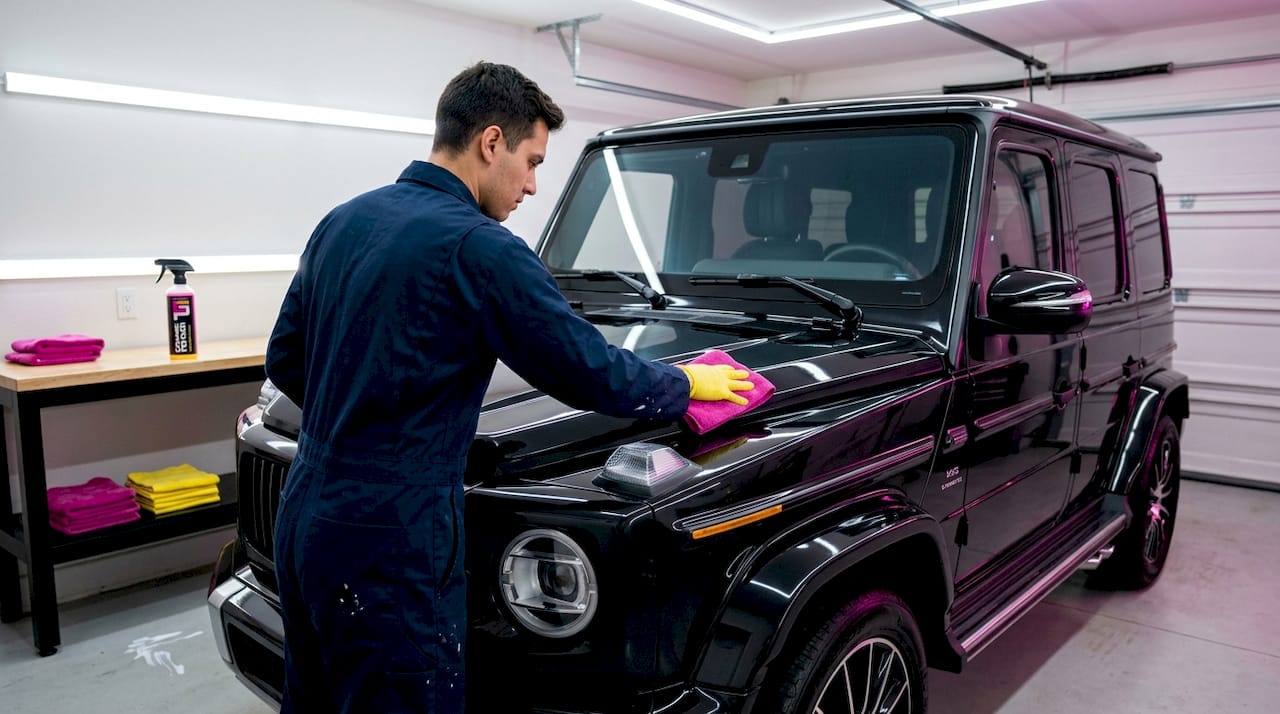
Additionally, ceramic coatings provide a sacrificial layer that makes cleaning easier and extends vehicle shine. The hydrophobic surface repels water, road grime, and environmental fallout, which means contaminants that could accelerate UV damage are shed more easily during routine washes.
PPF works differently. Rather than chemically bonding to the paint, it physically covers it. This is especially valuable for high-impact zones like the hood, front bumper, fenders, and door edges. PPF blocks UV effectively and also acts as a barrier against physical damage that exposes paint to further UV degradation.
Key advantages of PPF over ceramic coatings:
- Self-healing properties on the film surface (minor scratches disappear with heat)
- Physical protection against rock chips, road debris, and scratches
- High UV blocking capacity across the entire thickness of the film
- Suitable for complex curves and panel edges with professional installation
Key advantages of ceramic coatings over PPF:
- Enhanced gloss depth and color richness after application
- Hydrophobic properties that simplify maintenance
- Lower cost than full-vehicle PPF
- Works well over areas with low physical impact risk
For most luxury vehicle owners, the strongest approach combines both solutions. You can learn more about the PPF vs ceramic coating decision in detail to determine which combination fits your specific vehicle and usage pattern.
Pro Tip: For exotic or ultra-premium vehicles, consider applying PPF to the front end and high-impact panels, then layering a premium ceramic coating over the entire vehicle for unified gloss and UV defense.
Choosing and maintaining the right UV protection
Selecting the right UV protection comes down to an honest assessment of four factors: your local climate, how often the vehicle is driven and parked outdoors, your long-term appearance goals, and your budget for professional protection.
A step-by-step approach to selecting your solution:
- Evaluate your environment. Owners in high-UV climates like South Florida experience accelerated UV damage. Vehicles parked outdoors daily face far greater exposure than those stored in garages. If you drive daily in direct sunlight, your protection needs are higher and more urgent.
- Define your priority. Is your primary concern paint oxidation, interior fading, physical chip protection, or overall gloss retention? Different priorities point toward different solutions, or specific combinations.
- Set a realistic maintenance commitment. Ceramic coatings and PPF both reduce the frequency of required upkeep, but they are not zero-maintenance. Gentle hand washing with pH-neutral soap every two to four weeks preserves the effectiveness of any protective layer.
- Choose professional installation. Regular evaluation and professional maintenance extend the effectiveness of coatings and PPF significantly. DIY application rarely achieves the even bonding and complete coverage that professional studio installation provides.
- Plan for periodic inspections. Even the best products degrade over time. Building in an annual inspection with your protection specialist allows for timely touch-ups or reapplication before UV damage has a chance to set in.
For owners who want flexibility, mobile ceramic coating services offer professional-grade protection applied at your location, without disrupting your schedule.
Pro Tip: Avoid automatic car washes after any coating or film installation. Harsh brushes and abrasive chemicals in automatic washes can degrade protective layers much faster than hand washing, reducing their UV blocking effectiveness prematurely.
Ongoing protection also means staying on a consistent care schedule. Structured car maintenance plans take the guesswork out of knowing when to inspect, clean, or refresh your protective treatment. For high-value vehicles, a managed plan ensures you are never unknowingly running without adequate UV defense.
A professional detailer’s perspective: what actually works for luxury UV protection
After working with luxury, exotic, and collector vehicles across a wide range of protection scenarios, one pattern stands out clearly. Many owners make their UV protection decision based on what they heard from a friend, saw in an ad, or read in a quick online search. Very few start by asking the right foundational question: “What level of UV exposure does my vehicle actually face, and what does adequate protection look like for my specific situation?”
The automotive protection market is filled with products that use impressive-sounding language but deliver only incremental improvement over a standard wax. Brand hype and price points are poor substitutes for technical performance data and professional experience.
What we have seen work consistently is the layered approach. PPF on the front end and high-wear surfaces provides the physical barrier that no coating alone can replicate. A professional-grade ceramic coating over the entire vehicle then delivers the UV absorption, gloss depth, and low-maintenance surface that luxury owners expect. Neither product alone is as effective as both working together.
The real differentiator, though, is not the product itself. It is the preparation and installation process. A ceramic coating applied over contaminated or swirl-marked paint locks in the imperfections. A PPF installed without proper panel alignment creates edge lifting points where UV and moisture can get underneath. The prep work, the controlled environment, the installer’s technique, and the post-installation care instructions all determine whether a $3,000 protection package performs like it should or disappoints within the first year.
We encourage owners to think of UV protection not as a one-time purchase but as an ongoing discipline. Pair your protection with an expert protection comparison to understand what your specific vehicle requires, and then commit to the maintenance habits that keep it effective. The vehicles we see holding their finish and value over five or ten years are the ones whose owners treated protection as a standard of ownership, not an afterthought.
Take the next step to protect your luxury investment
Your vehicle’s finish is a long-term asset, and protecting it from UV damage is one of the most effective decisions you can make as a luxury car owner.
At Manny’s Ceramic Pro Touch LLC, we specialize in elite-level protection for high-value vehicles in Fort Lauderdale and the surrounding area. Whether you are considering paint protection film, advanced liquid PPF, or a full ceramic coating service, our team applies a tailored strategy for each vehicle. Every solution we install is backed by professional-grade products, meticulous preparation, and genuine expertise. We are not a volume shop. We are a precision studio for owners who expect results that last. Contact us to schedule a consultation and get a custom protection recommendation for your vehicle.
Frequently asked questions
How long does ceramic UV protection last on luxury vehicles?
Professional ceramic coatings can provide UV protection for 2 to 5 years, depending on maintenance and product quality. With proper washing habits and annual inspections, coatings provide extended protection and gloss retention well within that range.
Does UV protection affect the look of my car’s paint?
Ceramic coatings actually enhance gloss and deepen color clarity, while PPF is nearly invisible and preserves the original finish. Ceramic coatings enhance shine and PPF maintains the paint’s appearance without altering the vehicle’s visual character.
Can UV protection stop interior fading and cracking as well?
High-quality window films applied alongside exterior protection can block a significant portion of UV entering through glass, helping shield leather, dashboards, and trim. PPF and advanced coatings help reduce fading for both paint and interior surfaces exposed to light.
Is professional application better than DIY options for UV protection?
Professional application ensures more even coverage, proper surface bonding, and warranty-backed results that consumer-grade kits cannot match. Professional installation ensures optimal performance of UV protection products across the vehicle’s full surface area.
What is the most recommended UV protection method for high-value vehicles?
A combination of PPF for high-impact areas and ceramic coatings for overall gloss and easy maintenance offers the most complete solution. Combining advanced PPF and ceramic coatings provides comprehensive UV defense suited to the demands of luxury vehicle ownership.
Recommended
- LIQUID PPF IN FORT LAUDERDALE – Many Ceramic Pro Touch
- Paint Protection Services Fort Lauderdale, FL | Car PPF Specialist
- Mobile Ceramic Coating – Many Ceramic Pro Touch
- Ceramic Coating Fort Lauderdale, FL | (143)-456-7897 – Ceramic Coating Near Me – Ceramic Coating Services
- Ultimate Guide to Vehicle Paint Protection in Miami: Keep Your Car Looking New