


TL;DR:
- Rock chips are caused by high-speed impact from road debris, primarily from truck tire ejections and construction zones. Prompt repair is essential, as chips can rapidly turn into cracks due to temperature swings, moisture, and road vibrations. Protecting vehicles with paint film and adjusting driving habits can significantly reduce the risk and severity of damage.
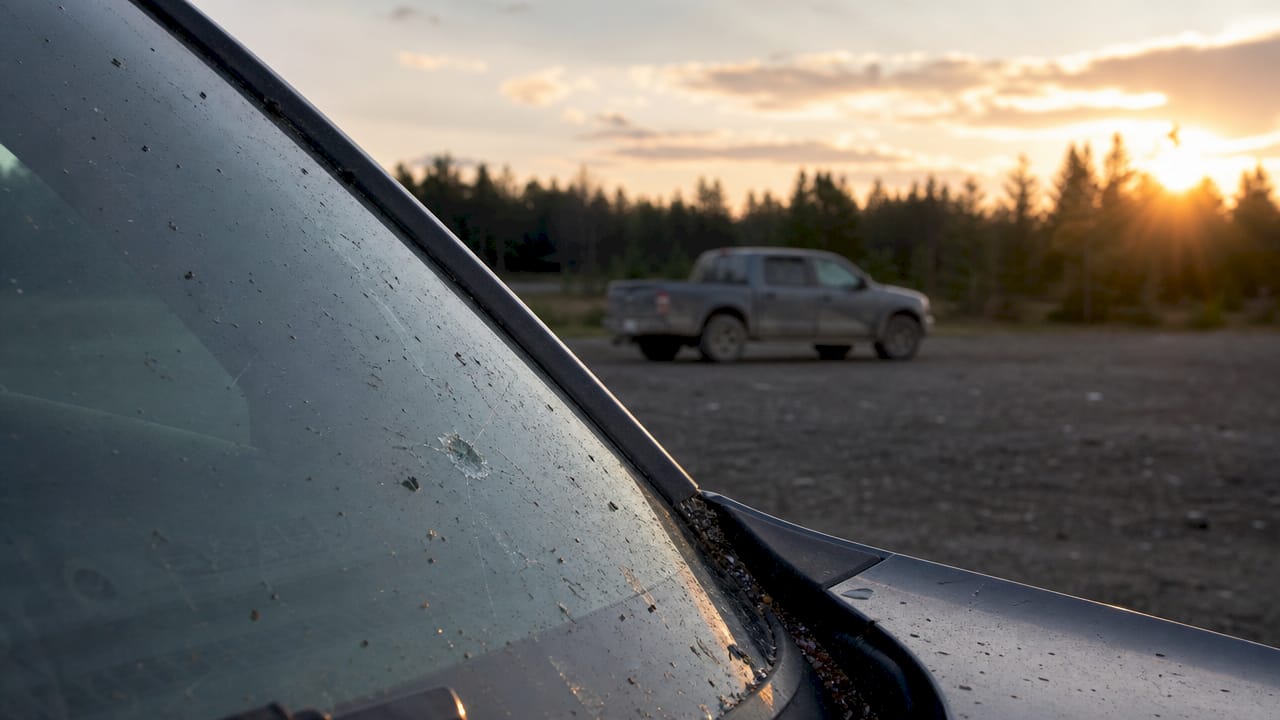
Rock chips are localized paint or glass damage caused by small stones, gravel, or road debris striking a vehicle’s surface at high speed. They happen on every road type, to every vehicle, but the physics and conditions behind them are specific enough that understanding them changes how you drive and how you protect your car. Why rock chips happen comes down to three forces working together: impact energy, road conditions, and vehicle proximity. Left unaddressed, what starts as a small surface blemish can compromise your windshield’s structural role and cost far more to fix than a timely repair would have.
Why rock chips happen: primary sources and impact dynamics
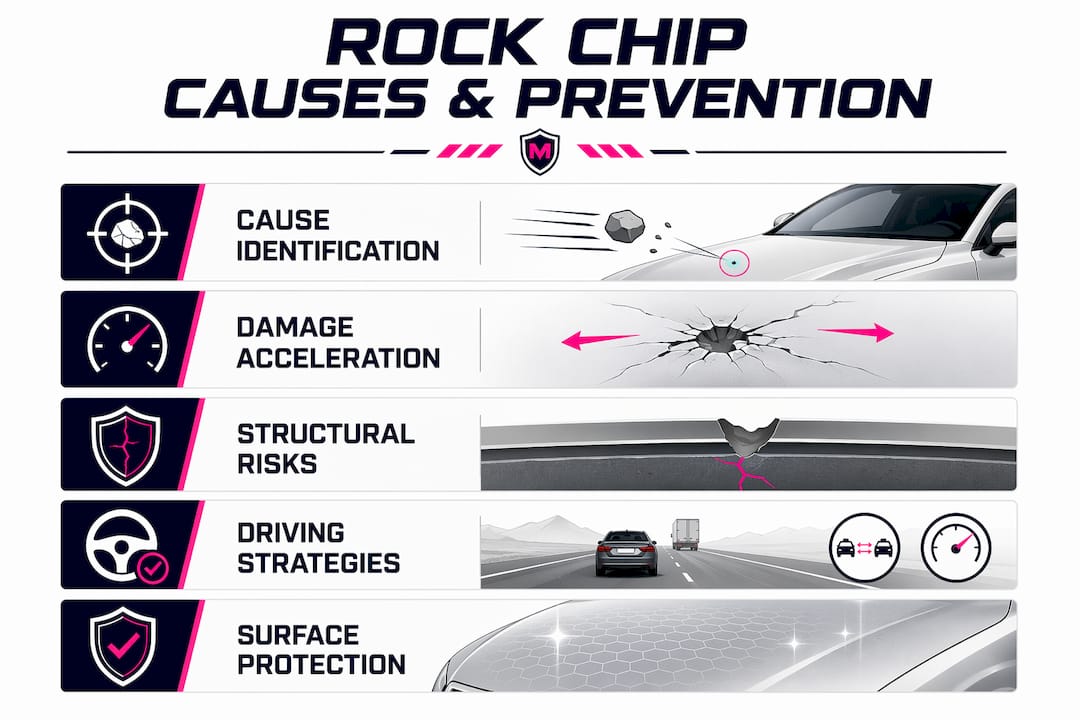
Interstate truck traffic causes 65% of all windshield chips. Dual rear tires on semi-trucks act like slingshots, ejecting stones 15–30 feet behind the vehicle at high velocity. Construction zones account for 20% of chip incidents, two-lane highway passing contributes 10%, and environmental sources like hail make up the remaining 5%.
Speed is the defining variable in chip severity. A 5-gram pebble at 30 mph delivers approximately 4.5 joules of impact energy. That same pebble at 45 mph more than doubles the energy, and at 70 mph it exceeds five times the original force. Modern windshields absorb roughly 8–12 joules before chipping occurs, which means highway speeds push debris well past the damage threshold.
The table below summarizes the primary causes of rock chips and their relative contribution to overall chip frequency:
| Cause | Contribution to rock chips |
|---|---|
| Interstate truck traffic (dual rear tires) | 65% |
| Construction zones (loose gravel) | 20% |
| Two-lane highway passing | 10% |
| Environmental sources (hail, wind debris) | 5% |
Lane choice also matters more than most drivers realize. Trucks travel in the right lane on most interstates, and following directly behind them puts your windshield squarely in the ejection path of their tires. Shifting one lane left when safe, or adjusting your position slightly within your lane on two-lane roads, reduces direct exposure to the debris stream.
Pro Tip: A 6-second following distance behind trucks dramatically reduces chip risk. Count six seconds from when the truck passes a fixed point to when your front bumper reaches the same point. Most drivers follow at two seconds or less, which puts them directly in the tire ejection zone.
How environmental and vehicle factors accelerate chip damage
A chip that forms on Monday morning is not the same chip by Friday afternoon. Temperature cycling, moisture, and road vibration all work to widen fractures that appear stable on the surface.

Thermal expansion and contraction are the most aggressive accelerants. Thermal cycles cause chip cracks to propagate rapidly, and in high-differential environments like Phoenix, Arizona, a vehicle can experience 3–5 thermal cycles per day. A typical crack requires 100–200 cycles to develop fully, meaning a chip in a hot climate can reach full crack status in weeks rather than months.
Moisture compounds the problem through capillary action. Freezing water expands by 9%, forcing chip fractures wider and delaminating the polyvinyl butyral (PVB) interlayer that holds laminated safety glass together. Once the interlayer is compromised, professional resin repair becomes ineffective. The chip that could have been filled for under $100 now requires a full windshield replacement.
Road vibration adds a third layer of stress. Rough roads generate 500–1,000 flex cycles per mile at chip locations. Even smooth highways produce 100–300 flex cycles per mile. Each cycle incrementally widens the fracture network beneath the surface, even when the chip appears unchanged to the naked eye.
The table below shows how each environmental factor accelerates chip-to-crack progression:
| Factor | Mechanism | Effect on chip |
|---|---|---|
| Thermal cycling | Expansion and contraction of glass | Widens fractures over 100–200 cycles |
| Moisture intrusion | Capillary action draws water into chip | Freeze expansion delaminates PVB interlayer |
| Road vibration | Flex cycles stress chip site | 500–1,000 cycles per mile on rough roads |
| Wiper blades | Mechanical pressure across chip | Can extend surface cracks laterally |
| Automated car washes | High-pressure water and brush contact | Forces debris deeper and widens fractures |
Pro Tip: Avoid automated car washes immediately after a chip forms. High-pressure water jets force contaminants deeper into the fracture, making resin bonding less effective and accelerating discoloration of the damaged area.
Do rock chips damage paint and glass structurally?
Rock chips are not cosmetic issues. Windshields contribute up to 30% of a vehicle’s structural integrity in a rollover event. A chip weakens the glass at the point of impact and creates a stress riser, which is a localized zone where force concentrates during flexing, vibration, or secondary impact.
The visible surface crater is only part of the damage. Subsurface stress fractures radiate 3–4 times wider than the surface chip appears. A chip that looks like a small bull’s-eye may have an invisible fracture network spanning several centimeters beneath the glass surface. That network is what propagates into a full crack.
Visibility impairment is a direct safety consequence. Light refracts differently through a chipped area, creating glare and distortion that worsens at night or in direct sunlight. As the chip grows into a crack, the distortion expands across the driver’s line of sight.
The repair window is narrow and the cost difference is significant. Repair success rates reach 95% within 24 hours of chip formation. That rate drops to 30–40% after one week, as moisture and contaminants compromise the resin bonding process. A chip repair typically costs a fraction of a full windshield replacement, which can run several hundred to over a thousand dollars depending on the vehicle.
Key structural and safety risks from untreated chips include:
- Reduced windshield strength in rollover and frontal collision scenarios
- Stress riser propagation into full cracks under thermal or mechanical load
- Driver visibility impairment from light distortion at chip sites
- PVB interlayer delamination from moisture, preventing effective repair
- Increased likelihood of full replacement rather than repair after one week
How to prevent rock chips: driving strategies and surface protection
Rock chip prevention combines defensive driving with physical surface protection. Neither approach alone eliminates risk, but together they reduce both frequency and severity of damage.
The most effective driving adjustments are:
- Maintain a 6-second following distance behind trucks. This is the single highest-impact change you can make. Most chip damage occurs within the 15–30-foot ejection zone behind dual rear tires.
- Change lanes when trucks are ahead. Moving one lane left on a multi-lane highway removes your vehicle from the primary debris path.
- Reduce speed in construction zones. Dropping speed by 10–15 mph below the posted construction limit reduces debris impact energy by approximately 62%. That reduction alone can keep impact energy below the windshield’s chipping threshold.
- Adjust your lane position on two-lane roads. Positioning slightly right of center when passing oncoming traffic reduces exposure to debris kicked up by passing vehicles.
- Use covered or indoor parking. Eliminating exposure to hail, falling debris, and temperature extremes reduces both chip formation and chip progression.
- Inspect your windshield and paint weekly. Early detection means repair is still viable. A chip caught within 24 hours has a 95% repair success rate. The same chip ignored for a week may be irreparable.
Physical protection adds a layer that driving habits cannot. Paint protection film (PPF) absorbs impact energy before it reaches the paint or glass substrate. Exterior protection upgrades like Liquid PPF and traditional PPF are engineered specifically to absorb the kinetic energy of small debris without transferring damage to the surface beneath. Ceramic coatings add chemical resistance and surface hardness, which reduces the severity of minor abrasion impacts.
Pro Tip: Apply PPF to the leading edges of your vehicle first: the hood, front bumper, side mirrors, and A-pillars. These surfaces receive the highest concentration of road debris impact and show the fastest paint degradation without protection. Learn more about preventing rock chip damage with a full surface protection strategy.
Key Takeaways
Rock chips happen when road debris strikes vehicle surfaces at speeds that exceed the glass or paint’s impact threshold, and they worsen rapidly without prompt repair.
| Point | Details |
|---|---|
| Trucks are the top cause | Interstate truck traffic causes 65% of windshield chips through stone ejection from dual rear tires. |
| Speed multiplies damage | A pebble at 70 mph delivers five times the impact energy of the same pebble at 30 mph. |
| Chips grow fast | Thermal cycling, moisture, and road vibration can turn a chip into a full crack within days. |
| Repair window is short | Repair success drops from 95% within 24 hours to 30–40% after one week of neglect. |
| Protection reduces risk | PPF and ceramic coatings absorb impact energy before it reaches the vehicle’s paint or glass. |
What I’ve learned from watching chips turn into replacements
Every week, I see vehicles come in with windshield damage that started as a chip the owner noticed but decided to “watch for a while.” By the time they bring the car in, the chip has cracked across the driver’s field of view, moisture has contaminated the fracture, and the only option is a full replacement. That pattern is not bad luck. It is a predictable outcome of a well-understood physical process.
The misconception I hear most often is that rock chips are inevitable and therefore not worth addressing urgently. Chips are common, yes. But the damage they cause is not inevitable. It is a function of time, temperature, and whether you act within the repair window. Drivers who treat a chip like a minor inconvenience are making a financial decision they do not realize they are making.
What actually works is combining informed driving habits with physical protection. Maintaining distance from trucks, slowing down in construction zones, and applying long-term surface protection to high-impact areas reduces both the frequency of chips and the cost when they do occur. The physics are not complicated. The follow-through is where most vehicle owners fall short.
— Emmanuel
Surface protection solutions from Mannyceramicprotouch
Rock chips are predictable, and so is the protection against them. Mannyceramicprotouch specializes in Liquid PPF and traditional paint protection film installation for luxury, exotic, and high-value vehicles. Both solutions are engineered to absorb the kinetic energy of road debris before it reaches your paint or glass substrate.

Mannyceramicprotouch applies a quality-first process to every vehicle, with protection strategies built around the specific surfaces most vulnerable to chip damage. If you are looking for paint protection in Fort Lauderdale or want to compare Liquid PPF versus traditional PPF for your vehicle, Mannyceramicprotouch provides the expertise and installation quality that high-value vehicles require.
FAQ
What causes most rock chips on vehicles?
Interstate truck traffic causes 65% of windshield chips through stones ejected by dual rear tires. Construction zones and two-lane highway passing account for most of the remaining incidents.
How fast does a rock chip turn into a crack?
In high-temperature environments with frequent thermal cycling, a chip can propagate into a full crack within days. Moisture intrusion and road vibration accelerate the process significantly.
Do rock chips damage paint as well as glass?
Rock chips damage both paint and glass. On painted surfaces, chips expose bare metal or primer to moisture and oxidation. On glass, they create stress fractures that compromise structural integrity and driver visibility.
Is it worth repairing a small rock chip?
Repair is worth it when done promptly. Success rates reach 95% within 24 hours but fall to 30–40% after one week, at which point full replacement becomes the likely outcome.
Does paint protection film prevent rock chips?
Paint protection film absorbs the impact energy of small debris before it reaches the paint surface. It does not make a vehicle impervious to all damage, but it significantly reduces chip frequency and severity on protected panels.