

TL;DR:
- Regular vehicle protection involves consistent maintenance to prevent damage from UV rays, contaminants, and micro-scratches. It reduces long-term repair costs, preserves paint quality, and maintains higher resale values. Regular inspections and proper washing habits are essential to sustain protective layers and maximize asset longevity.
Regular protection is the practice of applying consistent, preventive maintenance and safeguard measures to a vehicle to preserve its aesthetic quality and long-term value. Without it, paint surfaces, clear coats, and protective films degrade through daily exposure to UV rays, road debris, and environmental contaminants. Understanding why regular protection matters is the first step toward treating your vehicle as the asset it truly is. Mannyceramicprotouch works with owners who recognize that preservation is not a one-time event. It is a discipline.
Why regular protection matters more than most owners realize
Cumulative damage is the primary threat to any vehicle’s finish. Research on UV exposure shows that 80% of lifetime damage occurs during everyday, routine activities rather than extreme events. That finding applies directly to paint surfaces: the daily commute, the parking lot, the afternoon sun all add up faster than most owners expect.
The industry term for this process is surface degradation, and it operates invisibly. Micro-scratches from improper washing, paint etching from bird droppings, and oxidation from UV exposure each cause minor harm on their own. Over months and years, those minor harms compound into paint correction jobs that cost far more than prevention would have.
Proactive protection programs consistently outperform reactive repair strategies in long-term cost analysis. The math is straightforward: a scheduled ceramic coating maintenance visit costs a fraction of a full paint correction and respray. Owners who understand this shift their mindset from “fixing problems” to “preventing them.”
How does regular protection prevent cumulative vehicle damage?
Protective layers like ceramic coatings and paint protection film are not permanent by nature. Failure to maintain these layers causes rapid loss of hydrophobic properties and leaves the underlying paint vulnerable to contaminants. Think of a ceramic coating as a shield that needs periodic reinforcement, not a one-time installation that works forever.
The degradation process follows a predictable pattern:
- UV oxidation breaks down the clear coat and any unprotected coating surface over time.
- Chemical etching from bird droppings, tree sap, and road salts accelerates paint failure when no protective barrier is present.
- Micro-abrasions from dust, improper towels, and automatic car washes create surface scratches that dull the finish.
- Water spotting from mineral deposits bonds to unprotected paint and becomes increasingly difficult to remove.
- Contamination buildup from iron particles and industrial fallout embeds into the clear coat when no protective layer blocks it.
Each of these threats operates on a timeline measured in weeks, not years. A vehicle without active protection accumulates damage across all five categories simultaneously.
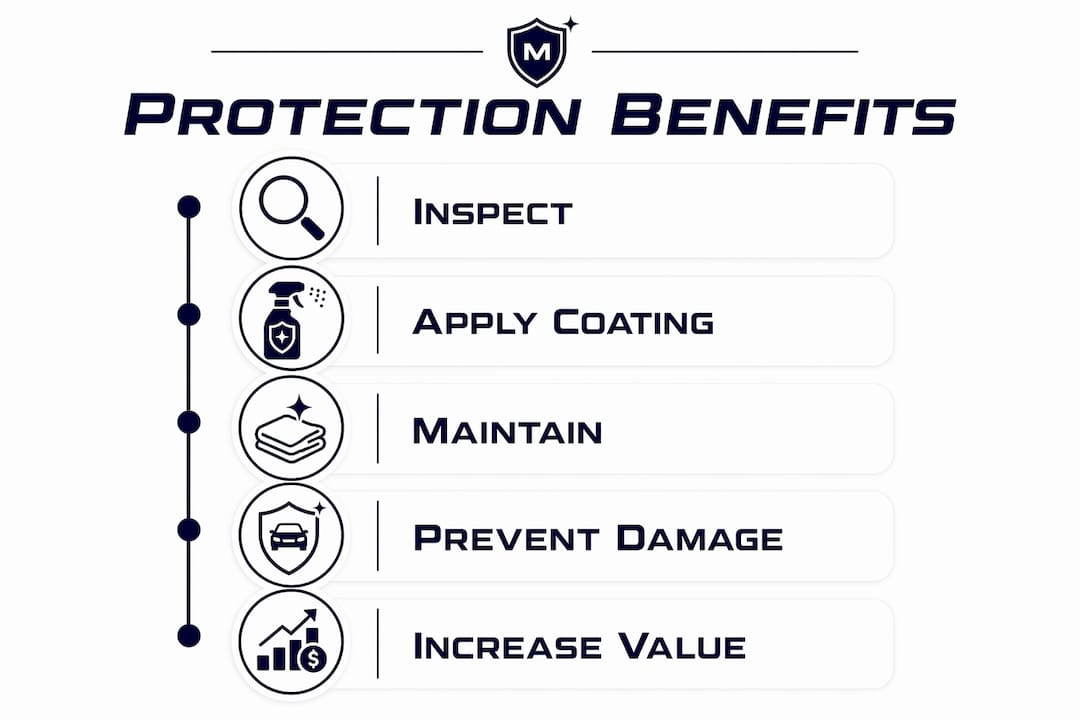
Pro Tip: Schedule a paint inspection every 90 days. Early detection of coating failure or surface contamination costs nothing to address. Waiting until damage is visible always costs more.
The difference between a one-time treatment and an ongoing protection regime is the difference between a single dose and a full course of treatment. One application starts the process. Consistent maintenance sustains it.
What are the economic benefits of consistent vehicle protection?
The financial case for routine vehicle protection is direct. Proactive interventions consistently outweigh the costs of late-stage damage recovery. Applied to vehicles, this means that regular ceramic coating upkeep, periodic paint inspections, and proper washing techniques reduce the frequency and severity of expensive corrective work.
The economic benefits of consistent protection break down into four measurable categories:
- Reduced repair frequency. Protected surfaces resist etching, scratching, and oxidation, which means fewer trips to a paint correction specialist.
- Lower depreciation rate. Vehicles with well-maintained finishes retain higher resale values. Buyers pay a premium for paint that looks factory-fresh.
- Extended coating lifespan. Regular maintenance extends the effective life of ceramic coatings and paint protection film, delaying the cost of full reapplication.
- Avoided insurance claims. Owners who protect their vehicles proactively report fewer cosmetic damage claims, which supports lower long-term insurance costs.
Quantifying the benefit of prevention is difficult because the absence of damage is invisible. A vehicle that never develops paint etching does not show a line item on any invoice. That invisibility causes many owners to underestimate the value of what consistent protection actually delivers.
The cost of regular protection is significantly less than the cost of paint correction or panel respray. For luxury and high-value vehicles, where factory paint quality and color matching are critical, that gap is even wider. Protecting a $120,000 vehicle with a $1,500 annual maintenance plan is not an expense. It is asset management.
Pro Tip: Track your protection spending annually and compare it against any corrective work you needed that year. Owners who do this consistently report that prevention costs less than 20% of what correction would have cost.
What practical steps can car owners take for effective protection?
Effective protection is not complicated, but it requires consistency. The following habits form the foundation of a working protection routine:
- Wash with the two-bucket method. One bucket holds clean soapy water, the other holds rinse water. This prevents dirt from re-contaminating the wash mitt and dragging across the paint.
- Use pH-neutral car wash soap. Alkaline or acidic soaps strip ceramic coatings and accelerate clear coat degradation.
- Dry with a microfiber drying towel. Abrasive towels and chamois create micro-scratches that accumulate into visible swirl marks.
- Apply a ceramic coating booster every 3–6 months. These spray-on products refresh the hydrophobic layer and extend the life of the base coating.
- Avoid automatic car washes with brushes. Abrasive wash methods can undo months of protection in a single session.
Beyond owner habits, periodic professional inspections are non-negotiable for high-value vehicles. A trained technician identifies coating failure, paint contamination, and surface damage that owners miss during routine washing. Scheduling a professional paint inspection twice per year catches problems before they require correction.
Pro Tip: Integrate protection checks into your existing calendar. Set a recurring reminder every 90 days to inspect the paint under direct sunlight. Water beading behavior tells you immediately whether your coating is still performing.
Owners who want a structured approach to year-round care can reference a winter car care checklist to cover seasonal threats that standard routines miss. Seasonal shifts in temperature and road conditions change the protection demands on any vehicle’s surface.
For wheel-specific maintenance, a guide on inspecting wheels for safety provides a useful framework that applies the same proactive detection logic to a different vehicle system.
How does a protection culture create long-term value?
The owners who maintain the best-looking vehicles over time share one trait: they treat protection as a core ownership value, not a reactive task. Routine safety checks separate functional, well-maintained systems from failing ones through proactive detection and accountability. The same principle applies to vehicle finishes.
Protection culture produces a compounding effect. Each maintenance session builds on the last. A coating that is refreshed regularly performs better than one that is ignored and then “rescued” with a booster. The vehicle stays in a state of readiness rather than cycling between neglect and correction.
“The real value of routine protection lies in the compounded interest of care over time. Small, consistent actions prevent minor issues from becoming structural failures. That is the discipline that separates preserved assets from depreciating ones.”
Luxury vehicle owners understand this intuitively. A well-maintained Ferrari or Porsche commands a premium at resale not just because of the brand, but because the paint, interior, and mechanical systems show evidence of disciplined care. That evidence is visible to any informed buyer. Consistent protection is how that evidence gets built.
The importance of regular protection extends beyond aesthetics. Owners who maintain their vehicles consistently report lower stress around ownership. There are no surprise repair bills, no visible deterioration, and no anxiety about resale value. That peace of mind is a real benefit, even if it does not appear on a balance sheet.
Key Takeaways
Regular vehicle protection is the most cost-effective strategy for preserving paint quality, resale value, and long-term ownership satisfaction.
| Point | Details |
|---|---|
| Cumulative damage is the core threat | Daily UV exposure and contaminants degrade paint invisibly, compounding into costly repairs over time. |
| Protective layers require maintenance | Ceramic coatings and paint protection film lose effectiveness without scheduled upkeep and reapplication. |
| Prevention costs less than correction | Routine protection spending is a fraction of what paint correction or respray costs on high-value vehicles. |
| Proper technique matters as much as product | Abrasive wash methods and harsh soaps can negate months of protection in a single session. |
| Protection culture builds compounding value | Consistent care habits produce better long-term results than sporadic treatments followed by reactive repairs. |
What I’ve learned from years of working with protected vehicles
I have seen the full spectrum of vehicle condition walk through the studio. Owners who maintained consistent protection schedules arrive with paint that looks three years old on a ten-year-old car. Owners who treated protection as optional arrive with oxidation, etching, and swirl marks that require hours of correction before any coating can even be applied.
The most common misconception I encounter is that a single ceramic coating application is a permanent solution. It is not. Coatings degrade. They need refreshing. The owners who understand this get the most out of their investment. The ones who do not end up paying twice: once for the original application and again for the correction work that precedes the reapplication.
The second misconception is that protection is only for exotic or luxury vehicles. Every vehicle depreciates. Every vehicle is exposed to UV, road debris, and environmental contaminants. The financial logic of protection applies whether you drive a $40,000 sedan or a $200,000 supercar. The scale changes. The principle does not.
My honest advice: build your protection routine before you need it. The owners who wait until they see visible damage have already lost ground they cannot fully recover. Start with proper washing technique, schedule professional inspections twice a year, and treat coating maintenance as a fixed line item in your ownership budget. The vehicles that hold their value and their appearance over time are not lucky. They are maintained.
— Emmanuel
Mannyceramicprotouch’s approach to long-term vehicle preservation
Mannyceramicprotouch specializes in surface preservation for luxury, exotic, and high-value vehicles. The studio’s work centers on Liquid Paint Protection Film and high-performance ceramic coatings, applied with a quality-first process that prioritizes long-term results over volume.
For owners in South Florida, the Liquid PPF solutions in Fort Lauderdale represent the highest level of paint protection currently available. Liquid PPF bonds to the surface at a molecular level, providing defense against rock chips, scratches, and chemical etching without altering the vehicle’s visual profile. Every vehicle receives a tailored protection strategy. Owners who want to understand how surface protection extends value for their specific vehicle can connect with the Mannyceramicprotouch team directly for a consultation.
FAQ
What is regular vehicle protection?
Regular vehicle protection is the practice of applying and maintaining protective layers such as ceramic coatings and paint protection film on a consistent schedule to prevent cumulative paint damage and preserve resale value.
How often should ceramic coatings be maintained?
Ceramic coatings require a booster application every 3–6 months and a professional inspection at least twice per year to sustain their hydrophobic and protective properties.
Does regular protection actually improve resale value?
Vehicles with well-maintained finishes command higher resale prices because buyers can visually confirm the paint condition and infer the overall care history of the vehicle.
What washing mistakes damage protective coatings?
Using abrasive towels, alkaline soaps, or brush-based automatic car washes can strip ceramic coatings and create micro-scratches that accumulate into visible surface damage.
Is professional protection worth it for non-luxury vehicles?
Proactive protection reduces repair costs and slows depreciation on any vehicle. The financial benefit scales with vehicle value, but the principle of prevention costing less than correction applies regardless of the vehicle’s price point.