

TL;DR:
- Fort Lauderdale’s coastal climate exposes luxury vehicles to salt air, high humidity, and UV damage, requiring ongoing protection. Regular washing, protective coatings, and prompt leak management are essential to preserve vehicle integrity and value. Implementing eco-friendly driving habits and maintaining garage conditions further minimize environmental harm and long-term depreciation.
Fort Lauderdale is one of the most beautiful places to own a luxury vehicle. It is also one of the most punishing. Salt air, relentless humidity, UV intensity, and road-level pollutants work constantly against your car’s finish, undercarriage, and mechanical systems. Taking the right environmental damage prevention steps for your car is not optional when you have a high-value asset sitting in this climate. This guide gives you a precise, actionable framework to protect your investment, from daily habits to seasonal maintenance and everything in between.
Table of Contents
- Assessing the environmental risks facing your luxury car
- Preparing to protect your luxury car: tools and habits overview
- Step-by-step guide to preventing and minimizing environmental damage
- Verifying and maintaining your car’s environmental protection over time
- A fresh take on preventing environmental damage to luxury cars in Fort Lauderdale
- Protect your luxury car with expert coatings and maintenance in Fort Lauderdale
- Frequently asked questions
Key Takeaways
| Point | Details |
|---|---|
| Understand local risks | Know how salt, humidity, spills, and pollution uniquely affect luxury cars in Fort Lauderdale. |
| Maintain regular washing | Wash your car at least every two weeks focusing on undercarriage and wheel wells to prevent corrosion. |
| Practice eco-driving | Reduce speed and avoid idling over 60 seconds to cut emissions and vehicle wear. |
| Manage spills immediately | Contain fluid leaks quickly to prevent environmental contamination and regulatory issues. |
| Control garage environment | Use ventilation or dehumidifiers to keep garage humidity low and protect your vehicle’s interior. |
Assessing the environmental risks facing your luxury car
Before you can protect something, you need to understand exactly what is attacking it. Fort Lauderdale’s coastal environment creates a specific combination of threats that inland owners rarely contend with.
The most significant is salt air corrosion. Airborne salt particles settle on every surface of your vehicle, including areas you cannot see. The undercarriage and wheel wells are especially vulnerable because they hold moisture and grit against bare metal. Once corrosion takes hold in those areas, the cost to address it climbs fast.
High humidity is the second threat most owners underestimate. Sustained moisture does not just affect the exterior paint. It accelerates material degradation inside the cabin, warping trim, attacking stitching, and promoting mold in carpets and headliners. Electronics are not immune either. Moisture intrusion in connector housings is a known cause of costly electrical faults in modern luxury vehicles.
As Florida’s coastal environment increases the risk of corrosion and pollutant exposure for vehicles, owners need to treat protection as an ongoing practice, not a one-time task.
Here are the primary threats to account for:
- Salt air and sea spray depositing corrosive particles on paint, trim, and exposed metal
- High humidity degrading interior materials, promoting mold, and encouraging condensation in electronics
- UV radiation breaking down clear coat, fading paint, and cracking leather or dashboard surfaces
- Particulate matter and air pollutants from South Florida traffic settling on paint and entering the cabin
- Fluid leaks from your own vehicle or others in a shared garage, which can damage paint and contaminate the local water supply
- Road debris and tar common on highway approaches to coastal areas
Each of these requires a different response. Understanding all of them together is what separates reactive owners from those who preserve their vehicles for years.
Preparing to protect your luxury car: tools and habits overview
Understanding risks allows you to gather the necessary tools and develop habits to shield your vehicle effectively. Preparation is where most owners fall short. They know washing matters but skip the undercarriage. They know humidity is a problem but never address the garage environment.
Removing salt and contaminants through regular washing is the single most effective preventive measure for South Florida vehicles, with a minimum interval of every two weeks recommended. After any beach visit or drive along the coastal corridor, a rinse should happen the same day.
Here is a quick-reference table for essential preparation tasks and the tools you need:
| Task | Recommended frequency | Key tools or products |
|---|---|---|
| Full exterior wash (including undercarriage) | Every 2 weeks | pH-neutral car shampoo, undercarriage spray wand |
| Post-beach rinse | Same day | Garden hose or touchless rinse |
| Interior humidity check | Monthly | Hygrometer, dehumidifier or ventilation |
| Wax or sealant application | Every 3 to 4 months | Carnauba wax, polymer sealant, or spray wax |
| Ceramic coating inspection | Annually | Microfiber towel, water bead test |
| Fluid leak check | Monthly | Visual inspection, absorbent pads ready |
| Garage ventilation review | Seasonally | Exhaust fan, dehumidifier |
Additional items every Fort Lauderdale luxury car owner should keep on hand:
- Oil-absorbent pads and spill containment booms in the garage for immediate leak response
- A dedicated undercarriage rinse nozzle or pressure washer attachment
- A hygrometer to monitor garage humidity, which should stay between 40% and 60% relative humidity
- A quality clay bar kit for quarterly decontamination of paint surfaces to remove bonded particles
- Waterless wash products for between-cycle touch-ups after light dust or pollen accumulation
Maintaining a maintenance checklist tailored to luxury vehicles keeps all of these tasks organized and prevents anything from slipping through the cracks over a busy season.
Step-by-step guide to preventing and minimizing environmental damage
Now that you are prepared, here are the key steps to effectively protect your luxury car from environmental damage day-to-day and seasonally.
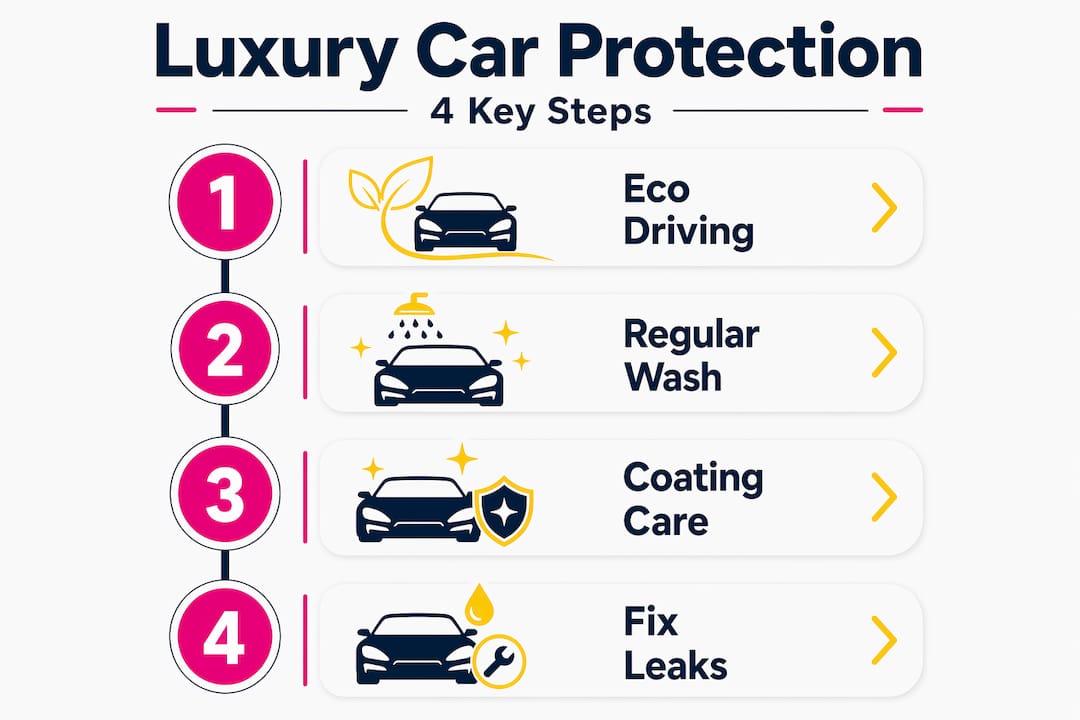
Step 1: Adopt eco-friendly driving habits
This is about more than reducing emissions. Eco-friendly driving habits reduce mechanical wear, lower your vehicle’s exposure to its own heat and combustion byproducts, and reduce particulate buildup on the exterior. Reducing speed from 120 to 100 km/h can cut fuel consumption and emissions by 20%. The physics of driving speed and fuel efficiency are clear: calmer driving protects your car and the environment simultaneously.
Idling is another issue. Turn off the engine if you are stopped for more than 60 seconds. This is especially relevant in Fort Lauderdale’s bridge and drawbridge traffic, where idling for several minutes is common.
Step 2: Follow a consistent washing and decontamination routine
Wash every two weeks using a pH-neutral shampoo. Give the undercarriage and wheel wells dedicated attention using a targeted spray. After washing, follow with a clay bar decontamination every 90 days to remove bonded contaminants that regular washing cannot lift. Apply a polymer sealant or spray wax as a final step to restore the hydrophobic barrier on the paint.
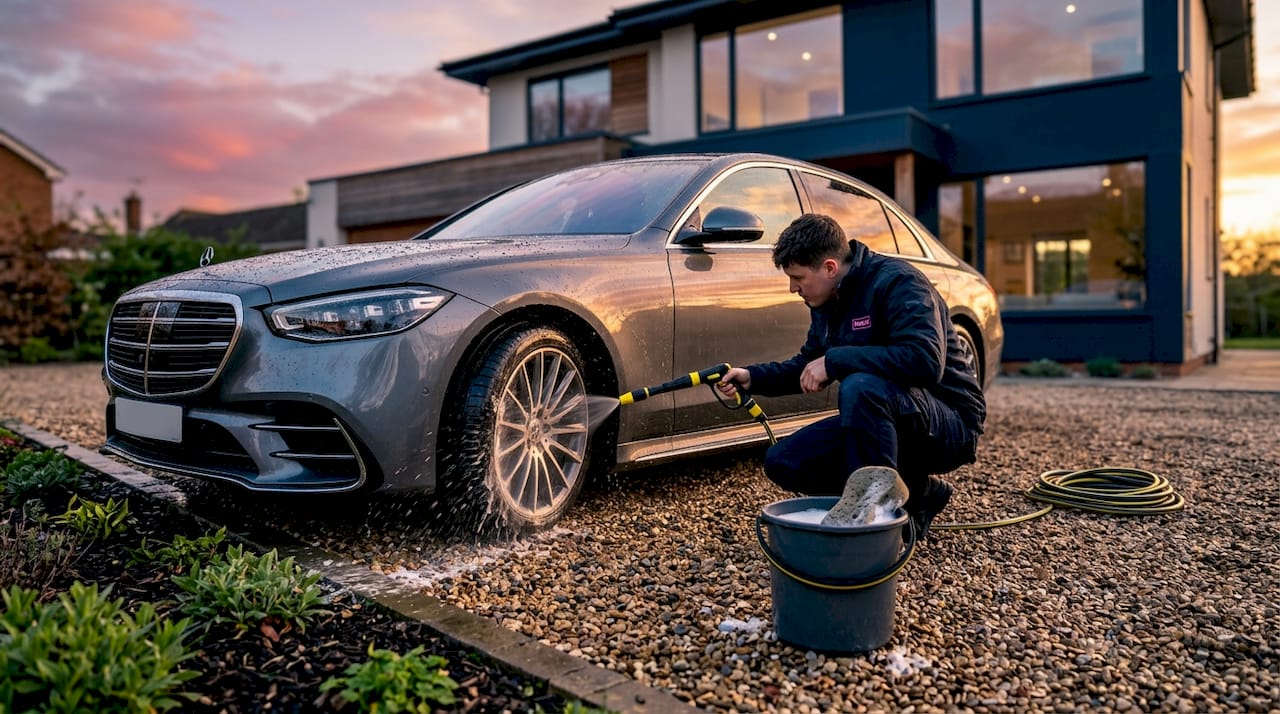
Use your car paint protection resources specific to South Florida to select products formulated for this climate rather than relying on general-purpose options.
Step 3: Apply and maintain protective coatings
Ceramic coatings and paint protection film create a physical barrier between your paint and the environment. A ceramic coating adds a hardened layer that repels water, salt, UV radiation, and minor abrasives. Liquid Paint Protection Film goes a step further by providing self-healing properties against physical contact. These are not set-and-forget solutions. Inspect them annually and refresh as needed.
Step 4: Manage fluid leaks immediately
Leaks require immediate containment to prevent pollution from reaching waterways, which is a particular concern in Florida’s strictly regulated environment. Keep absorbent pads under your vehicle in the garage if any drip is detected. Do not rinse leaks into the driveway or storm drain. Collect the contaminated absorbent material and dispose of it according to local hazardous waste guidelines.
Here is a comparison of eco-friendly driving versus typical driving patterns and their real-world impact:
| Factor | Typical driving | Eco-friendly driving |
|---|---|---|
| Cruising speed | 120 km/h or higher | 100 km/h or below |
| Idling behavior | Engine left running | Engine off after 60 seconds |
| Acceleration style | Hard, frequent | Gradual, anticipatory |
| Emissions output | Higher CO2 and particulates | Up to 20% lower |
| Fuel cost over time | Higher | Noticeably lower |
| Vehicle wear | Accelerated | Reduced |
Step 5: Protect the cabin during heavy traffic
Pro Tip: When sitting in slow traffic on I-95 or US-1 in Fort Lauderdale, roll up windows and switch the cabin air to recirculate mode. This blocks diesel particulates and exhaust gases from entering through the ventilation system. Your lungs and your interior materials benefit equally.
Verifying and maintaining your car’s environmental protection over time
Once your protection routine is in place, regular verification and adjustments ensure lasting results and compliance. Protection measures degrade over time and need monitoring to remain effective.
Key verification tasks to build into your schedule:
- Check tire pressure monthly. Under-inflated tires increase rolling resistance, raise fuel consumption, and elevate emissions from your vehicle. Correct pressure also improves handling on wet coastal roads.
- Track fuel economy per fill-up. A sudden drop in fuel efficiency often signals a mechanical issue or a developing leak before it becomes visible. Catching it early saves money and prevents environmental contamination.
- Inspect garage humidity quarterly. A hygrometer reading above 65% consistently should prompt action. Add ventilation, run a dehumidifier, or apply moisture-absorbing materials in enclosed corners.
- Test ceramic coating annually with water bead test. Pour water on the hood. If it beads and rolls off cleanly, the coating is still active. If it sheets flat, the hydrophobic layer has degraded and needs refreshing.
- Audit your spill kit regularly. Absorbent pads get used and forgotten. Inspect fluid containment equipment routinely and restock so you are never caught without response materials.
- Review Florida Department of Environmental Protection guidelines annually to stay current on any updates to spill response requirements for residential and commercial vehicle owners.
Pro Tip: Keep a simple maintenance log in your phone’s notes app with dates for each task. When you sell or trade the vehicle, that documentation demonstrates care and typically supports a stronger resale position.
Referencing a structured luxury car maintenance checklist turns these verification steps into a repeatable process rather than a list of tasks you mean to get to someday.
A fresh take on preventing environmental damage to luxury cars in Fort Lauderdale
Most conversations about car environmental protection focus on paint. That is the visible part, so it gets the attention. What actually costs owners the most over time is the damage they do not see until it is already serious.
Salt infiltration into brake caliper hardware, ABS sensor housings, and suspension components is a legitimate mechanical threat in South Florida. Calipers that seize, sensors that corrode, and control arms that pit and weaken are not cheap repairs. They are also entirely preventable with the same undercarriage rinsing habits that protect your paint. The science of UV coatings for surface protection is well established, but the case for undercarriage maintenance rarely gets the same emphasis. It should.
Garage humidity is another area where the standard advice stops short. Most owners think about the exterior. The interior of a vehicle stored in a humid, poorly ventilated garage accumulates moisture in places you never check: behind door panels, under carpets, inside the trunk lining. Over years, that creates odor, material failure, and in severe cases, mold that devalues a vehicle dramatically. A $50 dehumidifier running in your garage protects a six-figure asset from a surprisingly common source of long-term degradation.
There is also the matter of air quality inside the cabin. Owners who adopt eco-friendly driving habits and use air recirculation in traffic are not just reducing emissions. They are measurably lowering their own exposure to nitrogen dioxide, benzene, and fine particulate matter. That benefit is personal and immediate, not just automotive.
The owners who see the best long-term outcomes are the ones who treat environmental protection as a system, not a checklist. Each component, from the maintenance habits that preserve value to the coatings that create physical barriers, works better when the others are in place too.
Protect your luxury car with expert coatings and maintenance in Fort Lauderdale
Applying these environmental damage prevention steps consistently is a strong foundation. For luxury vehicle owners who want the most durable, long-lasting protection available, professional coatings take that foundation significantly further.
Manny’s Ceramic Pro Touch LLC specializes in surface preservation for high-value vehicles in Fort Lauderdale. Our Liquid PPF solutions deliver a self-healing barrier against rock chips, salt, UV exposure, and chemical contaminants without changing the visual character of your vehicle’s finish. For owners who want the original surface preserved under a hard ceramic layer, our paint protection film services provide a physically robust shield built for coastal conditions. We also offer mobile detailing in Fort Lauderdale to maintain your vehicle’s exterior and interior between coating cycles, reducing contaminant buildup at every stage.
Frequently asked questions
How often should I wash my luxury car to prevent environmental damage in Fort Lauderdale?
Washing every two weeks is the recommended minimum for South Florida vehicles, with an immediate rinse after any beach or coastal drive to remove salt deposits before they bond to the surface.
What is the recommended idling time limit to reduce pollution from my car?
Turn off your engine after 60 seconds of idling to reduce fuel consumption, greenhouse gas emissions, and your own exposure to exhaust pollutants inside the cabin.
How should I handle accidental oil or fuel leaks to prevent environmental damage?
Contain the leak immediately using absorbent pads to stop spread toward storm drains, then collect and dispose of the material properly. Delaying leak response increases the risk of pollutants reaching protected Florida waterways, which carries regulatory consequences.
What garage practices help protect my luxury car from environmental damage?
Maintaining garage humidity between 40% and 60% using a dehumidifier or active ventilation prevents condensation damage to interior materials, electrical connectors, and exposed metal components that are otherwise difficult to inspect.
Can I reduce pollution exposure inside my car during traffic in Fort Lauderdale?
Yes. Rolling up windows and switching the cabin air system to recirculate mode while stopped in heavy traffic blocks diesel exhaust and fine particulates from entering through the ventilation intake, meaningfully lowering your exposure on longer commutes.