

TL;DR:
- Luxury vehicle paint gradually fades due to UV radiation and environmental factors, even with advanced clearcoats. Regular maintenance, professional protection, and external coatings like ceramic and PPF significantly extend finish life. Ongoing care and timely protection are essential because factory UV defenses deplete over time, making external reinforcement critical.
Even the most precisely engineered luxury vehicles lose their paint luster over time, and most owners never see it coming. A Bentley, Porsche, or Ferrari sitting outdoors doesn’t need a collision to lose its finish quality. Sun exposure, airborne chemicals, and everyday environmental contact work continuously against your paint, regardless of its original quality. Understanding exactly what causes fading and which protection strategies actually work is the difference between a vehicle that holds its value and one that doesn’t.
Table of Contents
- What causes car paint to fade?
- The science behind modern automotive paint protection
- Luxury car finishes: why advanced coatings still need protection
- How to prevent paint fading: expert strategies for luxury vehicles
- Why even luxury car paint care is misunderstood (and what you should really focus on)
- Upgrade your luxury car’s defense: Advanced paint protection services
- Frequently asked questions
Key Takeaways
| Point | Details |
|---|---|
| UV rays are the top culprit | Sunlight is the leading factor in luxury car paint fading, even with modern finishes. |
| Modern coatings reduce but don’t eliminate risk | Advanced clearcoats with UV inhibitors slow fading but need ongoing care to be effective. |
| Protection is a routine, not a one-time fix | Consistent care and quality professional treatments are essential for maintaining a luxury finish. |
| Best strategies combine home and professional methods | Frequent washing, parking in shade, and top-tier coatings offer the greatest defense for your car’s appearance. |
What causes car paint to fade?
Paint fading is not random. It follows predictable chemical and environmental patterns that affect every vehicle, including luxury models with sophisticated multi-layer finishes.
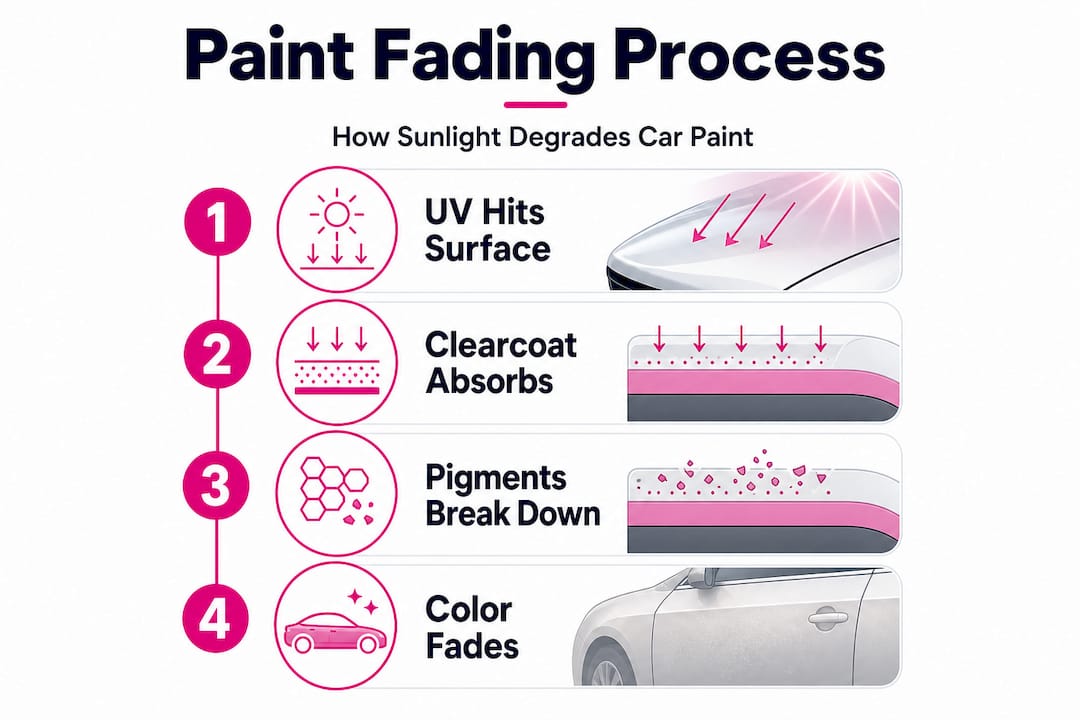
The biggest culprit is ultraviolet radiation from the sun. UV rays penetrate the clearcoat layer and break down the pigment molecules beneath, causing colors to shift, dull, and lose depth. This process is called photodegradation, and it happens whether you park outdoors regularly or only occasionally. Even ambient UV exposure on cloudy days contributes over time.
Oxidation is the second major factor. When paint molecules react with oxygen in the atmosphere, the surface develops a chalky, hazy appearance. On darker vehicles, this shows up as a faded or washed-out tone. On lighter colors, it can produce a milky, uneven look. Oxidation accelerates significantly in hot, humid climates or high-altitude environments where UV intensity is greater.
Additional contributors to fading and finish degradation include:
- Bird droppings and tree sap: These are acidic or enzymatic and can etch through the clearcoat within hours if left untreated.
- Road salt and mineral deposits: Common in coastal regions like South Florida, salt is corrosive and accelerates paint breakdown at the molecular level.
- Acid rain: Rainwater contaminated with industrial pollutants leaves residue that chemically attacks the clearcoat over time.
- Harsh cleaning chemicals: Improper wash products, especially those with alkaline formulations not designed for automotive use, strip protective layers and accelerate UV vulnerability.
- Automatic car washes: Abrasive brushes cause micro-scratches that scatter light and create the appearance of dullness, even when pigment is technically intact.
“Modern clear coats and coatings include UV-protection chemistry (e.g., UV absorbers and hindered amine light stabilizers, HALS) to slow photodegradation.” — UV stabilizers and HALS technology
This is an important point. Luxury vehicles do benefit from advanced paint systems with built-in UV protection for cars engineered into the factory clearcoat. But “slowing” photodegradation is not the same as stopping it. Over time, these chemical defenses deplete, and without external reinforcement, fading becomes inevitable.
The science behind modern automotive paint protection
Understanding what’s inside your vehicle’s clearcoat helps explain both why it performs so well early on and why it eventually needs reinforcement.
Modern automotive clearcoats contain two primary UV-defense technologies. The first is UV absorbers, which work by converting incoming UV radiation into harmless infrared heat instead of allowing it to attack paint pigments. The second is Hindered Amine Light Stabilizers, or HALS. These compounds interrupt the oxidation chain reactions triggered by UV exposure, preventing the breakdown of polymer chains within the paint. Together, these two technologies dramatically extend the life of a finish compared to older paint systems.
| Feature | Traditional paint (pre-2000s) | Modern paint systems |
|---|---|---|
| UV defense | Minimal or none | UV absorbers and HALS chemistry |
| Clearcoat durability | 3 to 5 years typical | 7 to 10 years with maintenance |
| Oxidation resistance | Low | Moderate to high |
| Self-healing properties | None | Available in select luxury OEM finishes |
| Chemical resistance | Low | Moderate |
| External reinforcement needed | Immediately | After 2 to 4 years typically |
The gap in performance between old and new paint systems is significant. But what this table also shows is that even modern paint eventually needs external protection. The UV-protection chemistry built into your clearcoat does not regenerate. It depletes with each UV cycle.
Pro Tip: If your vehicle is between two and four years old, it’s entering the window where factory UV protection starts to weaken. This is the ideal time to apply an external ceramic coating or paint protection film before visible degradation begins, not after.
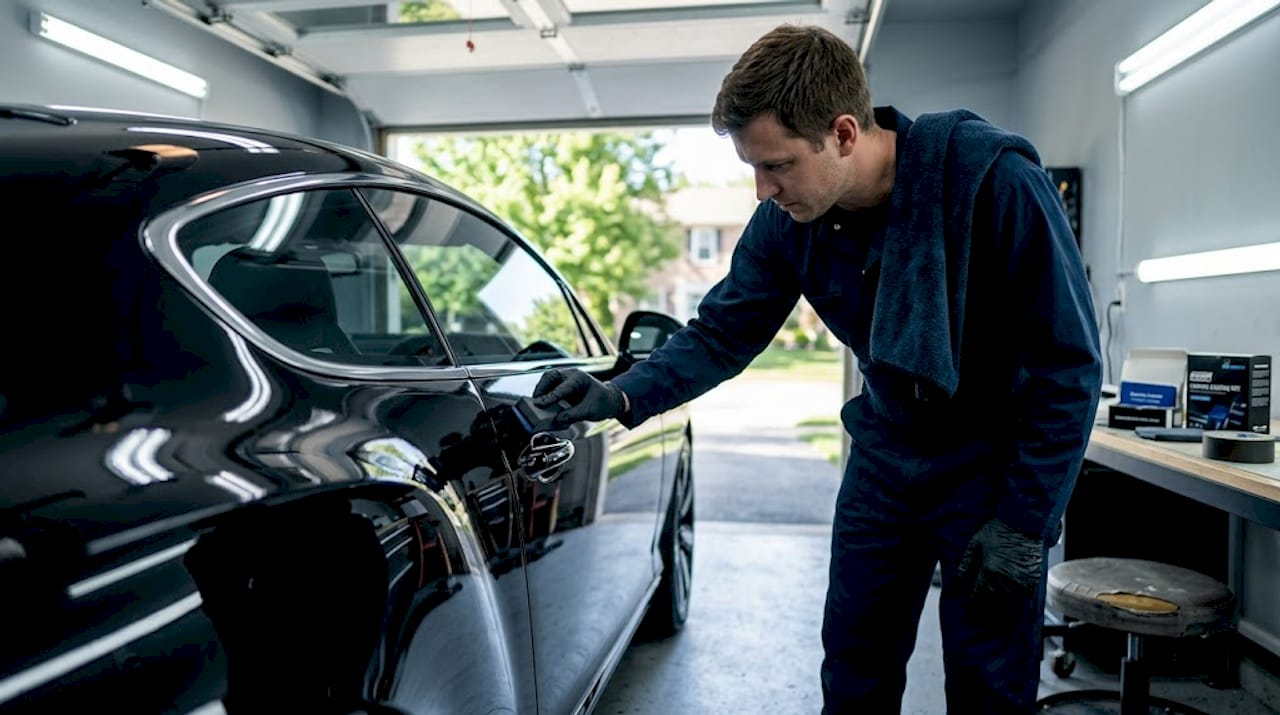
Aftermarket solutions like ceramic coatings add a second layer of chemical defense on top of the factory clearcoat. High-quality hydrophobic coatings also repel water and contaminants, reducing the frequency and duration of chemical exposure on the surface. The result is a compounding protection effect where the factory clearcoat and the applied coating work together to extend the life of the finish considerably.
Luxury car finishes: why advanced coatings still need protection
A common and expensive misconception among luxury vehicle owners is that a premium factory finish requires minimal maintenance. The idea seems reasonable: if the manufacturer spent significant resources engineering a superior paint system, shouldn’t it protect itself?
The reality is more nuanced. While luxury automakers do invest in higher-quality paint chemistry, the physics of environmental exposure apply equally to every vehicle. The sun doesn’t distinguish between a $30,000 sedan and a $300,000 grand tourer. UV radiation, acid rain, and bird droppings attack the chemistry of clearcoat regardless of its original quality. The UV-protection chemistry depletes at a rate determined by environmental intensity, not vehicle price.
Luxury vehicles also face some specific risks that their owners may not anticipate:
- Parking exposure: Luxury cars are often driven to upscale locations where valet parking, outdoor lots, and limited covered parking are common. More outdoor time means more UV and contaminant exposure.
- Low-clearance vulnerability: Many performance and exotic vehicles sit close to the ground, increasing rock chip frequency on front bumpers, hoods, and lower rocker panels.
- Touch-up damage: Dealer-applied touch-up paint rarely matches the original factory finish precisely, and improper application can create weak points where clearcoat adhesion is compromised.
- Specialty finishes: Matte, satin, and color-shift finishes popular on luxury vehicles require specific maintenance protocols. Standard detailing products can permanently alter these surfaces.
- Infrequent use: Vehicles parked for long periods, such as weekend or seasonal cars, accumulate environmental fallout without the mechanical cleaning action of regular driving and washing.
Pro Tip: Matte and satin finishes cannot be polished to remove oxidation without permanently changing the finish character. If you own a vehicle with a specialty finish, proactive protection is especially critical because correction options are extremely limited after damage occurs.
The benefits of ceramic coatings are particularly relevant for luxury owners because these coatings create a chemically bonded sacrificial layer above the clearcoat. Environmental damage lands on the coating first, preserving the factory finish below. Understanding the differences between a PPF vs. ceramic coating approach helps owners choose the right strategy based on their specific vehicle, climate, and usage patterns.
How to prevent paint fading: expert strategies for luxury vehicles
Preventing paint fading on a luxury vehicle requires a layered strategy. No single product or habit eliminates the risk entirely, but combining foundational maintenance with advanced protective applications significantly extends the life of the finish.
Foundational maintenance steps:
- Wash regularly with pH-neutral products. Contaminants like bird droppings, road salt, and tree sap become more damaging the longer they remain on the surface. Weekly washing with automotive-grade, pH-neutral soap removes residue before chemical etching occurs.
- Remove contaminants immediately. Bird droppings should be removed within a few hours. The enzymatic content of bird waste can penetrate clearcoat in less than a day in hot conditions.
- Park in covered or shaded areas whenever possible. This directly reduces UV exposure time and is the simplest habit with the highest impact on long-term finish preservation.
- Dry properly after washing. Mineral deposits from tap water, known as water spots, leave concentrated residue when water evaporates on the surface. Use filtered water or a soft microfiber towel to dry thoroughly.
- Use a clay bar treatment twice a year. Industrial fallout, brake dust, and embedded particles bond to the surface and accelerate clearcoat degradation. A clay bar removes these before they work deeper into the finish.
Advanced protection options:
| Protection type | UV resistance | Physical protection | Longevity | Best for |
|---|---|---|---|---|
| Ceramic coating | High | Moderate | 3 to 5 years | Daily drivers, show cars |
| Paint protection film (PPF) | High | Very high | 7 to 10 years | High-impact zones, full coverage |
| Liquid PPF | High | High | 3 to 5 years | Full-vehicle seamless application |
| Traditional wax | Low to moderate | Low | 2 to 4 months | Basic budget maintenance |
| Paint sealant | Moderate | Low to moderate | 6 to 12 months | Supplemental layer |
The most effective approach for a luxury vehicle in a demanding climate is a combination strategy. Best paint protection tips for high-value vehicles in Florida, for example, typically recommend full-vehicle ceramic coating with PPF applied to the highest-impact zones such as the hood, front bumper, mirrors, and rocker panels. This addresses both UV degradation and physical damage simultaneously.
Modern UV-protection chemistry in coatings adds meaningful defense, but the application quality matters as much as the product itself. Poor surface preparation before coating application can trap contamination under the protective layer, reducing adhesion and performance.
Pro Tip: Many owners invest in premium ceramic coatings but skip the paint decontamination and correction stage before application. A coating applied over oxidized or contaminated paint locks in defects and underperforms. Professional application always includes paint preparation as a prerequisite, and this is where most DIY attempts fall short.
Why even luxury car paint care is misunderstood (and what you should really focus on)
Most guides focus entirely on product selection when discussing paint protection. The right ceramic coating, the right PPF brand, the right sealant. And while product quality does matter, we’ve observed that the bigger variable in long-term finish preservation isn’t what you put on the car. It’s the consistency of care after application.
A high-grade ceramic coating applied on a filthy, unprepped surface and then neglected for two years will underperform a basic sealant that’s maintained weekly. That reality doesn’t make for exciting marketing, but it’s accurate. The owners whose vehicles look exceptional after five or six years are not necessarily the ones who spent the most on protection products. They’re the ones who developed consistent habits around washing, contaminant removal, and annual professional inspections.
There’s also a misplaced belief that luxury vehicles require less maintenance because they were built better. In our experience, the opposite is often true. Exotic and luxury vehicles are frequently driven in high-UV environments, parked at outdoor venues, and detailed infrequently because owners assume the finish is more durable than standard paint. Combined with specialty finishes that have limited correction options, the result is accelerated degradation that’s harder and more expensive to address.
The UV-protection chemistry in a factory clearcoat is genuinely impressive engineering. But it has a finite life. Once it’s depleted, photodegradation accelerates rapidly, and the window for correction before permanent damage narrows quickly. The owners who understand this treat their vehicles’ protection status as something that needs to be actively maintained, not assumed.
Reviewing real paint care priorities for South Florida vehicles shows that climate intensity accelerates every degradation factor simultaneously. Higher UV index, salt air, and frequent rain events mean that the timeline for factory protection depletion is shorter than in moderate climates. Waiting until fading is visible means you’re already well past the optimal intervention point.
Upgrade your luxury car’s defense: Advanced paint protection services
Protecting a luxury vehicle’s finish requires the same precision and expertise as the vehicle itself was built with. At Manny’s Ceramic Pro Touch LLC, every protection strategy is tailored to your specific vehicle, finish type, and driving environment.
Our paint protection film service covers high-impact zones or the full vehicle with a durable barrier against rock chips, scratches, and UV degradation. For owners who want a seamless, factory-fresh appearance, our Liquid PPF provides complete surface coverage without visible edges. Our ceramic coating packages are engineered for long-term UV defense and hydrophobic performance, designed specifically for luxury and exotic finishes that demand precision application. If your vehicle deserves showroom-level protection, we can build a strategy that delivers exactly that.
Frequently asked questions
Does UV protection in car paint last forever?
No, UV stabilizers degrade over time with continued UV exposure, which means ongoing external protection is necessary to maintain finish quality as factory defenses weaken.
What is the most common cause of fading in luxury car paint?
UV rays from sunlight are the leading cause of fading because they directly break down paint pigments and clearcoat chemistry, even on vehicles with advanced UV-protection chemistry engineered into the factory finish.
Can advanced coatings like ceramic completely stop paint fading?
No, ceramic coatings significantly slow fading by adding a UV-resistant layer above the clearcoat, but photodegradation continues at a reduced rate because environmental exposure cannot be fully eliminated.
Does washing your luxury car regularly help prevent paint fading?
Yes, regular gentle washing removes acidic contaminants like bird droppings, road salt, and industrial fallout that accelerate clearcoat breakdown and create entry points for deeper UV and oxidation damage.
Recommended
- UV protection for cars: preserve your luxury finish – Many Ceramic Pro Touch
- Liquid PPF vs traditional PPF: Best protection for luxury cars – Many Ceramic Pro Touch
- Elite scratch protection for your luxury car in Fort Lauderdale – Many Ceramic Pro Touch
- Hydrophobic coating explained: Ultimate protection for luxury cars – Many Ceramic Pro Touch